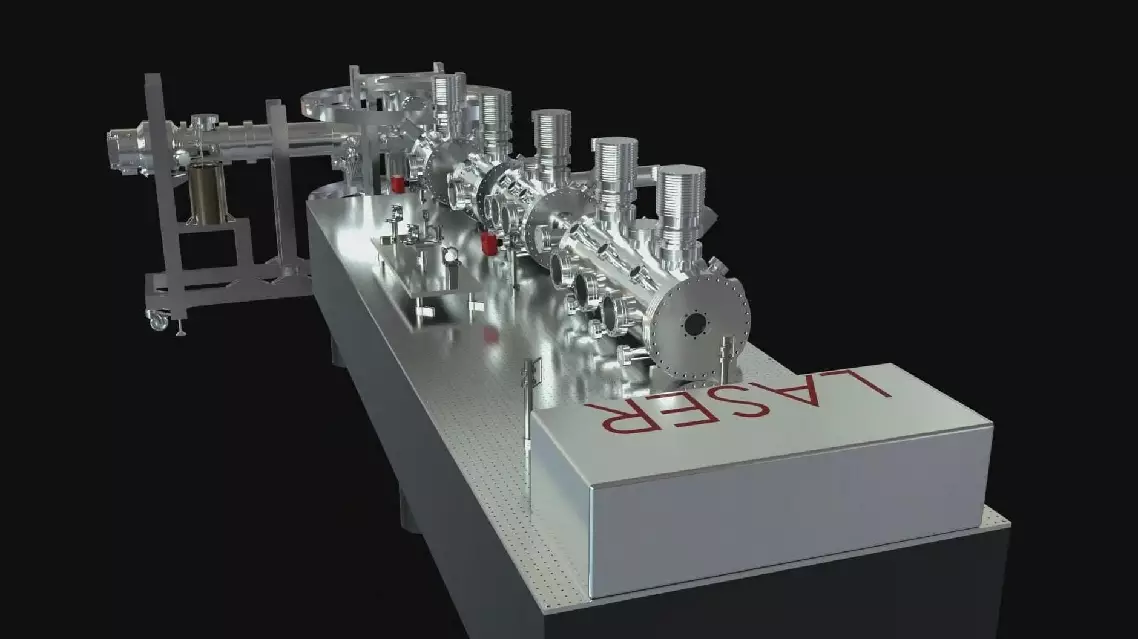
Attosecond laser, which allows scientists a window to observe the ultrafast particles in the microscopic world, bears major significance for achieving new scientific and technological progress, according to the chief engineer of a just-launched Chinese attosecond laser infrastructure project.
China has launched the construction of the Advanced Attosecond Laser Infrastructure (AALI) on Friday, with facilities to be built in Dongguan in south China's Guangdong Province and Xi'an in northwest China's Shaanxi Province.
The AALI project is planned to set up 10 beamlines covering wavelengths in extreme ultraviolet, soft X-ray and terahertz radiation, along with 22 research terminals, forming a comprehensive attosecond science facility in the next five years.
One attosecond is one-quintillionth of a second, or 0.000000000000000001 seconds. In one second, light can circle the Earth's equator seven and a half times. However, in one attosecond, the distance light travels is only about 0.3nm, physicists explained.
"Try to picture the nucleus inside an atom, and there is an electron circling around it. It takes almost 150 attoseconds for an electron to circle around the nucleus. The attosecond laser is like a high-speed camera for electron movements," Zhao Kun, chief engineer of the AALI,noted.
With attosecond lasers, microscopic processes within matter will no longer need "indirect evidence" to be confirmed, but can be directly observed in a manner much like watching instant slow-motion replay.
"It's like taking a photo of an electron moving in slow motion. With such a photo we will be able to know how electron moves, and how it drives other microprocesses to occur. Thus we may gain a deeper understanding of the nature of these processes. This is of great significance to both scientific research and technological development," Zhao said.
In chemistry, using attosecond lasers to capture the process of chemical reactions will help scientists better understand reaction mechanisms and further improve chemical processes.
Capturing the movement of molecules and atoms with attosecond lasers can reveal their interactions and dynamic processes, aiding in the advancement of material science and biological research.
In the field of biomedicine, the high-resolution imaging technology of attosecond pulses is expected to enhance early diagnosis and treatment of diseases, offering new breakthroughs for research on major medical challenges such as cancer and neurological diseases.
Attosecond laser research of great significance to sci-tech development: chief engineer
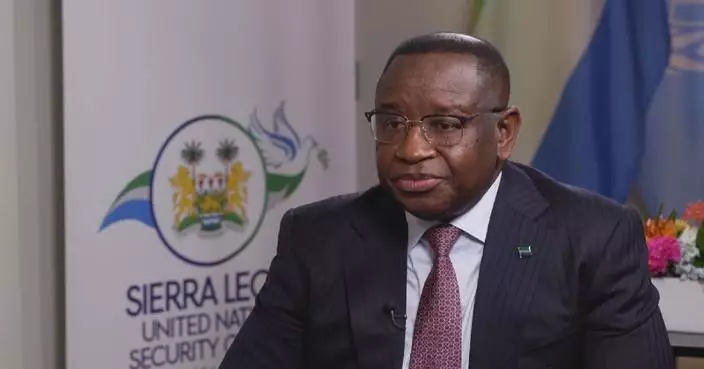
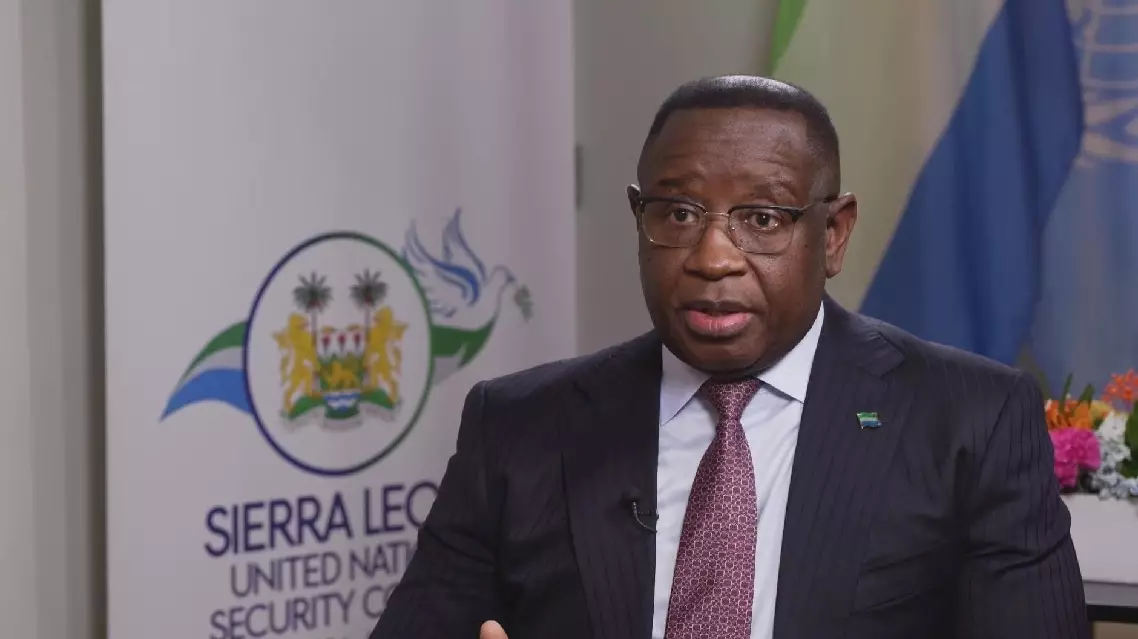
Sierra Leonean President Julius Maada Bio said serving on the UN Security Council has been a great learning experience for his country and stressed the importance of amplifying Africa's voice in global decision-making.
Sierra Leone was elected a non-permanent member of the UN Security Council for the 2024-2025 term and has twice held the rotating presidency during that period. The country also joined the Group of Friends of the Global Development Initiative (GDI) in early 2024.
Noting growing uncertainties over the past two years, the Sierra Leonean president said that the countries of the world must take care of one another, recognizing their common interests.
"We have to recognize, as we normally say, that the world is a village today. And if it is this a village, then we have to take care of one another, and that is what I admire China for. They have been open and willing to help other countries. China is a successful example of a country that has made so much progress in the last 50 years, and they have the experience that we can learn from," Bio said in an interview with China Central Television (CCTV) that aired on Friday.
Since taking office in 2018, Bio has twice presided over high-level open debates at the UN Security Council. He said those experiences offered his country valuable opportunities to understand world politics at the highest level and to navigate complex challenges.
"It's an honor, and a great learning experience for Sierra Leone. The word revolves around, for now, multilateralism, whether it's challenged or not. And being at the Security Council means you are at the center. And to have had the opportunity to preside over the Security Council twice, it's a great opportunity. We've learned quite a lot. It creates the opportunity for you to understand world politics at the highest level, and how you navigate the many challenges. These are very eventful times in the history of the world, and to be in the middle of that has been a great experience and we are happy that we are here and we have contributed to deal with some of the challenges around the world," said the president.
He also emphasized that Sierra Leone has used its seat to bring African perspectives to the UN Security Council, which regularly makes decisions that impact the continent.
"As a member of the Security Council, we used that opportunity to bring the perspectives of Africa, but also the concerns of Africa. We were not there at the beginning of the creation of the United Nations, because most of us, were not independent countries. Africa is 1.4 billion people. And most of the decisions at the Security Council, call it 60 to 70 percent, are actually about Africa. It is just fair to make sure that Africa is equally represented," Bio said.
African voices must be heard at Security Council as matter of fairness: Sierra Leone president