With the Spring Festival a little over two weeks away, China's catering sector is offering more tailored Chinese New Year's Eve dinner services with improved dining experience and greater convenience to attract more young consumers.
As the younger generation becomes the main consumer in China, more restaurants are introducing innovative and personalized dining services to cater to their preferences.
A restaurant in Beijing has enhanced the dining experience by combining tea service with traditional music performances to cater to consumer tastes nowadays.
"In addition to regular dining, we offer a special tea service that enhances the overall dining experience. By incorporating tea as a medium, consumers have the opportunity to appreciate the charm of traditional Chinese culture while enjoying their meal," said Chen Jiao, a staff member at the restaurant.
This innovative combination and enhanced service bring the restaurant more reservations for Chinese New Year's Eve dinner.
"So far, 80 percent of our seats for the Chinese New Year's Eve dinner have been reserved, a 20 percent increase compared to last year," said Li Lianhua, another staff member.
Additionally, to meet the increasing demand for home dining during the Spring Festival, a large chain restaurant in Nanjing City in eastern China has launched a variety of takeaway packages for different group sizes and at different prices, which has become quite popular among young consumers, according to the restaurant's general manager.
"We offer four takeaway package options, catering to groups of two to three people up to eight to ten people. Our takeaway option provides an ideal Chinese New Year's Eve feast for consumers with large dining tables at home who prefer not to cook the dinner themselves," said general manager Gan Fenfen.
To better preserve the flavor of the dishes for takeout, the restaurant uses special aluminum packaging that affectively keeps meals warm and withstand high temperatures.
"We offer many traditional dishes on our menu that are cherished childhood memories for Nanjing residents. For instance, our Chinese New Year's Eve dinner includes signature dishes that can add to the festivities," said Qiang Sheng, a staff member at the Nanjing restaurant.
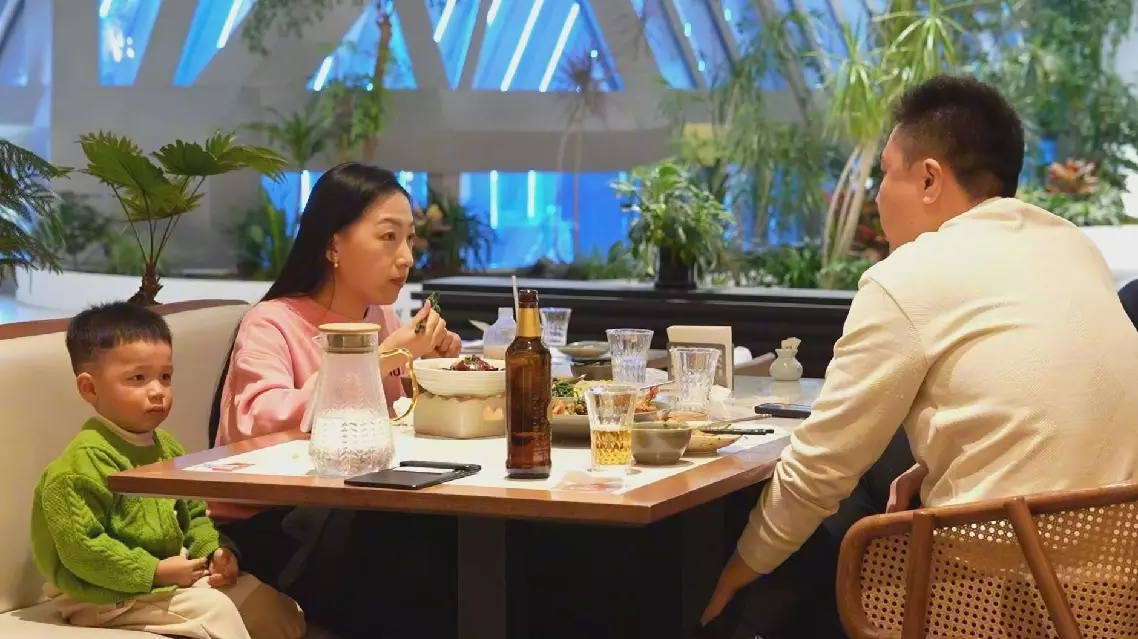
Restaurants cater to young diners with innovative Chinese New Year's Eve menus
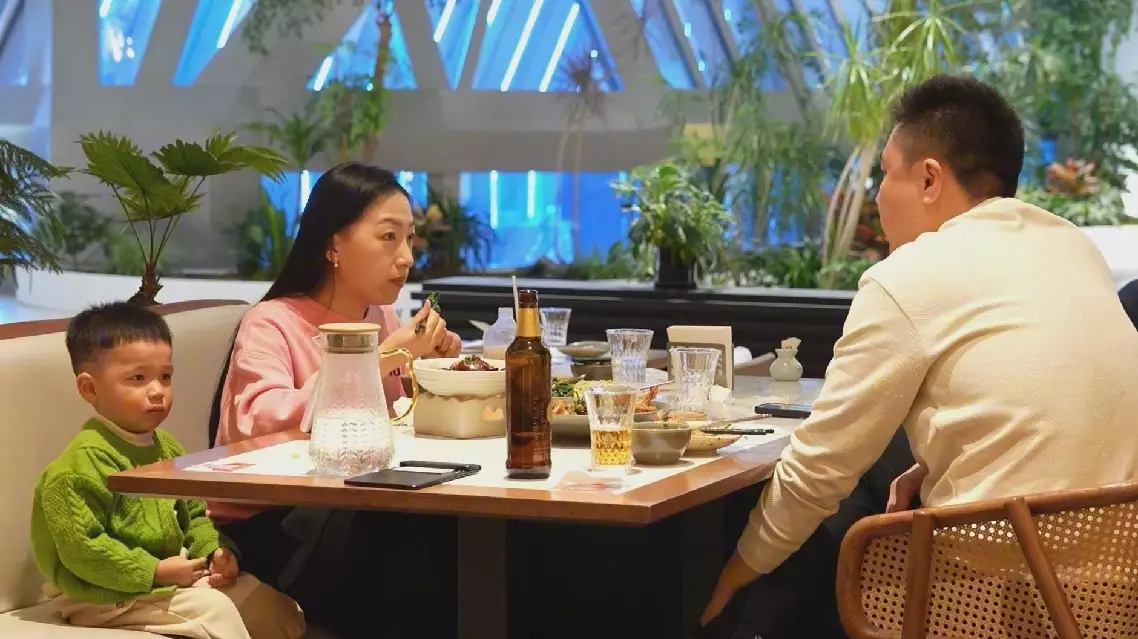
Restaurants cater to young diners with innovative Lunar New Year's Eve menus
A new round of trade-in subsidy program is energizing China's consumer market these days, with provinces across the country seeing a surge in demand for cars, home appliances and digital devices.
In north China's Shanxi Province, the new trade-in subsidy program, which started on January 9, has further helped boost sales in home appliances and digital devices which are covered by the new round of subsidies.
To enjoy the subsidies, six types of home appliances, including refrigerators and washing machines, must meet national Level 1 energy-efficiency or water-efficiency standards. Digital and smart products include four types, such as mobile phones and tablets, with a sales price cap of 6,000 yuan (about 800 U.S. dollars) per item.
In both categories, subsidies are set at 15 percent of the final transaction price. For home appliances, the maximum subsidy is 1,500 yuan per item. For digital products, the cap is 500 yuan per item. Each consumer can receive a subsidy for one unit in each category.
Neighboring Shanxi, Hebei Province kicked off the year of 2026 with the new round of trade-in subsidy program starting on January 1.
The subsidies cover automobiles, home appliances, and digital products. Individual consumers who purchase designated Level 1 energy-efficiency appliances or eligible digital products priced at no more than 6,000 yuan can receive subsidies equal to 15 percent of the transaction price. The maximum subsidy is 1,500 yuan per appliance and 500 yuan per digital or smart device, with each person limited to one subsidized item in each category.
Data showed that from Jan 1 to 9, Hebei's home appliance trade-in program alone disbursed more than 130 million yuan in subsidies, driving sales of over 920 million yuan.
In east China's Jiangsu Province, the new trade-in subsidy program, taking effect for two weeks, has brought the province a boom in trade-in.
At a local 4S store in Jiangsu's Suqian City, showroom traffic has spiked as salespeople walked customers through the new benefits from the trade-in subsidy program.
"Under the scrappage-and-replacement scheme, customers who buy a new energy vehicle (NEV) can receive a subsidy worth 12 percent of the vehicle price, capped at 20,000 yuan (about 2,860 U.S. dollars). For combustion-engine cars, the subsidy is 10 percent, with an upper limit of 15,000 yuan. For trade-ins, NEVs are able to receive a subsidy worth 8 percent of the vehicle price, up to 15,000 yuan, while combustion-engine cars will receive a 6-percent subsidy, with a cap of 13,000 yuan," said Sun Yue, a saleswoman at the store.
In the home appliance sector, Jiangsu's policy this year stipulates that only products that meet China's Level 1 energy-efficiency standard are eligible for subsidies. The scheme covers six major categories, including refrigerators and washing machines.
Consumers who purchase qualifying appliances can receive a subsidy equal to 15 percent of the final retail price, up to a maximum of 1,500 yuan per item. Each person is limited to one subsidized unit per product category.
Four types of digital and smart products, such as mobile phones and tablets, are eligible for a 15-percent subsidy capped at 500 yuan per unit, with a retail price no more than 6,000 yuan.
"With the national subsidy policy back in place this year, I went to the store to check what discounts I could get. It knocked 500 yuan off the price. [The discounted price is] very reasonable," said Wang Kang, a resident of Jiangsu's Xuzhou Province.
To enhance the shopping experience for consumers, many retailers are pairing subsidies with "one-stop" services that combine the delivery of new products with on-site collection of old ones.
"After consumers place an order for new home appliances, our staff will schedule a time to pick up the old units. Recycling the old appliance can also further offset the purchase price of the new one," said Yang Jie, a sales supervisor at a major home appliance company.
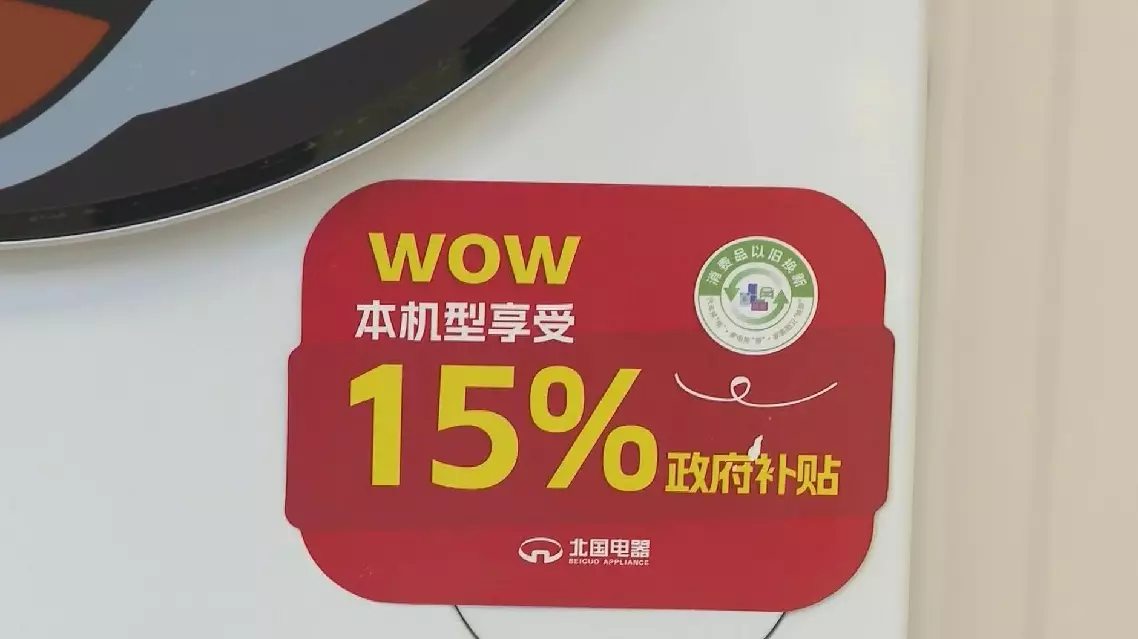
China's new trade-in program sparks consumption boom