Skip to Content Facebook Feature Image

China's central bank outlines financial support strategies adopted in 2024

China

China

China

China's central bank outlines financial support strategies adopted in 2024

2025-01-14 21:44 Last Updated At:22:27

The People's of Bank of China (PBOC), the country's central bank, outlined its financial support strategies used in the year of 2024 to help step up the country's high-quality economic development.

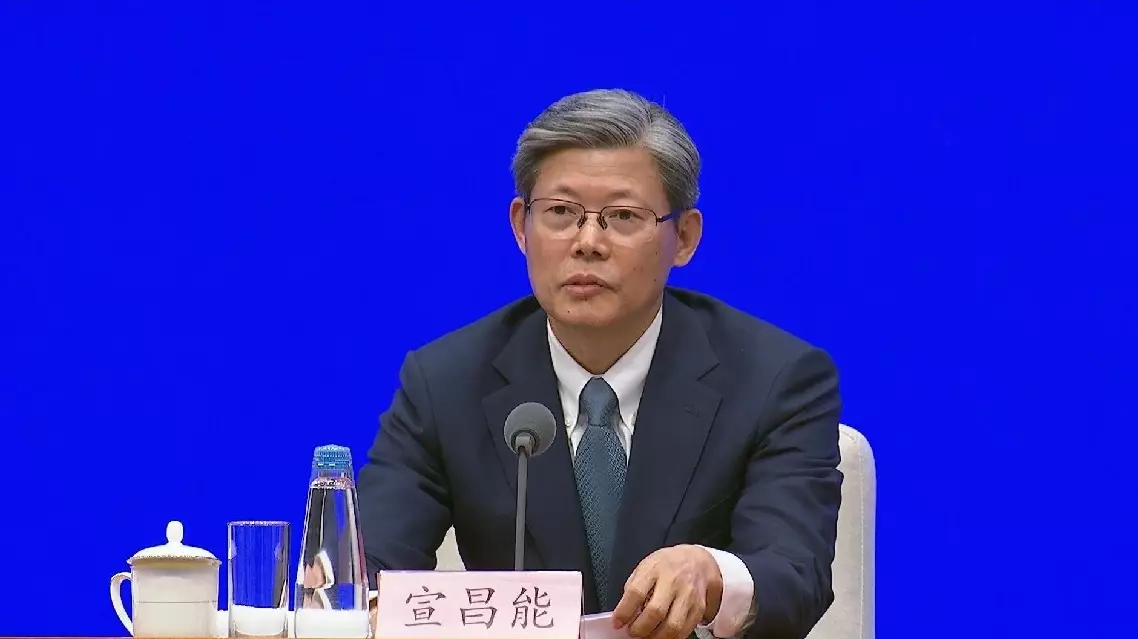
Speaking at a press conference held in Beijing on Tuesday, Xuan Changneng, deputy governor of the PBOC, introduced the PBOC's supportive monetary policy throughout 2024 with four major adjustments implemented to stimulate economic recovery.

He then said the central bank's efforts were focused on four key areas to provide financial support to high-quality economic development. First was to maintain a stable monetary and credit growth in terms of quantity, said Xuan.

"Various monetary policy tools have been utilized to maintain adequate liquidity and to promote reasonable expansion in social financing and growth in supplies of currency and credit, and guide loan interest rates steadily downward. Last year, the reserve requirement ratio was reduced twice, totaling a decrease of 1 percentage point, alongside a 0.3 percentage point cut in the central bank's policy interest rates, which have been the most significant adjustments in recent years," said Xuan.

The deputy governor then said the PBOC has strengthened its support for key sectors from the structural side.

"A re-loan of 500-billion-yuan (about 68.2 billion U.S. dollars) has been established to promote sci-tech innovation and technological transformation to effectively guide financial institutions to increase their financial support to first-time borrowers of small and medium-sized tech enterprises and to technological transformation and equipment upgrade projects in key areas. By the end of last year, banks had connected with 22,000 such projects, with 838.9 billion yuan (about 114.4 billion U.S. dollars) in signed loan contracts and waiting for enterprises to withdraw at any time," said Xuan.

"A re-loan of 300-billion-yuan (about 40.9 billion U.S. dollars) for affordable housing was launched. The lower limit on mortgage rates was removed, while efforts were made to lower mortgage rates for unsold second-hand commercial housing, which have saved borrowers approximately 150 billion yuan (about 20.5 billion U.S. dollars) in mortgage interest payments annually. Both supply and demand sides have simultaneously supported the stable and healthy development of the real estate market. Also, two capital market support tools were also introduced to effectively improve capital market expectations," Xuan added.

He also noted that the PBOC has worked to enhance the transmission of policy rates. As for foreign exchange, the PBOC has worked to stabilize the yuan to ensure the currency remains within a reasonable range, added Xuan.

"Overall, the monetary policy for 2024 has shown promising results. The financial output scored reasonable growth, with a year-on-year growth of 8.0 percent in social financing by December, alongside a 7.3-percent increase in broad money supply (M2) and a 7.6-percent rise in yuan loans, which all surpassed nominal economic growth rates. Besides, loan interest rates have steadily declined. In December, interest rate on new corporate loans remained at approximately 3.43 percent, down 0.36 percentage points year on year, while personal mortgage rates stayed at around 3.11 percent, a decrease of 0.88 percentage points year on year. The credit structure has also improved, with medium- and long-term loans to the manufacturing sector increasing by 11.9 percent, loans to specialized and sophisticated small and medium-sized enterprises by 13.0 percent, and inclusive loans to micro and small enterprises by 14.6 percent, which all have continued to outpace overall loan growth," said Xuan.

He then introduced how the PBOC provides financial support contributing to this year's high-quality economic development.

"Next, the macroeconomic policies will be further enhanced for counter-cyclical adjustments. We will adjust and optimize the intensity and pace of policies at the right time based on domestic and international economic and financial conditions, as well as the operation of financial markets, to support the achievement of the annual economic and social development goals," said Xuan.
China's central bank outlines financial support strategies adopted in 2024

China's central bank outlines financial support strategies adopted in 2024

The Ecological and Environmental Code solidifies China's successful reform experiences in the form of law, transforming ecological conservation into a long-term national goal for the sustainable development of the Chinese nation, said a member of the Standing Committee of the 14th National People's Congress (NPC) on Thursday.

Chinese lawmakers voted to adopt the Ecological and Environmental Code at the closing meeting of the fourth session of the 14th National People's Congress in Beijing earlier in the day.

Lyu Zhongmei, also vice chair of the NPC Environmental Protection and Resources Conservation Committee, who first proposed the drafting of the code, said in an interview with China Global Television Network (CGTN) that the adoption of the code represents a milestone in transforming the country's successful reform policies into a stable legal framework, with profound implications on both national ecological governance and people's daily lives.

"I think this actually sends a very strong signal to the world. Many of our past achievements in ecological civilization system reform were reflected through policies, with numerous reform measures introduced. This time, we are institutionalizing the successful experience of those reforms in the form of law, the most authoritative and stable way to solidify them. This shows that our efforts are not just a one-off campaign. Rather, ecological and environmental protection and the building of an ecological civilization are national goals that reflect the people’s aspiration for a better life and serve the ultimate purpose of ensuring the sustainable development of the Chinese nation," said Lyu.

Lyu highlighted that the code directly enshrines China's greenhouse gas pledge and dual-carbon goals into law, demonstrating the country's concrete actions to fulfill its international responsibilities and uphold its image as a responsible major country.

"We have directly written the commitment to fully meet greenhouse gas targets into the code, and incorporated pledges to use the 'dual carbon' goals as a driving force to advance a comprehensive green transformation of economic and social development. I think this reflects our concrete actions to honor our commitments and take responsibility to the international community, demonstrating China’s image as a responsible major country," she said.

On the topic of global trade, she explained how the code will help safeguard China's interests.

"On the one hand, we are raising standards for the green and low-carbon transition and adopting market-based measures. Some of the standards we have established based on China's actual situation and the methodologies we have created can contribute China's experience and expertise to the world. On the other hand, the Ecological and Environmental Code also includes provisions on extraterritorial application and establishes China’s own system of environmental protection standards," Lyu said.

Looking to the future, she discussed the code's role in the 15th Five-Year Plan period (2026-2030).

"During the 15th Five-Year Plan period, I believe our ecological and environmental protection will undergo fundamental changes. In the past, it relied more on strict administrative enforcement and control. But now, while not lowering strict control standards or reducing strict control measures, we must also introduce more incentive-based measures. Strict regulation will push enterprises to transform and encourage them to pursue environmental protection. The code will provide a clear, long-term and stable norm. In my view, the Ecological and Environmental Code is not only a 'tightening band' that constrains corporate behavior, but also an 'engine' that opens up new tracks for enterprises’ future development," she said.

China's ecological environmental code represents milestone in environmental rule of law

China's ecological environmental code represents milestone in environmental rule of law

Recommended Articles