The foreign direct investment (FDI) in the Chinese mainland, in actual use, reached 749.7 billion yuan (about 102.26 billion U.S. dollars) in the first 11 months of 2024, according to the Ministry of Commerce.
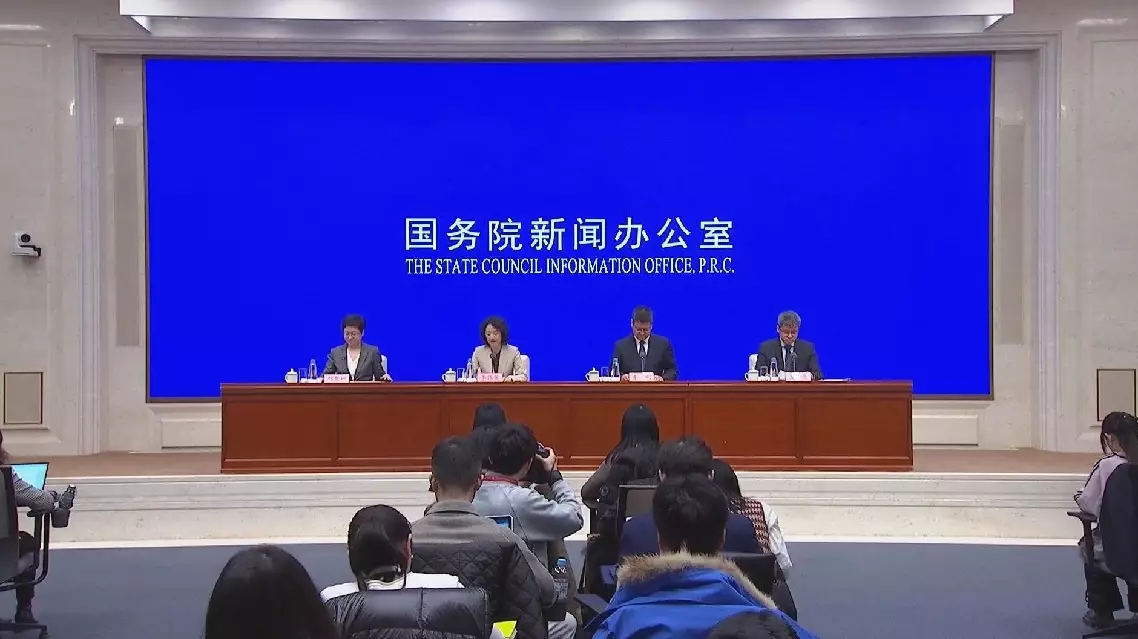
"In the first 11 months of last year, more than 52,000 new foreign-invested enterprises were established nationwide, and the FDI stood at 749.7 billion yuan," Li Yongjie, Deputy China International Trade Representative, told a press conference in Beijing.
The figure, 52,379, represents a year-on-year growth of 8.9 percent and marks the highest level in history for the same period. The FDI in November alone was six percent higher than that in the same period of 2023.
"We have continuously eased market access and removed all market access restrictions on foreign investment in the manufacturing sector. The proportion of FDI in high-tech manufacturing reached 11 percent. Pilot programs for opening up telecommunications, healthcare and other sectors of the tertiary industry are underway, with many projects under negotiation and implementation," Li said.
Investment from some developed economies has continued to grow, with actual investment from Germany up 10.9 percent year on year in the 11-month period, from Singapore up 4.8 percent, and from Switzerland up four percent. Investment from ASEAN countries climbed 6.4 percent year on year.
China logs 749.7 billion yuan of FDI in first 11 months of 2024
Uganda on Thursday announced the temporary suspension of flights to and from the neighboring Democratic Republic of the Congo (DRC) following an outbreak of Ebola Bundibugyo virus disease that has killed dozens of people.
Diana Atwine, permanent secretary at the Ministry of Health, said in a statement issued in Kampala that the National Task Force (NTF), chaired by Uganda's Vice President Jessica Alupo, had resolved to suspend all flights between Uganda and the DRC, with the measure taking effect within 48 hours.
The move follows the detection last week of two imported Ebola cases in Kampala, the Ugandan capital.
A 59-year-old Congolese man died from the virus at Kibuli Muslim Hospital in Kampala, while the other patient remains in isolation at Mulago National Referral Hospital. A total of 127 contacts have been identified and are in institutional quarantine.
According to Atwine, the government has also temporarily suspended public passenger ferry services on the Semuliki River, cross-border bus operations and all public passenger transport between Uganda and the DRC for the next four weeks, while allowing the continued movement of goods and food supplies.
According to the ministry, weekly markets in border sub-counties across high-risk districts have also been suspended for four weeks.
The NTF has activated a series of preparedness and response measures, including the suspension of cultural celebrations and commemorative events that draw large crowds along the Uganda-DRC border.
Over the past 24 hours, health authorities in the DRC and the World Health Organization have reported a worsening outbreak across the central African nation, with around 600 suspected cases and 139 probable deaths recorded since the outbreak was officially declared on May 15.

Uganda suspends DRC flights amid efforts to prevent Ebola outbreak spillover

Uganda suspends DRC flights amid efforts to prevent Ebola outbreak spillover