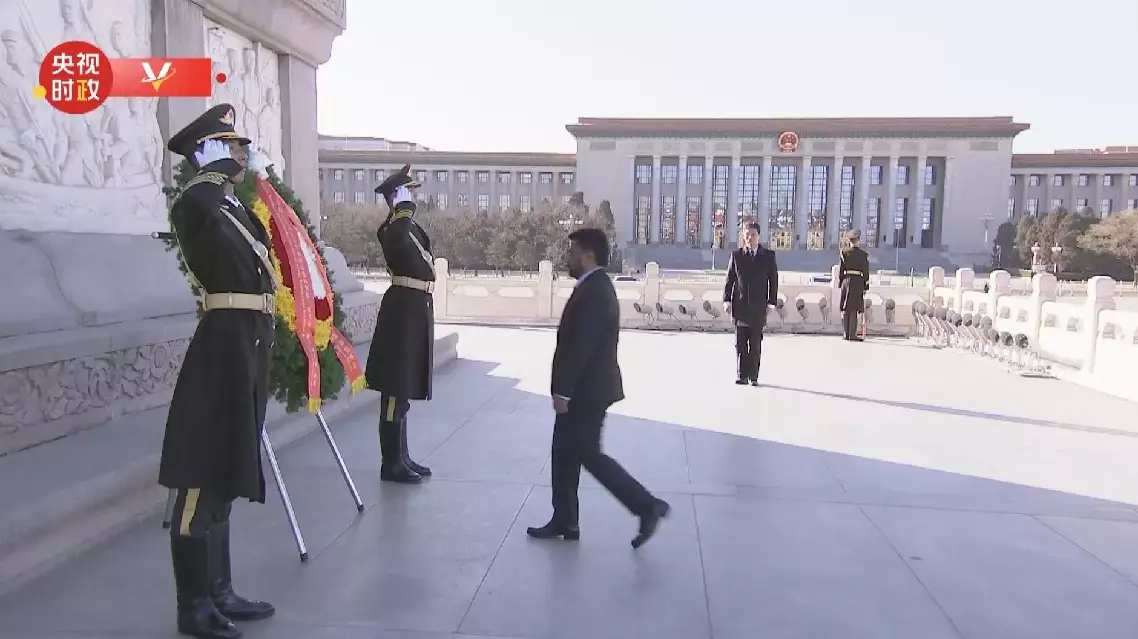
Sri Lankan President Anura Kumara Dissanayake laid a wreath at the Monument to the People's Heroes at the Tian'anmen Square in Beijing on Thursday afternoon.
Dissanayake landed at the Beijing Capital International Airport on Tuesday morning, kicking off a state visit to China.
Chinese President Xi Jinping held talks with Dissanayake in Beijing on Wednesday to discuss relations between their two countries, pledging to draw a new vision for the development of China-Sri Lanka relations.
Dissanayake is paying a state visit to China from Jan 14 to 17 at the invitation of Xi.

Sri Lankan president lays wreath at Monument to People's Heroes
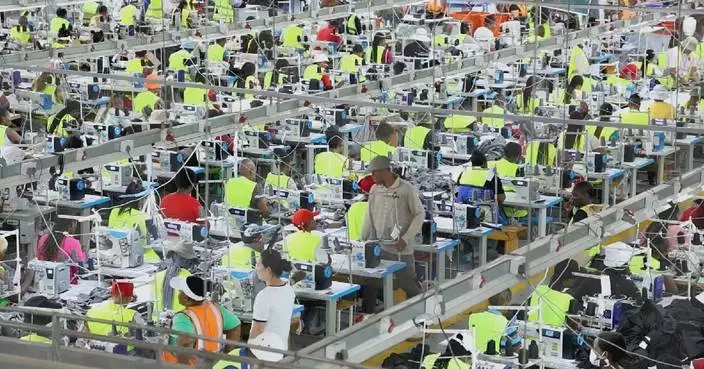
China will continuously build a robust domestic market to bolster its economy and counter external challenges in accordance with the requirements and arrangement from the annual Central Economic Work Conference, which put domestic demand at the forefront of eight key tasks for next year's economic work, according to experts.
The tone-setting conference was held in Beijing from Wednesday to Thursday in which the Chinese leadership decided priorities for the economic work in 2026.
Over the past four years, domestic demand has contributed an average of 86.4 percent to China's economic growth, according to the National Development and Reform Commission (NDRC), China's top economic planner.
"The top priority is to expand domestic demand as the key reason for this is that our demand is relatively weak. The first step here is figuring out how to increase consumption," said Chen Binkai, vice president of Central University of Finance and Economics.
Consumption has continued to play a leading role in the country's economic growth this year. In the first three quarters, final consumption expenditure contributed 53.5 percent to economic growth, an increase of 9 percentage points compared to the whole of last year.
The annual Central Economic Work Conference proposed that in 2026, a special campaign to boost consumption will be implemented in depth, the supply of high-quality goods and services will be expanded, policies on new and emerging industries will be optimized, unreasonable restrictions in the consumption field will be eliminated, and the potential of service consumption will be unleashed.
"Previously, much of the consumption we have encouraged is for manufactured goods. However, the growth rate of our service sector is not as ideal as that of the manufacturing sector. Therefore, increasing some investment to encourage consumption in the service sector may play a better role in stabilizing growth and expanding domestic demand," said Huang Qunhui, a researcher of the Institute of Economics under the Chinese Academy of Social Sciences.
Experts said that income is the primary factor determining consumption, and only by increasing residents' disposable income, can their consumption capacity be improved.
They also said that the conference, while emphasizing the promotion of consumption, also clearly pointed out the need to formulate and implement a plan to increase the income of urban and rural residents.
"The Third Plenary Session [of the 20th CPC Central Committee] mentioned the need to increase the proportion of residents' income, specifically the proportion of labor compensation within that income. The Fourth Plenary Session [of the 20th CPC Central Committee] further proposed implementing a specific income-increasing plan for urban and rural residents. Of course, consumption is not solely an income issue. We need to strengthen basic public services and improve our social security fund. If these issues are further improved and optimized, and residents have higher incomes, they will be more willing to spend more on consumption, especially on development-oriented consumption," said Huang.
Expanding domestic demand remains top priority for China's economic work in 2026: experts