Government raises Outbound Travel Alert for Myanmar (south-eastern regions) to Red
The Security Bureau (SB) has always attached great importance to cases where Hong Kong residents are suspected of being lured to Southeast Asian countries and detained to engage in illegal work. Since the second quarter of 2024, there have been signs of a resurgence in the situation where Hong Kong residents are suspected of being lured to Southeast Asian countries and detained to engage in illegal work. In view of recent developments, the Hong Kong Special Administrative Region (HKSAR) Government today (January 17) raised the Outbound Travel Alert (OTA) level for Myanmar (south-eastern regions) to red, while maintaining an amber OTA for the rest of the country.
A Government spokesman said, "Residents who plan to visit south-eastern regions ofMyanmar, including Myawaddy district, Hpapun district, Hpa-An district and Kawkareik district should adjust their travel plans and avoid non-essential travel there. For those who are already there, they should monitor the situation, exercise caution and attend to personal safety."
Moreover, the SB has already updated the OTA webpage regarding supplementary information for Cambodia with a view to reminding residents to exercise caution and beware of overseas job scams.
The SB will continue to closely monitor the situation in Myanmar and Cambodia. Any updates will be issued through the media, the Bureau's mobile app and the OTA webpage (www.sb.gov.hk/eng/ota). The Immigration Department (ImmD) will continue to maintain close contact with the Office of the Commissioner of the Ministry of Foreign Affairs in the HKSAR and the Chinese diplomatic and consular missions there to follow up relevant cases.
Hong Kong residents in Myanmar and Cambodia who need assistance may call the 24-hour hotline of the Assistance to Hong Kong Residents Unit of the ImmD at (852) 1868, call the 1868 hotline using network data or use the 1868 Chatbot via the ImmD Mobile Application, send message to the 1868 WhatsApp assistance hotline or 1868 WeChat assistance hotline, submit the Online Assistance Request Form, or contact the Chinese Embassy there (consular protection hotline in Myanmar: (95) 943209657; consular protection hotline in Cambodia: (855) 023210206).
Hong Kong residents are encouraged to use the online Registration of Outbound Travel Information service (www.gov.hk/roti) of the ImmD to register their contact details and itinerary when outside Hong Kong. The information provided allows the ImmD to disseminate practical information to them through appropriate means, including SMS on mobile phones, on a timely basis when necessary.
Update on chikungunya fever
The Centre for Health Protection (CHP) of the Department of Health announced that, as of 5pm today (January 28), no new cases of chikungunya fever (CF) had been recorded.
Latest surveillance data
---------------------------
Hong Kong has recorded a total of 82 confirmed CF cases last year. Among them, 11 were local cases, and the rest were imported cases.
Since the beginning of 2025, and as of December 10, 2025, a total of 502 264 CF cases and 186 CF-related deaths have been reported in over 40 countries/territories. Cases have been reported in the Americas, Africa, Asia, and Europe. Although the northern hemisphere has entered the winter season, temperatures in subtropical and some temperate regions remain elevated due to climate change, creating favourable conditions for mosquito breeding. In addition, CF outbreaks continue to occur in many countries worldwide. The risk of imported cases persists. Members of the public should check the situation of the destinations before travelling abroad, especially when travelling to Southeast Asian countries.
Continuously strengthening prevention and control
---------------------------------------------------------
Given that some local cases of CF have visited the Tsing Yi Nature Trails or the surrounding area in November last year, the trails are currently closed until further notice. Relevant government departments (including the Food and Environmental Hygiene Department (FEHD), Kwai Tsing District Office, Lands Department, Drainage Services Department, and Civil Engineering and Development Department) have been continuously conducting comprehensive mosquito control and environmental remediation work along the trails. Since the confirmation on December 10, 2025, of a case involving a person who had visited the Tsing Yi Nature Trails on November 30, 2025, no further local cases have been recorded to date.
The FEHD and relevant departments have comprehensively enhanced the mosquito control operations in Hong Kong since July last year, and this has continued. Among these, the FEHD has conducted vector investigations and targeted mosquito control operations against the imported and local cases. In light of the local cases, the FEHD has immediately conducted follow-up actions, including:
- carrying out intensive fogging in scrubby areas within a 250-metre radius of the relevant locations to kill adult mosquitoes;
- carrying out inspections of the locations, removing stagnant water, applying insecticides and disposing of abandoned water containers every week with a view to preventing mosquito breeding; and
- enhancing public education efforts through organising health talks, setting up mobile education stations, and distributing publicity leaflets.
The abovementioned measures will be continued. Furthermore, the Government will further enhance the mosquito control efforts in addition to the existing measures.
Preventive measures to be taken by the public
----------------------------------------------------
Members of the public should use DEET-containing insect repellents or other effective active ingredients properly to prevent mosquito bites, but the following precautions should be taken when using them:
- read the label instructions carefully first;
- apply right before entering an area with a risk of mosquito bites;
- apply on exposed skin and clothing;
- use DEET of up to 30 per cent for pregnant women and up to 10 per cent for children (for children who travel to countries or areas where mosquito-borne diseases are endemic or epidemic and where exposure is likely, those aged 2 months or above can use DEET-containing insect repellents with a DEET concentration of up to 30 per cent);
- apply sunscreen first, then insect repellent;
- reapply only when needed and follow the instructions; and
- in addition to DEET, there are other insect repellents available on the market containing different active ingredients, such as IR3535 and picaridin. When using any insect repellent, the public should follow the usage instructions and precautions on the product label.
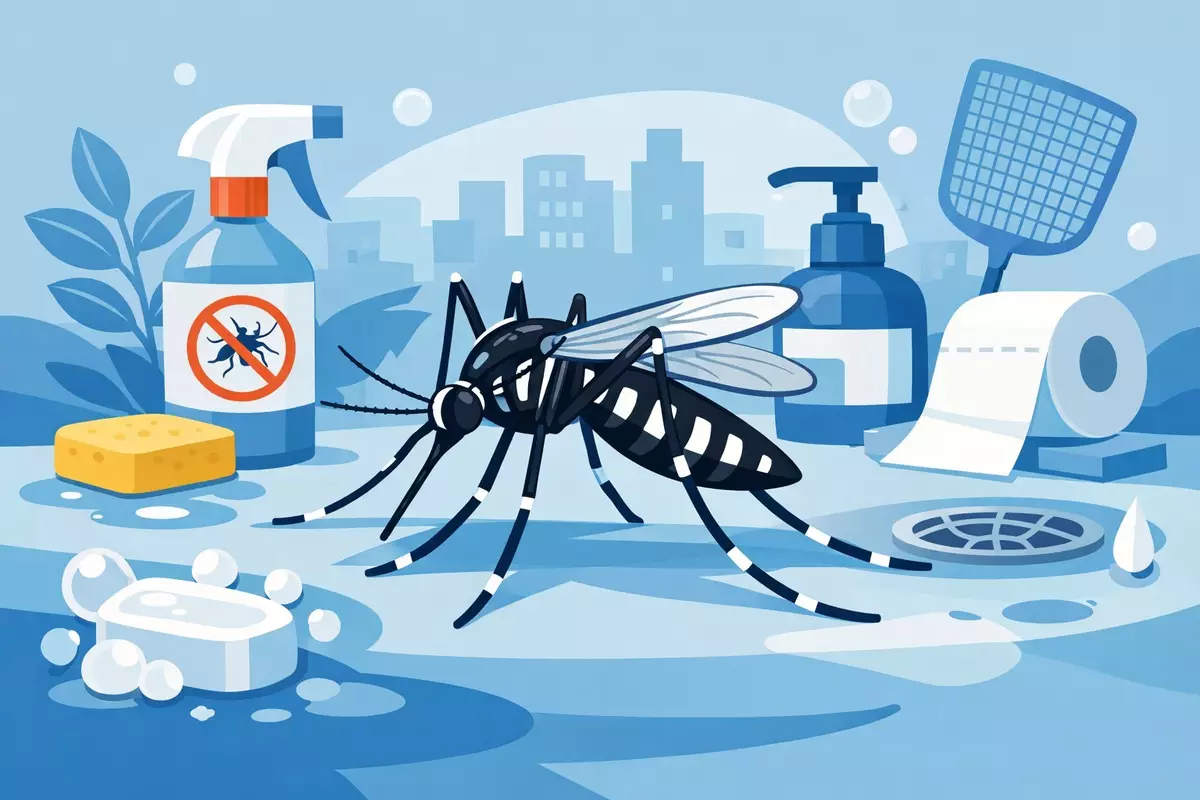
The FEHD also appeals to members of the public to continue to stay alert and work together to carry out mosquito prevention and control measures early, including inspecting their homes and surroundings to remove potential breeding grounds, changing water in vases and scrubbing their inner surfaces, removing water in saucers under potted plants at least once a week, and properly disposing of containers such as empty cans and lunch boxes. The FEHD also advises members of the public and property management agencies to keep drains free of blockage and level all defective ground surfaces to prevent the accumulation of water. They should also scrub all drains and surface sewers with an alkaline detergent at least once a week to remove any mosquito eggs.
The public should call 1823 in case of mosquito problems, and may visit the following pages for more information: the CF page of the CHP and the Travel Health Service, the latest Travel Health News, tips for using insect repellents, and the CHP Facebook Page, Instagram Account and YouTube Channel, and also the Mosquito Prevention and Control dedicated page of the FEHD.
Source: AI-created image