China Media Group held the third rehearsal for the 2025 Spring Festival Gala on Friday, with the four sub-venues involved for the first time.
Chongqing Municipality, Wuhan of Hubei Province, Lhasa of Xizang Autonomous Region, and Wuxi of Jiangsu Province have been selected to stage parts of the world's most-watched TV program.
Along with the main venue in Beijing, these locations are expected to stage a vibrant and diverse cultural feast featuring local customs and spectacular achievements in modernization in the new era.
The rehearsal presented singing and dancing, magic, martial arts, and creative fusion performances in an innovative manner and further improved the overall organization of the gala and transitions between the performances.
The Spring Festival falls on Jan 29 this year. It marks the start of the traditional Chinese Lunar New Year and is China's grandest traditional festival when people across the country return to their hometowns for celebrations and family reunion.
The gala, also known as "Chunwan" in Chinese, has been broadcast live annually on the Chinese Lunar New Year's Eve since 1983, and has been seen as a major cultural symbol for the traditional Lunar New Year celebrations in China.
The 2025 gala will be the first edition since Spring Festival's successful inclusion on UNESCO's Representative List of the Intangible Cultural Heritage of Humanity.
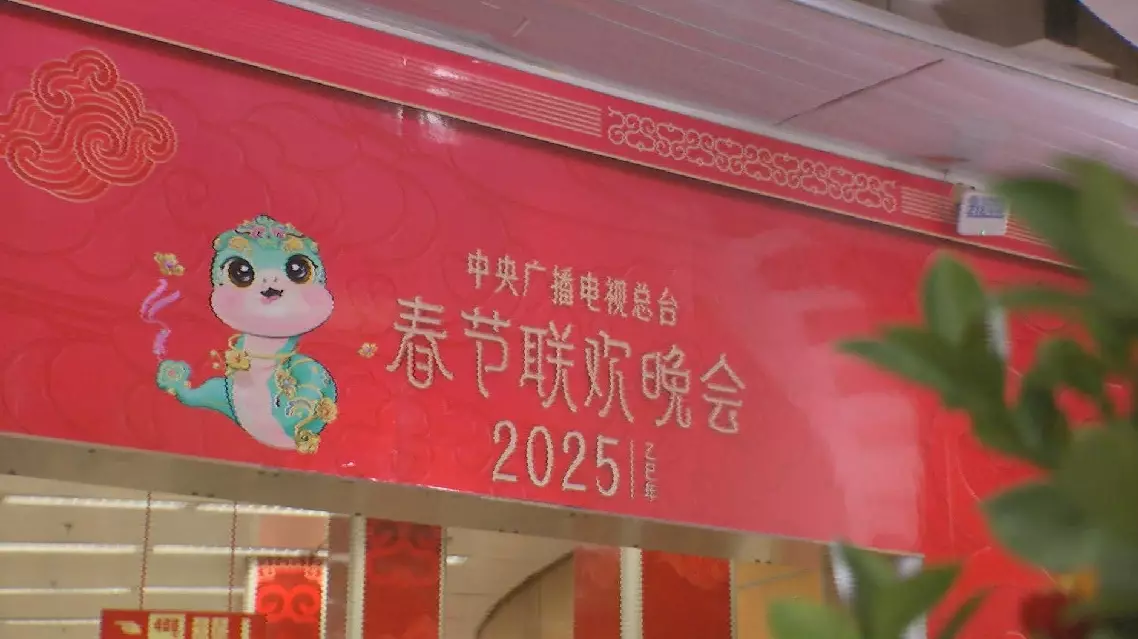
CMG holds third rehearsal for 2025 Spring Festival Gala
Solly Mapaila, general secretary of the South African Communist Party (SACP), criticized some countries jeopardizing the international rule-based system with wars, violence and sanctions as he elaborated on challenges multilateralism faces and Global South cooperation in a recent interview with China Global Television Network (CGTN) in Beijing.
Mapaila called these countries' unilateral actions "disruptive" to international order.
"The changing nature of the strategic relations, if you like, the world balance of forces, that the capitalist world has practically devoured and are destroying international rule-based system. They are destroying international law. They arrogated to themselves the leaders of the world. They are trying to impose their ideas as universal ideas, and in the context of an emerging multipolar world largely and centered around China and to an extent as well the Russian Federation, they found it difficult to allow this to happen and they become disruptive. That's why they have launched wars, violence, sanctions, interference in countries' internal affairs, interference in security threats and everything else," he said.
Against uncertainties posed by unilateralism, Mapaila highlighted the importance for the Global South to show solidarity like they have at the Bandung Conference in Indonesia and the Tricontinental Conference in Cuba.
"Now, the Global South has a necessity to relive the moment of Bandung in which the South came together to struggle and to consolidate their solidarity against colonialism. This conference took place in Indonesia, and later on the Tricontinental Conference that took place in Cuba, which we are celebrating [the 60th anniversary now], in 1966, where Africa, Asia and Middle East, Latin America came together to discuss the challenges of colonialism and how to come out and support one another so that solidarity is important today," he said.
Mapaila led a delegation of South African politicians to visit China in March, where the two sides discussed deepening ties and exchanged views on international and regional issues of common interest.
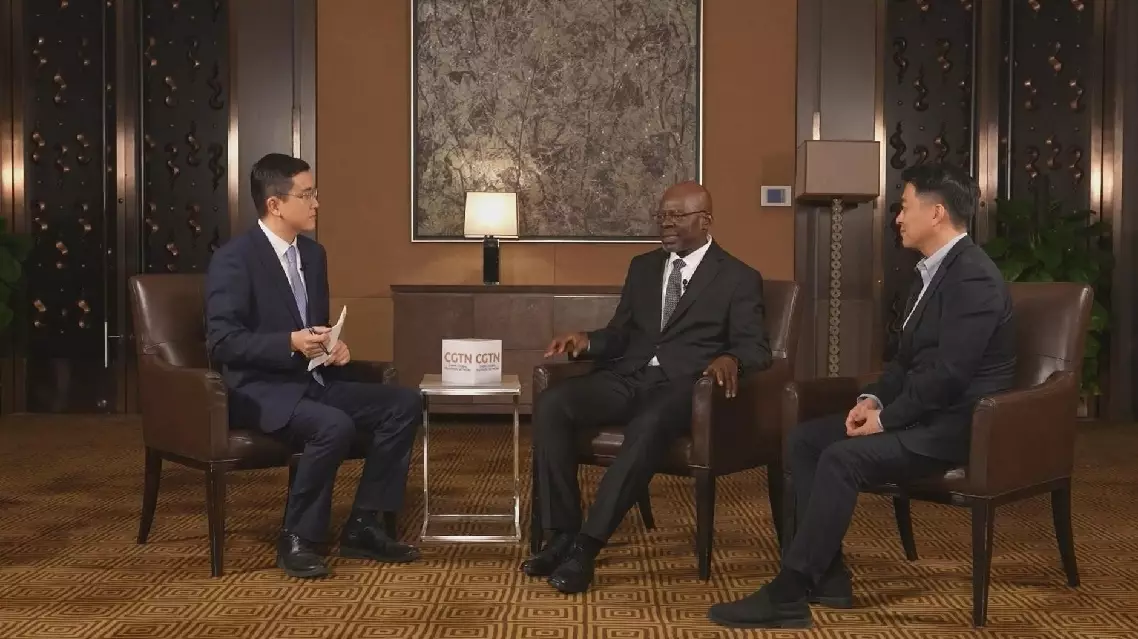
Wars, sanctions destroying international law: SACP general secretary