Maritime transport from China to the Middle East has gradually resumed, but via routes avoiding the Strait of Hormuz, where tensions remain high due to the ongoing U.S.-Israel-Iran conflict.
Hormuz, which once saw around 130 vessels passing daily, now has approximately 20,000 seafarers stranded aboard 2,000 ships in its waters, according to the International Maritime Organization.
China COSCO Shipping Corp., Ltd. has resumed bookings for shipments from the Far East to the United Arab Emirates, Saudi Arabia, Qatar, Oman, and other countries, beginning March 25, covering key ports including Jebel Ali, Dammam, and Doha. Other major shipping companies, including Maersk, Mediterranean Shipping Company (MSC) and CMA CGM Group, have also resumed bookings.
However, shipping companies have opted for routes that avoid the tense Strait of Hormuz.
"These shipping companies have indeed resumed bookings. However, they have made it clear in their announcements that they have suspended direct routes through the Strait of Hormuz and are instead using other ports or through other means," said Zhao Kaijie, head of an international warehousing and logistics company in Shenzhen, south China's Guangdong Province.
Amid rising geopolitical tensions that have pushed up fuel costs, the international shipping market is experiencing another wave of price hikes.
As maritime routes remain disrupted, land transportation, which offers greater flexibility and reliability, has emerged as a popular alternative for delivering goods to the Middle East.
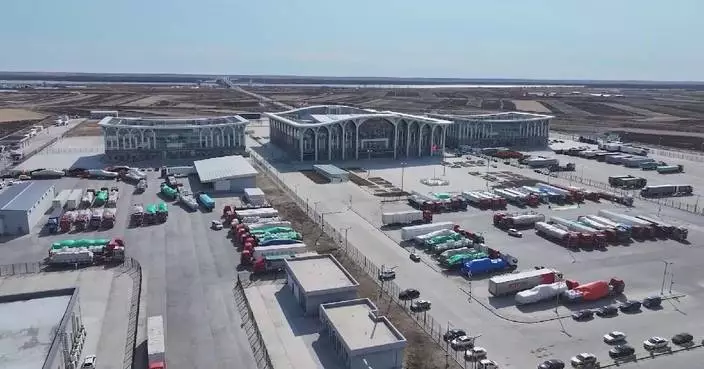
"What is behind us are the trucks that depart daily for Xinjiang ports as part of the domestic leg of the transportation route. After assembling in Xinjiang, the trucks continue on to Central Asia and the Middle East. Currently, the volume is around 20-30 trucks per day. The freight volume has seen a significant increase, especially for countries near Iran," said Li Jiantao, head of an international logistics company in Shenzhen.
Currently, China-Europe Railway Express routes heading toward the Middle East are also running at full capacity.
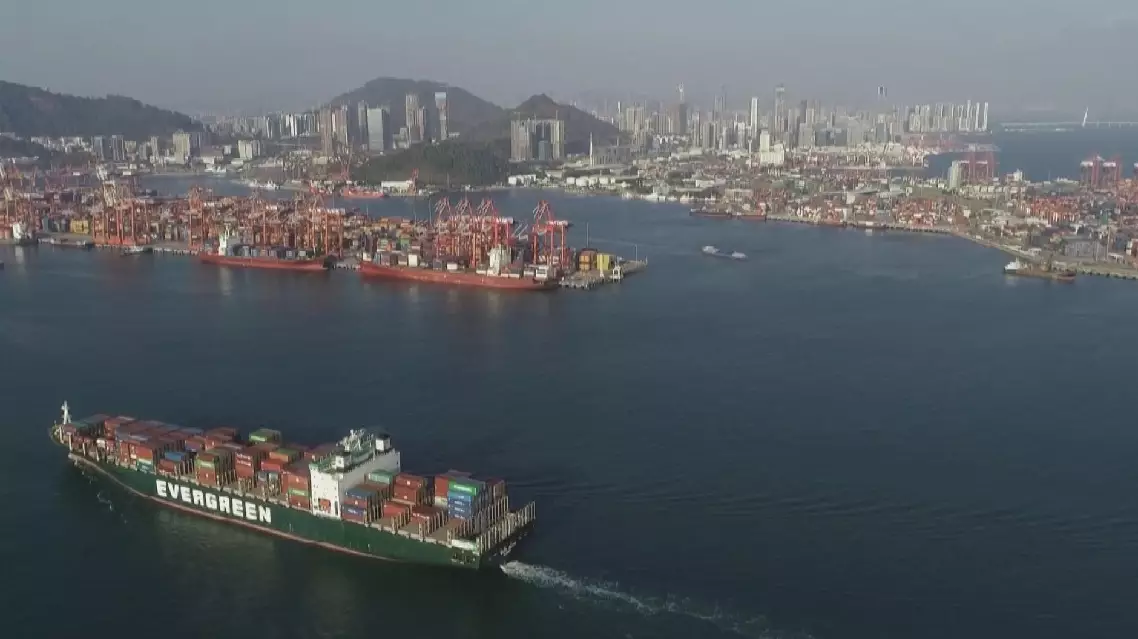
Shipping from China to Middle East gradually resumes via routes avoiding Strait of Hormuz