China's cold-chain logistics sector saw steady expansion in 2024, driven by the continuous release of consumer demand, industrial data showed Monday.
China's total demand for cold-chain logistics reached over 365 million tons in 2024, a year-on-year increase of 4.3 percent, according to the China Federation of Logistics and Purchasing (CFLP).
The annual total revenue of cold chain logistics in 2024 logged 536.1 billion yuan (about 73.19 billion U.S. dollars), a year-on-year increase of 3.7 percent, according to the CFLP.
The sector was in a volatile development trend of moving forward under pressure, and was gradually stabilizing and recovering, according to a CFLP official.
"The diverse demands of consumers for fresh products and their need for immediate consumption have driven the development of the fresh cold-chain sector. Additionally, as consumers place greater emphasis on food safety, large-scale catering delivery has also seen significant growth," said Qin Yuming, secretary-general of the Cold Chain Logistics Committee of the CFLP.
Since the third quarter of 2024, driven by the catering industry and fresh food e-commerce, the overall growth rate of cold-chain logistics has rebounded. In 2024, the annual catering revenue was over 5.57 trillion yuan, a year-on-year increase of 5.3 percent, according to the National Bureau of Statistics.
In addition, the sector also showcased a clear green transformation trend. In 2024, the sales volume of new energy refrigerated trucks reached 21,368 units, a year-on-year increase of 350.8 percent; and the penetration rate of new energy refrigerated trucks was 33.9 percent, an increase of 25.2 percentage points year on year.
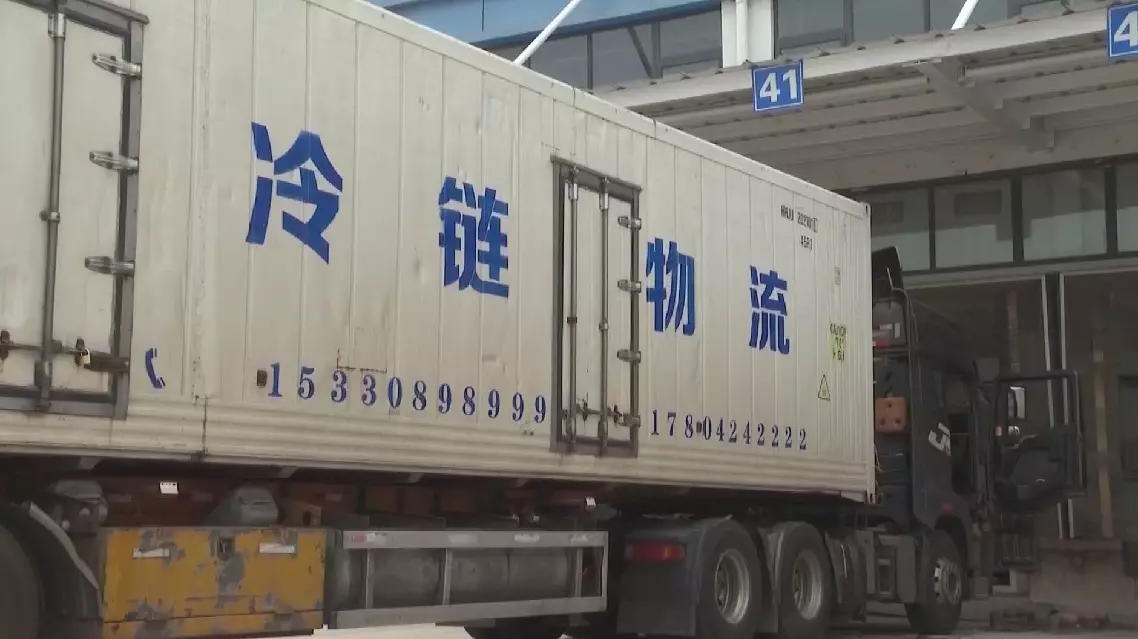
China's cold-chain logistics sector sees steady growth in 2024
As China marks the 90th anniversary of the victory of the Long March, a roughly 12,500-kilometer military odyssey, German writer Christian Y. Schmidt shared his and fellow author Volker Haering's extraordinary cycling journey retracing the the historic route with local audiences in Germany.
The Long March (1934-1936) was a military maneuver by the Chinese Workers' and Peasants' Red Army that later became a defining episode in modern Chinese history, symbolizing endurance and perseverance as troops crossed some of the country's harshest terrain to establish a new revolutionary base. Some marched as far as 12,500 kilometers, enduring hunger, thirst and cold.
Schmidt and his friend, fellow writer Haering spent 138 days between 2023 and 2024, cycling nearly 7,000 kilometers along the historic route of the Chinese Red Army, starting from Ruijin County in east China's Jiangxi Province and heading northwest.
Their experiences have been compiled into a book titled "Der lange Fahrrad-Marsch: 7.000 Kilometer durch das Reich der Mitte".
Last week, Schmidt shared extraordinary journey with audiences at the Confucius Institute at Dusseldorf, drawing engagement from local attendees seeking fresh perspectives on Chinese modern history.
"I think we can take away an inspiration from this: As long as you keep moving forward, never give up, and always keep your eyes fixed on your goal, you will surely be able to keep going. And if you encounter difficulties along the way, you just have to find ways to overcome them," said Schmidt.
The presentation prompted reflections on endurance and modern development among the German audience.
"Mao Zedong once said, 'Nothing is impossible in the world if you dare to scale the heights.' I think this is precisely the spirit demonstrated during the Long March. Who could have imagined that after enduring such hardship, victory could still be achieved in the end? I think that is the lesson we can draw from it. In a sense, the memory of the Long March seems deeply etched into the genes of future generations," said Kneppel, an attendee.
"China's development is indeed nothing short of a miracle. China has achieved astonishing leaps in technological development. Driven by the government, China displays tremendous vitality, focus, and purposeful effort. The Chinese government unites people from all over the country to march toward the exact same goal, and I have witnessed this with my own eyes," said Maria, another attendee.

German writer shares 7,000 km Long March cycling journey with audiences