Adorable animals at the Shanghai Wild Animal Park on Wednesday enjoyed tailored feasts prepared by caretakers to mark the Little New Year, inviting a cheerful atmosphere at the zoo ahead of the Spring Festival.
Little New Year, or "Xiao Nian" in Chinese, typically falls a week before the Lunar New Year and is observed on Jan 22 and 23 this year.
Visitors at the zoo eagerly gathered around enclosures as resident animals received their celebration meals. For the beloved pandas, keepers prepared a feast of fruits such as grapes, sugarcane, and dragon fruit, along with fresh bamboo leaves, bamboo shoots and specially made steamed buns.
"The animals enjoy eating the New Year meal, as if they know the New Year is approaching, which adds to the festive atmosphere," said a visitor.
Orangutans at the zoo received their own lavish treats, including java apple, star fruit, and durian - fruits that don't typically appear in their regular diet, providing ample enrichment during these days of celebration.
The zoo also made some innovative changes to the red pandas' meals. In addition to the usual apples and bamboo leaves, caretakers added red dates, grapes, bamboo shoots and sugar oranges, which were strung together and hung in the trees where the precious critters usually roam.
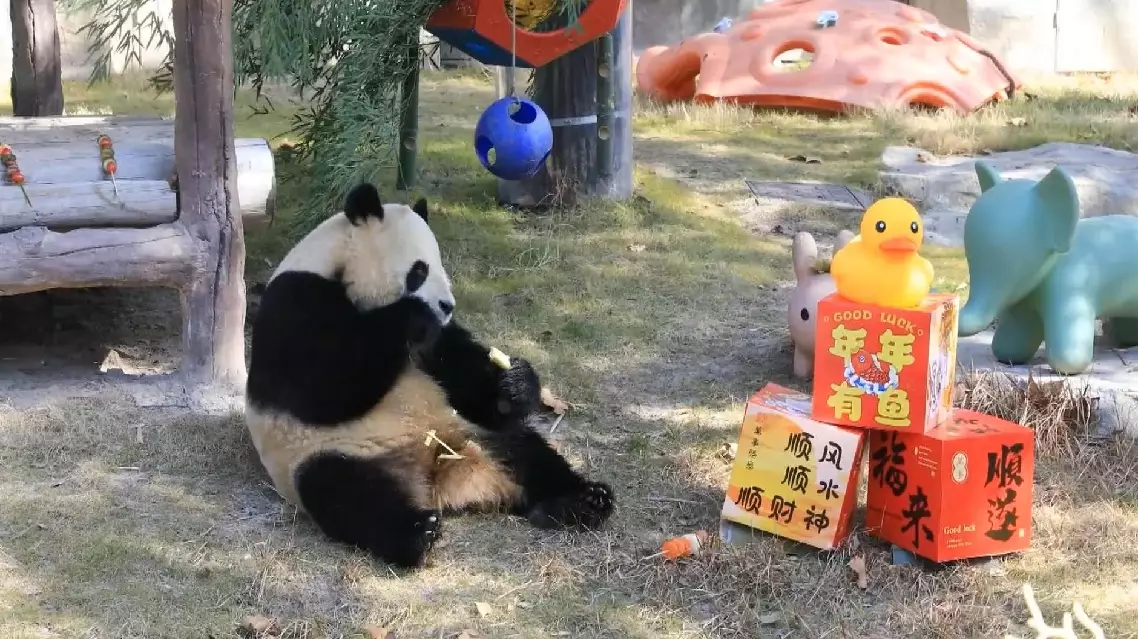
Animals at Shanghai zoo enjoy special feasts for 'Little New Year'
China's producer price index (PPI), which measures costs for goods at the factory gate, went up 2.8 percent year on year in April, the National Bureau of Statistics said Monday.
On a month-on-month basis, the PPI rose 1.7 percent in April, up from 1 percent in March.
NBS statistician Dong Lijuan attributed the rise in the PPI to three main factors: rising prices in domestic petroleum-related sectors driven by international price movements, increased demand in certain domestic industries, and the continued improvement in market competition order, which led to price increases or smaller declines in relevant sectors.
In the year-on-year breakdown, production materials prices rose 3.8 percent, contributing about 2.98 percentage points to the overall PPI increase. Among them, the mining industry surged 10.6 percent, raw materials rose 7.1 percent, and processing industries were up 1.5 percent.
Consumer goods prices fell 1.0 percent, trimming the overall PPI by 0.23 percentage points. To be specific, food prices declined 1.9 percent, clothing and daily-use goods each fell 1.1 percent, and durable consumer goods dropped 0.3 percent.
In the industrial producer purchase prices, nonferrous metal materials and wires jumped 21.3 percent, chemical raw materials rose 5.9 percent, fuel and power increased 4.4 percent, and textile raw materials were up 1.0 percent. By contrast, building materials and non-metallic products fell 5.1 percent, agricultural and sideline products dropped 2.1 percent, and ferrous metal materials declined 0.9 percent.
On a monthly basis, production materials prices increased 2.1 percent in April, contributing 1.68 percentage points to the overall PPI rise. Mining rose 5.7 percent, raw materials advanced 4.9 percent, and processing industries were up 0.4 percent.
Consumer goods prices edged down 0.1 percent. Food fell 0.4 percent and clothing dipped 0.1 percent, while daily-use goods and durable consumer goods each rose 0.1 percent.
With regard to purchasing prices of industrial producers, chemical raw materials jumped 7.3 percent, fuel and power rose 6.3 percent, textile raw materials increased 1.3 percent, ferrous metals gained 0.6 percent, and agricultural products added 0.3 percent. Building materials and non-metallic products fell 1.0 percent, while nonferrous metals and wires edged down 0.1 percent.
In the first four months of 2026, the PPI rose 0.2 percent from the same period last year, and the purchasing prices of industrial producers increased 0.5 percent.
China's PPI up 2.8 pct in April