Skip to Content Facebook Feature Image

Fostering balance between AI innovation, governance vital: expert

China

China

China

Fostering balance between AI innovation, governance vital: expert

2025-01-24 19:23 Last Updated At:19:47

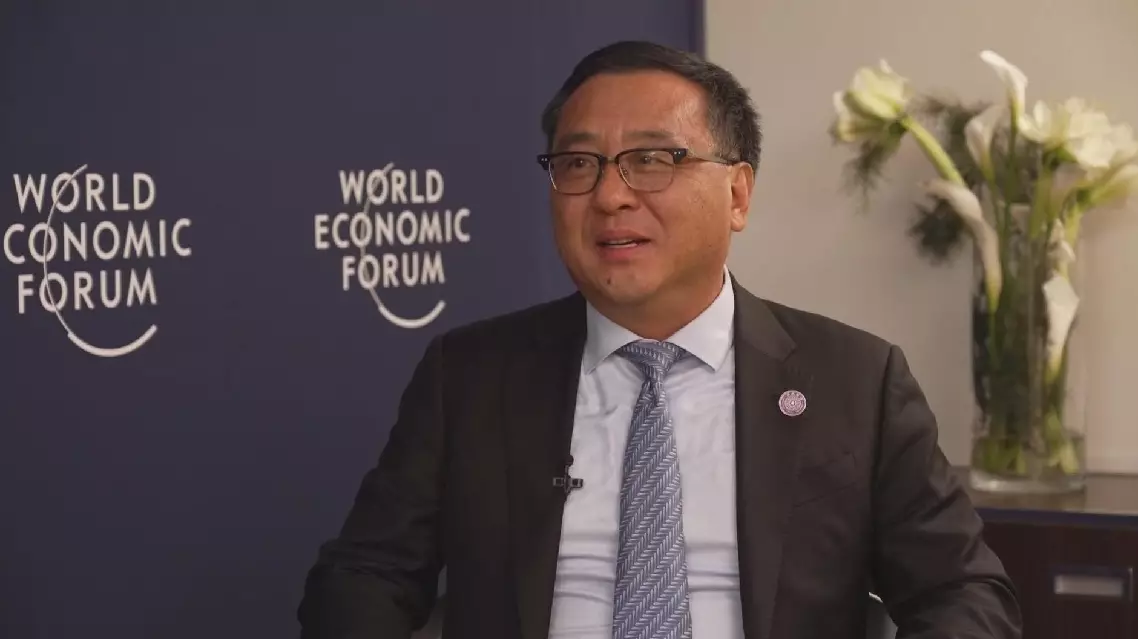
While artificial intelligence (AI) is driving industrial transformation, balancing innovation and governance is critical, said Ya-Qin Zhang , dean of the Institute for AI Industry Research at Tsinghua University, on the sidelines of the World Economic Forum (WEF) Annual Meeting 2025 in Davos, Switzerland.

U.S. President Donald Trump on Tuesday announced a 500 billion U.S. dollars' joint venture from OpenAI, SoftBank and Oracle in building the infrastructure needed for AI in the United States.

Speaking to China Global Television Network (CGTN), Zhang emphasized the importance of balancing technological development with safety.

"That (500 billion investment) is an indication of how much computation, how much data, how big the infrastructure scale needs to be for AI. So AI, obviously, is the largest, most transformative technology. It's going to drive, essentially the entire industry. So I think an investment of this scale is a great indication of how important, how critical AI is going to be. Obviously, we need to continue to innovate. You need to build a better foundation model, also have some critical fundamental technology and also the research. But at the same time, we want to make sure AI is pivot to the right direction, making sure there is the right level of governance, and with the right kind of regulation," he said.

Zhang, a renowned expert in AI and former executive at Microsoft and Baidu, highlighted that AI is a transformative technology driving industrial change, but governance is crucial to ensure it develops in the right direction. He also stressed the importance of dialogue and collaboration between China and the U.S. in government, business, and academia to address AI safety and governance.

"First, I think the governments, China and U.S., need to continue the dialogue. I think it's also important for companies and to partner, to compete. It’s market force instead of ideology or national boundary. But for academia, for university, it is important we keep that dialogue and conversation and of course collaboration. This is necessary for two big powers of AI to work together on the safety, the governance and the policies, go beyond just the national boundary," said the professor.

Taking place from Monday to Friday in the Swiss Alpine town of Davos, the WEF Annual Meeting 2025 gathered 3,000 attendees from over 130 countries to address key global and regional challenges, such as responding to geopolitical shocks, stimulating growth to improve living standards, and stewarding a just and inclusive energy transition.
Fostering balance between AI innovation, governance vital: expert
Fostering balance between AI innovation, governance vital: expert

U.S. stocks sank on Thursday as an escalating conflict in the Middle East and a renewed surge in oil prices weighed heavily on Wall Street.

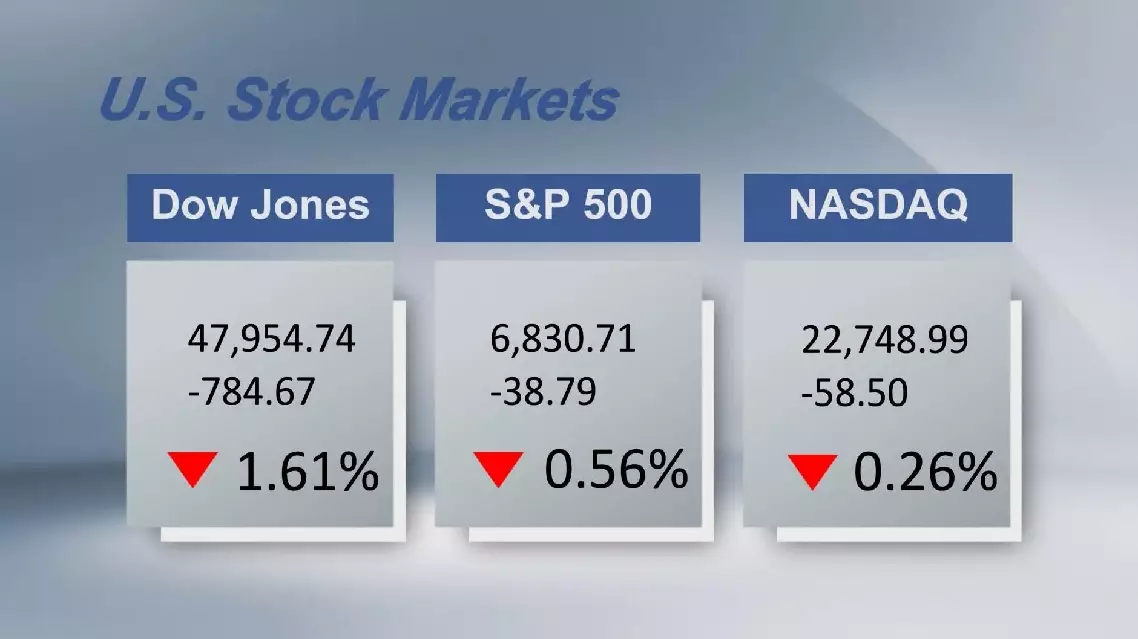
The Dow Jones Industrial Average fell 1.61 percent to 47,954.74. The S and P 500 sank 0.56 percent to 6,830.71. The Nasdaq Composite Index shed 0.26 percent to 22,748.99.

Eight of the 11 primary S and P 500 sectors ended in the red, with consumer staples and materials leading the laggards by dropping 2.43 percent and 2.27 percent, respectively. Energy and technology led the gainers by adding 0.59 percent and 0.39 percent, respectively.

Oil prices jumped significantly after Iran announced it had struck an oil tanker with a missile. U.S. benchmark West Texas Intermediate crude futures for April delivery surged 8.51 percent to settle over 81 U.S. dollars per barrel, reaching their highest level since July 2024. International benchmark Brent crude futures for May delivery advanced 4.93 percent, trading above 85 dollars per barrel. These sharp upward movements in energy markets drove major swings across equities throughout the trading session.

As Iran is the fourth-largest producer in the Organization of the Petroleum Exporting Countries, concerns are mounting that the conflict's impact on production capabilities could have wide-ranging effects across global commodities. The soaring energy prices have also sparked fears among investors that persistent inflationary pressures might force the Federal Reserve to re-evaluate its anticipated interest rate cuts in an already volatile market environment.

In the bond market, the yield on the benchmark 10-year U.S. Treasury note climbed to near 4.14 percent, up from Wednesday's close of approximately 4.1 percent. The yield, which heavily influences consumer borrowing costs across the broader economy, has risen consecutively every day this week after ending the previous week at 3.95 percent.

In corporate developments, Advanced Micro Devices lost 1.3 percent following a report that the U.S. government drafted rules restricting AI chip shipments without its approval.

Conversely, telecommunications equipment provider Ciena dropped 12.88 percent, and StubHub retreated 12.39 percent. Costco Wholesale, which is scheduled to report its quarterly results after the market closes, fell 2.4 percent during regular trading hours.

On the economic calendar, Friday features a highly anticipated monthly jobs report, offering investors another read on the labor market's health.

U.S. stocks sink as Middle East tensions trigger oil price surge

U.S. stocks sink as Middle East tensions trigger oil price surge

Recommended Articles