Transport authorities in various regions of China are responding to cold waves and the most extensive and intense snowfall of this winter so far amid the Spring Festival travel rush.
On Sunday at 06:00, the Central Meteorological Observatory issued a blue warning for heavy snow and cold waves and a yellow alert for strong winds.
China has a four-tier, color-coded weather warning system, with red representing the most severe weather, followed by orange, yellow and blue.
In the following day, parts of northern and eastern provinces, including Inner Mongolia, Liaoning, Jilin and Shandong, are expected to experience heavy snowfall.
Most areas in central and eastern China will experience significant strong winds and cold temperature due to the cold wave.
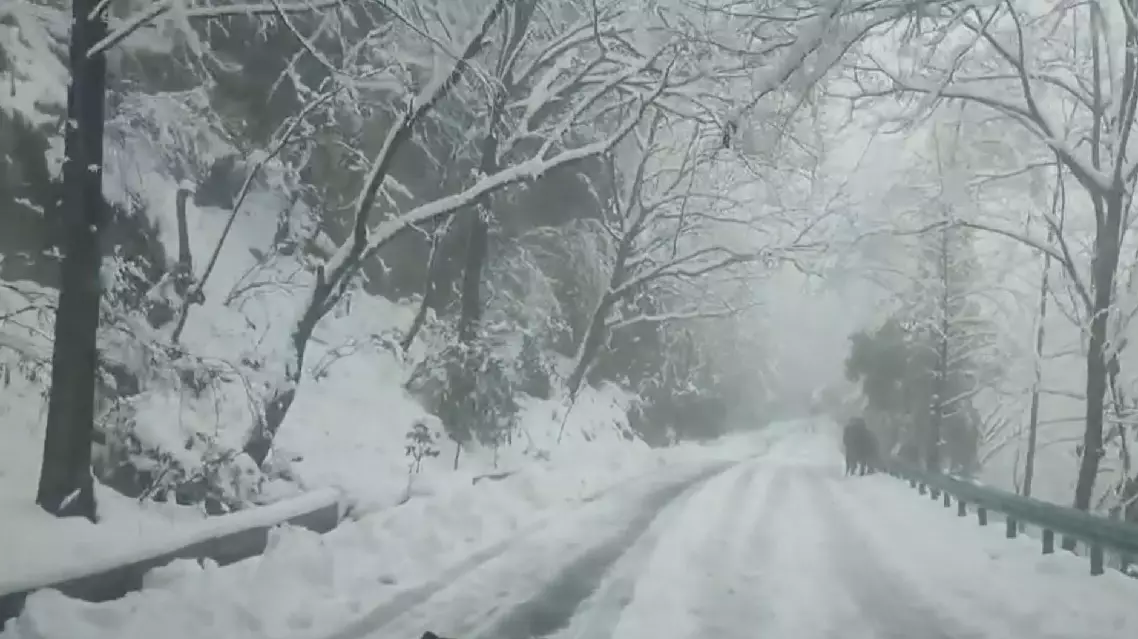
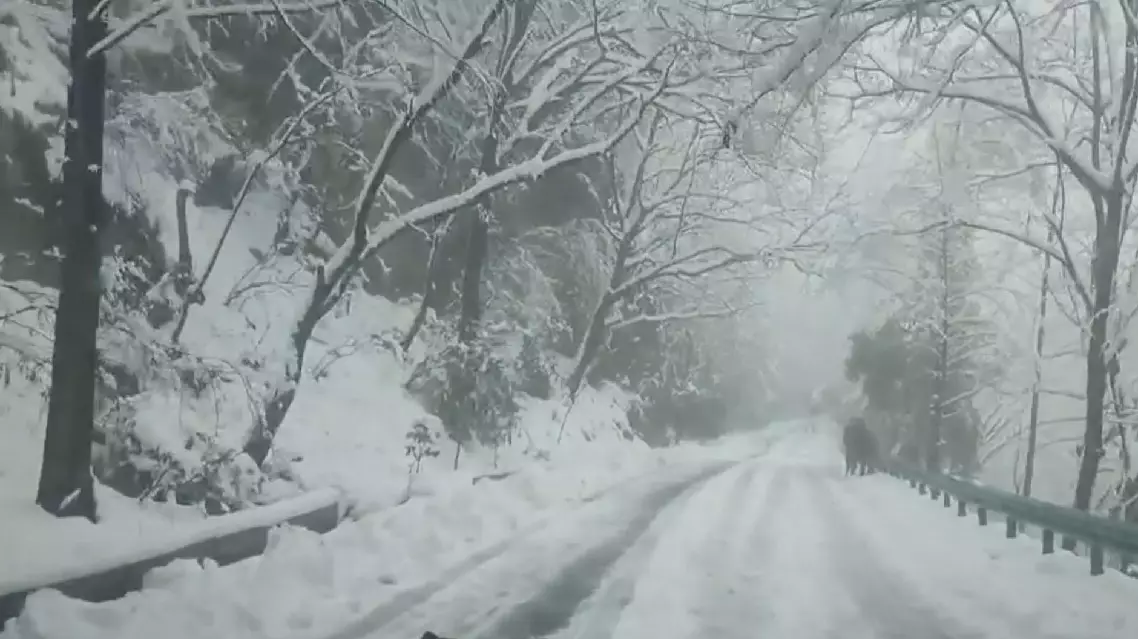
Sanmenxia City of central China's Henan Province experienced a sudden snowfall on Saturday morning, which covered highways with ice and snow and hindered road traffic.
Amid the Spring Festival travel rush, long lines of vehicles were stranded on the roads. In response, local highway traffic police used police cars to escort the passing vehicles, ensuring they could proceed slowly and safely.
Lyuliang City in north China's Shanxi Province was hit by a cold wave and snowfall on Saturday, which impacted traffic conditions.
Local transportation authorities quickly launched an emergency plan to clear ice and snow to ensure smooth traffic. They increased manpower and applied snow-melting agents on critical sections such as bridges, sharp bends and steep slopes to prevent icing.
"We have spread over 30 tons of snow-melting agents to ensure smooth traffic flow on roads as soon as possible," said Zhang Yajun, a local highway official.
Central China's Hubei Province has been hit by cold waves, strong winds and heavy snow since Friday, and local authorities made swift response to ensure smooth transportation during the travel rush.
In the Shennongjia Forestry District, local highway management staff have been spreading salt and removing snow from the road surface since 03:00 on Saturday. They focused on key snow-prone sections to eliminate potential icing hazards.
In Wudang Mountain of Shiyan City, over 100 tourists were stranded on Saturday as snow had blocked the roads, with the snow reaching up to 20 centimeters' deep and some roads frozen. The scenic area was temporarily closed.
Local authorities immediately set up an emergency rescue team to clear ice and snow and mobilized 10 buses to pick up tourists from various scenic spots within the area.
All the tourists stranded had safely arrived at the foot of the mountain by afternoon.
Beijing has also welcomed its first snowfall in 2025 starting Saturday night. Local authorities increased manpower at key transportation junctions such as railway stations and highway toll gates to monitor the situation and guide the traffic.
The Spring Festival is the biggest annual holiday for the Chinese, when people across the country return to their hometowns for celebrations and family reunion. This year's Spring Festival holiday season lasts from Jan 28 to Feb 4.
The travel rush during the festival, known as "chunyun" in Chinese, is China's biggest annual human migration. The 2025 Spring Festival travel rush will last from Jan 14 to Feb 22, totaling 40 days, with the number of total cross-regional trips during this period expected to reach 9 billion.
China responds to cold waves, heavy snow amid Spring Festival travel rush
China responds to cold waves, heavy snow amid Spring Festival travel rush