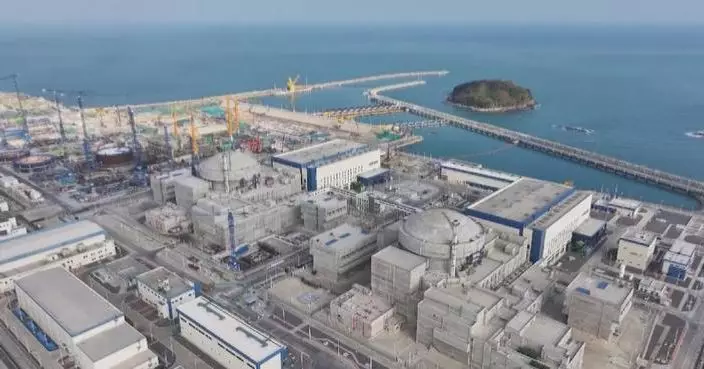
The first container ship of the "China-Europe Express", the fastest direct route connecting Europe and China's Yangtze River Delta region, arrived at its destination at the Jade Weser Port in Wilhelmshaven, Germany on Friday, ushering in a new era of international trade upon the Chinese New Year.
The "KAWA Ningbo" cargo ship, departing from the Ningbo-Zhoushan Port in east China's Zhejiang Province and carrying over 1700 containers of lithium batteries and other high-value goods, completed its non-stop voyage in 26 days, well below the shipment time of 45 days in the past.
"This opening significantly enhances the flows of goods between China and Europe, strengthening the stability of the global industrial and supply chains. The route demonstrates vividly how the belts and roads are built together," said Cong Wu, consul general of the Chinese General Consulate in Hamburg.
The global shipping industry has faced years of disruptions, resulting in longer transit times and higher shipping costs. By linking one of the world's busiest cargo ports to Europe with no intermediate stops, the CEX is expected to ease these logistical challenges.
"We are incredibly proud that one of the largest ports in the world has decided to come to Wilhelmshaven. We are the only deep-water port in Germany, which means that we can be approached at any time by all ship classes in the world, and we offer excellent connections to the European hinterland by rail and truck transport," said Marc-Oliver Hauswald, managing director of Container Terminal Wilhelmshaven JadeWeserPort-Marketing GmbH.
"They have full block train containers we have trans-loaded from Wilhelmshaven to Budapest. The lithium batteries and also the new type of energy cars manufacturers have invested a lot, like billions of Euros in Hungary and we are doing the last mile logistics for them," said Stanley Song, logistics manager of the Central European Trade and Logistics Cooperation Zone.
According to Zhejiang Seaport Logistics Group, who initiated this new shipping option, the CEX ship has already been overbooked by customers and a monthly service is going to start as of next month, with plans to increase to bi-weekly sailings by the end of the year.
The next China Europe Express cargo ship will depart from the Ningbo-Zhoushan Port at the end of February.
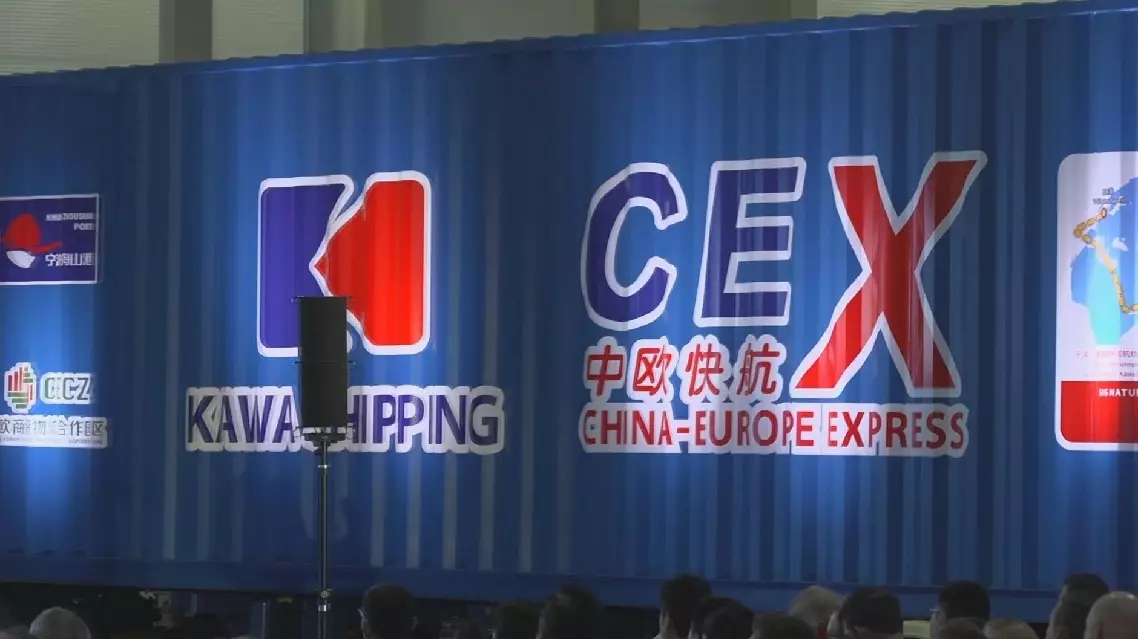
First China-Europe Express cargo ship completes maiden voyage
U.S. stocks sank on Thursday as an escalating conflict in the Middle East and a renewed surge in oil prices weighed heavily on Wall Street.
The Dow Jones Industrial Average fell 1.61 percent to 47,954.74. The S and P 500 sank 0.56 percent to 6,830.71. The Nasdaq Composite Index shed 0.26 percent to 22,748.99.
Eight of the 11 primary S and P 500 sectors ended in the red, with consumer staples and materials leading the laggards by dropping 2.43 percent and 2.27 percent, respectively. Energy and technology led the gainers by adding 0.59 percent and 0.39 percent, respectively.
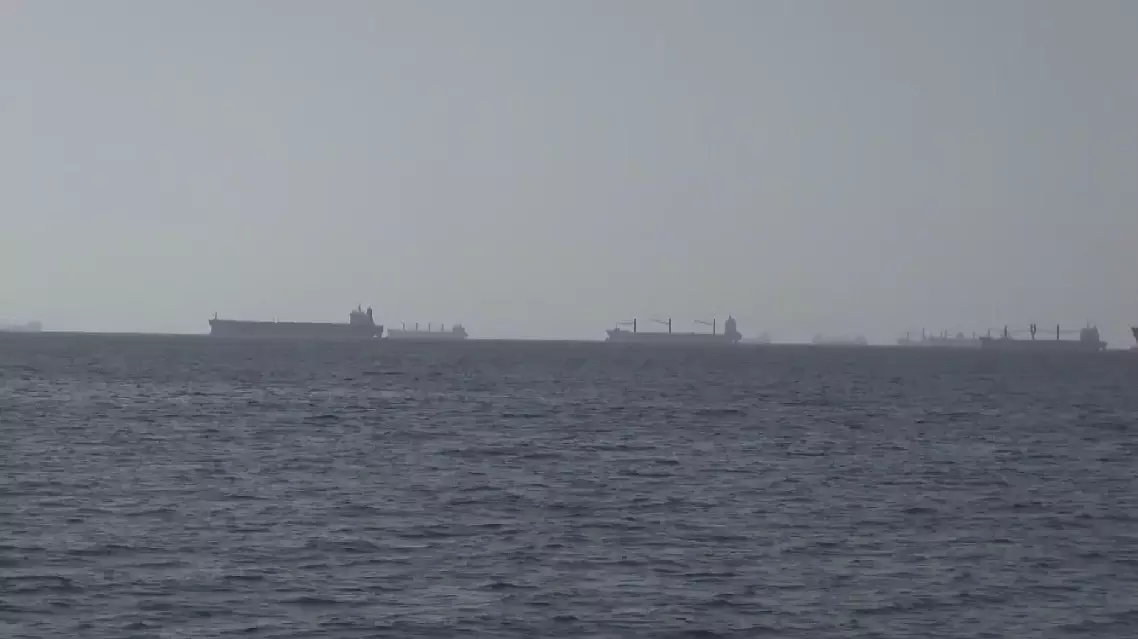
Oil prices jumped significantly after Iran announced it had struck an oil tanker with a missile. U.S. benchmark West Texas Intermediate crude futures for April delivery surged 8.51 percent to settle over 81 U.S. dollars per barrel, reaching their highest level since July 2024. International benchmark Brent crude futures for May delivery advanced 4.93 percent, trading above 85 dollars per barrel. These sharp upward movements in energy markets drove major swings across equities throughout the trading session.
As Iran is the fourth-largest producer in the Organization of the Petroleum Exporting Countries, concerns are mounting that the conflict's impact on production capabilities could have wide-ranging effects across global commodities. The soaring energy prices have also sparked fears among investors that persistent inflationary pressures might force the Federal Reserve to re-evaluate its anticipated interest rate cuts in an already volatile market environment.
In the bond market, the yield on the benchmark 10-year U.S. Treasury note climbed to near 4.14 percent, up from Wednesday's close of approximately 4.1 percent. The yield, which heavily influences consumer borrowing costs across the broader economy, has risen consecutively every day this week after ending the previous week at 3.95 percent.
In corporate developments, Advanced Micro Devices lost 1.3 percent following a report that the U.S. government drafted rules restricting AI chip shipments without its approval.
Conversely, telecommunications equipment provider Ciena dropped 12.88 percent, and StubHub retreated 12.39 percent. Costco Wholesale, which is scheduled to report its quarterly results after the market closes, fell 2.4 percent during regular trading hours.
On the economic calendar, Friday features a highly anticipated monthly jobs report, offering investors another read on the labor market's health.
U.S. stocks sink as Middle East tensions trigger oil price surge