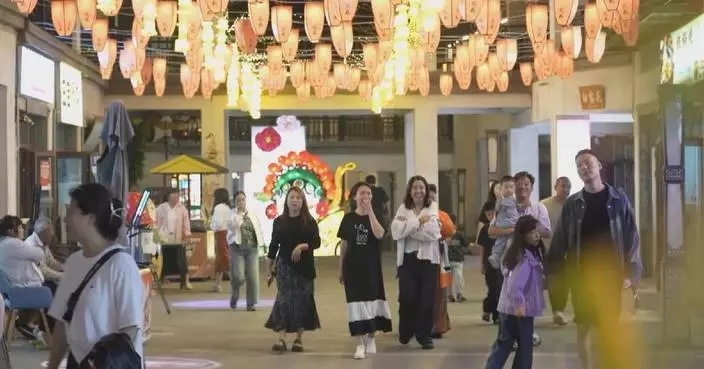
The seven-minute show staged in Wuhan, one of the four sub-venues for the 2025 Spring Festival Gala, portrayed the indomitable spirit of the city's people through a breathtaking array of performances, aiming to deeply resonate with audiences, according to the director of the Wuhan sub-venue.
The gala, hosted by the China Media Group (CMG), was broadcast live on the evening of Tuesday, the eve of the Chinese New Year.
In addition to the main stage in Beijing, the gala had sub-venues in Chongqing Municipality, Lhasa City in Xizang Autonomous Region, Wuhan City in Hubei Province, and Wuxi City in Jiangsu Province.
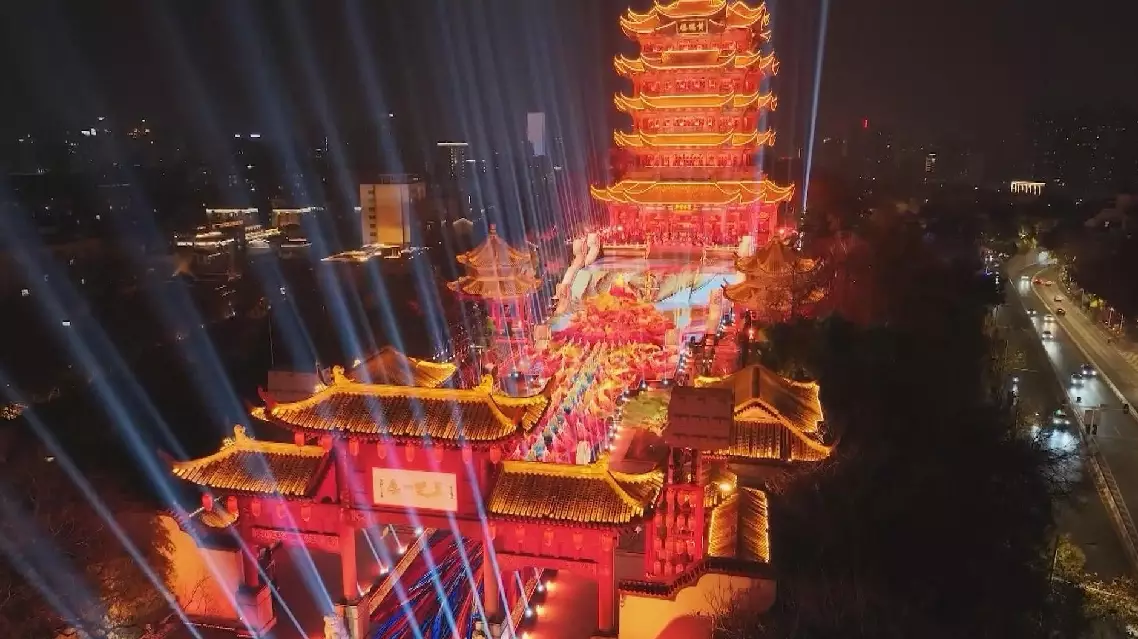
One of the most breathtaking scenes staged at the sub-venue in Wuhan was the "Phoenix Dance" performed in front of Wuhan's iconic Yellow Crane Tower, with a total of 241 dancers embodying the majestic posture of the mythical bird.
Leading the performance as the "head of the phoenix" was dancer Meng Qingyang, renowned for her role in the dance drama "A Tapestry of a Legendary Land."
Throughout the show, Meng donned a specially crafted costume weighing up to 10 kilograms, with a skirt train stretching six meters. Standing on a stage over six meters above the ground, she executed a series of intricate and graceful dance movements with precision and grace.
To enhance the visual impact, the performance incorporated advanced technology such as CG animation, showcasing a magnificent phoenix adorned in golden feathers as it gracefully ascended the Yellow Crane Tower and soared into the sky.
Moreover, the scenes featuring themes of family reunion, iconic moments and dialogues from popular movies, and local residents in Wuhan running at significant landmarks, were accompanied by heartfelt narrations and have profoundly resonated with audiences.
Throughout a month-long period, across 22 filming locations in Wuhan, students from 12 universities, over 2,000 professional actors representing 11 academic groups, and 12,000 extras collaborated to produce a magnificent seven-minute performance.
"I believe that the people of Wuhan embody a spirit of resilience and fearlessness in the face of hardship. They exemplify perseverance through challenges and the capacity to attain a happy life through their own endeavors in the modern era. The scenes transition from the hustle and bustle of daily life to the warmth of reunion, then to heightened emotions, and ultimately to emotional sublimation, encapsulating the spirit of the 'Nirvana of Phoenix,'" said Zhang Min, director of the Wuhan sub-venue.
The annual gala, also known as "Chunwan" in Chinese, was first broadcast in 1983 and is seen as a major cultural symbol for Spring Festival celebrations in China.
Recognized by the Guinness World Records as the world's most-watched annual TV program, the hours-long television extravaganza attracts over a billion views every year.
2025 Spring Festival Gala's Wuhan sub-venue exhibits Wuhan people's indomitable spirit: director
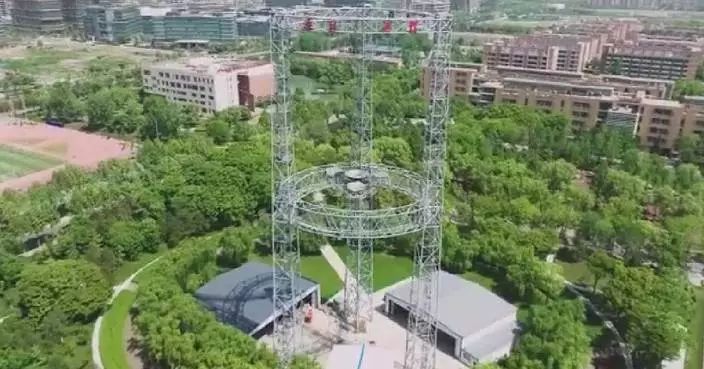
Major breakthroughs by Chinese scientists have laid the foundation for a future where space-based solar power stations are capable of wirelessly transmitting energy to Earth and spacecraft, though significant engineering problems remain.
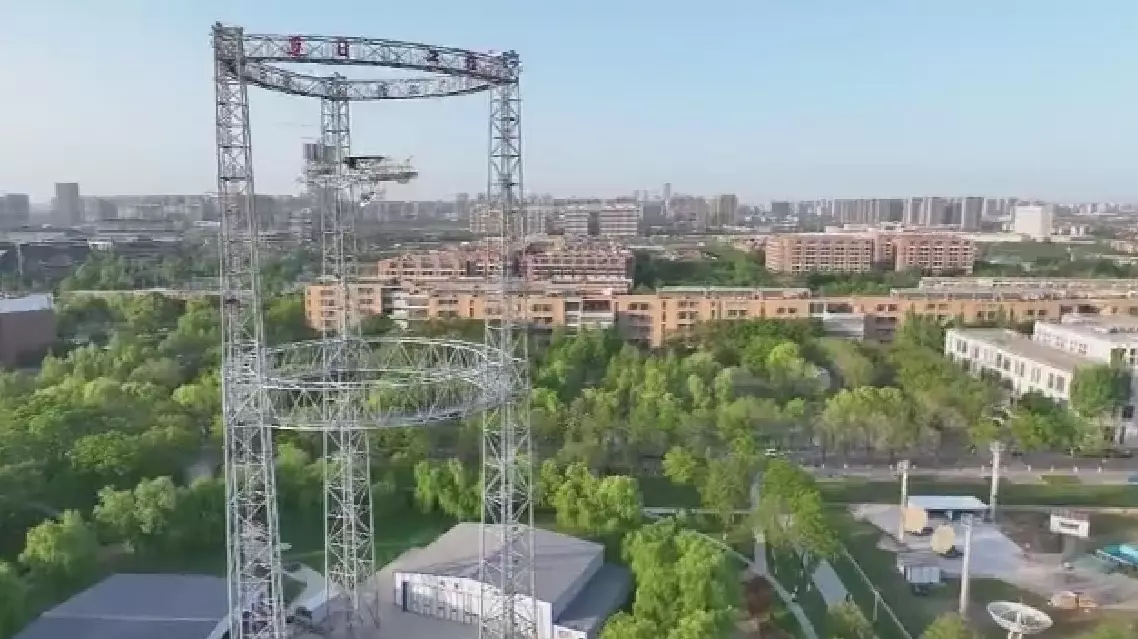
A research team from Xidian University in northwest China's Shaanxi Province has made significant progress on the Sun Chasing project, or "Zhuri" in Chinese. The team has developed a ground-based test system for wireless power transmission that can charge multiple moving targets at the same time.
In recent tests, the system achieved a wireless power transmission efficiency of 20.8 percent from direct current to direct current over a distance of 100 meters. It delivered 1,180 watts of power. The team has also built a wireless charging system for drones. In a test, a drone flying at 30 kilometers per hour was able to receive 143 watts of stable power from 30 meters away.
A space solar power station works exactly as its name suggests: a huge array of solar panels placed in orbit. It would collect sunlight in space, where the sun always shines, and then convert that energy into microwaves or lasers to beam down to Earth or directly to satellites and spacecraft. This could address two significant issues: supplying uninterrupted power for space missions and alleviating energy shortages on the ground.
"The construction of space solar power stations could become a major undertaking in the future. One potential benefit is access to a virtually unlimited power supply. Because energy can be collected continuously in space 24 hours a day, electricity could be supplied on an uninterrupted basis," said Fan Guanheng, an associate professor at the School of Mechano-Electronic Engineering at Xidian University.
"Secondly, it could reduce our dependence on fossil fuels, thereby lowering carbon emissions and helping protect the environment. Thirdly, it could support the development of charging infrastructure in space and enable wireless microwave charging for spacecraft, changing the way power is supplied to space vehicles," the professor added.
In 2018, the research team launched the first phase of the Sun Chasing project to build a ground test system. By June 2022, they had completed the world's first full-link, full-system ground validation system for a space solar power station. Now, the team has moved to phase two. The goal now is to solve the challenges of generating high power in space and transmitting it efficiently over long distances.
According to Duan Baoyan, an expert at Xidian University and an academician of the Chinese Academy of Engineering, recent breakthroughs include improving the efficiency of solar energy collection and conversion, increasing the precision of microwave beam control to reduce energy loss, and making the transmitting and receiving antennas smaller and lighter, which is critical for space application.
The team has also solved the problem of how to power multiple moving targets at once using a single transmitter. This means that in the future, one space power station could potentially supply electricity to several satellites or ground vehicles at the same time, Duan said.
Despite the advances in ground-based validation, a series of technical challenges must still be overcome before the technology can be deployed in space.
"The first issue that needs to be addressed is the adaptability of components to the space environment, as conditions in space are completely different from those on Earth, including radiation exposure and extreme temperatures. Another challenge involves the deployment and retraction design of transmitting and receiving antennas. We also need to develop thermal management systems to cope with extreme temperatures and temperature fluctuations in space. These are all areas where further breakthroughs are needed," said Qian Sihao, an associate professor at the School of Mechano-Electronic Engineering at Xidian University.
"We have now completed the development and validation of a ground-based test system, and our next step is to carry out in-orbit wireless microwave power transmission," Fan said.
With ground validation complete, the team now turns its attention to overcoming the harsh realities of space, aiming to demonstrate in-orbit wireless power transmission and bring the vision of orbital solar energy closer to reality.
Space-to-earth solar power moves closer to reality although hurdles remain: scientists