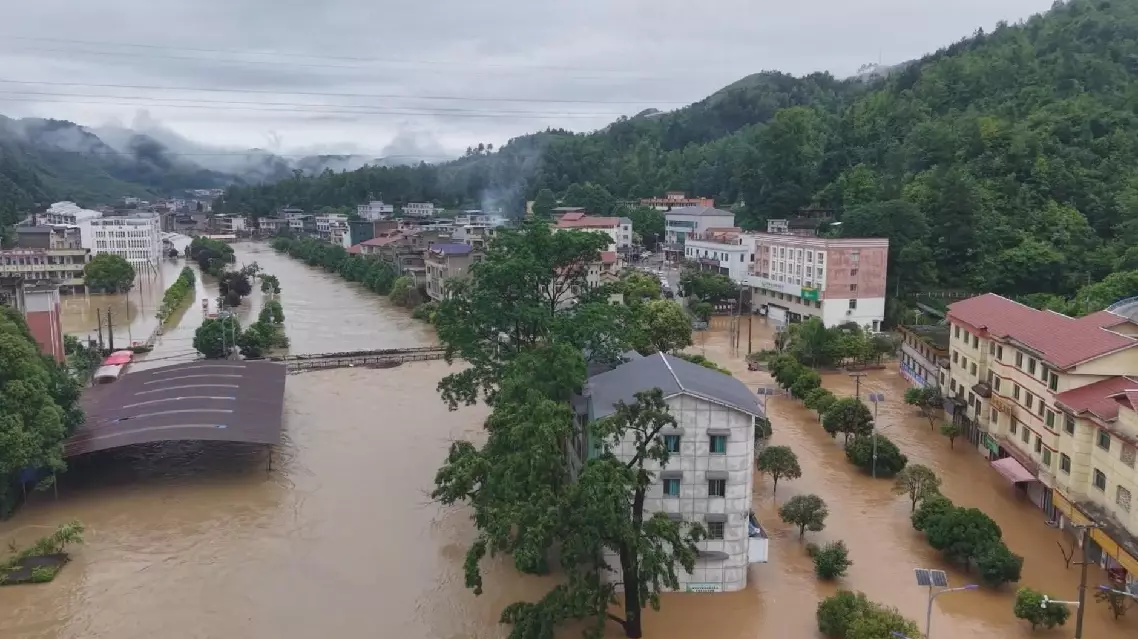
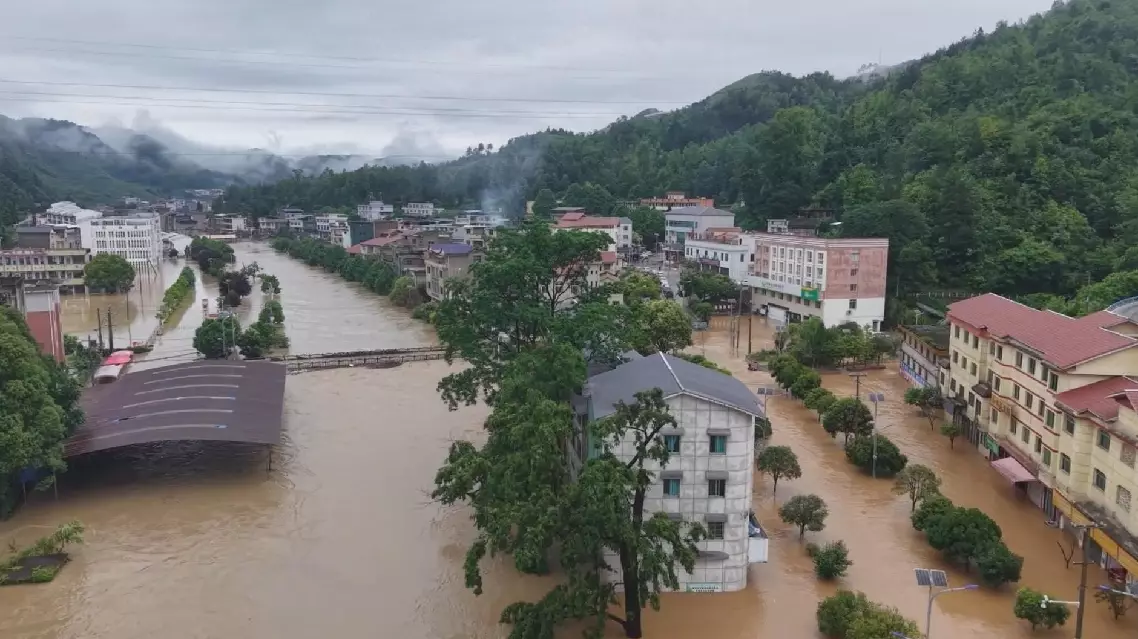
China's Ministry of Water Resources activated a Level-IV flood emergency response for six provincial-level regions Sunday.
The response was launched in Hunan, Guangdong, Guangxi, Chongqing, Sichuan and Guizhou.
The office of the State Flood Control and Drought Relief Headquarters on Sunday activated a Level-IV flood emergency response for south China's Guangxi Zhuang Autonomous Region, and sent a work team to southwest China's Chongqing Municipality to guide flood control work.
China has a four-tier emergency response system, with Level I being the most severe response.
From Sunday to Tuesday, heavy rainfall will sweep the six provincial-level regions, with parts of the areas expected to see extremely heavy rainstorms.
Water levels of multiple rivers across the regions are set to rise, with small and medium-sized rivers in rainstorm-hit areas at risk of floods exceeding warning levels. Hilly areas are also prone to mountain torrent disasters.
The ministry has issued notices to local water authorities and river basin management bodies to roll out targeted flood prevention arrangements.
China activates Level-IV flood emergency response for 6 provincial-level regions
China activates Level-IV flood emergency response for 6 provincial-level regions
Japan's ongoing push to revise its pacifist constitution and expand military buildup escalate regional tension, warned Japanese lawyer Kyoko Oe, who urged adherence to pacifism and vigilance against the government's dangerous moves.
Since Japanese Prime Minister Sanae Takaichi took office last October, the Japanese government has renewed its push to revise the country's pacifist constitution and accelerated a series of military expansion measures, including increasing defense spending, deploying long-range missiles, and easing restrictions on arms exports.
Speaking on the dangerous policy shifts, Oe criticized the Takaichi administration for bypassing public will.
"We believe that when Japanese citizens are not demanding constitutional reform, pushing it forward through a parliamentary majority clearly violates the principle of popular sovereignty and the obligation to respect the constitution. Moreover, the content of the revision itself is extremely dangerous. [The government] is attempting to change pacifist principles of the Japanese constitution -- the most fundamental part -- and abandon basic concepts, including the renunciation of war and not maintaining military forces," said Oe.
The Japanese government has aggressively accelerated war readiness even under the current constitution, said Oe, adding that amending it will grant the Self-Defense Forces even greater freedom of action at the constitutional level.
"If the constitution is amended, the Self-Defense Forces will gain greater freedom of action at the constitutional level than they have now, and legal interpretations will develop in that direction. Even while the current constitution remains effective, the Japanese government has already forcibly advanced war preparations. For example, manufacturing long-range missiles, which were previously considered unacceptable to possess, and deploying them domestically; conducting joint war games and military exercises with the United States; and massively manufacturing and exporting weapons overseas," said Oe.
The lawyer also criticized Takaichi's provocative remarks on China, saying they have sharply strained bilateral ties and undermined peace and stability in the region.
"We believe that due to Takaichi's remarks made last November, China-Japan relations have become very tense and are deteriorating. Legal experts believe that Takaichi's remarks contain multiple obvious errors. Takaichi should frankly retract the relevant remarks and apologize. Only by building mutual trust with neighboring countries can we maintain our peace, and the peace of East Asia and even the peace of Asia. We believe that what the Takaichi administration is doing runs completely counter to what the Japanese people truly wish to achieve," Oe said.
Japan's constitution revision, military buildup fuel regional tensions: lawyer