Skip to Content Facebook Feature Image

Cross-promotion initiative boosts box office, catering during Spring Festival

China

China

China

Cross-promotion initiative boosts box office, catering during Spring Festival

2025-01-31 18:23 Last Updated At:18:37

China is seeing a surge in box office revenue during the ongoing 2025 Spring Festival holiday, fueled by an innovative of "Movies and Meals" cross-promotion that is drawing significant foot traffic to both cinemas and restaurants nationwide.

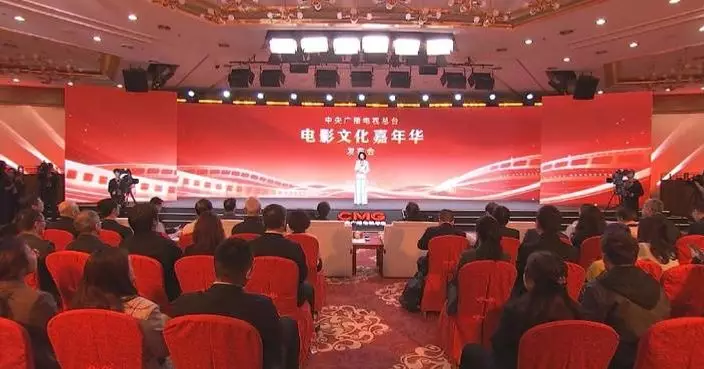
The initiative, jointly launched by the China Film Administration (CFA) and the Ministry of Commerce on January 20, encourages collaboration between the film and dining industries, offering a range of discounts and incentives to consumers.

The annual Spring Festival holiday is one of China's most lucrative movie-going seasons, and this year's Spring Festival holiday season runs from Jan. 28 to Feb. 4, one day longer than previous years.

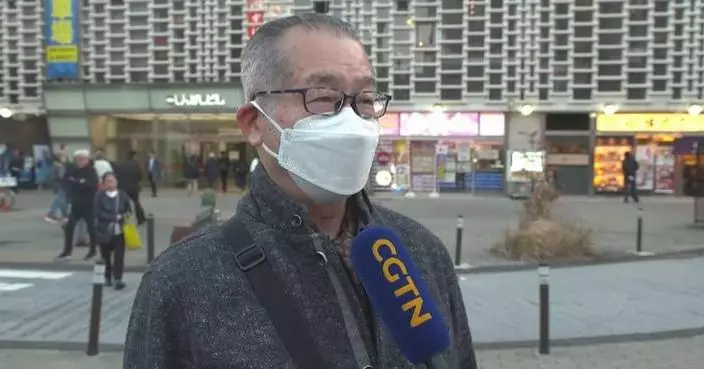
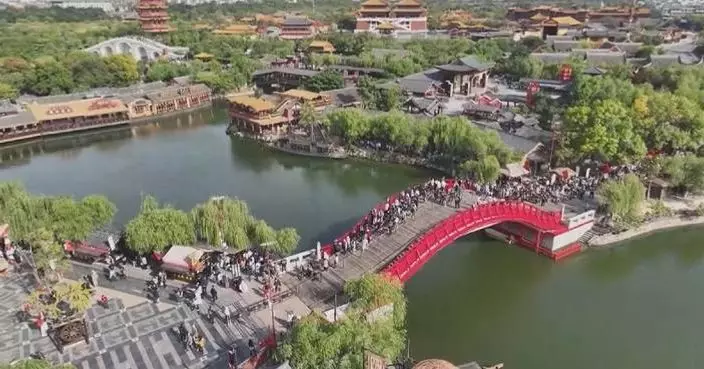
During the holiday, tourist Li Sisi and her family members from north China's Shanxi Province visited Nanjing, capital city of east China's Jiangsu Province, where they enjoyed authentic local cuisine and were thrilled to win a movie ticket valued at over 100 yuan (about 14 U.S. dollars) to see Chinese live-action, fantasy epic film "Creation of the Gods II: Demon Force".

"The movie we most want to see during the Spring Festival is 'Creation of the Gods II: Demon Force.' We rewatched the 'Creation of the Gods I: Kingdom of Storms' before coming, so winning movie tickets is an additional delightful surprise. We are very happy," Li said.

While Li's family delighted in a feast accompanied by a free movie ticket, local resident Zhu Jingjing and her family members enjoyed a different experience. Using their movie ticket stubs, they were able to redeem complimentary signature dishes at the dining outlets located in the same mall as the cinema.

This reciprocal arrangement benefits both participating businesses. Cinemas attract larger audiences, while restaurants see a surge in customers.

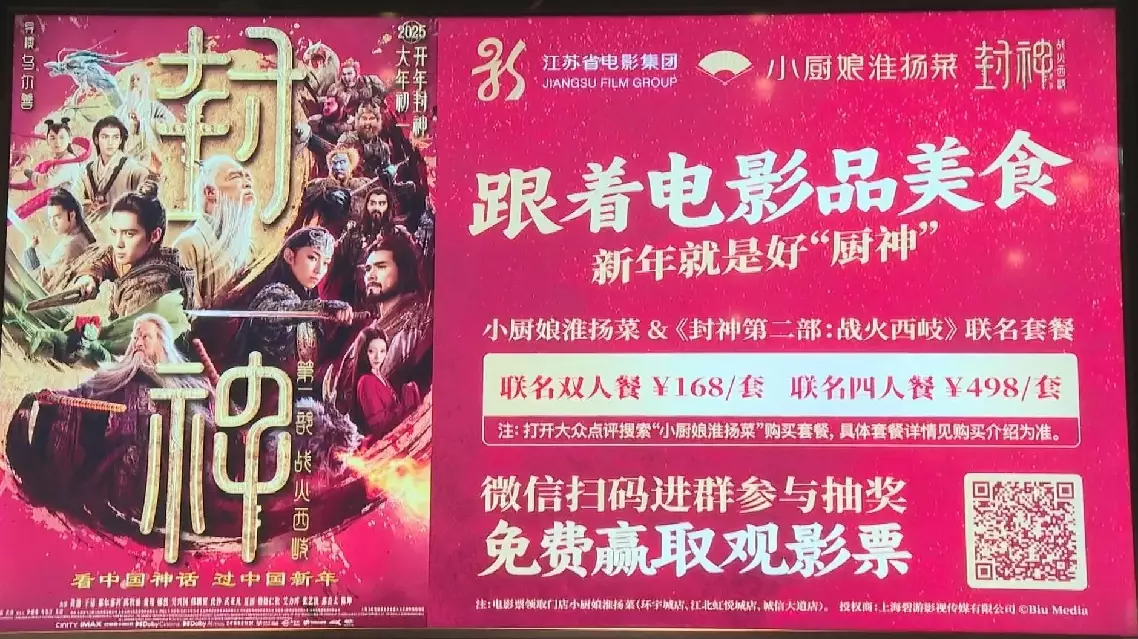
The "Movies and Meals" campaign has proven particularly effective for restaurant chains, many of which partnered with the producers of "'Creation of the Gods II: Demon Force" and local cinemas to offer themed meal deals.

Dai Jiahua, manager of a Jiangsu-based restaurant chain, reported positive results from their first film-themed promotion.

"In our first-ever movie collaboration, we introduced the 'Creation of the Gods' themed set meals for two and four diners, priced at 168 and 498 yuan (23 and 69 U.S. dollars) respectively, offering great value. On the first day of the Chinese New Year (Wednesday), we sold around 500 orders. The overall sales increased by 10 percent compared to the same period last year. This partnership between dining and movies watching has been very effective, and I hope for more collaborations in the future," Dai said.

The collaboration extends further, with some cinemas and popular hotels offering combined accommodation and movie packages during the holiday.

"When guests check in at the hotel, they will receive movie exchange vouchers. They can redeem these at the cinema for movie tickets and select their preferred showtimes and seats. We exchanged about 40 tickets on the first day of the New Year," said Li Chao, manager of a cinema in Nanjing.

Since December last year, the CFA has encouraged relevant institutions to allocate approximately 600 million yuan (82.7 million U.S. dollars) in movie-going consumption subsidies -- a move analysts say is aimed at unlocking the full consumption potential of moviegoers.

Kaiyuan Securities predicts that total box office takings will see a 6.7-percent year-on-year increase to reach 8.54 billion yuan (1.18 billion U.S. dollars) during the 2025 Spring Festival holiday.
Cross-promotion initiative boosts box office, catering during Spring Festival

Cross-promotion initiative boosts box office, catering during Spring Festival
South China's Guangdong Province is accelerating its transformation into an international medical tourism hub, positioning itself as a destination for patients worldwide seeking affordable, high-quality care.

The push follows a joint initiative announced in late March by nine Chinese government departments, including the Ministry of Commerce, aimed at boosting spending by foreign tourists and enhancing exports of tourism services as part of broader efforts to expand the country's service sector.

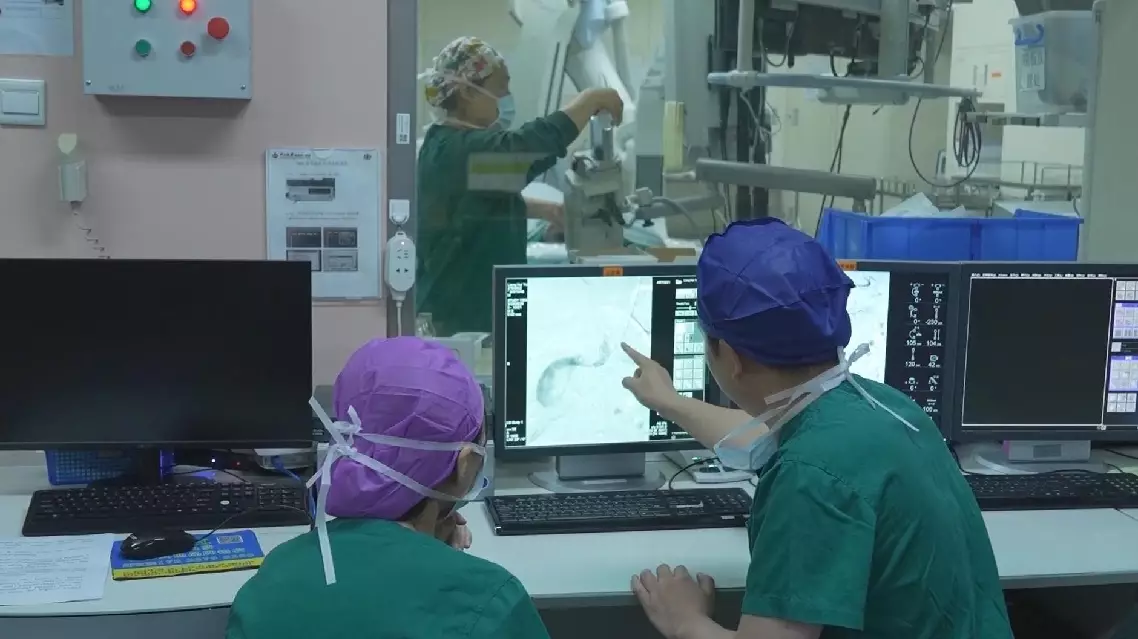
Every day, some of the most complex surgeries are performed here. Li Zilun, deputy director of the division of vascular surgery at the First Affiliated Hospital of Sun Yat‑sen University, is among the doctors capable of carrying out these intricate procedures.

He recently completed surgery on a patient with an aortic aneurysm, a condition often described as a "time bomb" in the body’s main artery, increasingly common in aging societies around the globe. Li also specializes in highly difficult and pioneering procedures, including repairing leaks caused by failed grafts.

"This was a very challenging case. And then, we implanted the covered stent to eliminate the endoleak. Actually, the outcome was pretty good. The patient will be discharged today," said Li Zilun.

The ability to handle such complex cases -- combining international techniques with domestically produced devices -- is drawing patients from around the world to seek treatment. In addition, high safety standards and low costs are also major draws.

"Our government is encouraging innovation. So, lots of physicians -- including our vascular surgeons -- we are actively involved in the innovation that helps to increase the effectiveness and safety, and also bring down the cost," said Li.

This hospital is one of the first in Guangdong to be designated by the provincial health commission as a pilot site for building an international medical service hub.

The growing number of patients has pushed the hospital to explore new ways to transform every step -- from treatment to payment and everything in between -- into a seamless experience, reducing waiting times and delivering better care for patients.

"I think it's fast. When the patient come here for just about, I think, one week, you can solve the problem," said Xiao Haipeng, president of the First Affiliated Hospital of Sun Yat-sen University.

The hospital is also deepening its international cooperation with top-tier medical institutions, including those at Harvard University.

"Not just for China, for the whole globe, we are facing health care challenges -- emerging infectious disease and chronic, lung infectious diseases, and also the aging population, also the shortage of healthcare workforce," said Xiao.

In response to these challenges, China is promoting its own solutions, including aggressive innovation in artificial intelligence (AI)-driven workflows, while stepping up research and development investment and global engagement along the way.

"In recent years, the innovation in Western medicine is dramatically growing. An example of my hospital -- in the past few years, we have 140 innovations and seven of them are international leading innovations," said Xiao.

As global demand for medical tourism grows, China is positioning itself as a new destination. Official data shows that the number of foreign patients in Guangdong increased by 20 percent last year. Among them, the growth in inpatient admissions was even faster, rising by 76 percent.

Guangdong fast-tracks pilot for int'l medical service hub

Guangdong fast-tracks pilot for int'l medical service hub

Recommended Articles