Skip to Content Facebook Feature Image

Argentina's economy poised for growth with promising outlook for 2025

China

China

China

Argentina's economy poised for growth with promising outlook for 2025

2025-01-31 19:15 Last Updated At:20:57

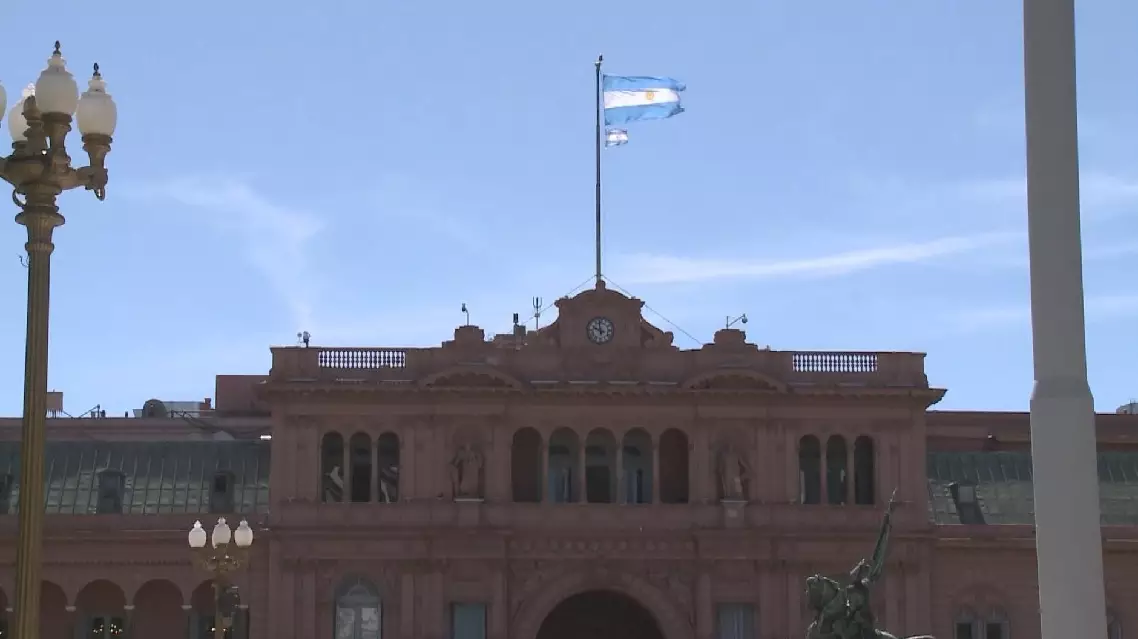
Following two years of recession, Argentina's economy is projected to grow by approximately 5 percent this year as financial markets in the country are responding positively to President Javier Milei's reforms.

There are high expectations that the Argentine economy will rebound this year, after contracting by nearly 3 percent in 2024. The country's stock exchange is still celebrating last year's performance.

"At least from the market's point of view, you have something that is very objective. That is the prices. Hard dollar sovereign bonds went from 20 cents to 70 cents in a year. So, that was crazy, a more than 120-percent increase in our index prices. So, performance has been really good," Gonzalo Pascual Merlo, CEO of BYMA Stock Exchange, said in an interview with China Global Television Network (CGTN).

Milei, a right-wing libertarian who took office in 2023, promised what he called economic "shock therapy" to combat Argentina's rampant inflation, including measures such as devaluing the currency peso, reducing government personnel and cutting fiscal expenditure.

Markets have welcomed the economic policies of the president.

"They are doing the proper homework, you know, good fiscal policy, monetary order. Then things start getting together and a very happy and positive cycle starts," Merlo said.

Milei government's symbolic "chainsaw" plan pointed to a series of achievements in 2024, including the first fiscal surplus in 14 years and significant declines in monthly inflation rate from 25.5 percent in December 2023.

"The federal government did a fiscal cut of five points of GDP, this is a huge amount. The poverty rate increased by eight points in the first semester of last year, just because of the economic adjustment. But then it has also very important and positive effect on inflation, which was reduced significantly," said Martin Rapetti, executive director of Buenos Aires-based consultancy Equilibra.

Experts say Milei still faces a series of challenges for his economic reforms to be considered a success, given the slowed but still high inflation, which ended the year at 117 percent, the increase in poverty, slumped manufacturing and industrial sectors as well as other unresolved social issues.

"The main risk I think, I see is that the exchange rate, the peso is probably overvalued. When the peso is overvalued in Argentina, at some point, there might be a correction of that, which means a depreciation of the peso, which could be soft or abrupt. In Argentina, typically is the second," Rapetti said.

Argentina has been negotiating with the International Monetary Fund (IMF) for a new 11-billion-U.S.-dollar loan, as part of the government's ongoing efforts to stabilize its economy and address financial challenges.
Argentina's economy poised for growth with promising outlook for 2025
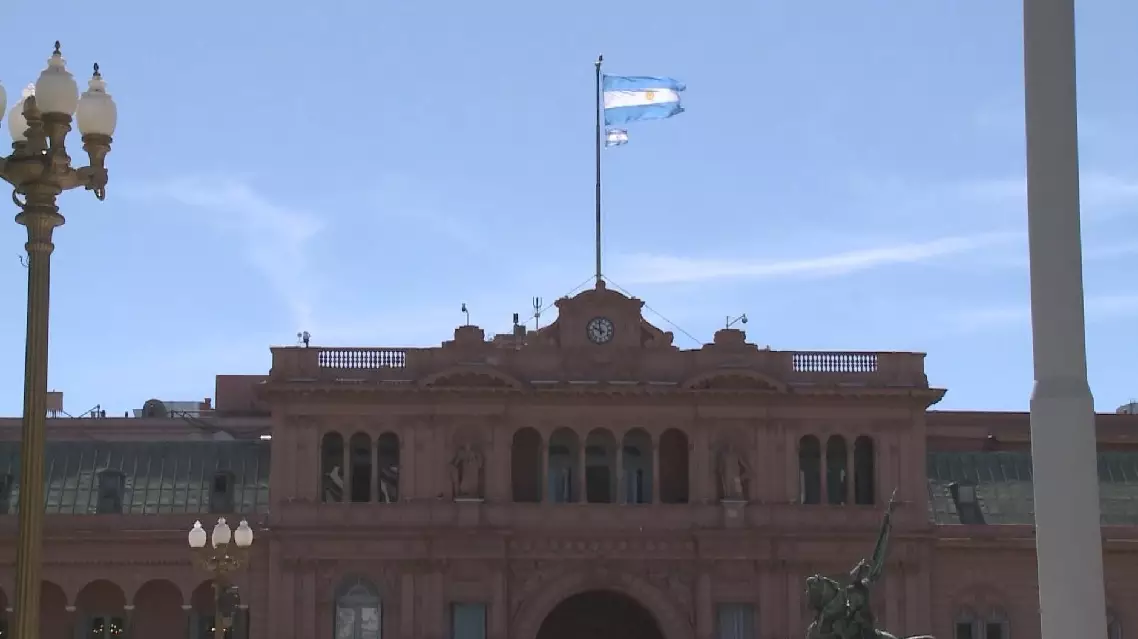
Argentina's economy poised for growth with promising outlook for 2025
Argentina's economy poised for growth with promising outlook for 2025
Argentina's economy poised for growth with promising outlook for 2025
The Iranian government is focusing on public concerns and maintaining stable supplies of essential goods amid recent protests, Iranian President Masoud Pezeshkian said in a televised interview on Sunday.

In the city of Karaj, northwest of the capital Tehran, daily life has largely continued as normal. A video filmed by a local resident on Sunday shows food stores open and grocery shelves fully stocked.

"This is the block near my home, and there are some food stores here. Daily life continues here. Last night we did not see many protests in Karaj. Right now the city is very safe. This is a grocery store close to my home. All the food is available; nothing is in shortage. Here are noodles and different types of beans. Here are dairy products, cheese, and yogurt. I also checked other grocery stores and didn't see any shortages. Everything is available," said local resident Ali Reza.

Iranian officials have described recent disturbances as acts orchestrated by the "enemy," including some carried out by well-trained and armed "terrorists." The incidents have caused casualties among security personnel and civilians, as well as property damage.

The Secretary of Iran's Supreme National Security Council Ali Larijani has directed authorities to severely punish the "terrorists."

Meanwhile, Iran's police chief Ahmad-Reza Radan said on Sunday that the police had raised alert levels and arrested several leaders of the troublemakers during the operations on Saturday.

President Pezeshkian noted in the interview that the normal demands of the Iranian people are reasonable and justified, but they must realize that triggering riots and carrying out terrorist acts are the enemy's attempts to undermine the country. He urged the public to remain vigilant.

Also on Sunday, Iranian Parliament Speaker Mohammad Baqer Qalibaf warned that Tehran would regard U.S. and Israeli bases and facilities in the Middle East as "legitimate targets" if Washington takes military action against Iran. His remarks followed media reports saying U.S. President Donald Trump is "seriously considering authorizing a strike" against Iran.

Iranian state media reported that at least 109 members of Iran's security forces have been killed in clashes since the protests began 14 days ago. Meanwhile, human rights groups based outside the country said the number of protesters killed has exceeded 200, though the figure could not be independently verified.

The protests initially erupted over a sharp depreciation of the rial and sweeping subsidy reforms. Iranian authorities have blamed the unrest on foreign-linked agents and sanctions imposed by the United States.

Iranian president says government focusing on ensuring supplies amid protests

Iranian president says government focusing on ensuring supplies amid protests

Recommended Articles