The Zhuhai port of the Hong Kong-Zhuhai-Macao Bridge on Friday handled 156,000 inbound and outbound passenger trips, marking the highest single-day traffic volume since the bridge's opening in 2018, as Spring Festival travel peaks.
A variety of cultural activities in south China's Guangdong Province during the Spring Festival holiday, such as intangible cultural heritage exhibitions and street performances, have attracted large numbers of visitors from China's special administrative regions of Hong Kong and Macao.
"I came from Hong Kong to visit friends and relatives. I'll stay for two to three days, bringing my child for a visit," said Mr. Lee, a Hong Kong resident.
"We come from Hong Kong and are heading to Zhuhai. After a meal there, we'll go to Zhongshan to see the fireworks. We want to experience the different atmosphere between Chinese mainland and Hong Kong," said Miss Chan, another Hong Kong resident.
The 55-km Hong Kong-Zhuhai-Macao Bridge has become a key crossing point for Hong Kong and Macao residents traveling to Chinese mainland thanks to its convenient location.
From Tuesday to Friday, the first four days of this year's eight-day Spring Festival holiday, over 454,000 passenger trips and over 69,000 vehicle trips were recorded through the bridge's Zhuhai port, a 22 percent and 32 percent increase, respectively, compared with the same period last year.
To handle the surge, the bridge's border control stations have taken various measures to optimize the customs process.
"We have increased manpower, and set up additional check-in spots. We've also offered 'drive-through' inspections for those in need to maximize passage efficiency," said Wang Yixuan, a spokeswoman for the bridge's border inspection station.

Hong Kong-Zhuhai-Macao Bridge sees record daily passenger trips
Commemorations honoring Chinese People's Volunteers (CPV) martyrs were held on the banks of the Yalu River in Dandong, Liaoning Province on Tuesday as part of ongoing tributes to those who fought in the War to Resist U.S. Aggression and Aid Korea (1950-1953).
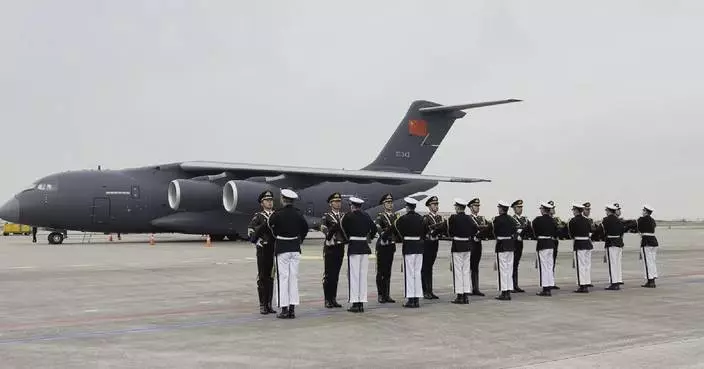
The event was held to mark the return of the remains of 12 CPV martyrs, who were killed in the war, from the Republic of Korea (ROK) on Wednesday.
This will be the 13th such repatriation of CPV remains following the handover agreement between the two countries. Since 2014, the remains of 1,011 soldiers have been returned to China from the ROK, according to China's Ministry of Veterans Affairs.
More than 170 representatives, including veteran CPV soldiers, relatives of the martyrs, active-duty personnel, students, and other from various sectors of society, attended the event.
People boarded a ferry which slowly sailed down the Yalu River. Inside the cabin, all present stood in solemn silence as the national anthem of the People's Republic of China was played, and observed a moment of silence in honor of the CPV martyrs.
Then, they walked to the ship's railings one by one and scattered flower petals into the river to pay tribute to the martyrs.
"We, the CPV, went abroad to fight to defend our motherland, the people, and our good life and to resist U.S. imperialist aggression against the Democratic People's Republic of Korea (DPRK). I hope that our young comrades and students today will study hard and make contributions to our motherland," said Hu Changzhe, a CPV veteran.
"I feel deeply moved as these veteran soldiers are heroes who once fought for our country. Now, standing by the Yalu River, looking back on their past and remembering their comrades, they must be deeply touched," said Hong Jialu, a student at a branch of Liaoning Province Shiyan High School.
At the event, 10 student representatives from primary and middle schools read aloud a letter to express their reverence and remembrance for the heroic martyrs through their sincere words and heartfelt recitation.
The Korean War broke out in June 1950, eight months after the People's Republic of China was founded. At the request of the Democratic People's Republic of Korea (DPRK), China sent 2.9 million CPV soldiers to assist the DPRK during the war, of whom more than 360,000 were killed or injured.
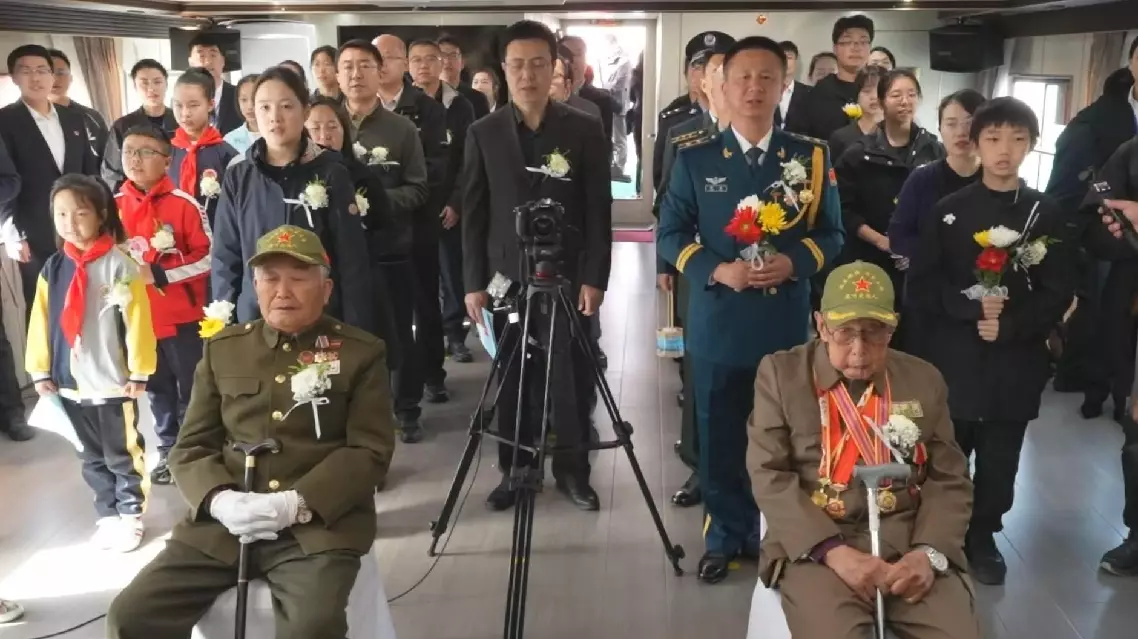
Commemorations held to pay tribute to CPV heroes in northeast China