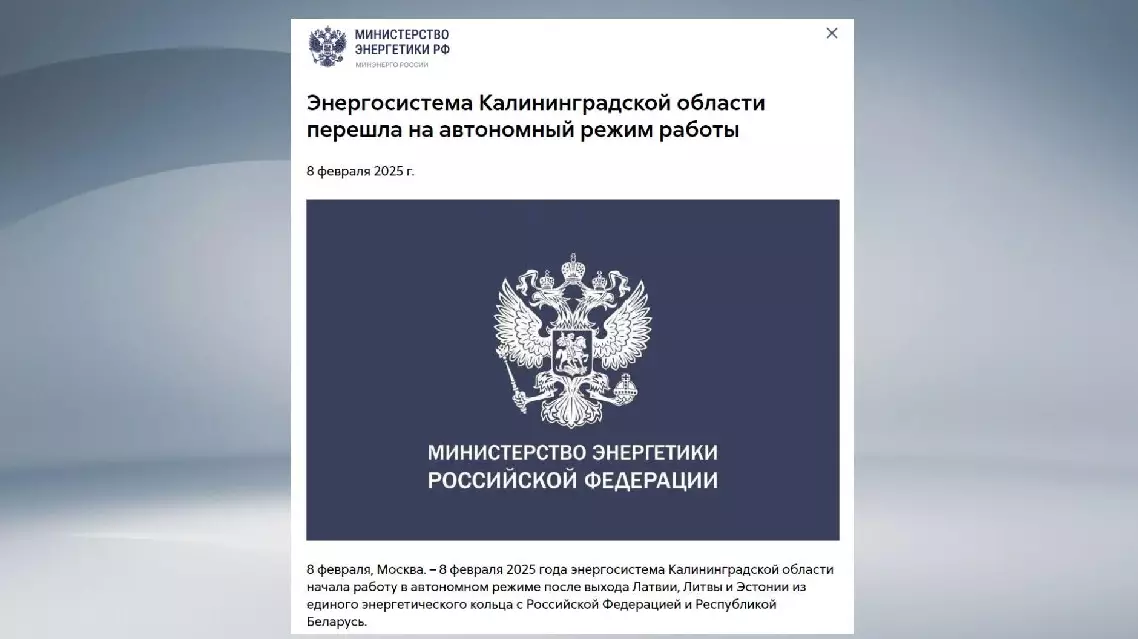
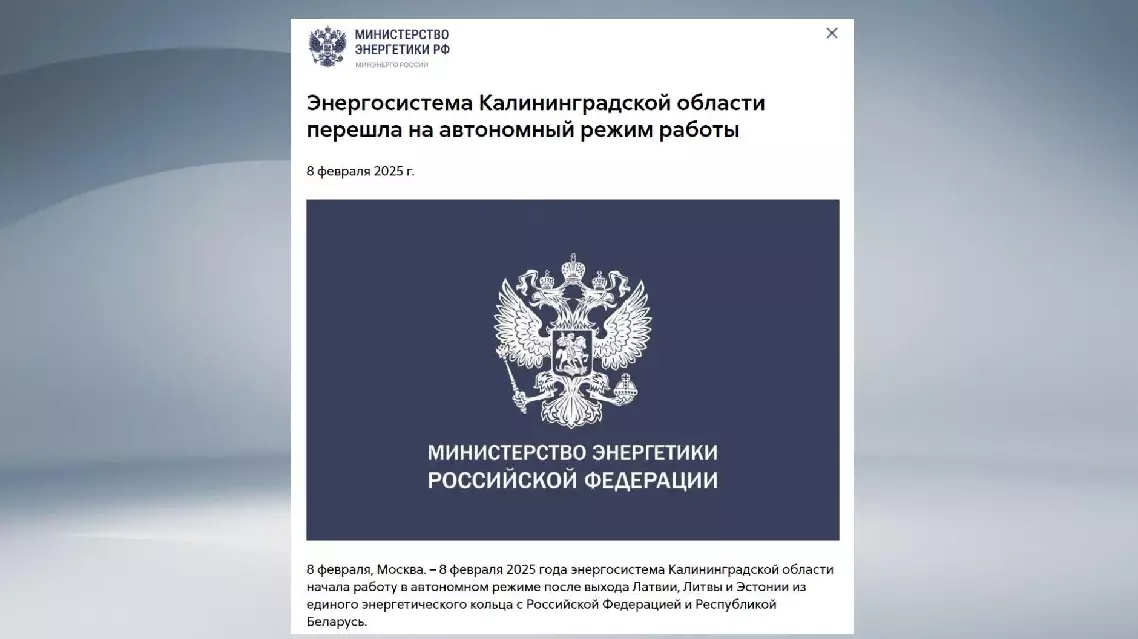
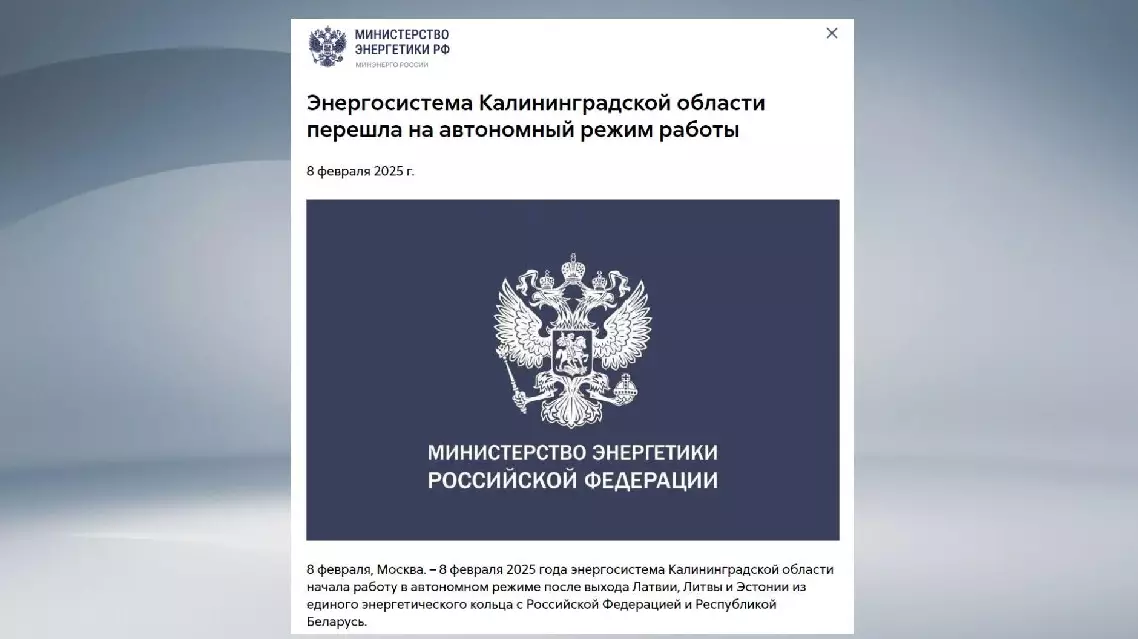
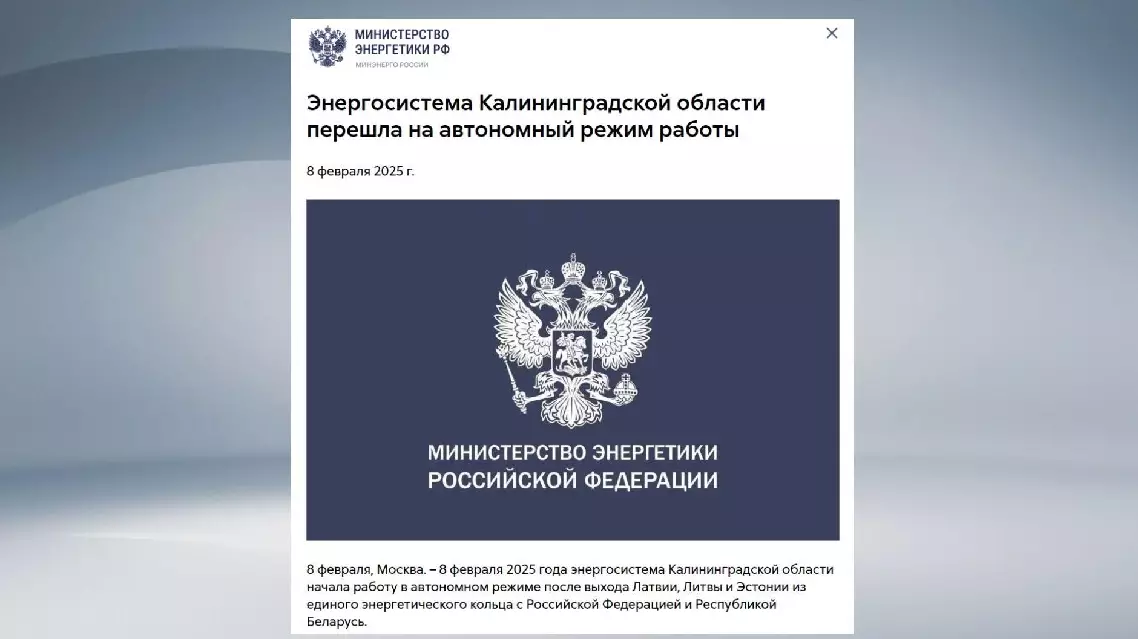
Ministry of Energy of the Russian Federation on Saturday announced that three Baltic countries: Latvia, Lithuania, and Estonia, have officially disconnected from the shared power grid system with Russia and Belarus.
The Kaliningrad Region of Russia has now switched to an autonomous energy operation mode.
Click to Gallery
Baltic states disconnect from Russian power grid
Baltic states disconnect from Russian power grid
Baltic states disconnect from Russian power grid
Baltic states disconnect from Russian power grid
Currently, the total installed capacity of power plants in Kaliningrad has reached 1.88 GW, more than twice the region's peak electricity demand, which is capable of ensuring a stable power supply for residents under any circumstances.
In 2018, the three Baltic states, Poland, and the European Commission signed a political agreement in Brussels, Belgium to synchronize the Baltic states' electricity networks with the European continent grid.
The agreement aimed to fully disconnect the Baltic nations from the BRELL network (Belarus, Russia, Estonia, Latvia, Lithuania) by 2025 and integrate them into the European Union energy market, achieving the goal of "energy independence from Russia."
As planned, the Baltic states will join the European continent electricity grid system on Sunday, marking the start of synchronized operations.
Baltic states disconnect from Russian power grid
Baltic states disconnect from Russian power grid
Baltic states disconnect from Russian power grid
Baltic states disconnect from Russian power grid
China released the outline of its 15th Five-Year Plan on Friday, highlighting digital intelligence development and high-quality population development as vital drivers of economic and social progress.
Including dedicated sections on the two themes, the plan calls for greater efforts to facilitate AI applications and establish life cycle care to safeguard the people's right to development.
Compared with the 14th Five-Year Plan, which focused on accelerating digitalization, the new concept of "digital intelligence development" places greater emphasis on the integration of artificial intelligence with the real economy, according to a macro economy expert.
"While the previous five-year plan caught the wave of digitalization, the new plan is embracing a new wave. As we all know, the new round of science and technology revolution, featuring the rapid development of AI, is thriving. The 15th five-year plan elaborates in a separate chapter how China can respond to the new trend of science and technology and industrial development. Compared with the previous plan, which emphasized 'digital economy,' the new plan highlights 'new intelligent economic forms,' which requires AI to be integrated into all aspects of economic development and to better empower growth. This will be an important direction for the future," said Dong Yu, Executive Deputy Director of the China Institute for Development Planning at Tsinghua University.
The plan also places new emphasis on high-quality population development, dedicating a separate section to supporting policies throughout the life cycle of its citizens based on China's long-term demographic trends.
"The role of human factors in China's development is becoming increasingly prominent. Economic work now places greater emphasis on combining investment in physical assets with investment in people. By dedicating a separate chapter to population issues, the plan is not focusing solely on birth rates. More importantly, it aims to build a full-chain support system covering needs from birth to growth to elderly care. The tasks laid out in the plan will match these needs, ensuring that the principle of putting people first is reflected across every stage of human development," said Dong.
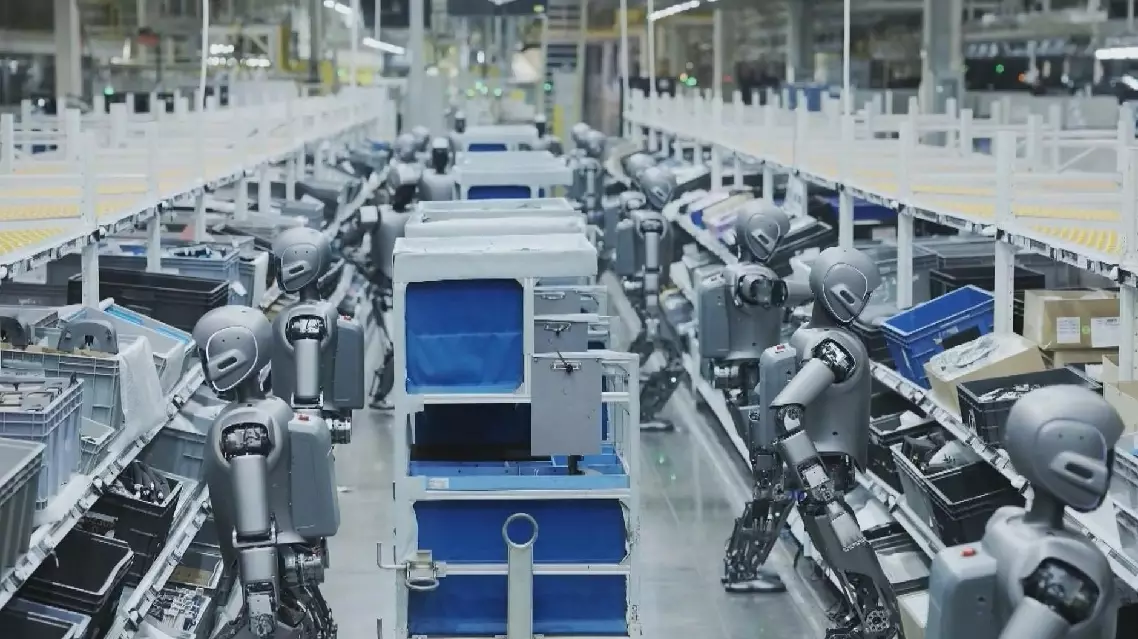
China’s 15th five-year plan underscores digital intelligence, high-quality population development