Chinese automakers Dongfeng Automobile and Changan Automobile announced on Sunday night restructuring plans of their controlling shareholders, both of which are centrally administered state-owned enterprises (SOEs).
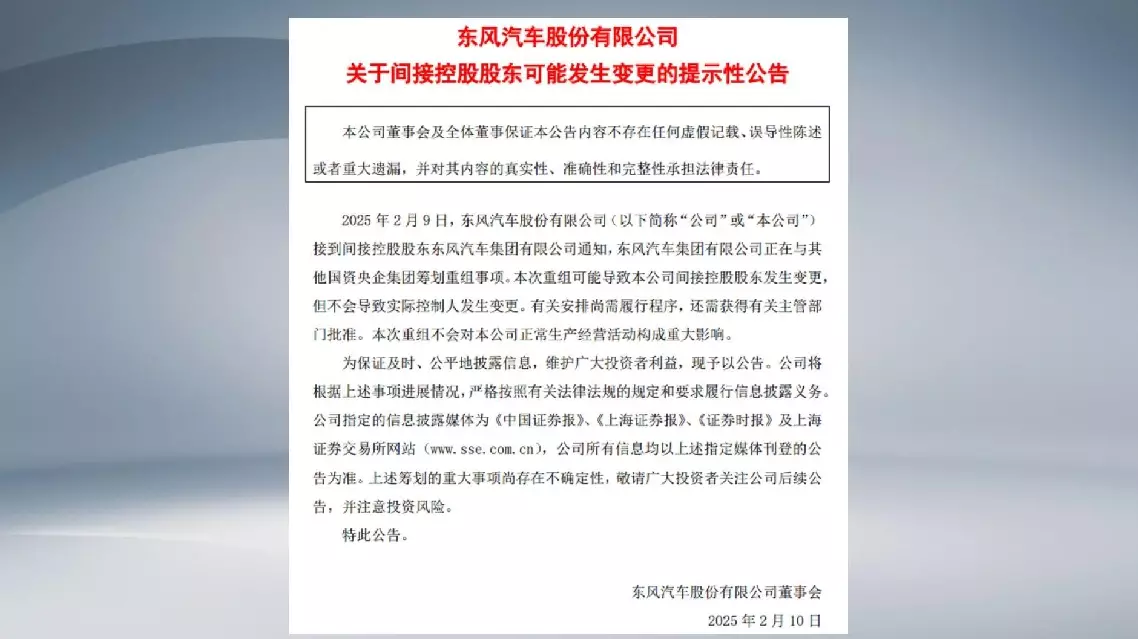
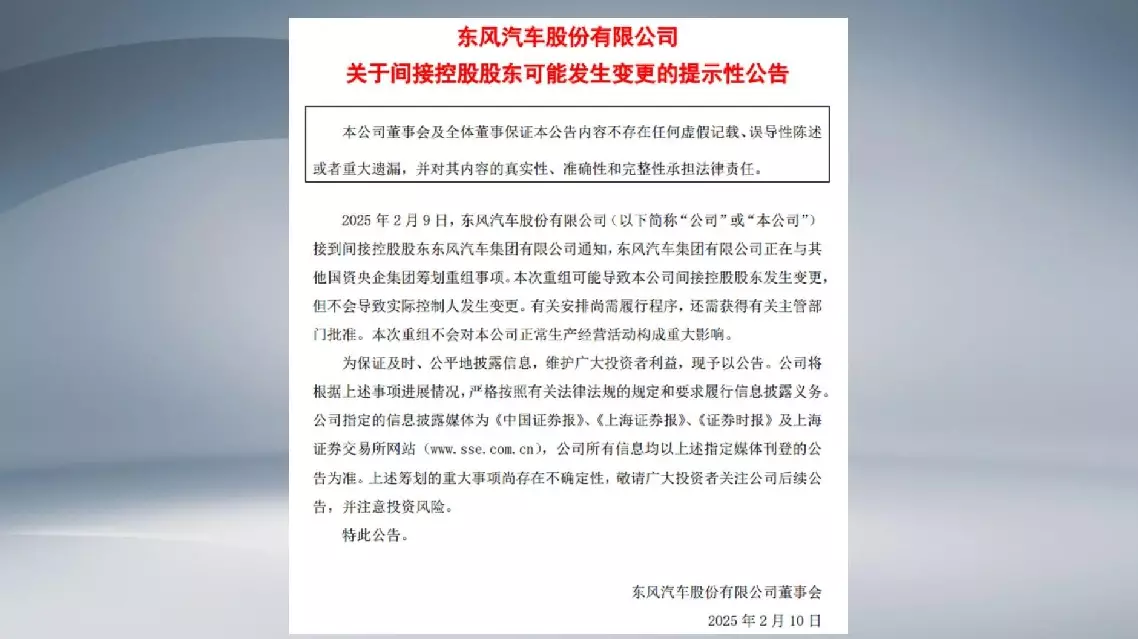
Dongfeng Automobile said in a filing that its indirect controlling shareholder Dongfeng Motor Corp is planning a restructuring with other central SOEs, which could result in a change in its indirect controlling shareholder, without affecting its actual controller.
Click to Gallery
Chinese carmakers Dongfeng, Changan announce restructuring plans
Chinese carmakers Dongfeng, Changan announce restructuring plans
Chinese carmakers Dongfeng, Changan announce restructuring plans
Chinese carmakers Dongfeng, Changan announce restructuring plans
On the same day, Changan Automobile issued a similar announcement regarding its indirect controlling shareholder China South Industries Group's restructuring plan.
Currently, the State-owned Assets Supervision and Administration Commission (SASAC) of the State Council directly supervises three centrally administered automotive enterprises - FAW Group, Dongfeng Motor Corp and Changan Automobile.
In the past two years, the three automotive enterprises have accelerated their transition to new energy, investing nearly 36 billion yuan (about 4.9 billion U.S. dollars) in new energy vehicles (NEVs) in 2023, with the investment proportion exceeding 60 percent.
Since 2024, the SASAC has frequently signaled its intent to accelerate the development of NEVs, offering support in areas such as assessment, innovation and industry integration.
Dongfeng Motor, based in central China's Hubei Province, reported vehicle sales of 2.48 million units in 2024, reflecting a 2.5 percent year-on-year increase, according to information released by the SASAC.
Meanwhile, Changan Automobile, headquartered in southwest China's Chongqing Municipality, achieved total sales of 2.68 million vehicles last year, marking a 5.1 percent growth compared to the previous year. Notably, the company's NEV sales surpassed 734,000 units, representing a 52.8 percent year-on-year surge.
Chinese carmakers Dongfeng, Changan announce restructuring plans
Chinese carmakers Dongfeng, Changan announce restructuring plans
Chinese carmakers Dongfeng, Changan announce restructuring plans
Chinese carmakers Dongfeng, Changan announce restructuring plans
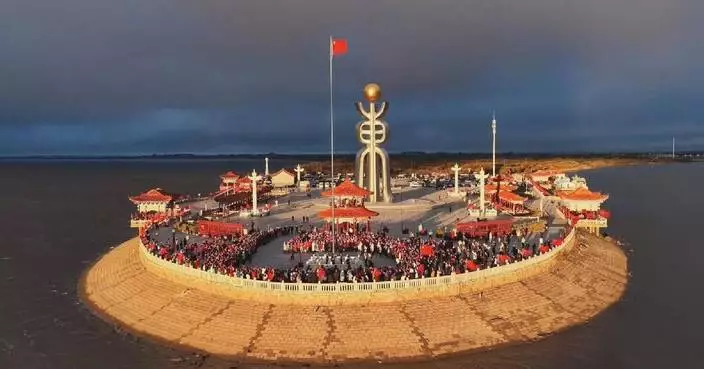
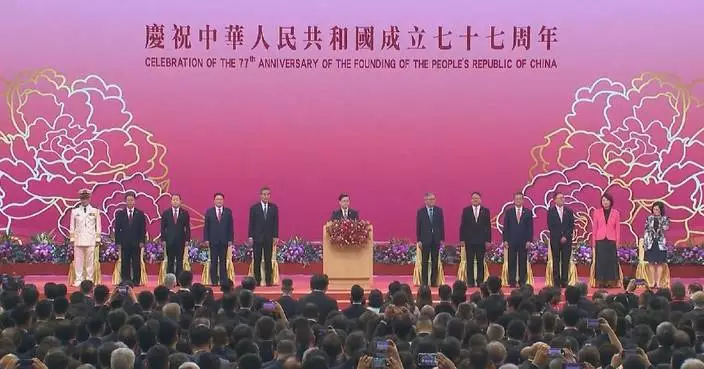
China's Macao Special Administrative Region (SAR) held a flag-raising ceremony at the Golden Lotus Square on Thursday morning to mark the 77th anniversary of the founding of the People's Republic of China.
At 08:00, a flag-bearing contingent composed of members of the Police Tactical Intervention Unit, a subordinate of the Public Security Forces Affairs Bureau of Macao, escorted the national flag and the Macao SAR flag into the square in a Chinese-style marching step.
This marks the first time members of the Public Security Forces Affairs Bureau have participated in a flag-raising ceremony using Chinese-style drill formations. To match the style, the contingent members wore brand-new uniforms and were equipped with brand-new gear.
Macao SAR Chief Executive Sam Hou Fai attended the ceremony, along with heads of central government agencies in Macao and representatives of people from all walks of life in the region.
Young representatives from Macao who had previously traveled to Beijing to participate in the "Salute to the National Flag" event also attended the ceremony.
"As a youth from Macao, I feel particularly honored and proud to be able to participate in this flag-raising ceremony. After watching the ceremony, I feel extremely moved and excited," said Tai U Fei, a student from the Macao SAR.
"This is the first time this year to witness the change from the Portuguese-style to the Chinese-style drill formations. I had seen their training before, and this time I was able to witness this historic moment with my own eyes at the Golden Lotus Square. I feel very honored. We had just returned from our visit to Beijing, where we also watched the same flag-raising ceremony from the viewing stand at Tian'anmen Square. When those familiar steps came to our land in Macao, I felt a strong sense of familiarity and honor. My feelings today are as warm as the sunshine," said another young student named Che Hang Kok.
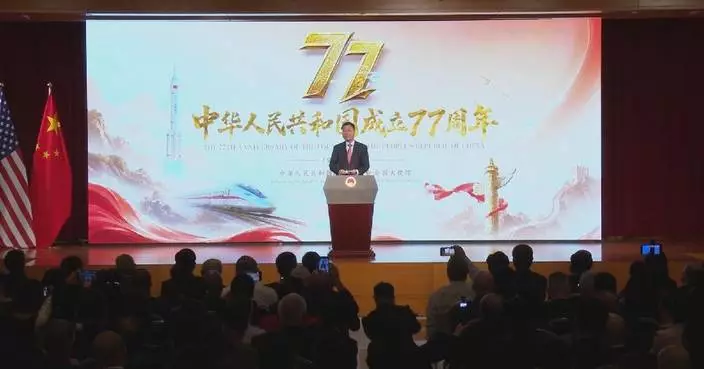
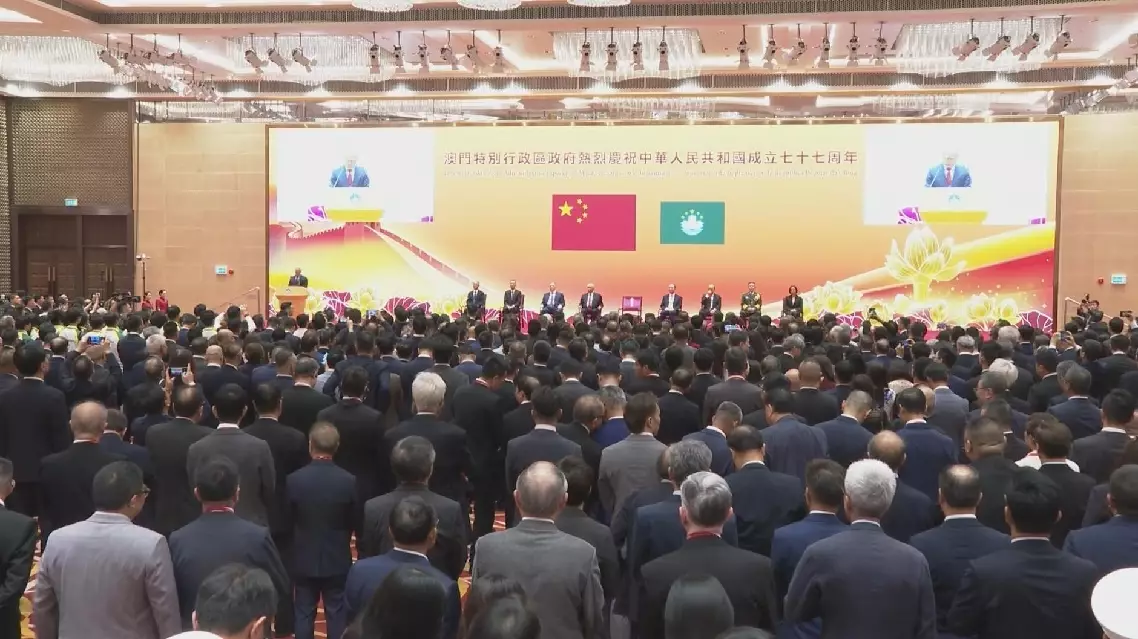
Following the flag-raising ceremony, the Macao SAR government held a reception to celebrate the 77th anniversary of the founding of the People's Republic of China. Sam said the motherland's vigorous development and constant progress have always been the strongest support and warmest haven for the Macao SAR.
Looking ahead, Macao will demonstrate greater resolve and adopt a more forward-looking approach to push the SAR to make greater contribution to the great cause of building China into a powerful country and realizing national rejuvenation, he said, adding that the SAR will write a new chapter in the successful practice of "one country, two systems" with Macao characteristics.
Flag-raising ceremony held in Macao to mark 77th founding anniversary of PRC