BEIJING (AP) — Zhang Yazhou was sitting in the passenger seat of her Tesla Model 3 when she said she heard her father’s panicked voice: The brakes don’t work! Approaching a red light, her father swerved around two cars before plowing into an SUV and a sedan and crashing into a large concrete barrier.
Stunned, Zhang gazed at the deflating airbag in front of her. She could never have imagined what was to come: Tesla sued her for defamation for complaining publicly about the car’s brakes — and won. A Chinese court ordered Zhang to pay more than $23,000 in damages and publicly apologize to the $1.1 trillion company.
Click to Gallery
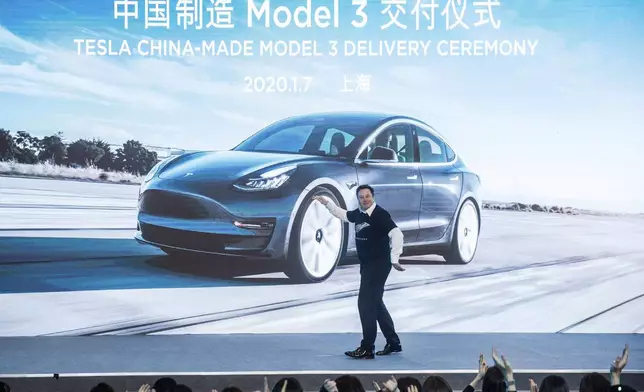
FILE - In this photo released by China's Xinhua News Agency, Tesla CEO Elon Musk reacts at a delivery ceremony for the first Tesla Model 3 cars made at Tesla's Shanghai factory in Shanghai, Tuesday, Jan. 7, 2020. (Ding Ting/Xinhua via AP, File)
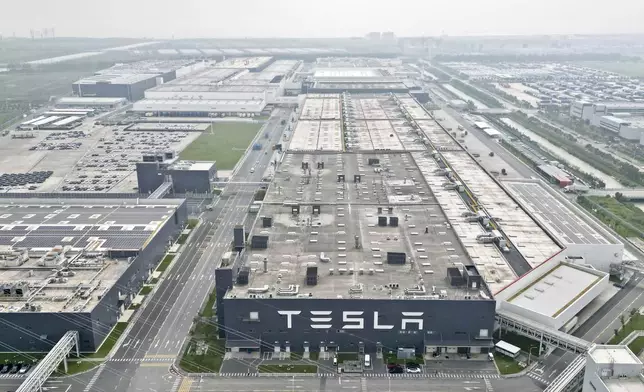
FILE - In this photo released by Xinhua News Agency, the Tesla Gigafactory in Lingang new area of the China (Shanghai) Pilot Free Trade Zone is seen in east China's Shanghai on Sept. 26, 2023. (Liu Ying/Xinhua via AP, File)
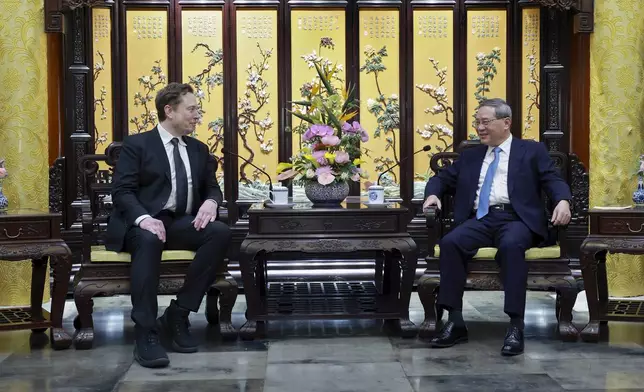
FILE - In this photo released by Xinhua News Agency, visiting Tesla CEO Elon Musk, left, meets with then-Chinese Premier Li Qiang in Beijing, Sunday, April 28, 2024. (Wang Ye/Xinhua via AP, File)
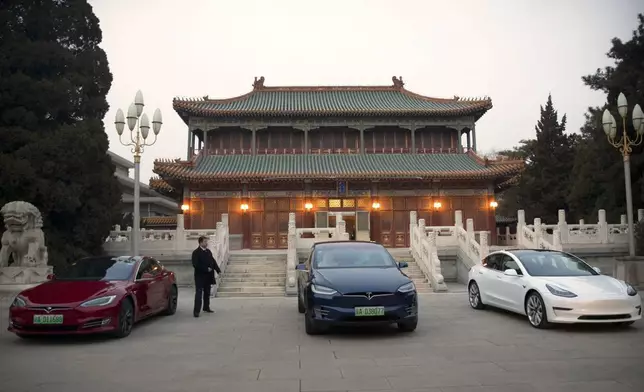
FILE - Tesla vehicles are parked outside of a building at the Zhongnanhai leadership compound during a meeting between Tesla CEO Elon Musk and former Chinese Premier Li Keqiang in Beijing, Wednesday, Jan. 9, 2019. (AP Photo/Mark Schiefelbein, Pool, File)
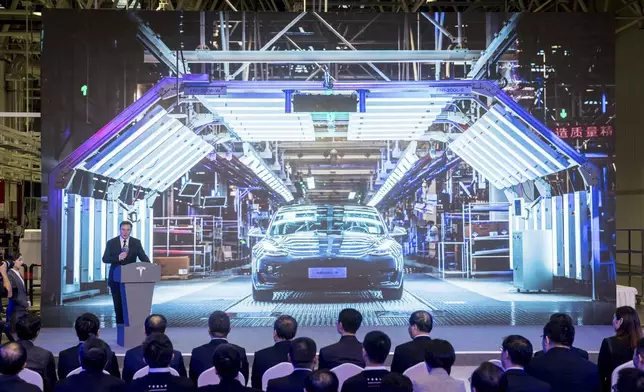
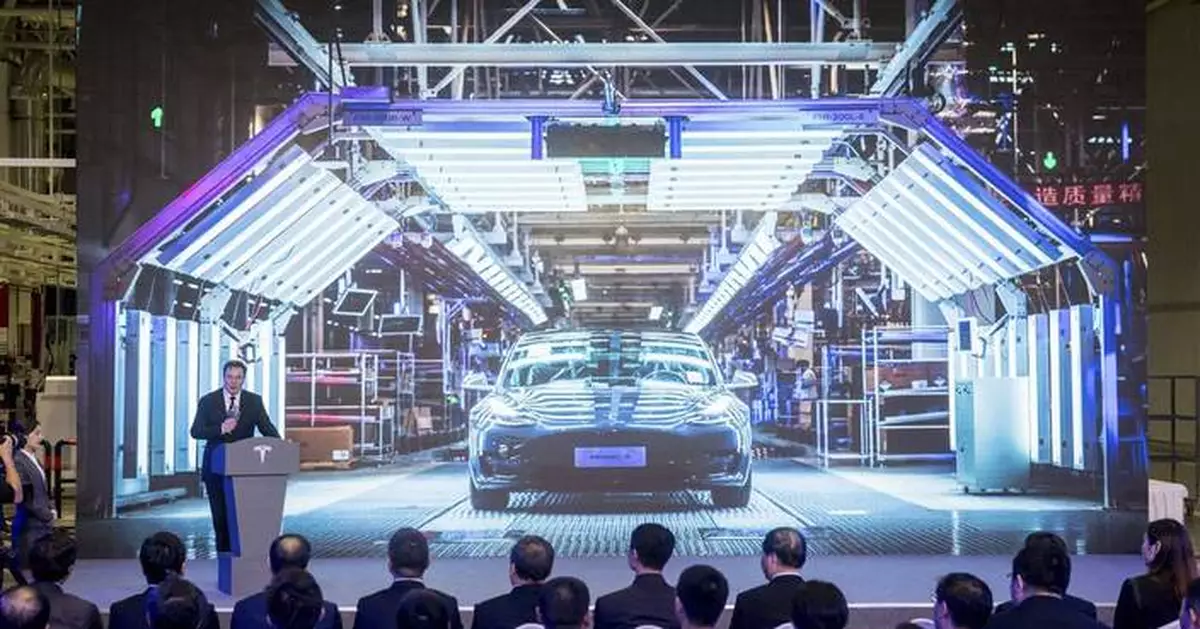
FILE - In this photo released by China's Xinhua News Agency, Tesla CEO Elon Musk speaks at a delivery ceremony for the first Tesla Model 3 cars made at Tesla's Shanghai factory in Shanghai, Tuesday, Jan. 7, 2020. (Ding Ting/Xinhua via AP, File)
Zhang is not the only one to find herself in the crosshairs of Tesla, which is led by Elon Musk, among the richest men in the world and a self-described “ free speech absolutist.” Over the last four years, Tesla has sued at least six car owners in China who had sudden vehicle malfunctions, quality complaints or accidents they claimed were caused by mechanical failures.
The company has also sued at least six bloggers and two Chinese media outlets that wrote critically about the company, according to a review of public court documents and Chinese media reports by The Associated Press. Tesla won all 11 cases for which AP could determine the verdicts. Two judgments, including Zhang’s, are on appeal. One case was settled out of court.
It is not common practice for automakers — in China or elsewhere — to sue their customers. But Tesla has pioneered an aggressive legal strategy and leveraged the patronage of powerful leaders in China’s ruling Communist Party to silence critics, reap financial rewards and limit its accountability.
The AP review of Tesla’s record in China comes as Musk is wielding significant influence in President Donald Trump’s new administration, leading an effort to rapidly shrink the size of the federal government and oust employees deemed disloyal to the president. His actions have raised concerns that Musk is weakening the U.S. system of checks and balances, in part, to benefit Tesla and his other companies.
In the United States, Musk has found a powerful ally in Trump. Together, they have launched an assault on the federal government, freezing spending, suspending programs and dismissing prosecutors, government watchdogs and others that have traditionally acted as guardrails.
Tesla officials in China and the United States did not reply to requests for comment.
Tesla’s record in China shows how Musk has thrived in a system in which regulators, the media and the courts — which must all ultimately answer to the ruling Communist Party — are, by design, somewhat intertwined.
Tesla has profited from the largesse of the Chinese state, winning unprecedented regulatory benefits, below-market rate loans and large tax breaks. With a few pointed exceptions, Tesla has enjoyed ingratiating coverage in the Chinese press, and journalists told AP they have been instructed to avoid negative coverage of the automaker.
Tesla’s windfall has extended to the courts — and not just in legal actions Tesla has brought against customers. In a review of public court documents, AP found that Tesla won nearly 90% of civil cases over safety, quality or contract disputes brought by customers.
“The government gave Tesla a super status that put consumers in a very vulnerable position,” said Qiao Yudong, a former lawyer for American sports car company Saleen Automotive in China. “That’s why some consumers had to resort to extreme actions.”
One of those desperate customers was Zhang.
The February 2021 crash in central China's Henan province sent Zhang’s mother and father, who had a concussion, to the hospital for four days, medical records show. Zhang — who was unharmed in the accident, as was her baby niece — wanted to understand what had happened: How could her dream car have turned into such a nightmare?
Traffic police determined that the crash was her dad’s fault because he hadn’t maintained a safe following distance. Zhang, however, insisted that the brakes had malfunctioned, sending the car out of control. She filed a complaint with a local market regulator, requesting a refund and compensation. Teslas are among the most computerized cars on the market, so Zhang asked the automaker to turn over the full pre-crash data from her car, hoping it might help explain what went wrong. Tesla refused.
“Tesla’s employees were very arrogant and tough in dealing with my complaints,” Zhang said in an interview. “I was burning with anger.”
After weeks of stewing, she draped her damaged car with a banner proclaiming “Tesla brake failure” in front of the Tesla dealership in Zhengzhou, the capital of Henan province, some 200 km (124 miles) from her home. She sat on the Tesla’s roof and blared her protest through a bullhorn: “Tesla Model 3 brakes failed,” she said. “A family of four almost died.” The next month, she parked her damaged car outside an auto show in Zhengzhou. It was all to no avail — Tesla refused to turn over the full data and mediation went nowhere.
Figuring that top Tesla officials would attend an April auto show in Shanghai, she and a friend — who had also had a problem with her Tesla — donned matching T-shirts with the phrase “Brakes fail” and headed for Tesla’s booth, determined to buttonhole executives. The automaker’s officials avoided them, Zhang said, and they couldn’t get anyone to hear them out.
Her friend, who was six months pregnant, started shouting, “Tesla brakes fail!”
Zhang clambered on top of a shiny red display model and started hollering, too.
“Things escalated,” said Zhang.
The moment — captured on cellphone videos shot by onlookers — went viral on Chinese social media. Burly security guards hauled Zhang out, and she was detained for five days.
Some observers speculated that Zhang’s protest had been orchestrated -- perhaps by a competitor or by the Chinese government itself to pressure Tesla to conform with Chinese regulations. Tesla alleged that Zhang hadn’t acted on her own. A top executive speculated to Chinese media that she “had someone behind her” and said Zhang was making a fuss because she just wanted higher compensation.
Zhang insisted she acted on her own — and out of anguish. Outraged, she sued Tesla for defamation, arguing that the executive’s comments unjustly cast her as a troublemaker to deflect attention from the company’s own shortcomings.
And then she found herself on the receiving end of a lawsuit filed by Tesla.
Tesla said Zhang had deliberately spread false information that damaged the brand and asked for 5 million yuan ($684,000) in damages.
The case, which a court took up in October 2021, came as Tesla faced a barrage of criticism in China.
Dozens of Tesla owners had been publicly complaining about alleged brake failures, battery fires, unintended acceleration and other defects, as well as what they claimed were misleading sales practices. The same month as Zhang’s crash, Chinese regulators summoned Tesla to respond to quality concerns raised by such reports.
Zhang’s emotional protest sparked a rare burst of criticism of Tesla in Chinese media. Under pressure from regulators, Tesla finally released the data from her car, which the company said showed her father had been driving nearly 120 km per hour (75 mph) and that the brakes had functioned to reduce the magnitude of the collision.
Tesla had finally given Zhang what she’d been asking for, but they’d published the data publicly and included her vehicle identification number. She said she and her family started getting threatened and doxed online. Besides, she wondered, how could she be sure Tesla hadn’t modified or redacted the data from her car? It was less than the victory she’d hoped for. Feeling besieged, she sued Tesla a second time, in March 2022, for invading her privacy.
Zhang lost both cases she brought against Tesla.
Meanwhile, the defamation case against her was grinding along. Back in court as a defendant, Zhang was unable to prove that the brakes on her Tesla had indeed failed. In a closed trial, a Shanghai court ruled in May 2024 that Zhang’s public complaints went beyond what magistrates considered reasonable, factual criticism and ordered her to publicly apologize and pay 170,000 RMB ($23,000) to cover damages and the legal costs of the world’s most valuable car company.
Zhang appealed the ruling. She maintains that her lawsuit is a cry for transparency and accountability and that a company as rich and powerful as Tesla should be able to tolerate legitimate criticism from its customers.
“I refuse to accept it,” Zhang told The Associated Press, “As a consumer, even if I said something wrong, I have the right to comment and criticize. I spoke about my feelings as a user of the car. It has nothing to do with damaging their reputation.”
Her odds of winning the appeal against Tesla do not look good. Tesla has not only won the defamation cases it brought against unhappy car owners and critical journalists, it’s also prevailed in lawsuits customers have filed against it.
An AP review of a Chinese government database of court filings published online found 81 civil judgments in which car owners sued Tesla over safety and quality issues or contract disputes. Car owners won in only nine of those cases.
In a statement to AP, the Shanghai High People’s Court said that judgments are the result of a “fair trial” based on “the objective facts of the case."
“It cannot be assumed that the party has received ‘special protection’ or ‘special treatment’ because of their victory,” the court wrote.
While some auto industry experts in China say it’s generally difficult for customers to win cases against car companies, others say it’s remarkable for a foreign company to enjoy such success in Chinese courts.
“For Tesla to win that percentage of the time is an anomaly,” said Bill Russo, founder of Automobility Ltd., an advisory firm based in Shanghai, who also used to be regional head of Chrysler in northeast Asia. “The odds are stacked against you. It’s like going to the casino and winning every hand.”
Tesla’s commercial and political success in China has hinged on the support of a powerful patron: Li Qiang, the former party boss of Shanghai who is now China’s premier, second in rank only to President Xi Jinping. It was under his watch, in 2019, that Tesla built its first overseas factory on the outskirts of China’s financial capital.
With Li’s support, Tesla became the first foreign automaker allowed to retain complete control over its China venture and got low-interest loans and generous tax breaks. China also adopted an emissions credit scheme modeled after a U.S. program that has generated billions in income for Tesla.
In January 2020, one year after breaking ground, Elon Musk unveiled the first Chinese-made Teslas on a stage in Shanghai. Tesla turned an annual profit for the first time in its history that year, and Musk was declared the world’s richest person in January 2021.
China got what it wanted, too: Tesla was a potent catalyst for domestic production and consumption. Before Tesla’s arrival, new energy vehicles accounted for around 5% of China’s auto market. Today, analysts say, more than half of passenger vehicles sold retail in China are powered by an electric motor. Chinese battery maker CATL, a key Tesla supplier, has embedded itself in global supply chains to become the world’s largest EV-battery maker. China’s BYD is now the world’s largest electric vehicle manufacturer and a growing competitive threat to legacy carmakers in the West.
“Tesla had a large part to play in that,” said Tu Le, the managing director of Sino Auto Insights, a consulting firm. Tu said the way the government smoothed the way for Musk’s factory was critical. “It was a swampy field on the outskirts of Shanghai. A year later they’re rolling cars off the line,” he said. “I don’t know if that happens anywhere else in the world.”
Requests for comment to the State Council, which is run by Li Qiang and oversees China's government ministries, went unanswered.
Musk still swings by to meet Li when he goes to China. Their encounters underscore the complexity of Musk’s overlapping interests as a businessman and the most China-friendly member of Trump’s inner circle.
Musk’s “greater objective was winning influence over the people that mattered for him, that enabled him to get things done,” said Russo, the auto strategist in Shanghai. “He’s done a good job of it in China and he’s done it now with the influence he purchased with his relationship with Trump.”
Safety advocates worry about the implications of Musk’s proximity to power in the United States. Federal investigations and safety initiatives Musk has long railed against could be easily snuffed out by the new administration.
In the U.S., Tesla also has been subject to a raft of customer safety complaints and lawsuits over autopilot function, battery charging, alleged suspension defects, sudden braking or acceleration, faulty airbags and allegedly monopolistic practices on repairs and parts. Judges have dismissed some cases. In others, Tesla settled out of court or paid hefty settlements.
Tesla has not publicly sued any of its U.S. customers for speaking out, though in January, Musk said on X that “maybe it is time” to sue media outlets for coverage that could stain Tesla’s brand. His post has been viewed more than 22 million times.
Tesla has already successfully done that in China.
Two Chinese journalists based in Shanghai told AP there is an unwritten rule to avoid critical coverage of Tesla. Both spoke on condition of anonymity, fearing retaliation.
“We were told by our editor that we should not write negatively about Tesla because it is a key company that was introduced and protected by the Shanghai government,” a tech reporter told AP.
Those who have strayed have found themselves in court. Musk’s company sued media outlets PingWest and ifeng.com over negative coverage. It was unhappy about PingWest’s report that claimed Tesla’s Shanghai factory was a “sweatshop.” The news website ifeng.com drew Tesla’s ire over a story that explored the tribulations of car owners who fought Tesla. PingWest had to apologize and pay Tesla 100,000 yuan ($13,700). AP could not determine the outcome of the case against ifeng.com.
Tesla is not the only company in its industry to sue its critics. BYD has also aggressively pursued media in court, including an unsuccessful lawsuit against Vice Media in the United States. More recently, electric vehicle makers Nio and Li Auto have stepped up defamation cases against bloggers in China who allegedly spread false information about their companies.
Tesla, however, stands out even among its cut-throat Chinese competitors — in going after car owners who suffered crashes.
“Tesla used their legal advantages to bully Chinese car owners and people who speak up for them,” said Feng Shiming, an auto blogger and Tesla owner who was ordered by a Shanghai court last year to pay Tesla 250,000 yuan ($34,200) after he wrote about Tesla’s alleged brake failures. He has appealed the verdict. “Tesla wants to have a chilling effect on society and terrify people so they will be scared to say anything negative about Tesla.”
Chen Junyi got the message. He lost control of his Model 3 and plowed into a dozen cars in a parking lot at high speed in August 2020. He claimed the brakes had failed. He told Chinese media at the time that he broke his back and four ribs and had to have 30 centimeters (12 inches) of his small intestine removed. Chen took to social media and warned people not to buy Teslas, raising his shirt to reveal the long, gnarled scar that runs up his abdomen.
Tesla maintained the accident was Chen’s fault, citing a technical review that found the car was accelerating and not braking in the seconds before the crash, and sued him for making false claims.
“Tesla should proactively respond to consumers instead of using its superior resources and filing lawsuits against consumers who are at a disadvantage,” Chen said in a court statement reviewed by AP. “I almost lost my life because of the car accident. I lost my job and income. I am under tremendous economic pressure.”
Chen declined to speak with the AP, citing fear of retaliation. A Chinese court ordered Chen to pay the carmaker 50,000 yuan ($6,800) as compensation — and to issue an apology.
“I deeply regret the serious negative impacts I have had on Tesla and its cars,” he wrote. “I hereby sincerely apologize to Tesla and to the people who were misled by my remarks.”
A month later, he took to social media and apologized for his apology, saying the words were not his own.
Chen and Kinetz reported from Washington.
Contact AP’s global investigative team at Investigative@ap.org or https://www.ap.org/tips/
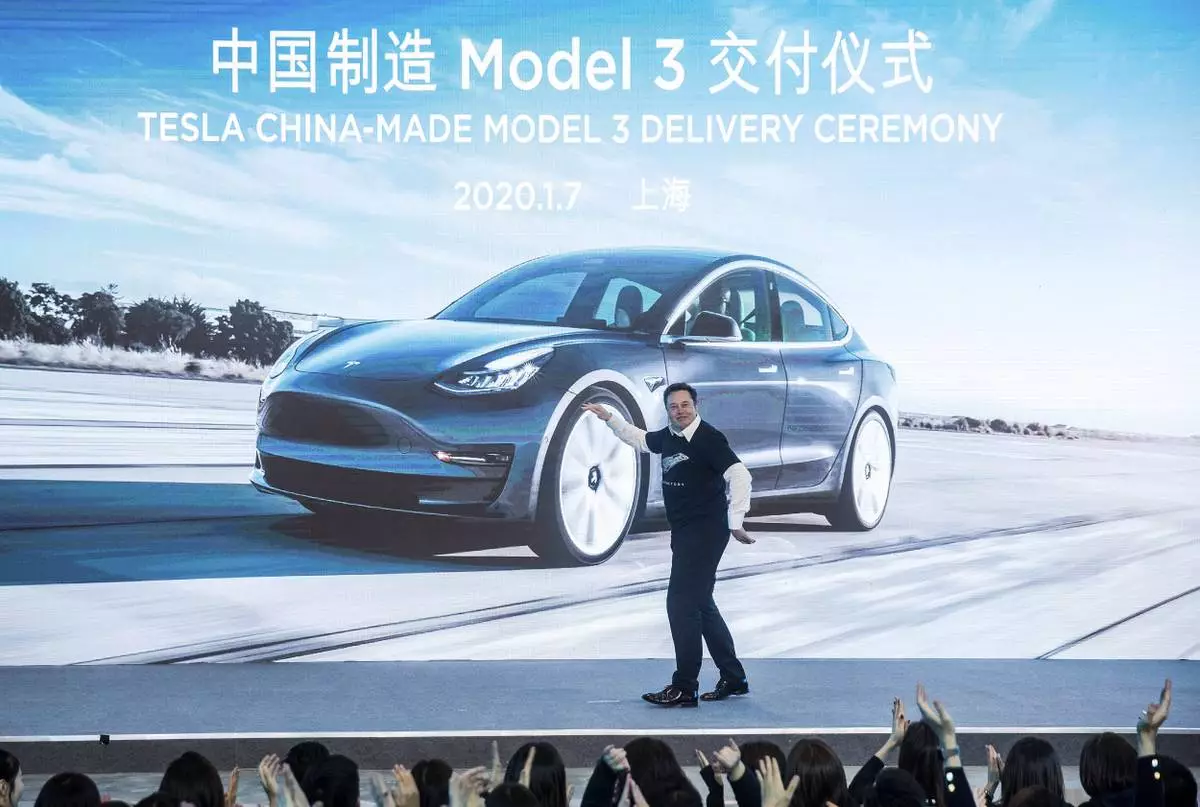
FILE - In this photo released by China's Xinhua News Agency, Tesla CEO Elon Musk reacts at a delivery ceremony for the first Tesla Model 3 cars made at Tesla's Shanghai factory in Shanghai, Tuesday, Jan. 7, 2020. (Ding Ting/Xinhua via AP, File)
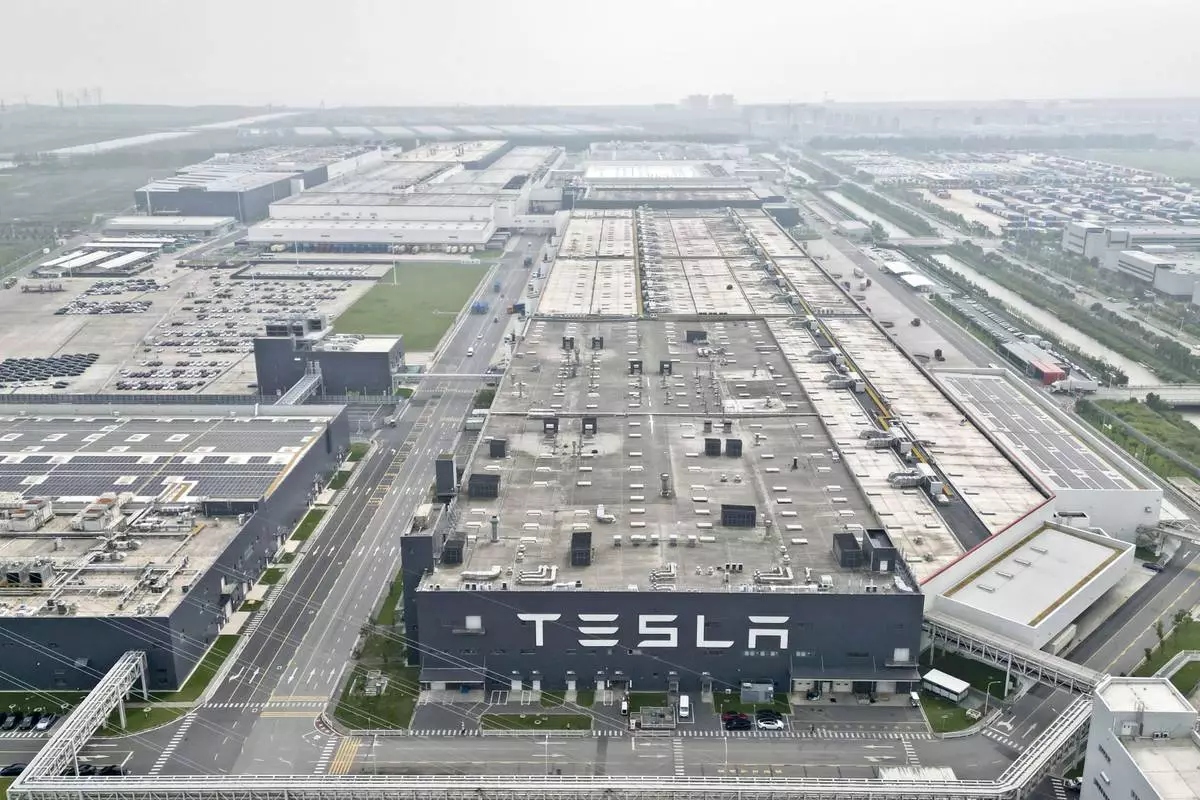
FILE - In this photo released by Xinhua News Agency, the Tesla Gigafactory in Lingang new area of the China (Shanghai) Pilot Free Trade Zone is seen in east China's Shanghai on Sept. 26, 2023. (Liu Ying/Xinhua via AP, File)
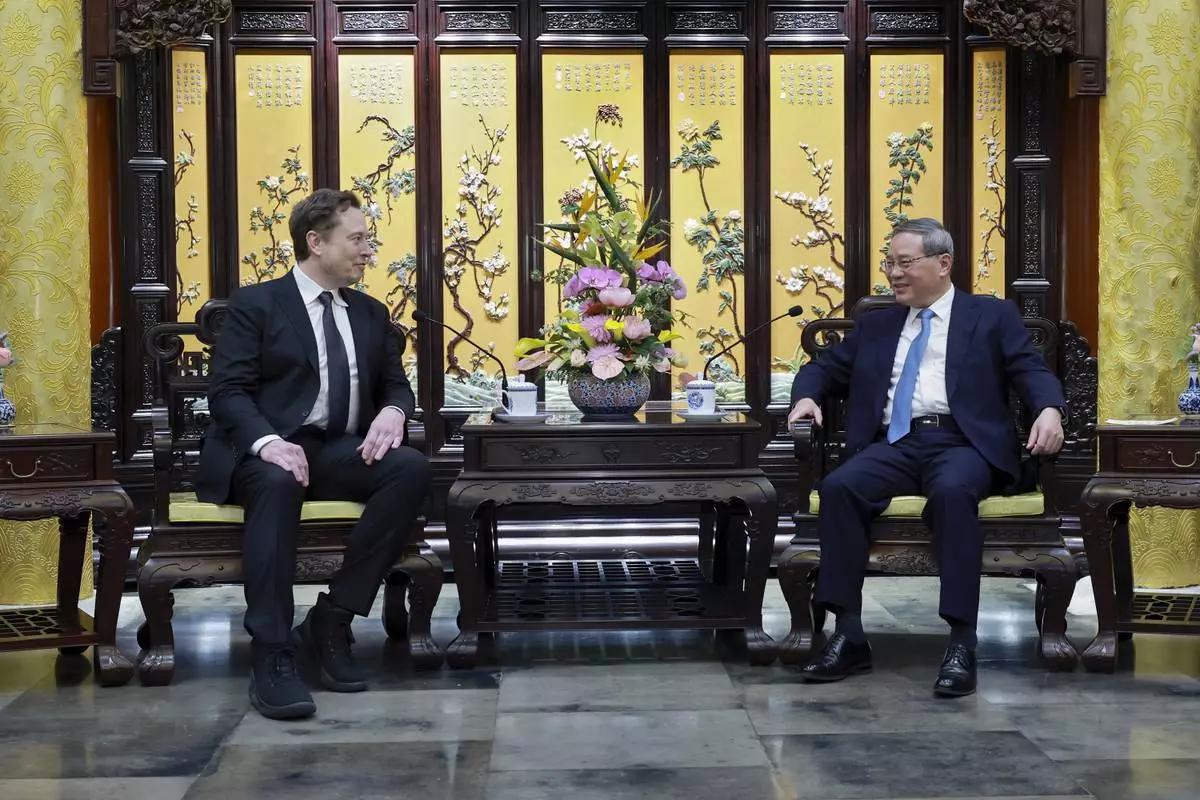
FILE - In this photo released by Xinhua News Agency, visiting Tesla CEO Elon Musk, left, meets with then-Chinese Premier Li Qiang in Beijing, Sunday, April 28, 2024. (Wang Ye/Xinhua via AP, File)
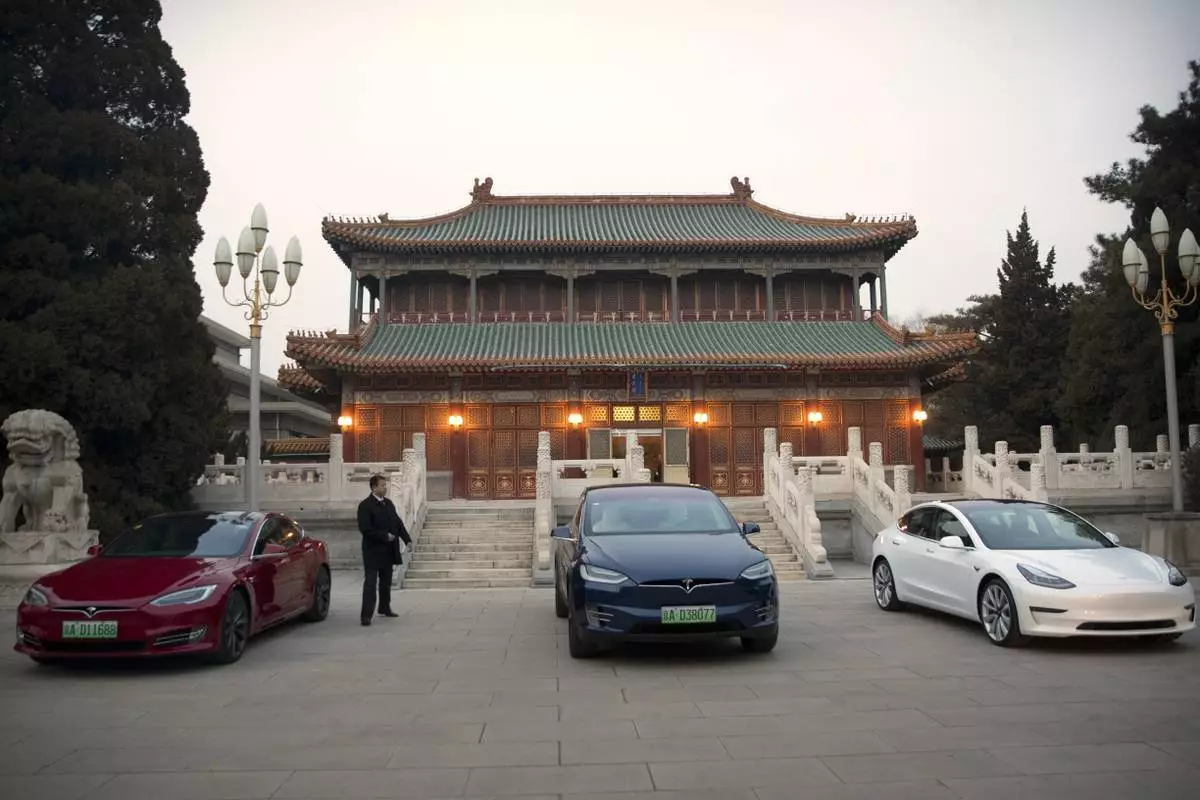
FILE - Tesla vehicles are parked outside of a building at the Zhongnanhai leadership compound during a meeting between Tesla CEO Elon Musk and former Chinese Premier Li Keqiang in Beijing, Wednesday, Jan. 9, 2019. (AP Photo/Mark Schiefelbein, Pool, File)
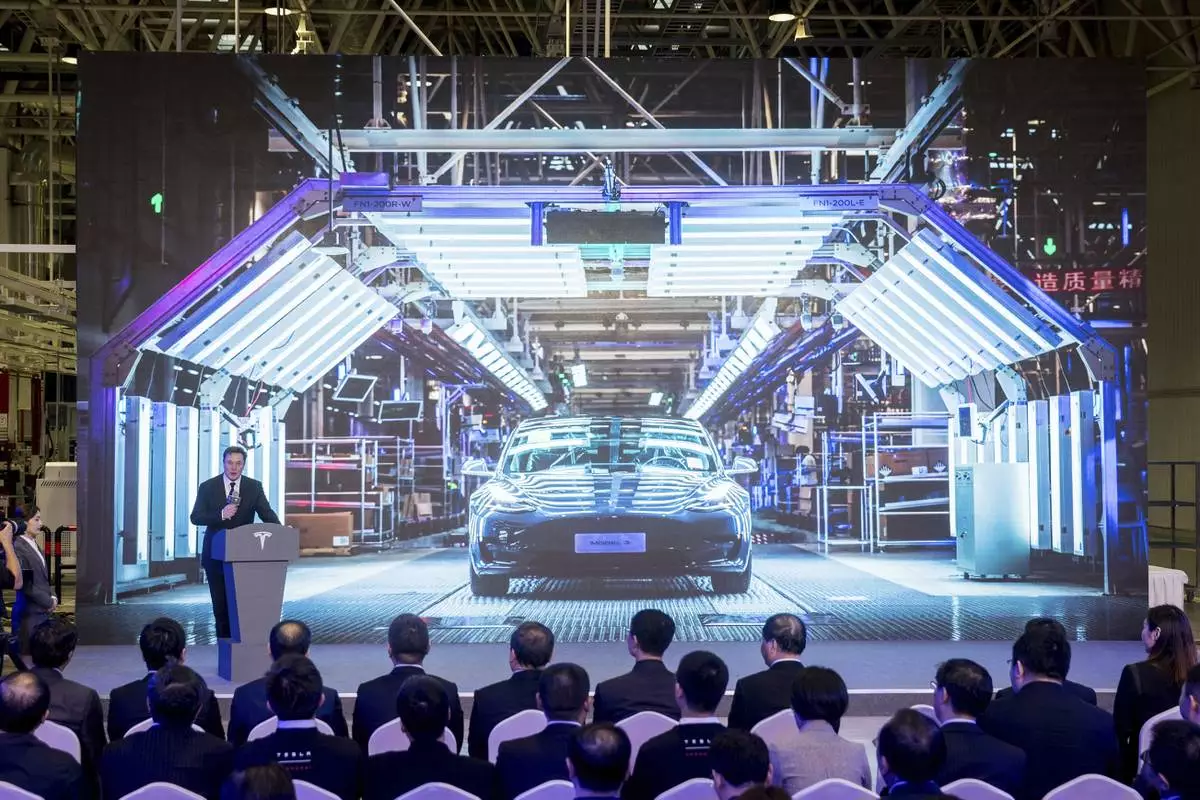
FILE - In this photo released by China's Xinhua News Agency, Tesla CEO Elon Musk speaks at a delivery ceremony for the first Tesla Model 3 cars made at Tesla's Shanghai factory in Shanghai, Tuesday, Jan. 7, 2020. (Ding Ting/Xinhua via AP, File)