Since the breakout of the latest round of the conflict between Israel and Hamas in early October 2023, the Palestinian death toll from Israeli attacks in Gaza has risen to 48,239, with 111,676 others injured, the Gaza-based health authorities said in a statement on Thursday.
In the past 24 hours, the Israeli forces killed three people and wounded two others in their operations in the region, and Gaza hospitals also received 14 corpses pulled out of the rubbles, the health authorities reported.
On Thursday, Taher Al-Nono, a senior official of Hamas, stressed the need to immediately start negotiations for the second phase of the ceasefire agreement, and urged Israel to actively fulfill its obligations. The advisor also blamed Israel for the delay in negotiations.
Currently, the ceasefire deal is facing its most severe crisis since the implementation of its first phase.
Israeli Prime Minister Benjamin Netanyahu said Tuesday that the ceasefire with Hamas would end "if Hamas does not return our hostages by noon on Saturday."
Netanyahu's remarks came a day after Hamas announced that the handover of hostages scheduled for Saturday would be postponed until further notice. Following Netanyahu's statement, Hamas said it remained committed to the ceasefire deal as long as Israel abides by it.
Israel "bears full responsibility for any complications or delays," the group said in a statement.
On Monday, Hamas accused Israel of violating the three-week-old ceasefire deal, including blocking vital humanitarian aid.
The three-phase ceasefire agreement, brokered by Qatar, Egypt and the United States, aims for a "permanent ceasefire between the parties," according to the mediators.
The first stage, which lasts for 42 days, includes a ceasefire, the withdrawal and redeployment of Israeli forces outside densely populated areas, the release of hostages and exchange of prisoners and detainees, the exchange of the remains of the deceased, the return of internally displaced persons to their places of residence in Gaza, and facilitating the departure of patients and the wounded to receive treatment, as well as intensifying the safe and effective entry and distribution of humanitarian aid on a large scale throughout the Gaza Strip.
The deal is also expected to see 33 of the remaining 98 Israeli hostages released in return for more than 1,890 Palestinian prisoners and detainees in the first phase of the agreement, according to the Egyptian foreign ministry.
The details of the second and third phases will be announced after the completion of the first phase of the agreement.

Palestinian death toll in Gaza climbs to 48,239
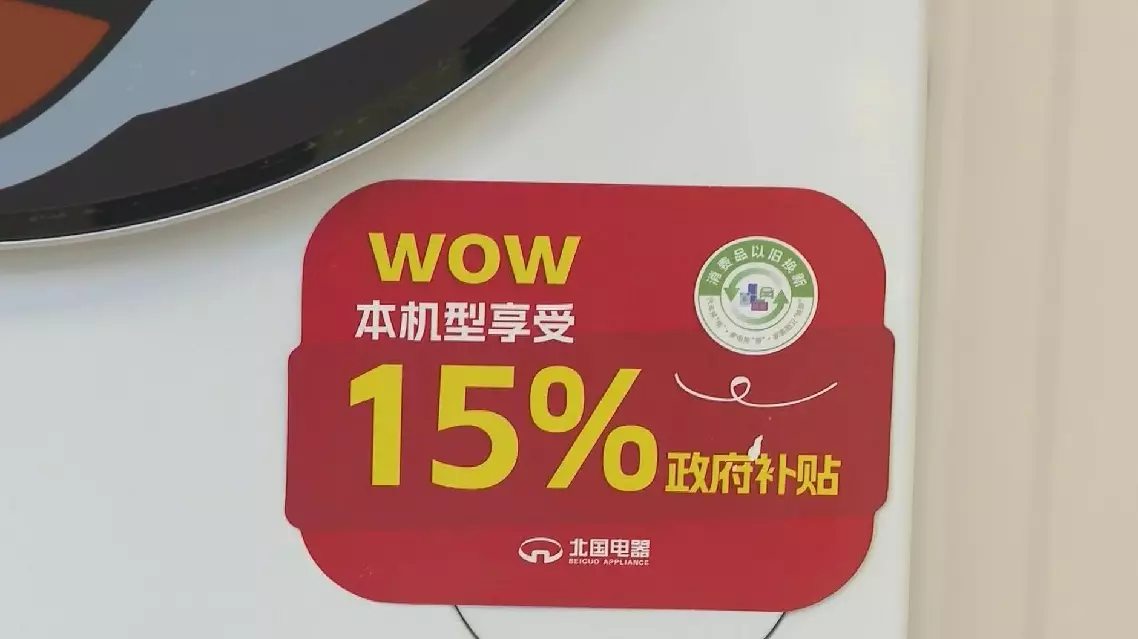
A new round of trade-in subsidy program is energizing China's consumer market these days, with provinces across the country seeing a surge in demand for cars, home appliances and digital devices.
In north China's Shanxi Province, the new trade-in subsidy program, which started on January 9, has further helped boost sales in home appliances and digital devices which are covered by the new round of subsidies.
To enjoy the subsidies, six types of home appliances, including refrigerators and washing machines, must meet national Level 1 energy-efficiency or water-efficiency standards. Digital and smart products include four types, such as mobile phones and tablets, with a sales price cap of 6,000 yuan (about 800 U.S. dollars) per item.
In both categories, subsidies are set at 15 percent of the final transaction price. For home appliances, the maximum subsidy is 1,500 yuan per item. For digital products, the cap is 500 yuan per item. Each consumer can receive a subsidy for one unit in each category.
Neighboring Shanxi, Hebei Province kicked off the year of 2026 with the new round of trade-in subsidy program starting on January 1.
The subsidies cover automobiles, home appliances, and digital products. Individual consumers who purchase designated Level 1 energy-efficiency appliances or eligible digital products priced at no more than 6,000 yuan can receive subsidies equal to 15 percent of the transaction price. The maximum subsidy is 1,500 yuan per appliance and 500 yuan per digital or smart device, with each person limited to one subsidized item in each category.
Data showed that from Jan 1 to 9, Hebei's home appliance trade-in program alone disbursed more than 130 million yuan in subsidies, driving sales of over 920 million yuan.
In east China's Jiangsu Province, the new trade-in subsidy program, taking effect for two weeks, has brought the province a boom in trade-in.
At a local 4S store in Jiangsu's Suqian City, showroom traffic has spiked as salespeople walked customers through the new benefits from the trade-in subsidy program.
"Under the scrappage-and-replacement scheme, customers who buy a new energy vehicle (NEV) can receive a subsidy worth 12 percent of the vehicle price, capped at 20,000 yuan (about 2,860 U.S. dollars). For combustion-engine cars, the subsidy is 10 percent, with an upper limit of 15,000 yuan. For trade-ins, NEVs are able to receive a subsidy worth 8 percent of the vehicle price, up to 15,000 yuan, while combustion-engine cars will receive a 6-percent subsidy, with a cap of 13,000 yuan," said Sun Yue, a saleswoman at the store.
In the home appliance sector, Jiangsu's policy this year stipulates that only products that meet China's Level 1 energy-efficiency standard are eligible for subsidies. The scheme covers six major categories, including refrigerators and washing machines.
Consumers who purchase qualifying appliances can receive a subsidy equal to 15 percent of the final retail price, up to a maximum of 1,500 yuan per item. Each person is limited to one subsidized unit per product category.
Four types of digital and smart products, such as mobile phones and tablets, are eligible for a 15-percent subsidy capped at 500 yuan per unit, with a retail price no more than 6,000 yuan.
"With the national subsidy policy back in place this year, I went to the store to check what discounts I could get. It knocked 500 yuan off the price. [The discounted price is] very reasonable," said Wang Kang, a resident of Jiangsu's Xuzhou Province.
To enhance the shopping experience for consumers, many retailers are pairing subsidies with "one-stop" services that combine the delivery of new products with on-site collection of old ones.
"After consumers place an order for new home appliances, our staff will schedule a time to pick up the old units. Recycling the old appliance can also further offset the purchase price of the new one," said Yang Jie, a sales supervisor at a major home appliance company.
China's new trade-in program sparks consumption boom