Zhou Yizhe, a 61-year-old former logger turned forest guardian, has witnessed the transformation of Inner Mongolia's Greater Khingan Mountains from a timber-producing hub to a thriving ecological haven. As China shifts its focus from exploitation to conservation, Zhou and thousands of others are reaping the benefits of a greener economy.
For decades, he and his team felled trees, contributing to China's rapid economic growth. But as the environmental toll became evident, Zhou's life took a dramatic turn.
"In the past, we focused on timber production. We cut trees down at that time and felt that we were contributing to the country. High-rise buildings cannot be built without timber. (At that time) our team had about 70 to 80 members. The annual output was about 20,000 meters (of timber), and many places where we had worked had suffered from soil erosion," Zhou said.
In 2015, China introduced sweeping reforms, halting commercial logging in natural forests and shifting the focus to conservation and sustainable development.
"At first, we were lost and confused," Zhou admitted. "Logging was our livelihood. What were we supposed to do?"
As part of the country's green transformation, China has created tens of thousands of state-funded posts focused on protecting grasslands, forests and wetlands. Thousands of tree fellers like Zhou turned into rangers, trading their axes for shovels and becoming guardians of the forest.
"On the eve of the Spring Festival of 2014, the temperature in the forest area fell to more than 30 degrees or 40 degrees Celsius below zero. General Secretary Xi went to Arxan for inspection, and we still remember it very clearly. He visited the forestry workers and said, 'you cut down trees in the past for the needs of national construction and to contribute to the country. We must not forget these workers who have made contributions to the forest area.' We felt relieved and happy after hearing this," Zhou said.
Today, Zhou and his colleagues spend their days planting trees, preventing forest fires, and nurturing the ecosystem. "We work year-round now, and have incomes every month," he said.
"After closing the mountains for afforestation, the forest vegetation coverage rate has greatly increased to 92 percent from the earliest of 88 percent. Tourists can drive by themselves or traverse on foot through the forests. They can feel that this ecological environment is very good and fully experience the close contact between people and nature," said Li Jianwei, general manager of Genhe forest industry company of Inner Mongolia Forest Industry Group.
Since the 18th National Congress of the Communist Party of China, the country has significantly accelerated its afforestation and greening efforts, achieving remarkable progress in both the scale and quality of its forest resources.
By the end of 2023, China's forest coverage rate had exceeded 25 percent, with forest stock volume surpassing 20 billion cubic meters. The annual carbon sequestration capacity reached over 1.2 billion tons, while the area of planted forests ranks first globally. These achievements have cemented China's position as the world leader in green growth.
In the Greater Khingan Mountains, a thriving green economy has emerged, proving that prosperity can coexist with environmental protection.
The region has developed a diverse "1+N" green industry system, encompassing eco-tourism, under-forest economies, specialty farming, forest carbon sinks, and seedling cultivation.
This transformation has turned lush mountains and clear waters into valuable economic assets, creating a sustainable path to wealth for local communities.
Visitors to the region are captivated by its natural beauty.
"I came from Guangzhou (in south China), and the snowy landscapes here are breathtaking. On a ride through the forest, I felt a sense of freedom and joy," said one tourist.
Another visitor added, "The snow is so pure and serene. It's like a fairyland."
China's commitment to afforestation and sustainable development has not only enhanced its ecological resilience, but also provided a model for balancing economic growth with environmental conservation. As the nation continues to expand its green initiatives, the vision of "lucid waters and lush mountains as invaluable assets" has become a reality.
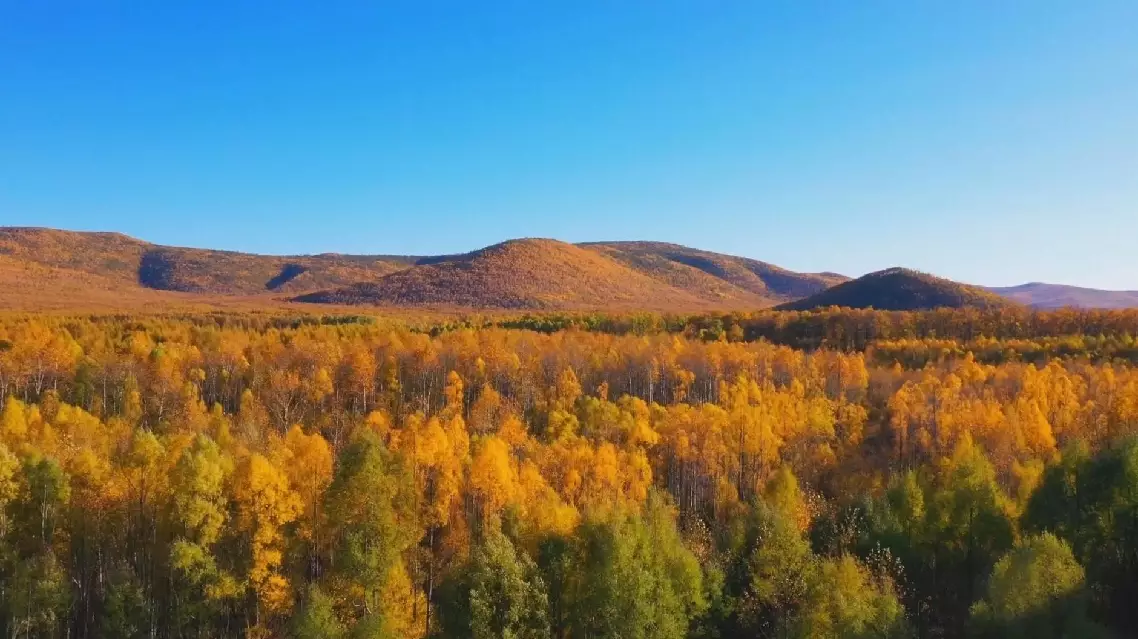
China's forest reform transforms loggers into guardians of green growth