The 2025 Global Developer Conference opened in Shanghai on Friday, gathering more than 100 developer communities from around the world to discuss large language model industrialization solutions and promote AI application.
Themed "Shaping Infinite Possibilities Globally", the event will run through Sunday, featuring the debut of multiple open source large language models.
"It not only assists developers in code generation and does it automatically, but also serves as an automatic assistive tool for office workers to handle spreadsheet and text tasks. Additionally, we have also released an open-source AI software toolchain, hoping it can lower the costs of AI production," said Yang Fan, co-founder and president of SenseTime, an AI software company based in Hong Kong.
The current trend in the AI industry is about training lower-cost, better-structured and integrated language models with stronger capabilities for processing text, image and video materials, according to insiders.
In the meantime, more businesses have adopted an open-source strategy to speed up the building of their own developer ecosystems and application ecosystems.
"We're introducing two models to the open-source community. One is an integrated speech generation and comprehension model, which is skillful in understanding emotions and dialects. The other one is a text-to-video generation model. I think it will bring better experiences to content creators in many fields," said Li Jing, vice president of StepFun.
In December 2024, Shanghai announced a comprehensive plan aimed at developing a world-class AI industry ecosystem by 2025. The plan, officially named the Implementation Plan for AI "Molding Shanghai", consists of 22 measures.
Its goals include surpassing 100 Exa Floating Point Operations Per Second (EFLOPS) in computing power, developing approximately 50 industry-specific open corpus demonstration applications, launching three to five innovation accelerators for large models, and establishing several collaborative empowerment centers and vertical zones for model training.
The city had registered 60 large generative AI models as of 2024.
"Last year, the scale of our AI industry reached 450 billion yuan (about 62 billion U.S. dollars), up 7.8 percent. This year, we will focus on application. Shanghai will continue enhancing computing power with a goal of adding 100,000 PetaFLOPs of computing power by the end of the year to improve public computing service platforms," said Pan Yan, director of the AI office of the Shanghai Economy and Information Technology Commission.
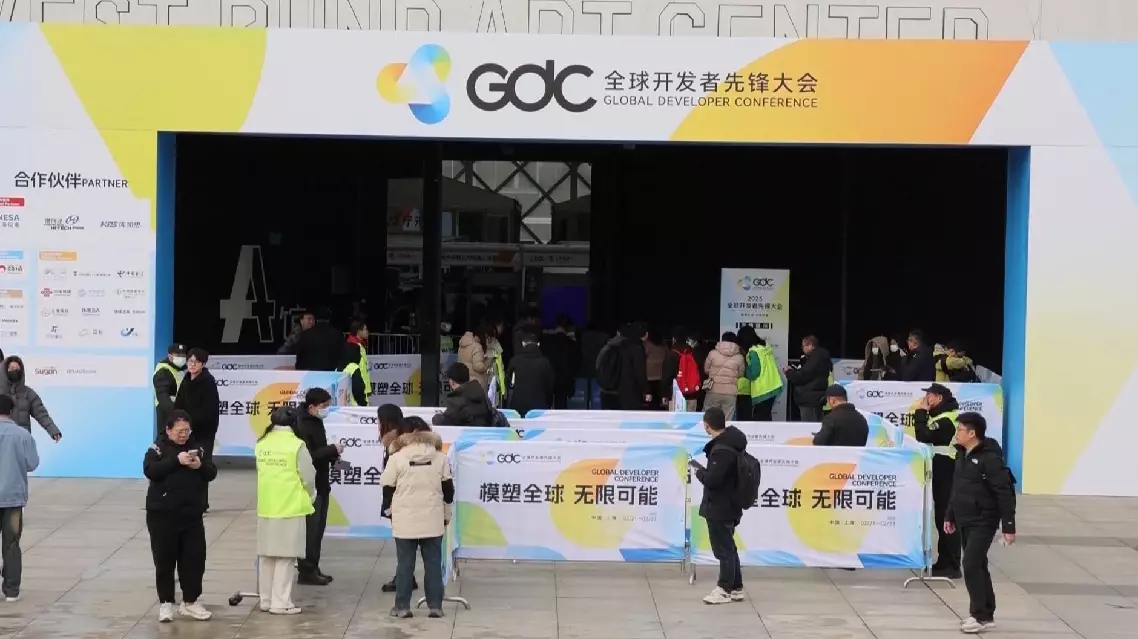
2025 Global Developer Conference opens in Shanghai
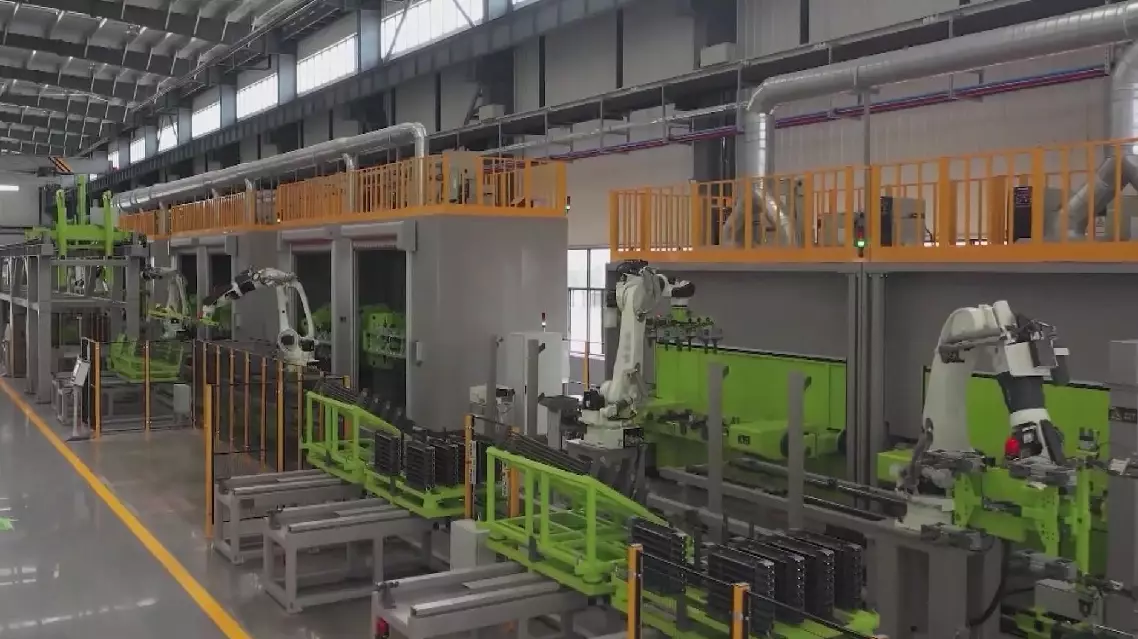
Researchers from the Center for Excellence in Brain Science and Intelligence Technology (CEBSIT) under the Chinese Academy of Sciences (CAS) have made new progress in invasive brain-computer interface clinical trials, with the second successful case involving a paralyzed patient.
According to the research team, the patient suffered a spinal cord injury in 2022 that resulted in high paraplegia. After more than a year of rehabilitation, only head and neck movement was possible. In June this year, the patient underwent implantation of a BCI system.
Following two to three weeks of training, the patient was able to control electronic devices such as a computer cursor and a tablet. To meet further needs, researchers expanded the application from two-dimensional digital screens to three-dimensional physical devices. An intelligent wheelchair and a robotic dog became new control targets.
This shift required the system to not only decode simple intentions such as "left" or "right," but also to deliver continuous, stable, and low-latency precise control to cope with complex real-world environments and interactive tasks.
According to an expert, as the patient became more proficient, the level of mental concentration required was significantly reduced.
"The experience is very close to how we normally control our own bodies. Once you are very skilled, it doesn't require much mental effort -- just like being able to chat while driving," said Zhao Zhengtuo, researcher from CEBSIT.
To achieve this, the team made multiple technical breakthroughs.
At the data source level, they developed high-compression, high-fidelity neural data compression technology and innovatively combined different compression methods. This allows effective information to be extracted efficiently even in noisy neural signal environments, improving overall brain-control performance by 15 to 20 percent.
The team also replaced traditional calibration methods with an "online recalibration" technology that silently and continuously fine-tunes decoding parameters in real time to maintain high system performance. Control speed has also been significantly improved, with intentions and actions now almost synchronized.
Notably, the research team has partnered with a local federation for persons with disabilities to enable the patient who can control a computer via the BCI to participate in online data annotation work, such as verifying the accuracy of AI recognition in vending machines. This makes the patient China's first paraplegic to earn income through labor using a brain-computer interface.
Researchers revealed that a third patient has now had a BCI implanted for nearly two months. Future applications will focus on more refined movements.
"[The next step is] to use the intention of finger movements to control robotic fingers to interact with the external world," said Poo Mu-ming, scientific director of CEBSIT, and also a CAS academician.
Chinese researchers complete 2nd successful case in invasive brain-computer interface trial in Shanghai