Chinese Foreign Minister Wang Yi discussed China-Angola relations with his Angolan counterpart Tete Antonio on Friday, on the sidelines of the Group of 20 (G20) Foreign Ministers' Meeting in Johannesburg, South Africa.
Wang, also a member of the Political Bureau of the Communist Party of China Central Committee, said that China and Angola fought side by side in the struggle against imperialism and colonialism and then joined hands in the pursuit of development and revitalization.
Noting that the friendly cooperation between the two countries facilitated Angola's national reconstruction and economic recovery, bringing tangible benefits to the Angolan people, Wang said the two sides should cherish the time-honored friendship and enhance mutual understanding and trust.
Wang congratulated Angola on assuming the rotating presidency of the African Union, saying that China has never sought selfish gains in Africa or interfered in African country's internal affairs and China has firmly supported African integration and is committed to maintaining sound relations with African countries, Wang said.
Comprehensive cooperation between China and Africa has not only helped accelerate Africa's development but also encouraged more attention and input from the international community to the continent. China will remain Africa's most sincere and reliable partner in its future development journey, Wang noted.
For his part, Antonio noted that Angolan President Joao Lourenco paid a state visit to China last year and held a successful meeting with Chinese President Xi Jinping, promoting new achievements in bilateral practical cooperation and bringing tangible benefits to both peoples. He thanked China for supporting Angola's economic and social development and Chinese enterprises for their contributions to Angola's national construction.
Antonio said that Angola is willing to expand cooperation with China in various fields such as economy and trade, investment, finance, and energy, and stand firmly with China on issues concerning the latter's core interests.
Angola stands ready to take the presidency of the African Union as an opportunity to strengthen communication and coordination with China, deepen Africa-China cooperation, and enhance African solidarity, said Antonio.
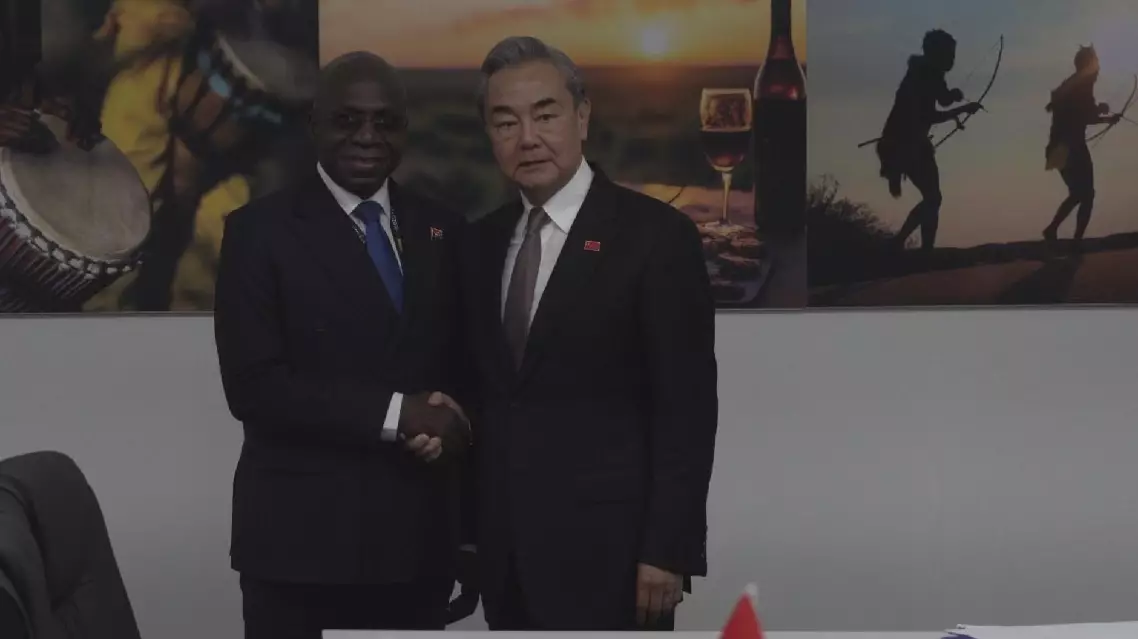
Chinese, Angolan FMs meet on bilateral ties
Chinese, Angolan FMs meet on bilateral ties
China will continue to implement a series of more proactive and effective macro policies in 2026 to keep driving the country's economic development, said one of the drafters of the government work report, which was submitted Thursday to the country's top legislature for deliberation.
Chen Changsheng, also deputy director of the Development Research Center of the State Council, made the remarks at a press conference held in Beijing on Thursday.
Chen said one of the reasons for continuing implementing more proactive and effective macro policies is to respond to the external environment.
In 2026, China is facing significant uncertainty both at home and abroad, and the country is also confronting strong supply and weak demand, with a gap in its aggregate demand remaining, he said.
Chen said it is necessary for the country to step up policy adjustment and use the certainty of macro policies to offset the uncertainty.
"Compared with other countries around the world, China's overall government debt ratio, particularly that of the central government, remains relatively low. There is still room for cuts in required reserve ratios and interest rates. Besides, there is also room for innovation in the policy mix. At the same time, continuing these policies also aims to send a signal to the society of continuing regulation through macro policies," said Chen.
Chen said China's macro policies will be implemented with greater intensity and wider scope in 2026.
"The deficit-to-GDP ratio remains at 4 percent, a relatively high level in history. The net increase in the deficit stands at 230 billion yuan (over 33 billion U.S. dollars). The scale of newly added government debt comes in at 11.89 trillion yuan, also a record high. Additionally, this year's general budget is expected to exceed 30 trillion yuan. More importantly, its net increase will reach 1.27 trillion yuan. All these demonstrate the stability of our macro and fiscal policies. Similarly, monetary policy will continue to be appropriately accommodative. Besides, we will flexibly employ policies such as cuts to required reserve ratios and interest rates to ensure ample liquidity. We will also implement policies such as policy-based monetary and financial tools with greater intensity and wider scope, with an aim to reduce financing costs across the whole society and support the real economy," said Chen.
The macro policies will also be more targeted and effective, he said.
"In terms of fiscal policy, special emphasis has been placed on deepening zero-based budgeting reforms, with the inefficiently and poorly used funds to be reallocated to more effective areas. The reform had been implemented for a period of time last year and had achieved some results. This year, efforts will be intensified. Additionally, we will further optimize the expenditure structure and make better use of existing funds to boost consumption, invest in people, and increase spending in people's wellbeing. Structural monetary policies will be improved to support small and medium-sized enterprises (SMEs), tech enterprises, and the expansion of domestic demand," said Chen.
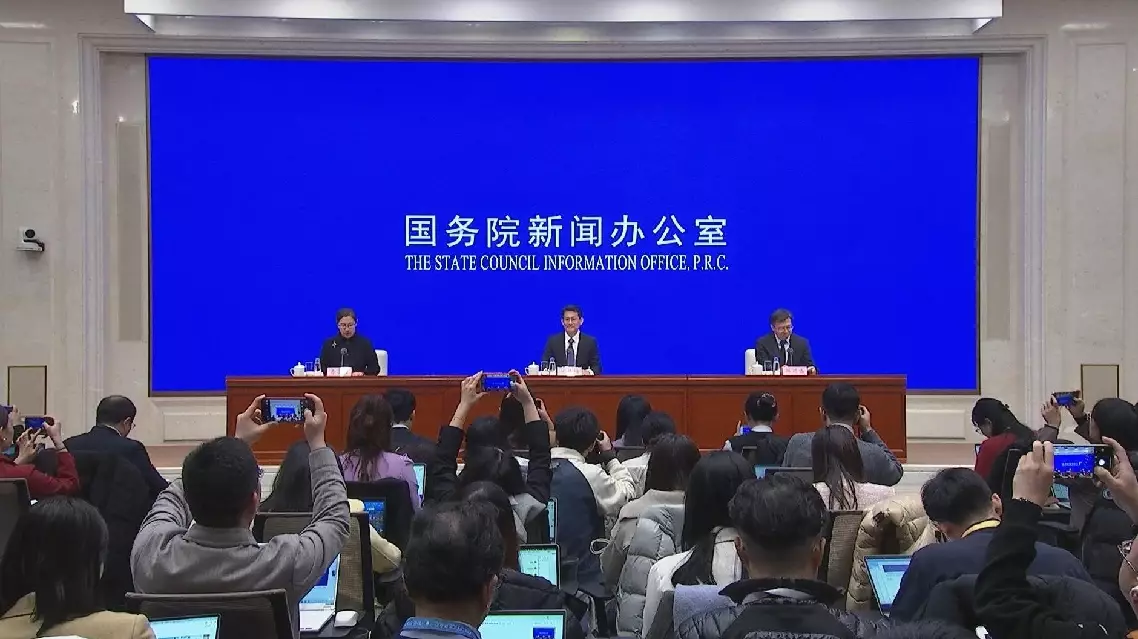
China to continue implementing more proactive, effective macro policies to drive economic growth in 2026: official