Skip to Content Facebook Feature Image

Renewable energy technologies shine at World Smart Energy Week 2025

China

China

China

Renewable energy technologies shine at World Smart Energy Week 2025

2025-02-22 17:42 Last Updated At:23:47

Renewable energy technologies, including photovoltaic systems and hydrogen products, take center stage at an international energy exhibition in Tokyo, Japan.

The World Smart Energy Week 2025, held from Wednesday to Friday at Tokyo Big Sight, Japan's largest exhibition center, attracted around 1,600 companies from both Japan and abroad.

The event featured top-notch energy technologies and products in nine categories, including hydrogen and fuel cell, photovoltaic (PV) systems, wind energy, and biomass power.

In the hydrogen and fuel cell section, Japanese automaker Toyota Motor Corp. unveiled its third-generation hydrogen fuel cell system, which offers a 20 percent increase in range and doubles the battery lifespan, making it suitable for large vehicles and ships.

Additionally, Toyota and its partners presented hydrogen fuel tanks and portable hydrogen fuel cell generators to cater to various needs, including cooking and emergency power.

"The current challenge is that hydrogen energy remains costly. The industry, together with our partners, will work to address this issue," said You Shimizu, head of Toyota's Hydrogen Energy Division.

Currently, solar power accounts for the largest share of renewable energy usage in Japan. Given the country's limited flatland and frequent natural disasters, solar panels with high conversion efficiency and lightweight designs were among the most popular products at this year's exhibition.

Chinese companies, with their proven technology, attracted a significant amount of interest from Japanese clients.

"At present, there is a significant demand among Japanese clients for lightweight products. Some have expressed interest in becoming our agents, while others have signed procurement intentions directly with our factory," said Gu Yu, head of a Chinese photovoltaic firm.

"Some solar panels are not produced in Japan, only in China. The quality of Chinese products is excellent, with increasing conversion efficiency and stable prices. They are highly reliable," shared a Japanese purchaser.

The Japanese government approved a new basic energy plan on Tuesday, setting a goal to increase the share of renewable energy in the country's energy mix to 40 to 50 percent in fiscal 2040, nearly double the 22.9 percent recorded in fiscal 2023, opening new opportunities for businesses in the renewable energy sector.

The World Smart Energy Week, organized by RX Japan, is the most influential international new energy industry exhibition in Japan.
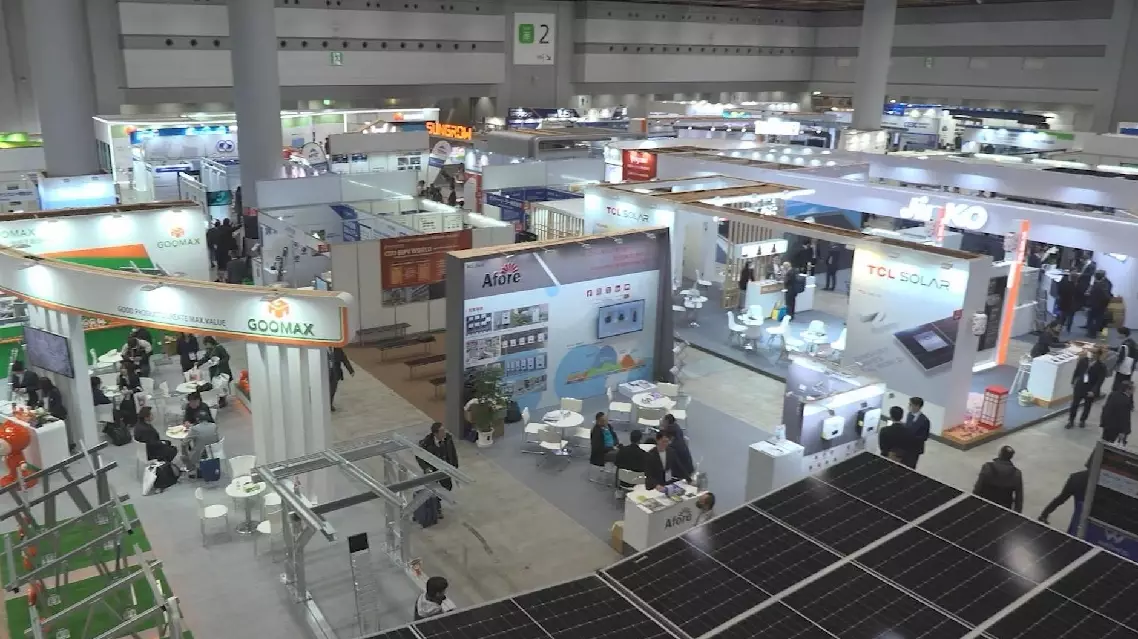
Renewable energy technologies shine at World Smart Energy Week 2025
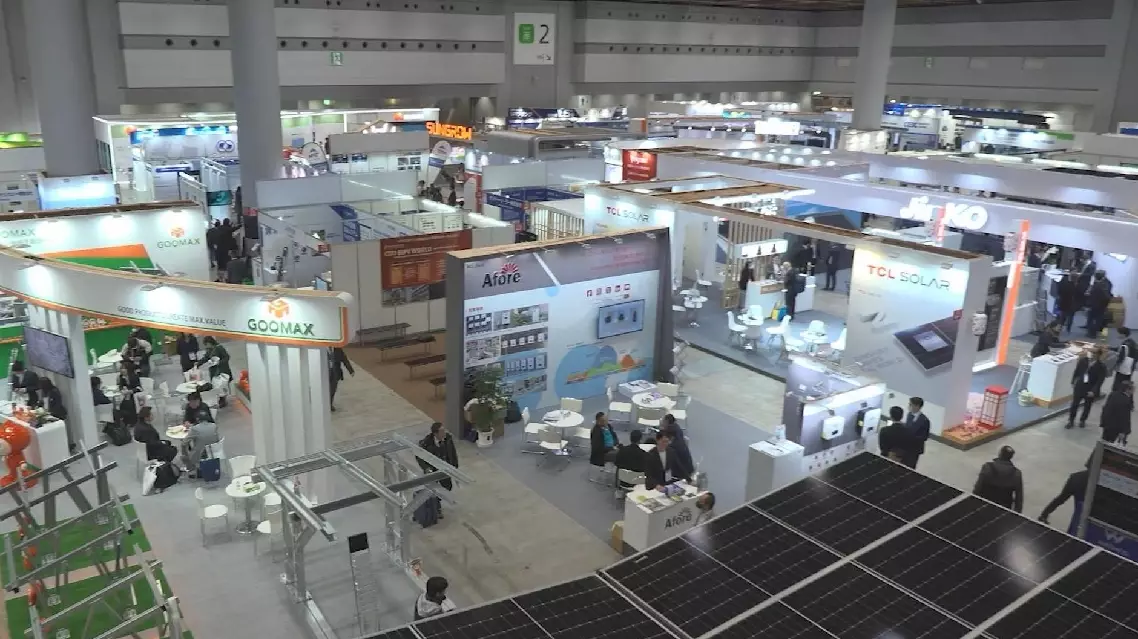
Renewable energy technologies shine at World Smart Energy Week 2025


Renewable energy technologies shine at World Smart Energy Week 2025

Renewable energy technologies shine at World Smart Energy Week 2025

Continued surges in global oil prices, a result of the ongoing U.S.-Israeli military strikes against Iran, will put severe pressure on Japan's heavily energy-import-dependent economy, a Japanese scholar warned.

The warning came as the Japanese government started a historic oil reserve release on Monday to ease the impact of volatile international oil prices. The release totaled around 80 million barrels, equal to roughly 45 days of Japan's domestic oil consumption, marking the largest-ever drawdown of the country's oil reserves.

Tomohiko Nakamura, a professor of the Faculty of Economics at Kobe International University, said that while the reserve release will have a limited effect in curbing oil price hikes, protracted geopolitical tensions in the Middle East will undermine the policy's impact given Japan's finite oil stockpiles.

"I believe the release of oil reserves will have a certain effect in curbing oil price hikes. However, if the tensions in the Middle East become protracted, that will pose a problem as Japan's oil reserves are not unlimited. We are facing a double whammy: on one hand, crude oil prices are rising, and on the other, the yen's depreciation is driving up import costs. The impact of soaring crude prices is being felt not just in Japan, but across the world. For example, the power sector, where a large share of electricity generation still relies on oil, will see higher generation costs, and as a result, nearly all industries will be affected. These unforeseen impacts may gradually become apparent over the next month," he said.

Beyond the immediate macroeconomic pressures, Nakamura expressed particular concern for Japan's small and medium-sized enterprises (SMEs), which form the backbone of the country's economic activity.

"The biggest impact is the sharp rise in raw material and fuel costs. While large corporations can reduce costs through bulk purchasing, SMEs find it difficult to achieve the same. As a result, the operating pressures on SMEs will grow increasingly severe, leading to a probable rise in the number of businesses exiting the market. The trend of declining SME numbers could accelerate further," he said.

Soaring oil prices put severe pressure on Japan's economy: Japanese scholar

Soaring oil prices put severe pressure on Japan's economy: Japanese scholar

Recommended Articles