Local bazaars or markets in Lhasa, capital of southwest China's Xizang Autonomous Region, are brimming with festive energy as people flock there to buy special goods for the upcoming Tibetan New Year, or Losar, which falls on Feb 28 this year.
One of the largest New Year markets in Lhasa, the Barkhor shopping mall in the heart of the city has set up more than 1,000 booths to welcome the Year of the Wood Snake. Shoppers can find a dazzling array of goods, from finely crafted copperware and handwoven blankets to the most important Tibetan New Year snacks such as khapse (deep-fried pastry) and sliced dried beef. The market's vibrant atmosphere and colorful displays are drawing groups of tourists.
Meanwhile, in Dagze District, the annual Tibetan New Year Shopping Festival is in full swing. The event brings together over 320 local vendors, offering a wide range of unique Tibetan New Year items like "New Year flowers," highland barley seedlings, and exquisite chema boxes (a two-tier rectangular wooden box containing roasted barley and fried wheat grain). Visitors can also enjoy Tibetan folk dance performances and even receive handcrafted Tibetan New Year couplets written by local calligraphers.
"It's wonderful and well-prepared. There are various kinds of goods here," said a local buyer, Yanglha.
The Tibetan New Year celebration usually starts on the first day of the first month under the Tibetan calendar and ends after 15 days. Just like the Spring Festival, the Tibetan New Year holiday marks the perfect opportunity for Tibetans to reunite with their relatives and friends.
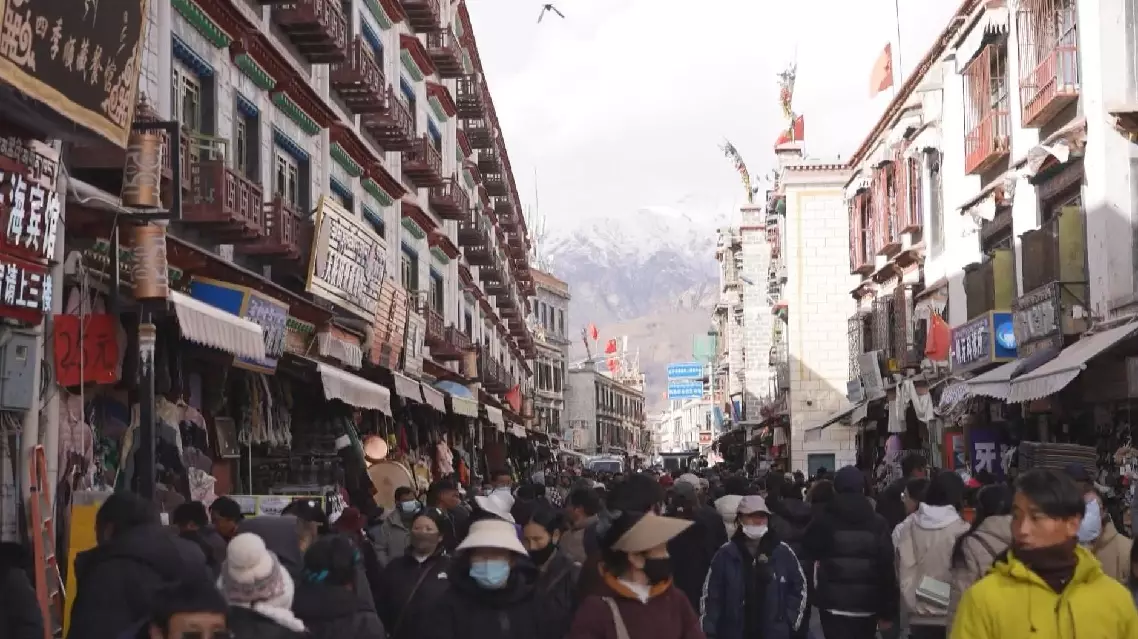
Lhasa markets bustling as Tibetan New Year approaches
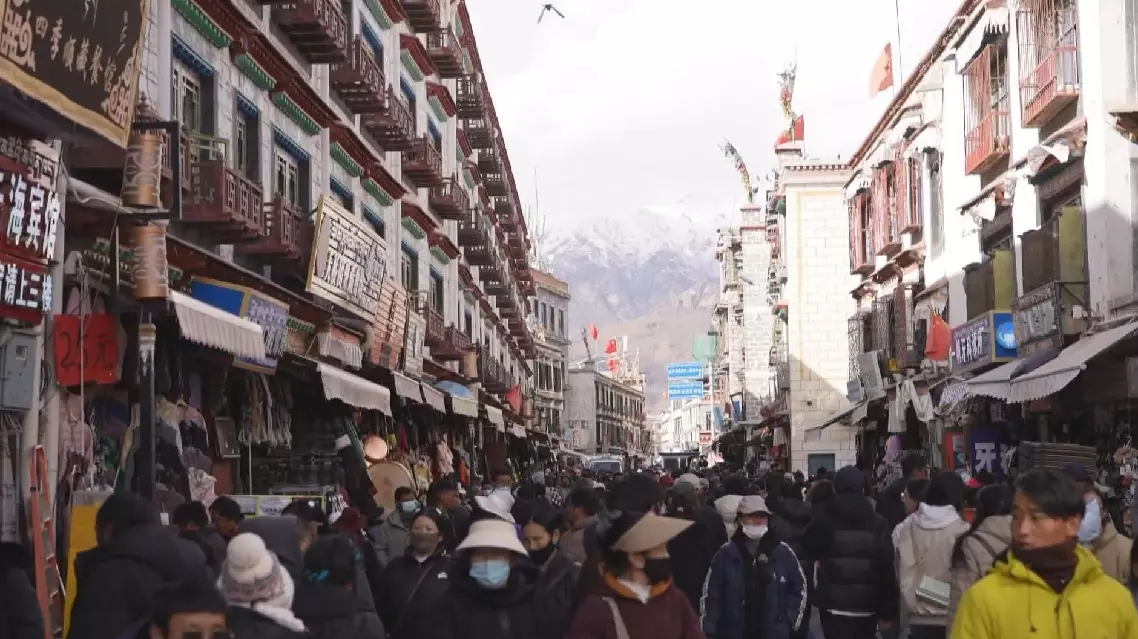
Lhasa markets bustling as Tibetan New Year approaches