Beijing Economic-Technological Development Area, or E-Town, has taken a series of measures including promoting institutional innovation to improve market access for companies and establishing service centers within industrial parks to better support enterprises.
Located in the southeastern suburbs of Beijing, E-Town is home to over 100,000 businesses. Most of them are private companies from futuristic industries, including robotics, commercial astronomy, biomedicine, and new energy.
Among these companies is Joybing, a firm specializing in robots that can cook Chinese street food.
One of the robots designed and produced by the company can make Jianbing Guozi, a Chinese crepe, in just three minutes. The robot can spread a spoonful of batter on the pan, brush it with sauce, flip it, toss in fillings, and fold it, just as a human Jianbing maker would.
It took Joybing eight years to create this robot, which consists of over 10,000 parts and 100 intellectual property rights (legal rights given to its creator). However, when the robot was finally ready for commercialization, a lack of a certain license held it back.
It turns out that China had never issued a food safety license for a company that allows automatic device to make street food by 2023.
"In the past, there were regulatory gaps on robots, especially those relating to food making, and on automated cooking processes, which means at that time we did not have market access", said Yu Qinwei, chairman of Joybing.
To help Joybeing find a way forward, the authorities in E-Town have collaborated with various government agencies to promote institutional innovation. As a result, the company received its license, the first of its kind in the country, last year. Since then, it has delivered hundreds of orders for such robots. The company's goal this year is to sell between 5,000 and 10,000 of these robots, with new products specializing in steaming and toasting food on the way.
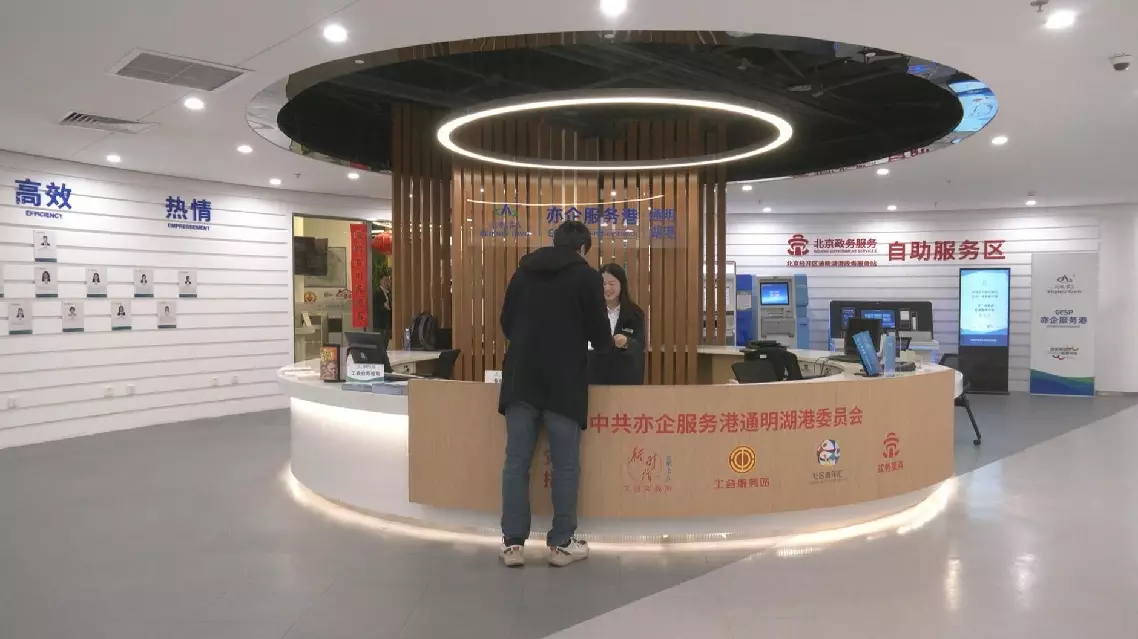
To better connect with companies and help solve their problems, E-Town has set up 11 service stations within industrial parks in the region, streamlining the regulatory process for businesses and benefiting more than 2,000 companies in or near these parks.
"Our service station serves over 2,600 companies, and we basically visit all of them within a year. These companies usually come to us when facing challenges in securing business venues, accessing financing, and obtaining favorable policies," said Wen Jing, a staff member at a service station in E-Town.
Through these service stations, companies can directly voice their needs to government more effectively.
"The service stations can assign tasks to different government departments and coordinate their work. They cover key areas of company development, including company registration, business operations, technical upgrades, product commercialization, cost reduction, and increase in input and production," said Li Bing, an official with E-Town.
Beijing's E-Town takes steps to help private companies thrive