Skip to Content Facebook Feature Image

US energy secretary touts nuclear power as tech sector's thirst for electricity grows

News

US energy secretary touts nuclear power as tech sector's thirst for electricity grows
News

News

US energy secretary touts nuclear power as tech sector's thirst for electricity grows

2025-02-26 10:28 Last Updated At:10:30

ALBUQUERQUE, N.M. (AP) — U.S. Energy Secretary Chris Wright says it’s critical that the nation be out in front when it comes to artificial intelligence, and that means having reliable and affordable sources of electricity to meet the growing demands of the technology sector.

Wright made the comments Tuesday before touring Sandia National Laboratories. On Monday, he visited Los Alamos National Laboratory, home to the top secret project during World War II that created the atomic bomb.

A fossil fuel executive and graduate of MIT, Wright highlighted the labs' legacies and said they will play a role in what he described as this generation's Manhattan Project — a critical scientific undertaking that will change the course of the world in ways yet to be imagined.

To win the AI race, he said the nation needs reliable and affordable electricity and the infrastructure to move it around.

“I'm a believer,” Wright said, adding that nuclear power will be part of the solution.

Federal energy analysts say the U.S. has generated more nuclear electricity than any other country and that plants here have supplied close to 20% of the nation's total annual electricity since 1990. That's enough to power more than 70 million homes.

Nuclear power makes up less of the world’s portfolio when it comes to generating energy than other sources, Wright said. That's despite plants having small footprints and running on small amounts of material that pack a big punch.

"It’s playing a shrinking role in our energy pot,” he said. “That doesn’t square.”

However, many states are looking to nuclear energy to fill the gap as more data centers come online and tech companies develop more energy-thirsty AI tools.

Arizona already is home to one of the nation's largest nuclear plants and utilities there have teamed up to explore the potential for building more. Meanwhile, California extended the life of its last operating nuclear plant with the help of more than $1 billion in federal funding. Officials say the Diablo Canyon plant is vital to California's power grid.

In Wyoming, TerraPower, a company started by Bill Gates, broke ground last summer on what officials say will be one of the first advanced reactors to operate in the U.S.

Nuclear power plants are fueled with uranium — the mining and milling of which is a major sticking point for environmentalists who point to legacy contamination from early operations in western U.S. states and on Native American lands. Concerns still swirl today, with some groups criticizing the revival of mining near the Grand Canyon.

The back end of the fuel cycle also is an issue, with commercial reactors across the country producing more than 2,000 metric tons of spent fuel annually, according to the U.S. Department of Energy. Most of the waste remains at the sites that produce it because there’s nowhere else to put it.

Private companies plan to temporarily store spent fuel in New Mexico and West Texas. In the case of Texas, the U.S. Supreme Court is weighing whether federal regulators have the authority to grant licenses for such facilities to operate.

Barring a permanent solution, both Republican and Democratic leaders in the two states have said they don't want to become the nation's nuclear dumping ground.

Wright acknowledged the challenge of spent fuel, saying there are “some creative ideas” on the horizon that could lead to long-term storage solutions at multiple sites around the U.S.

U.S. President Donald Trump has set the stage, signing executive orders aimed at stoking American innovation when it comes to AI, declaring a national energy emergency and establishing a national council that will be focused on “energy dominance.”

The administration also supports a multibillion-dollar venture by OpenAI, Oracle and SoftBank that involves building data centers and the electricity generation needed for further AI development.

The Biden administration, too, had touted nuclear power as a way to meet demands without emitting greenhouse gases. The administration last year set a target of at least tripling nuclear power in the U.S. by 2050.

Standing in a corner of the national nuclear science museum in Albuquerque, Wright noted that the nation's nuclear history began in large part in New Mexico with the development of the atomic bomb.

There are many reasons for the lack of progress over recent decades, including government regulations he called overly burdensome. Beyond ensuring human safety, he said the high bars that have been set have stifled the development of next-generation nuclear power.

“Our goal is to get that out of the way, bring private businesses together, and figure out what kind of nudge we might need to get shovels in the ground and next-generation small modular reactors happening,” he said. “I think they will be part of the solution.”
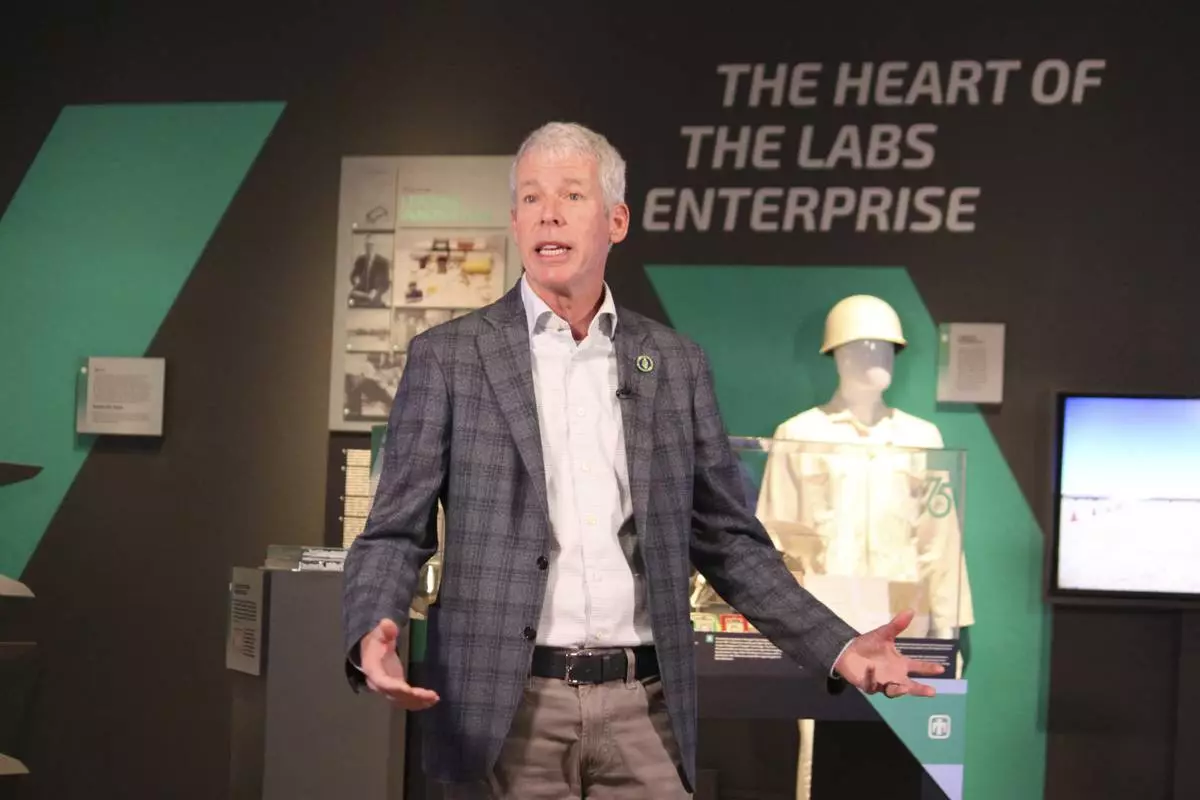
U.S. Energy Secretary Chris Wright talks with reporters at the National Museum of Nuclear Science and History before a tour of Sandia National Laboratories in Albuquerque, N.M., on Tuesday, Feb. 25, 2025. (AP Photo/Susan Montoya Bryan)
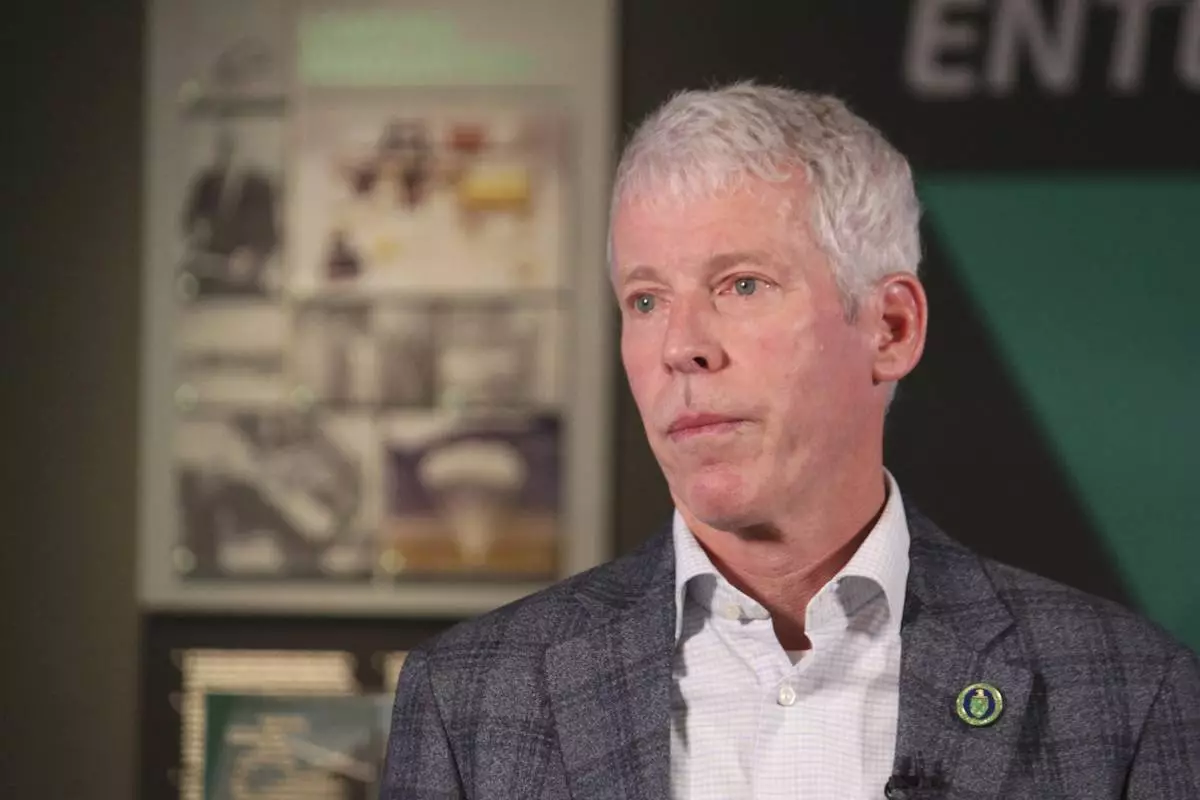
U.S. Energy Secretary Chris Wright talks with reporters at the National Museum of Nuclear Science and History before a tour of Sandia National Laboratories in Albuquerque, N.M., on Tuesday, Feb. 25, 2025. (AP Photo/Susan Montoya Bryan)
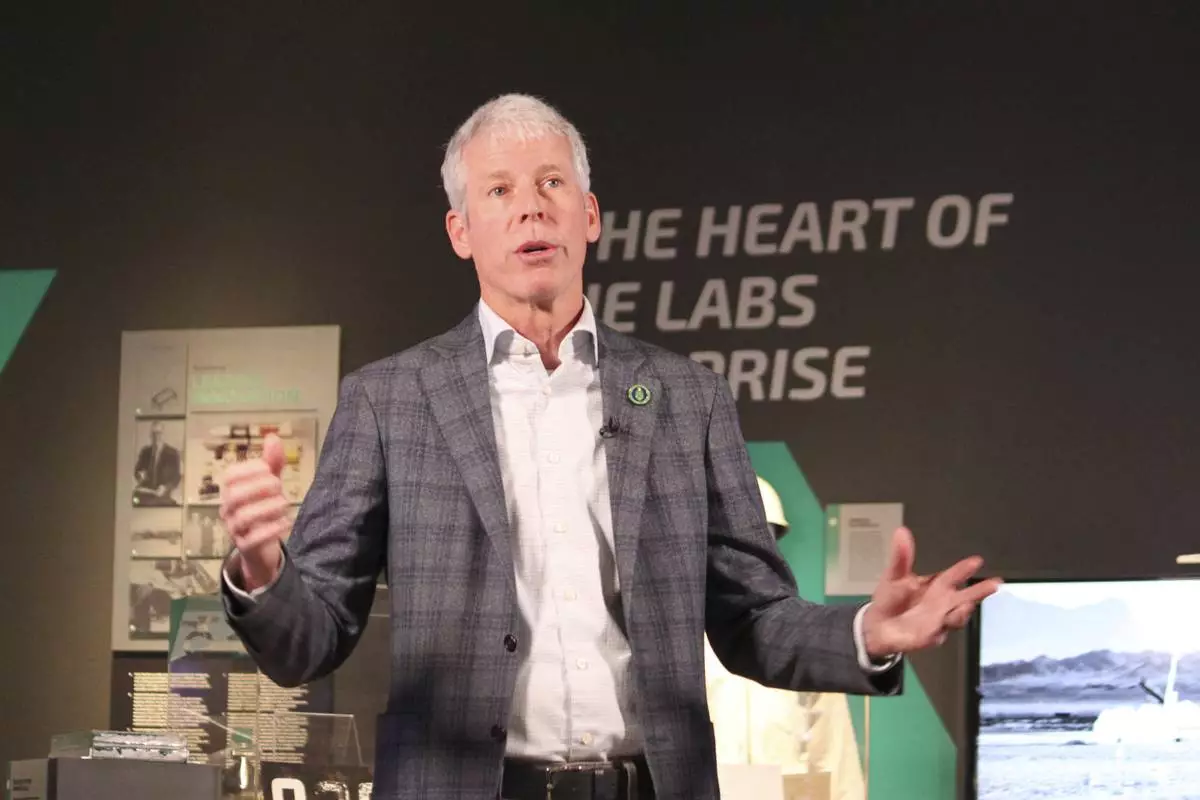
U.S. Energy Secretary Chris Wright talks with reporters at the National Museum of Nuclear Science and History before a tour of Sandia National Laboratories in Albuquerque, N.M., on Tuesday, Feb. 25, 2025. (AP Photo/Susan Montoya Bryan)


U.S. Energy Secretary Chris Wright talks with reporters at the National Museum of Nuclear Science and History before a tour of Sandia National Laboratories in Albuquerque, N.M., on Tuesday, Feb. 25, 2025. (AP Photo/Susan Montoya Bryan)

U.S. Energy Secretary Chris Wright talks with reporters at the National Museum of Nuclear Science and History before a tour of Sandia National Laboratories in Albuquerque, N.M., on Tuesday, Feb. 25, 2025. (AP Photo/Susan Montoya Bryan)

U.S. Energy Secretary Chris Wright talks with reporters at the National Museum of Nuclear Science and History before a tour of Sandia National Laboratories in Albuquerque, N.M., on Tuesday, Feb. 25, 2025. (AP Photo/Susan Montoya Bryan)

WASHINGTON (AP) — Washington, D.C., Attorney General Brian Schwalb filed a lawsuit Thursday using an expansive racketeering law — originally crafted to prosecute organized crime — to put a landlord accused of providing unsuitable living conditions to his renters out of business.

Speaking at a press conference, Schwalb announced his office was using the Racketeer Influenced and Corrupt Organizations Act, or RICO, to dismantle the real estate operation of Ali “Sam” Razjooyan, his brother Eimon “Ray” Razjooyan, and their mother Houri Razjooyan. Schwalb said it was the first time D.C. has used the statute in a housing case.

The law is designed for complex investigations that involve legitimate entities, like an LLC or corporations that are used to mask criminal activities. It is especially useful in tracking through multiple corporations and other legal entities to reach the source of alleged illegal activity. Its use in Washington highlights one way cities may fight back against fraud and other actions that deplete already-slim inventories of affordable housing around the country.

Schwalb said that “for every 100 extremely low income renters in the District of Columbia there are only 32 affordable and available homes.” He said the Razjooyans allegedly took advantage of the system through a “sprawling illegal enterprise, a complex web of shell LLCs, unlicensed property management and construction companies and straw purchasers.” Those were all designed to conceal the true ownership and condition of the properties to defraud lenders and take advantage of the district’s affordable housing subsidy programs.

The family owns 70 primarily rent controlled properties, the lawsuit said. The lawsuit accuses them of deceiving lenders with false promises to renovate buildings and then rent them to tenants who receive housing subsidies paid by the D.C. government. The buildings were allowed to fall into disrepair, leaving hundreds of residents living in terrible conditions, the lawsuit said.

“I strongly disagree with the Attorney General’s allegations. These claims have not been proven, yet they are being represented to the public as though they already have been. That is not how our legal system is supposed to function. This case should be decided in a courtroom based on evidence, not through dramatic headlines,” Ali Razjooyans said in a text.

He added that Schwalb has suggested this is about protecting residents when it is imposing substantial costs on property owners and the housing system without producing meaningful solutions. “I will address these allegations in court, where they belong. When the full record is developed and the evidence is tested, I am confident it will demonstrate that the accusations do not reflect the facts.”

Thursday’s lawsuit is a continuation of the action Schwalb’s office took in 2024 when it filed lawsuits on behalf of residents of two properties. The continuing investigation uncovered an intricate array of LLCs, unlicensed property management and construction companies, and straw purchasers designed to conceal the true ownership of certain properties, Schwalb said.

Schwalb said the racketeering statute allows his office to move beyond individual properties and target the “foundation of the Razjooyan's vast operation, the web of fraud and deception that is core to their business mode.”

Palmer Heenan, a longtime housing expert and civil rights attorney, called the use of RICO in a housing lawsuit “novel and important” because determining the identity of the actual owner of a property can be complicated when it involves multiple layers of corporate ownership.

“One of the advantages is it lets you go backwards into these networks, so it makes it easier to go after all of the companies involved,” he said. “It will also make it easier for tenants to obtain justice for the horrific conditions they’re all too often been exposed to.”

In one allegation that appears in the lawsuit, Razjooyan, while attempting to obtain a refinancing loan, claimed to build 10 new units in one property and showed pictures of new doors and apartment numbers to lenders. The doors opened to “concrete block walls, apparently to deceive appraisers and generate a higher property evaluation,” the lawsuit alleges.

Conditions for tenants in actual apartments were dire, with some living in rodent- and cockroach-infested properties while others suffered noxious smells from basements full of standing water that collected for days, and some who lived without heat during the entire winter, the lawsuit alleges.

Schwalb said at the press conference that some of those apartments became uninhabitable, worsening the affordable housing crisis in the city.

The lawsuit seeks restitution for impacted tenants and to “enjoin the defendants from doing business in the District.”

FILE - District of Columbia Attorney General Brian Schwalb speaks during a hearing of the House Committee on Oversight and Government Reform on Capitol Hill, Sept. 18, 2025, in Washington. (AP Photo/Mark Schiefelbein, File)

FILE - District of Columbia Attorney General Brian Schwalb speaks during a hearing of the House Committee on Oversight and Government Reform on Capitol Hill, Sept. 18, 2025, in Washington. (AP Photo/Mark Schiefelbein, File)

Recommended Articles