China officially launched a deep-sea research megaproject in Guangzhou City of South China's Guangdong Province on Friday. It is to become the world's first 2,000-meter-class seafloor-based, crewed, long-term deep-sea laboratory.
The project, known as the Cold Seep Ecosystem Research Facility, marks a step forward of the country in exploring extreme deep-sea environments and the sustainable development of deep-sea resources.
Cold seeps are areas on the seafloor where gases such as methane, hydrogen sulfide, and carbon dioxide seep out of the seabed due to geological or pressure changes. The ecosystems that develop around these seeps, known as cold seep ecosystems, are unique "oases" in the dark depths of the ocean, where marine organisms thrive by using the chemical substances from the seeps for chemosynthesis.
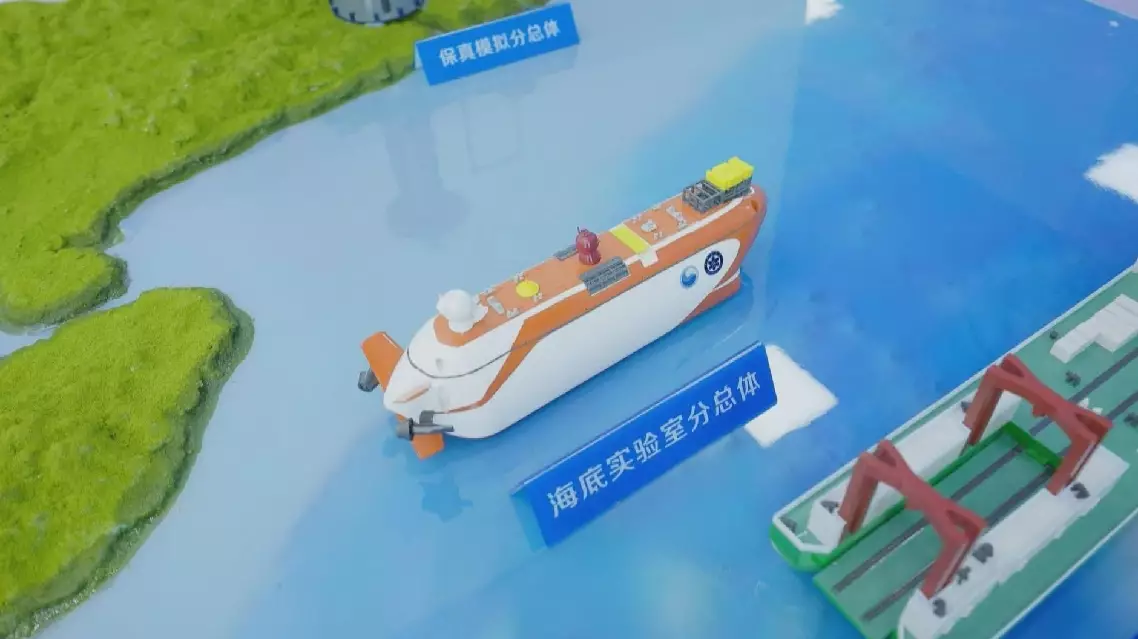
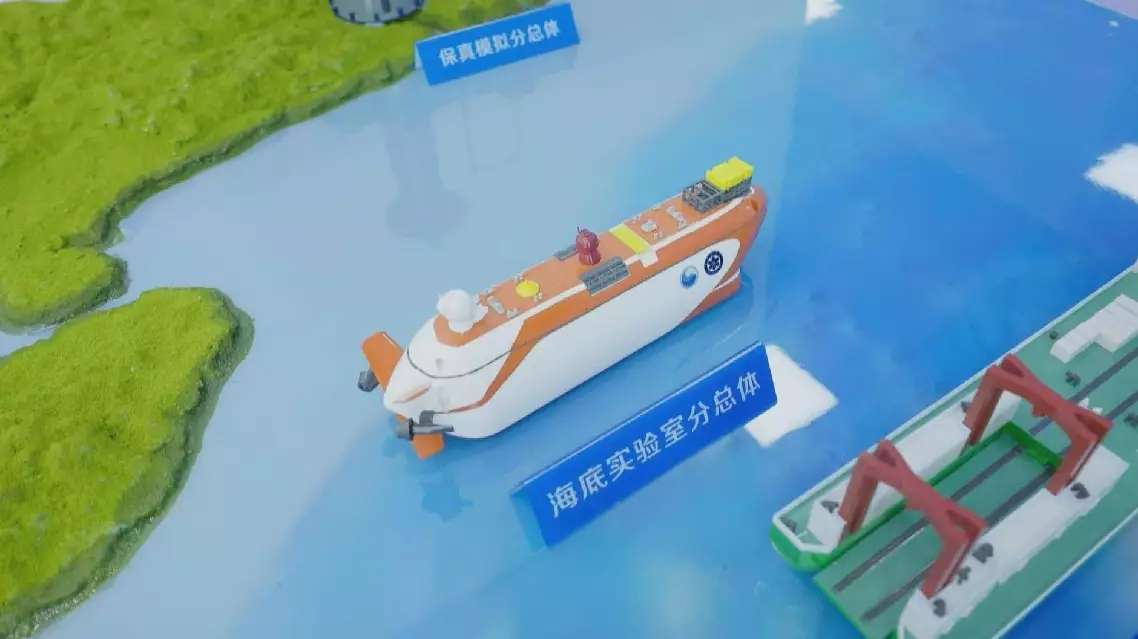
Led by the South China Sea Institute of Oceanology under the Chinese Academy of Sciences (SCSIO), the facility comprises three key components: a surface support ship, a seafloor laboratory, and a fidelity simulation system.
The centerpiece is the seafloor laboratory, which measures 33 meters in length and seven to eight meters in width and height. Its interior consists of five interconnected pressure-resistant spheres, providing a total internal volume equivalent to three times that of China's space station, significantly larger than existing crewed submersibles like the Fendouzhe.
According to Li Chaolun, director of SCSIO and chief commander of the Cold Seep Ecosystem Research Facility, the laboratory can support six scientists for 30 days. "It can operate at depths of up to 2,000 meters, and support six scientists for 30-day in-situ experiments on the seafloor," he said.
The construction of the Cold Seep Ecosystem Research Facility is planned to be completed within five years. It will be the world's first 2,000-meter-class seafloor-based, crewed, long-term laboratory dedicated to cold seep systems. Once operational, it is expected to facilitate groundbreaking research in the development mechanisms of cold seeps, the evolutionary processes of extremophiles, and the ecological impacts of methane hydrates, thereby propelling progress in deep-sea science and technology.
"The greatest significance of this facility is that it truly moves the laboratory -- that used to be on a research boat -- from the surface to the seafloor. And it allows for real-time adjustments based on the objects of observation. This long-term deep-sea experimental facility, especially a crewed one, will drive the development of related industries such as deep-sea materials, energy, and communications," said Li.
Operating at a depth of 2,000 meters, equivalent to 200 atmospheric pressure, the facility faces significant challenges in maintaining long-term stability and ensuring the well-being of the scientists on board.
The team mainly leveraged existing technologies from manned spaceflight and other areas, such as the non-regenerative environmental control and life support systems. These systems regulate the environment, manage oxygen levels, provide food, and also handle waste to ensure a relatively comfortable and suitable living and working environment for the scientists during their stay, according to Li.
The development and operation of the Cold Seep Ecosystem Research Facility will also lead to breakthroughs in several key technologies, including long-term crewed deep-sea experiments, the safety of large-scale high-pressure structures, large-scale titanium alloy processing, and underwater docking mechanisms.
The facility's pressure-resistant structure consists of five interconnected spherical pressure hulls, designed to support six people for an extended stay of 30 days.
"This long-term, ultra-high-pressure structure is unprecedented internationally and poses many technical challenges. In addition to its core experimental functions, the facility can also deploy AUVs (Autonomous Underwater Vehicles) and ROVs (Remotely Operated Vehicles) to expand its capabilities in seafloor exploration and sampling," said Li.
China launches deep-sea cold seep research megaproject
China launches deep-sea cold seep research megaproject