The Cook Islands values and appreciates China's respect for its sovereignty, a stance that encourages other countries to establish diplomatic ties with the small Pacific island nation, said Prime Minister Mark Brown.
Brown paid an official visit to China from Feb. 10 to 16, during which he attended the closing ceremony of the 9th Asian Winter Games and met with Chinese Premier Li Qiang in the game's host city of Harbin in northeast China.
In an interview with China Central Television (CCTV) during his stay in Harbin, the prime minister shared his insights into his country's relations with China.
Respect is the cornerstone of China's policy towards the Pacific island countries. Chinese President Xi Jinping has emphasized that China fully respects the sovereignty and independence of these nations, their will, ethnic and cultural traditions, as well as the efforts to seek strength through unity.
Brown expressed his support for this policy.
"As a small country, we've always valued the respect that the People's Republic of China has afforded to the Cook Islands, since our signing of our formal diplomatic relations. And it is that respect of our sovereignty as a state that has no doubt also encouraged other countries to establish their formal relations with the Cook Islands. So that respect, as you called it, that is afforded to other countries, is certainly one that we very appreciate and certainly one that we return in same regard. Respect between countries, regardless of how large or how small they are, is a fundamental cornerstone of good relationships, building good relationships between our countries," said the Prime Minister.

Cook Islands highly appreciates China's respect for its sovereignty: prime minister
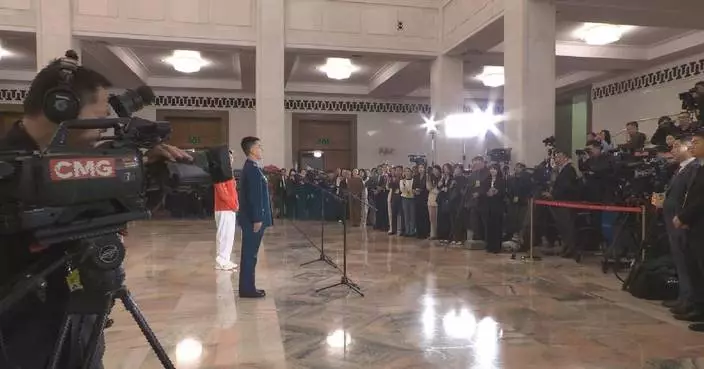
The Ecological and Environmental Code solidifies China's successful reform experiences in the form of law, transforming ecological conservation into a long-term national goal for the sustainable development of the Chinese nation, said a member of the Standing Committee of the 14th National People's Congress (NPC) on Thursday.
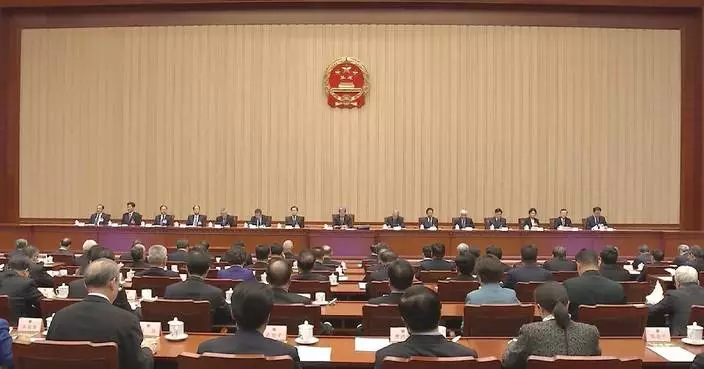
Chinese lawmakers voted to adopt the Ecological and Environmental Code at the closing meeting of the fourth session of the 14th National People's Congress in Beijing earlier in the day.
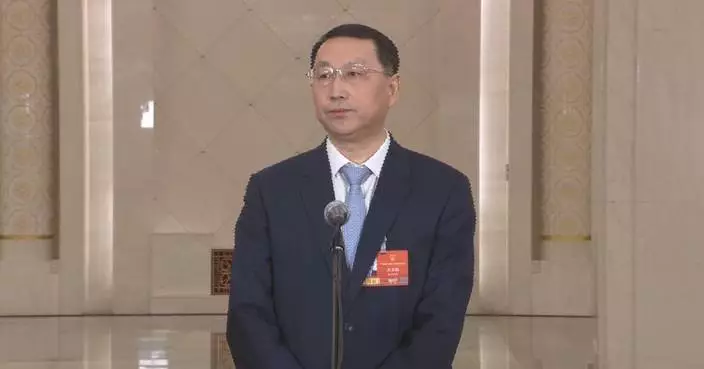
Lyu Zhongmei, also vice chair of the NPC Environmental Protection and Resources Conservation Committee, who first proposed the drafting of the code, said in an interview with China Global Television Network (CGTN) that the adoption of the code represents a milestone in transforming the country's successful reform policies into a stable legal framework, with profound implications on both national ecological governance and people's daily lives.
"I think this actually sends a very strong signal to the world. Many of our past achievements in ecological civilization system reform were reflected through policies, with numerous reform measures introduced. This time, we are institutionalizing the successful experience of those reforms in the form of law, the most authoritative and stable way to solidify them. This shows that our efforts are not just a one-off campaign. Rather, ecological and environmental protection and the building of an ecological civilization are national goals that reflect the people’s aspiration for a better life and serve the ultimate purpose of ensuring the sustainable development of the Chinese nation," said Lyu.
Lyu highlighted that the code directly enshrines China's greenhouse gas pledge and dual-carbon goals into law, demonstrating the country's concrete actions to fulfill its international responsibilities and uphold its image as a responsible major country.
"We have directly written the commitment to fully meet greenhouse gas targets into the code, and incorporated pledges to use the 'dual carbon' goals as a driving force to advance a comprehensive green transformation of economic and social development. I think this reflects our concrete actions to honor our commitments and take responsibility to the international community, demonstrating China’s image as a responsible major country," she said.
On the topic of global trade, she explained how the code will help safeguard China's interests.
"On the one hand, we are raising standards for the green and low-carbon transition and adopting market-based measures. Some of the standards we have established based on China's actual situation and the methodologies we have created can contribute China's experience and expertise to the world. On the other hand, the Ecological and Environmental Code also includes provisions on extraterritorial application and establishes China’s own system of environmental protection standards," Lyu said.
Looking to the future, she discussed the code's role in the 15th Five-Year Plan period (2026-2030).
"During the 15th Five-Year Plan period, I believe our ecological and environmental protection will undergo fundamental changes. In the past, it relied more on strict administrative enforcement and control. But now, while not lowering strict control standards or reducing strict control measures, we must also introduce more incentive-based measures. Strict regulation will push enterprises to transform and encourage them to pursue environmental protection. The code will provide a clear, long-term and stable norm. In my view, the Ecological and Environmental Code is not only a 'tightening band' that constrains corporate behavior, but also an 'engine' that opens up new tracks for enterprises’ future development," she said.

China's ecological environmental code represents milestone in environmental rule of law