China's CR450 high-speed train, the fastest in the world, is entering an intensive testing phase, with researchers confident it could be ready for commercial service within two years, offering higher speeds, enhanced safety, improved energy efficiency, greater comfort, and advanced intelligence.
Unveiled in Beijing at the end of 2024, the CR450 prototype is now the focus of a series of scientific tests and performance evaluations aimed at ensuring its readiness for commercial operation.
This cutting-edge train boasts impressive specifications, including a test speed of 450 kilometers per hour and an operational speed of 400 kilometers per hour, making it the fastest high-speed rail vehicle globally. Notably, it achieves this speed without increasing braking distances, while also reducing aerodynamic drag by 22 percent and cutting its total weight by 10 percent. Interior noise levels have been lowered by two decibels, and business class seating is designed to rotate 300 degrees, enhancing passenger comfort.
Zhao Hongwei,principal researcher of the China Academy of Railway Sciences and a member of the Chinese People's Political Consultative Conference (CPPCC), China's top political advisory body, has been deeply involved in the CR450's development since its inception.
"We started planning the CR450 back in 2018. It took three years to nail down the top technical specifications, and we commenced the project officially in 2021," she said.
These indicators focus on achieving higher speeds, enhanced safety, improved energy efficiency, greater comfort, and increased intelligence.
To meet these ambitious targets, the design team recognized the need for innovation, stepping beyond traditional standards to integrate advanced technologies. A primary goal was weight reduction.
The CR450 prototype incorporates lightweight materials such as carbon fiber composites and magnesium alloys, alongside refinements in its aerodynamic design. Every adjustment contributes to a more efficient and lightweight train.
These innovations have led to a great reduction in drag and total weight, significantly lowering the energy required for operation while also reducing environmental impact.
Central to the train's performance is its propulsion system, which employs a permanent magnet motor — the first of its kind in commercially operated high-speed trains in China. This motor enhances efficiency by over 3 percent compared to the asynchronous traction motors in the existing CR400 series.
"To achieve a top speed of 400 kilometers per hour, we had to increase the traction power. To further reduce energy consumption and improve efficiency, we also introduced the use of permanent magnet traction motors," Zhao said.
As a leading researcher attending the third session of the 14th CPPCC National Committee scheduled to start on March 4, Zhao is particularly interested in how artificial intelligence can enhance research efficiency. She said she believes AI will play a transformative role in high-speed rail design, testing, and maintenance, empowering future developments in train systems.
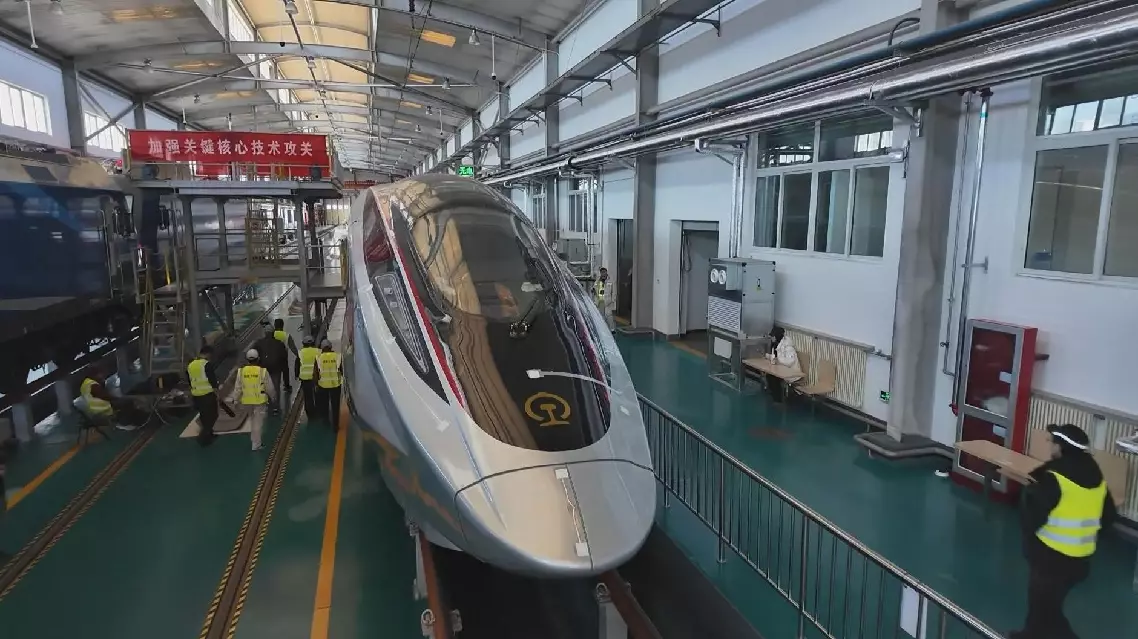
World's fastest high-speed train CR450 undergoing rigorous testing
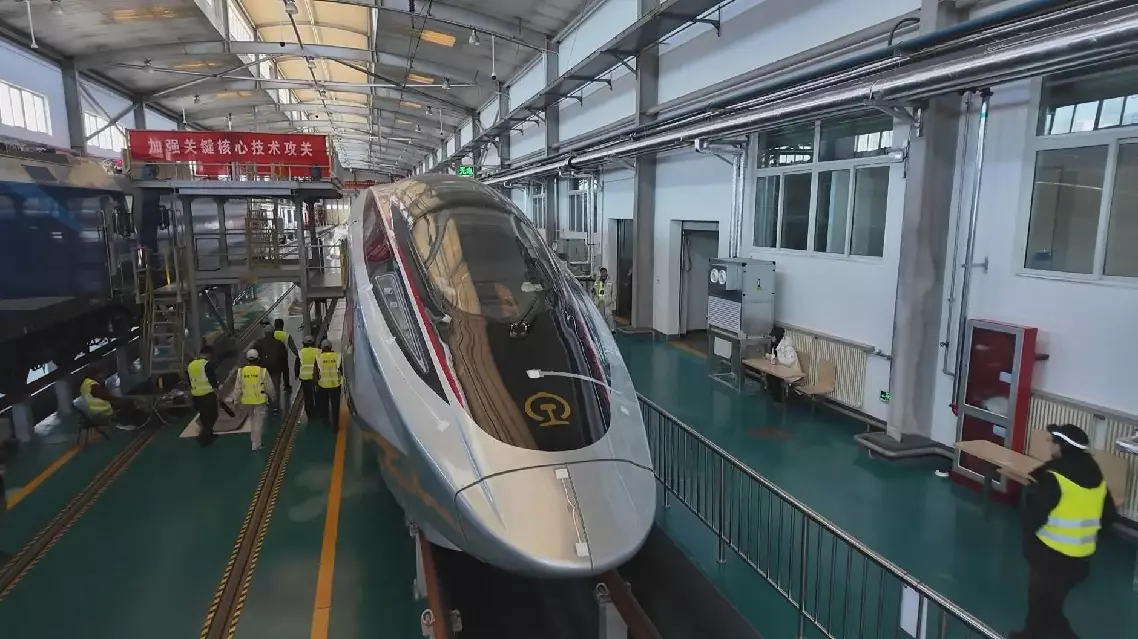
World's fastest high-speed train CR450 undergoing rigorous testing