A three-day cross-border cultural exchange event celebrating the Spring Dragon Festival wrapped up on Sunday in Longzhou County, Guangxi Zhuang Autonomous Region bordering Vietnam, bringing together participants from both countries.
The Spring Dragon Festival, a traditional Chinese celebration, falls on the second day of the second month of the lunar calendar, and this year landed on Saturday. The festival marks the day when, according to folklore, the dragon raises its head, symbolizing prosperity and renewal.
The event kicked off on Friday with an opening ceremony one day later featuring performances from Chinese and Vietnamese delegations. Traditional music, folk fashion shows, and wedding customs took the center stage, offering a glimpse into the region's rich cultural heritage.
One of the highlights was a vibrant procession led by golden dragon figures, symbolizing a bountiful harvest. As the dragons paraded around grain granaries, participants followed in a lively celebration.
Visitors praised the festive dynamic atmosphere and immersive cultural experiences.
"It's bustling with excitement, and the cultural activities truly reflect the unique charm of the China-Vietnam border. The food here is also amazing, and we are having a great time," said a visitor.
An open-air fair drew large crowds, offering a variety of local specialties, including Longzhou's signature black sugar and Vietnamese coffee.
Xie Wenbo, head of the Longzhou County Bureau of Culture, Tourism, Sports, and Broadcasting, said that this year marks the 75th anniversary of the establishment of diplomatic relationship between China and Vietnam, as well as China-Vietnam Year of People-to-People Exchanges, emphasizing that the festival serves as a platform to celebrate shared traditions and strengthen cross-border ties.
"We have specially organized this intangible cultural heritage exhibition to highlight the deep cultural connection between our two nations," Xie said.

China, Vietnam celebrate Spring Dragon Festival, strengthen bilateral ties
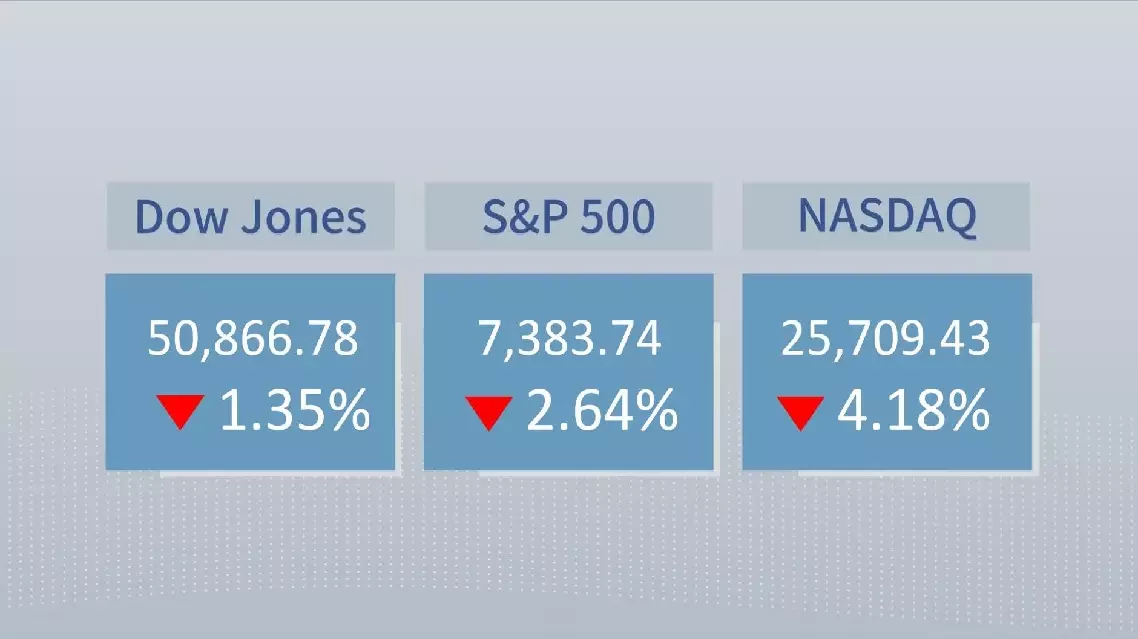
U.S. stocks ended sharply lower on Friday, as a stronger-than-expected May jobs report heightened bets on a potential Federal Reserve rate hike later this year.
The Dow Jones Industrial Average fell 695.15 points, or 1.35 percent, to 50,866.78. The Standard and Poor's 500 sank 200.57 points, or 2.64 percent, to 7,383.74. The Nasdaq Composite Index shed 1,121.53 points, or 4.18 percent, to 25,709.43.
Six of the 11 primary Standard and Poor's 500 sectors closed in negative territory, with technology and consumer discretionary leading the declines at 5.78 percent and 2.43 percent, respectively. Consumer staples and utilities were the top performers, rising 1.64 percent and 0.8 percent, respectively.
The U.S. Bureau of Labor Statistics reported that employers added 172,000 jobs in May, exceeding economists' expectations of around 88,000. The unemployment rate held steady at 4.3 percent.
While the strong labor market data underscored economic resilience, it also raised concerns about persistent inflation and reduced the likelihood of near-term monetary easing.
Traders now price in a Federal Reserve rate hike by the end of this year. According to the CME FedWatch Tool, the probability of interest rates rising by year-end jumped to 72.7 percent on Friday, up from 50.5 percent the previous day. This shift came even as U.S. President Donald Trump continued to press for interest rate cuts while his nominee, Kevin Warsh, assumed leadership of the Federal Reserve.
Market volatility intensified this week as investors took profits after recent rallies and adjusted expectations for Fed policy. The CBOE Volatility Index, Wall Street's fear gauge, surged over 30 percent to its highest level in two months.
In the technology sector, concerns over the artificial intelligence investment boom persisted. Broadcom continued to plummet following its disappointing earnings forecast earlier in the week, while Micron Technology, Advanced Micro Devices, and Intel also posted notable losses.
U.S. stocks tank as strong jobs report fuels rate-hike expectations