The U.S. dollar increased in late trading on Friday.
The dollar index, which measures the greenback against six major peers, gained 0.65 percent to 100.068 at 3 p.m. (1900 GMT).
In late New York trading, the euro decreased to 1.1523 U.S. dollars from 1.1614 dollars in the previous session, and the British pound fell to 1.3337 dollars from 1.3425 dollars in the previous session.
The U.S. dollar bought 160.17 Japanese yen, higher than 160.02 Japanese yen of the previous session. The U.S. dollar advanced to 0.7962 Swiss francs from 0.7892 Swiss francs, and it was up to 1.3949 Canadian dollars from 1.3899 Canadian dollars. The U.S. dollar climbed to 9.4735 Swedish kronor from 9.3737 Swedish kronor.
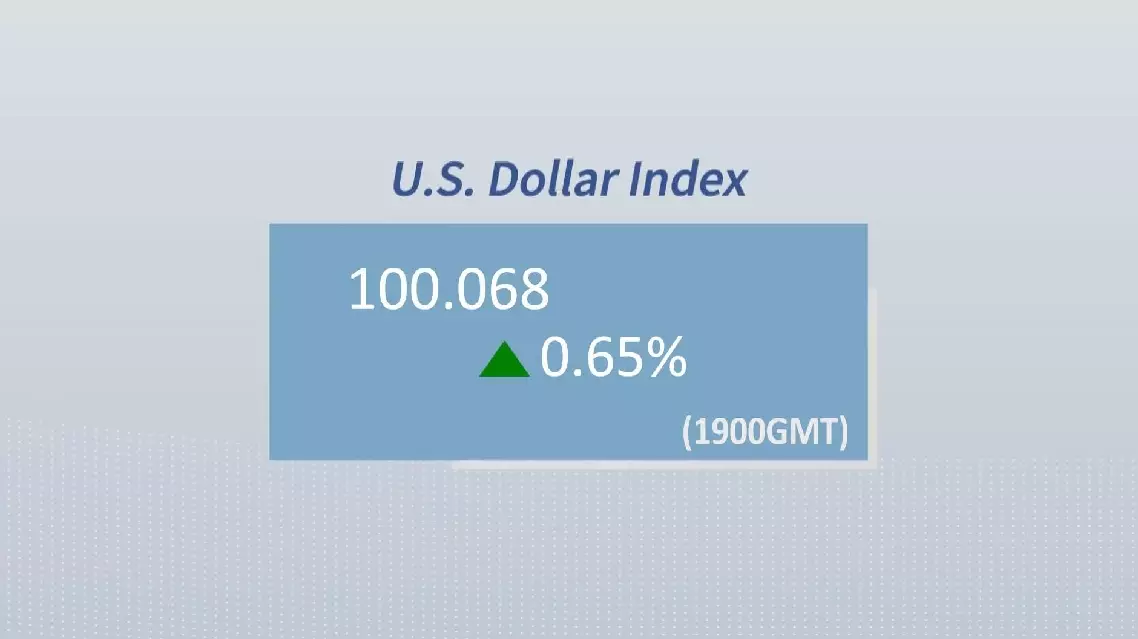
U.S. dollar ticks up
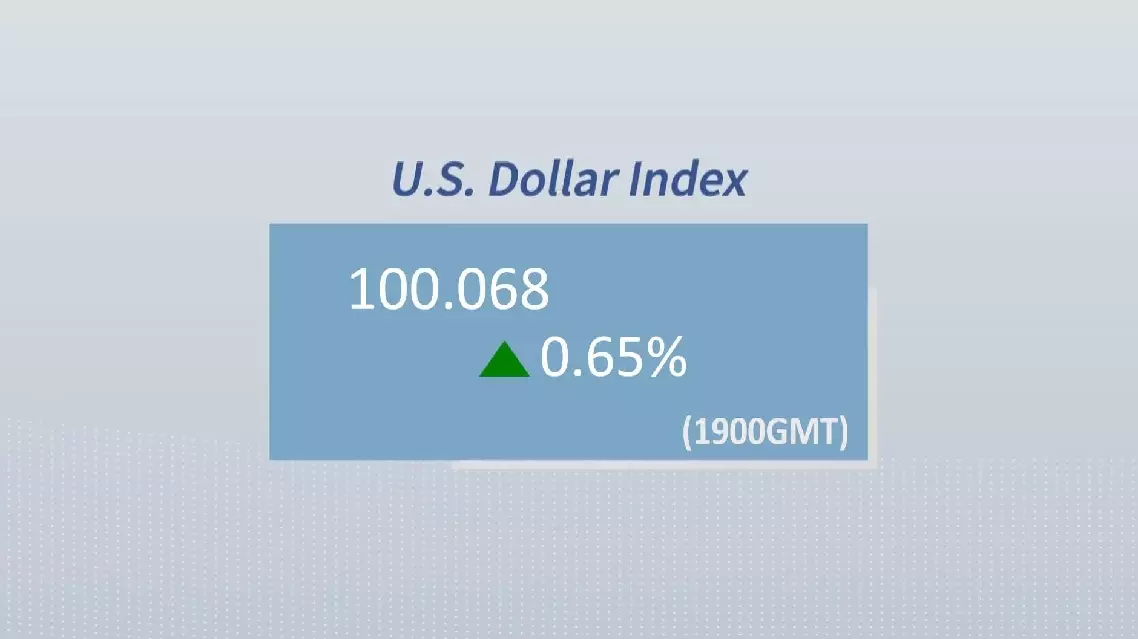
U.S. dollar ticks up
China's new regulation on outbound investment is not only about regulating domestic enterprises but also about sending a global signal of cooperation that benefits all overseas partners seeking long-term, stable growth, according to a Chinese economic expert.
The regulation, which will take effect from July 1, enhances policy transparency and clarifies regulatory boundaries to boost investment stability and efficiency. It aims to promote China's high-standard opening up and the high-quality development of its outbound investment, protect the legitimate rights and interests of investors and their outbound investment, and safeguard national sovereignty, security and development interests.
To that end, the 34-article regulation highlights efforts to align with international high-standard economic and trade rules, advance high-quality Belt and Road cooperation, and promote international cooperation in industrial and supply chains.
The regulation applies to all domestic investors in China. Without official approval, these investors cannot export or use restricted goods, technologies, services or data in overseas investment, nor covertly transfer restricted resources by sending technical personnel abroad.
For the first time, specific penalties are set: regulators may order violators to halt prohibited investment, dispose of overseas assets, confiscate illegal gains, and impose fines of up to one percent of the total investment value for non-compliance.
Nonetheless, experts note that the new regulation does not mark a policy shift toward curbing outbound investment. Instead, it equips authorities with clearer legal grounds for investor protection and reciprocal countermeasures.
"I would say that the Chinese government is trying to improve the efficiency and also the stability of China's outward direct investment. As China is playing a more and more important role in the global outward investment regime, I would say that it is likely that the Chinese government should do more to help enterprises enjoy the benefits by investing in other countries in the proper ways. So, this kind of new regulation -- it's not just trying to regulate Chinese enterprises themselves, but also trying to give better and clearer signals to the world, like the home countries for the investment," said Zhou Mi, a senior research fellow at the Chinese Academy of International Trade and Economic Cooperation.
Experts widely agree that the core purpose of the regulation is to enhance cross-government coordination and policy transparency. This will provide a more predictable environment for outbound investment, benefiting not only Chinese investors but also their overseas partners seeking stable, long-term growth.
"We would like to open our channels for cooperation with local governments on improving the stability of investment. I think that China's outward investment is growing very fast. It's not only in traditional industries, but also in many of these new and innovative industries. So, we are facing so many uncertainties about some of the possible technical improvements or the threats related to national security. It is not only a concern for China, but also for other partners," Zhou said.

China's new outbound investment regulation to boost transparency, global cooperation: expert