MELBOURNE, Australia (AP) — Fred Stolle, a winner of two Grand Slam singles titles and 17 major doubles trophies, has died, Tennis Australia said Thursday. He was 86.
Stolle was an “iconic figure” in tennis as a player and later as a commentator for Australia's Nine Network and U.S. broadcasters, Tennis Australia CEO Craig Tiley said. Tiley did not provide a cause of death.
The 1.91-meter (6-foot-3) Stolle was part of Australia's successful era in the 1960s as tennis progressed from an amateur to professional sport.
Nicknamed “Fiery Fred” or “Fiery” for short, he lost the first five Grand Slam singles finals he reached — four of them to fellow Australian Roy Emerson. He also fell in consecutive Wimbledon finals in 1963, 1964 and 1965.
He broke through on his least favorite surface, on clay at the 1965 French Championships, beating Tony Roche in the final.
“I lost a bunch of those to Emmo but against anybody else I felt comfortable," Stolle told the Tennis Channel. “The French was not the one I was supposed to win, but it was exciting for me.”
At the 1966 U.S. Championships in Forest Hills, he beat John Newcombe in another all-Australian final, becoming only the second unseeded champion. Newcombe was also unseeded. Stolle beat three seeds to reach the final. Afterward, he held the No. 1 ranking and turned pro.
He won 10 men's doubles titles at Grand Slams from 1962-69, four each with Bob Hewitt and Emerson and two with Ken Rosewall. He's one of the few to win all four doubles majors.
Stolle also won seven mixed doubles majors, his partners including Margaret Court, Lesley Turner Bowrey and Ann Haydon Jones.
He won the Davis Cup in 1964, 1965 and 1966. His most notable win was in 1964 in Cleveland where, with Australia 2-1 down, he beat American Dennis Ralston 7-5, 6-3, 3-6, 9-11, 6-4. The following year, he launched Australia's defense in Sydney by overcoming Spain's Manolo Santana 10-12, 3-6, 6-1, 6-4, 7-5.
Stolle coached American Vitas Gerulaitis to the 1977 Australian Open title, and would continue playing singles on tour until 1982.
“His legacy is one of excellence, dedication, and a profound love for tennis," Tiley said. "His impact on the sport will be remembered and cherished by all who had the privilege to witness his contributions.
“A star member of Australia’s Davis Cup team, Fred made significant contributions to the sport following his decorated career, as a coach and astute commentator."
Rod Laver, an Australian who won 11 major titles including the calendar-year Grand Slams in 1962 and 1969, posted a tribute to Stolle on X.
“As I wrote in my book on the Golden Era of Aussie tennis, Fred Stolle was too nice a guy to hold a grudge. He won many Grand Slams and was in the finals of many more. It took the best to beat the best,” Laver posted. “We never tired of reliving the past as we travelled the world looking into the future with an enduring love of the sport.”
Stolle was born in Sydney but lived in the United States after his playing career.
Tennis Australia said Stolle is survived by his wife, Pat, his son Sandon — a U.S. Open doubles winner — and daughters Monique and Nadine.
AP tennis: https://apnews.com/hub/tennis
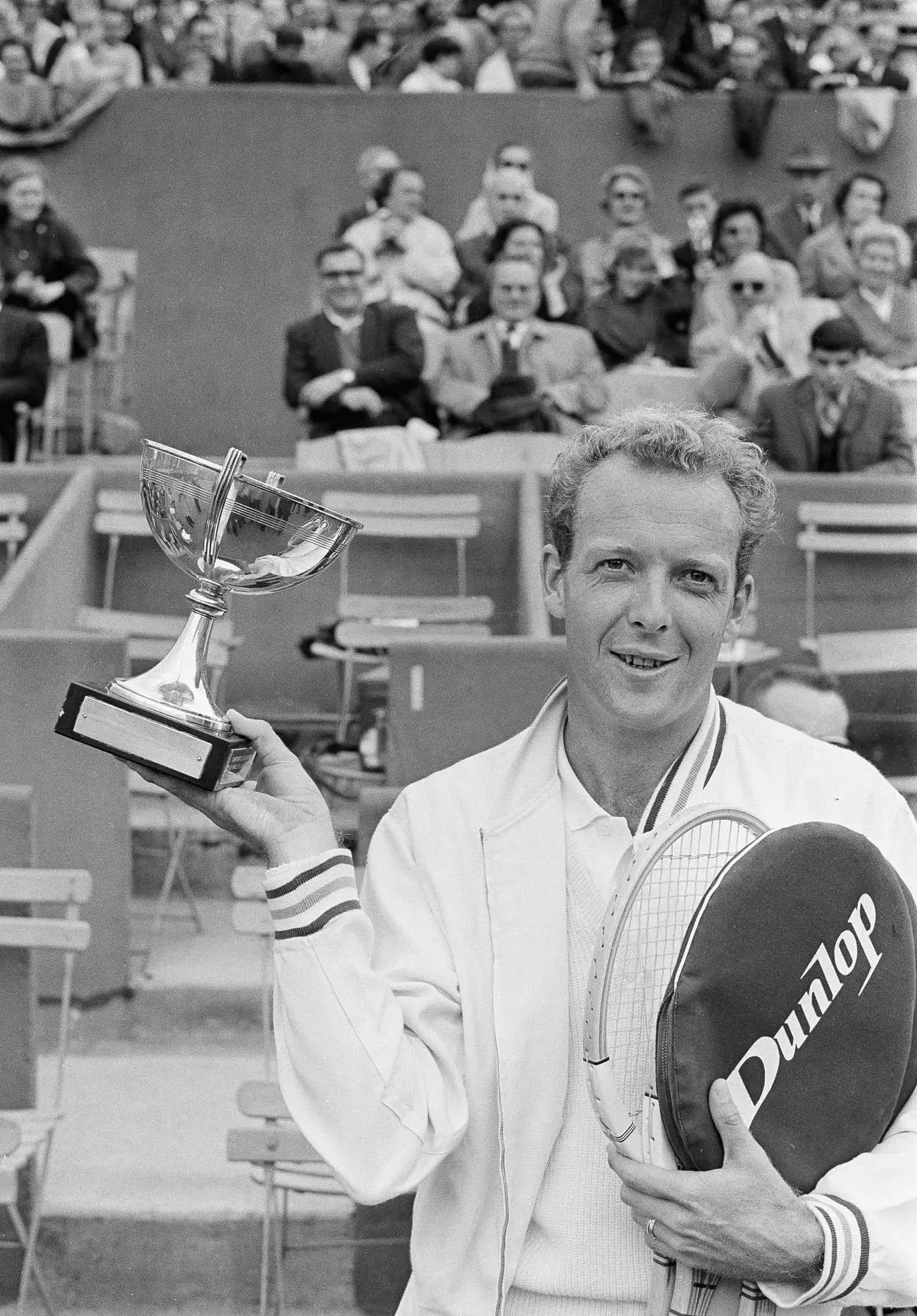
FILE - Australian tennis ace Fred Stolle holds the trophy he won in the final of the men's singles of the French tournament at Roland Garros stadium in Paris, May 29, 1965. (AP Photo/Pierre Godot, File)
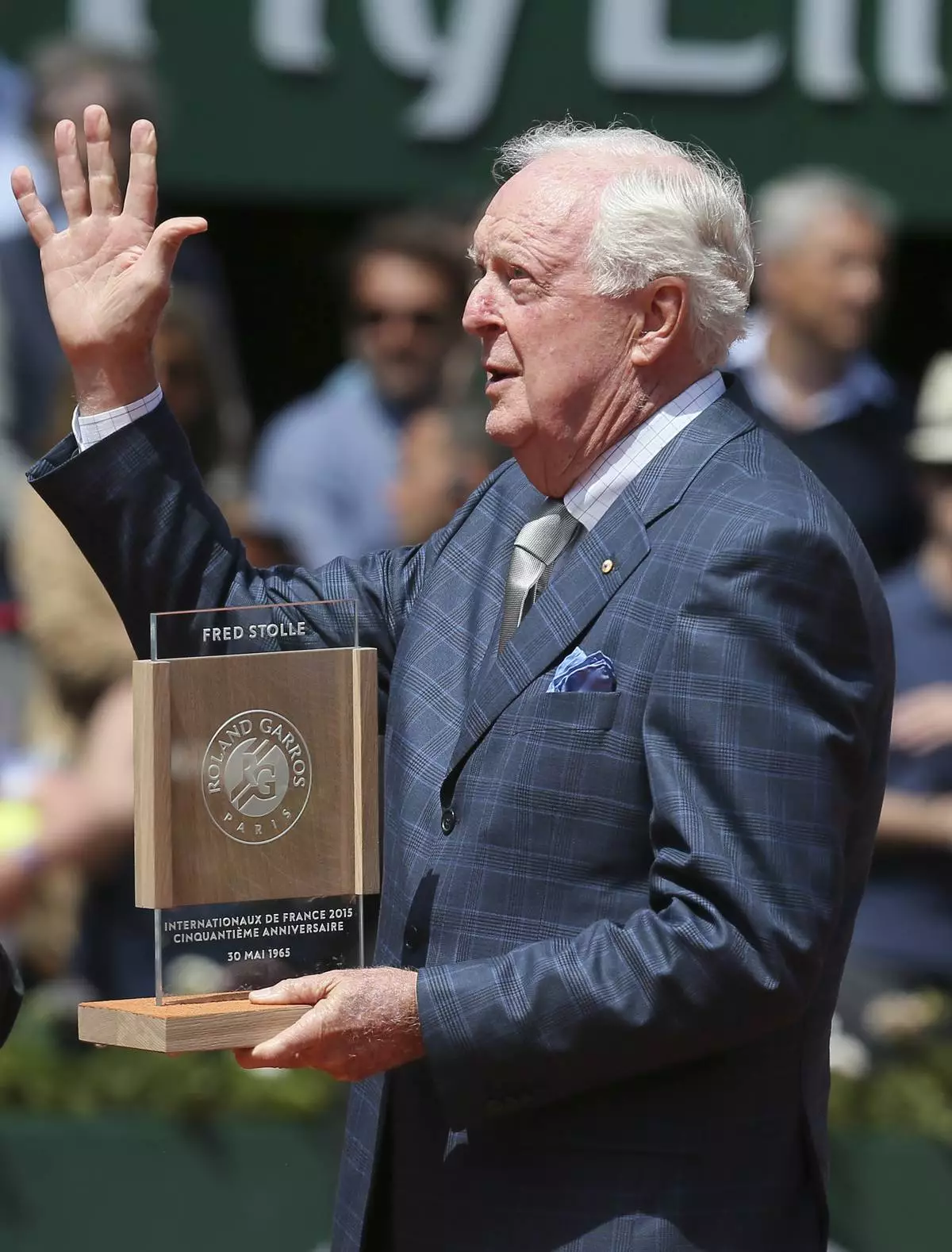
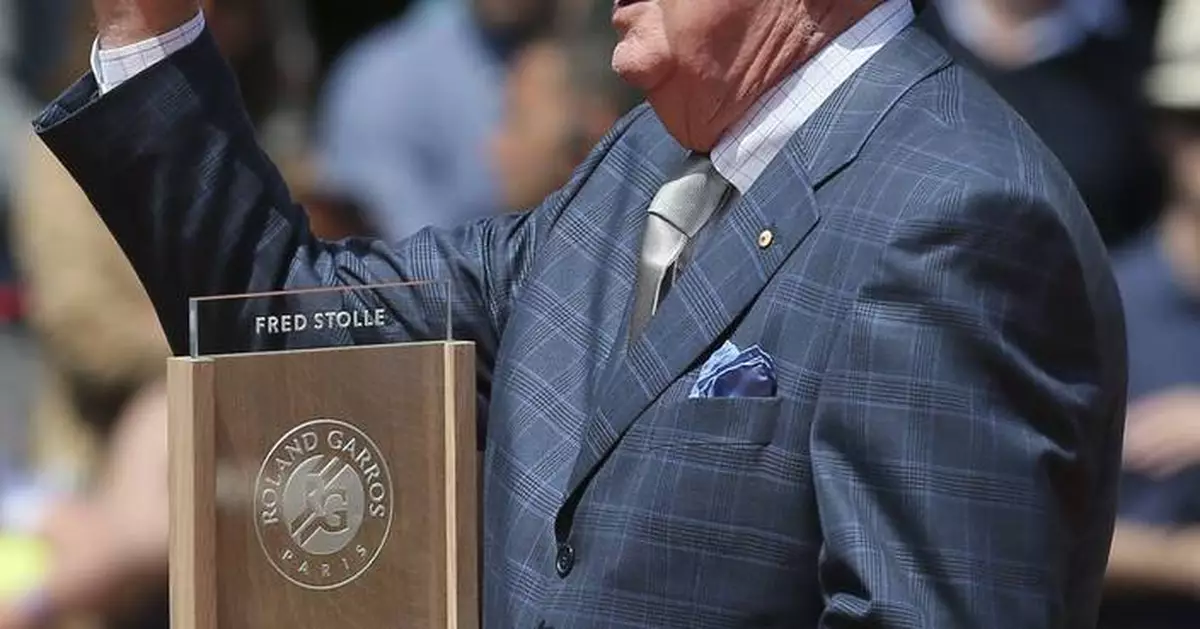
FILE - Former tennis champion Fred Stolle, of Australia, waves after receiving a symbolic trophy, just 50 years after winning the French Open tennis tournament, at the Roland Garros stadium, Saturday, May 30, 2015 in Paris. (AP Photo/David Vincent, File)
JERUSALEM (AP) — The White House says it is moving into the second phase of President Donald Trump’s Gaza ceasefire plan – breathing new life into a proposal that aims to rebuild the war-ravaged area and reshape the wider Middle East.
Trump’s Mideast envoy, Steve Witkoff, broke the news Wednesday in a post on X, saying the new phase will include the establishment of a transitional Palestinian governing committee and begin the complicated tasks of disarming Hamas and reconstruction.
But the announcement included few details about the new Palestinian committee or other key aspects of the plan, signaling just how much work lies ahead.
Trump's 20-point plan — which was approved by the U.N. Security Council — lays out an ambitious vision for ending Hamas’ rule in Gaza. If successful, it would see the rebuilding of a demilitarized Gaza under international supervision, the normalization of relations between Israel and the Arab world, and the creation of a possible pathway to Palestinian independence.
But if the deal stalls, Gaza could be trapped in an unstable limbo for years to come, with Hamas remaining in control of parts of the territory, Israel’s army enforcing an open-ended occupation, and its residents stuck homeless, unemployed, unable to travel abroad and dependent on international aid to stay alive.
“We’re going to do our best to try and see if we can work with the Palestinian people to try something new,” said a U.S. official, speaking on condition of anonymity to discuss the evolving plan. “It will be hard to do,” he acknowledged.
Here is a closer look at the next stages of the ceasefire and the potential pitfalls.
The ceasefire took effect on Oct. 10, halting two years of fighting between Israel and Hamas. It also included the release of all remaining hostages held in Gaza in exchange for hundreds of Palestinians held by Israel.
The ceasefire has largely held, though both sides accuse each other of ongoing violations. Israeli fire has killed more than 400 Palestinians, according to Gaza health officials. Israel says it has targeted militants or responded to violations of the ceasefire, but the Palestinians say scores of civilians have been shot.
Palestinian militants, meanwhile, continue to hold the remains of the last hostage — an Israeli police officer killed in the Hamas-led Oct. 7, 2023, attack that triggered the war. Israeli Prime Minister Benjamin Netanyahu has made clear he is in no rush to move forward until the remains are returned.
Netanyahu appeared to play down Witkoff’s announcement as symbolic, calling the creation of a new Palestinian committee a “ declarative move.”
The new committee will consist of independent Palestinian experts who are to run Gaza’s daily affairs under American supervision.
Wednesday’s announcement didn't say who will serve on the committee. But the other mediators of the ceasefire — Egypt, Turkey and Qatar — said it would be led by Ali Shaath, an engineer and former deputy minister in the Palestinian Authority in the West Bank.
The U.S. official who spoke on the condition of anonymity said other names are expected in the next two days, and the committee will focus on attracting investment and improving the quality of life.
“This really will be a technocratic committee,” he said. “They seem to be a group that wants to have peace.”
The committee will report to the Board of Peace, a group of world leaders supervising the ceasefire and led by Trump. If the Palestinian committee is seen as just a façade, it risks not gaining public support.
Also, its exact powers remain unclear. Hamas has said it will dissolve its government once the committee takes office, but it has shown no signs that it will dismantle its military wing or security forces.
The board will oversee the ceasefire, reconstruction and an open-ended reform process by the Palestinian Authority, with the goal of one day allowing the internationally recognized authority to return to Gaza to govern.
The U.S. official said invitations for the board have been extended, but he declined to name any of the people expected to join. “It’s going to be a great list,” he said.
The key challenge will be forming a board that can work with Israel, Hamas, the mediators and international aid agencies.
One key appointment appears to have been made. Nickolay Mladenov, a former Bulgarian politician and U.N. Mideast envoy, is expected to serve as the board’s on-the-ground representative. He already has met with Netanyahu and Palestinian leaders in the occupied West Bank.
Trump's plan calls for the formation of an International Stabilization Force to maintain security and train Palestinian police to one day to take over. That force hasn't been formed yet, and a deployment date hasn't been announced.
The U.S. official insisted there is “great excitement” over the force and said there would be important announcements in the coming weeks.
But the force’s command structure and authorities remain unknown.
Hamas said it will oppose any attempts by the force to disarm it, and contributing nations may not to want to risk clashes with the militant group. Israel, meanwhile, is hesitant to trust an international body with its security needs.
Trump’s plan calls for an economic development outline to “rebuild and energize Gaza,” which suffered widespread destruction during the war and where most of the territory’s 2 million people are displaced and unemployed.
Still, no such plan has been announced, and it remains unclear who will pay for a process the U.N. estimates will cost $70 billion.
The ceasefire deal calls for Hamas to surrender its weapons under the supervision of international monitors. Militants who disarm will be granted amnesty and the option to leave Gaza.
However, Hamas, whose ideology is based on armed resistance against Israel, has said it won't disarm until Israel ends its occupation of Palestinian territories.
Bassem Naim, a senior Hamas official, told The Associated Press last month that the group is open to “ freezing or storing” its weapons while a political process takes place, perhaps over many years. It is unclear whether that would be sufficient for Israel.
Failure to disarm Hamas could lead to renewed fighting with Israel and clashes with international troops, and could block progress on the rest of the peace plan.
Under the ceasefire, Israel is to withdraw from all of Gaza, with the exception of a small buffer zone along the border. At the moment, Israel retains control of just over half of Gaza.
The plan says further withdrawals will be based upon “standards, milestones and timeframes linked to demilitarization” to be negotiated by Israel, the U.S., the international force and other “guarantors.”
There are no firm timelines for further withdrawals, and Israel may refuse to pull back further.
The plan calls for an overhaul of the Palestinian Authority, which runs the West Bank, and the creation of conditions for a “credible pathway” to Palestinian statehood.
Palestinian officials say they have begun making reforms in key areas such as corruption, the education system and payments to families of prisoners convicted in attacks on Israelis.
Israel rejects the creation of a Palestinian state and opposes any role for the authority in postwar Gaza. Without a pathway to statehood, any Palestinian support for the new system could crumble. The plan also offers no clear benchmarks or timelines for the reform process.
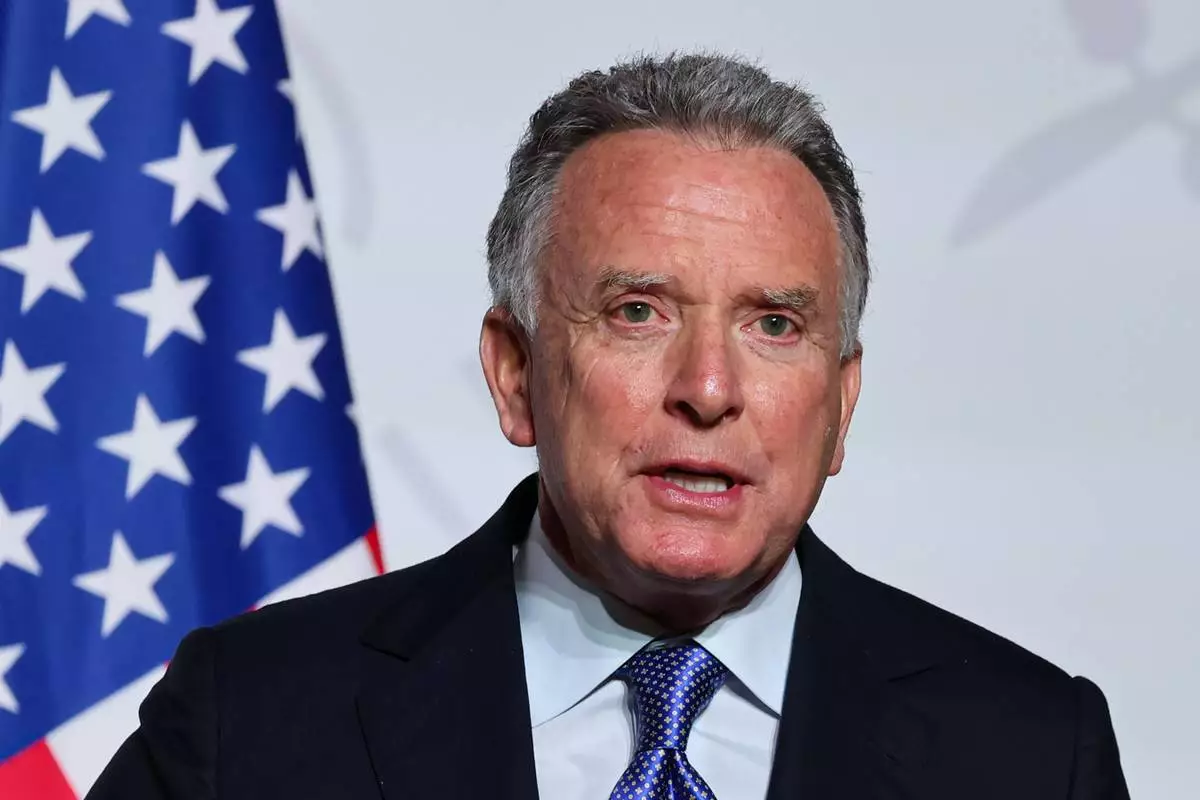
US Special Envoy Steve Witkoff delivers a speech upon the signing of the declaration on deploying post-ceasefire force in Ukraine during the 'Coalition of the Willing' summit on security guarantees for Ukraine, at the Elysee Palace in Paris Tuesday, Jan 6, 2026. (Ludovic Marin, Pool photo via AP)
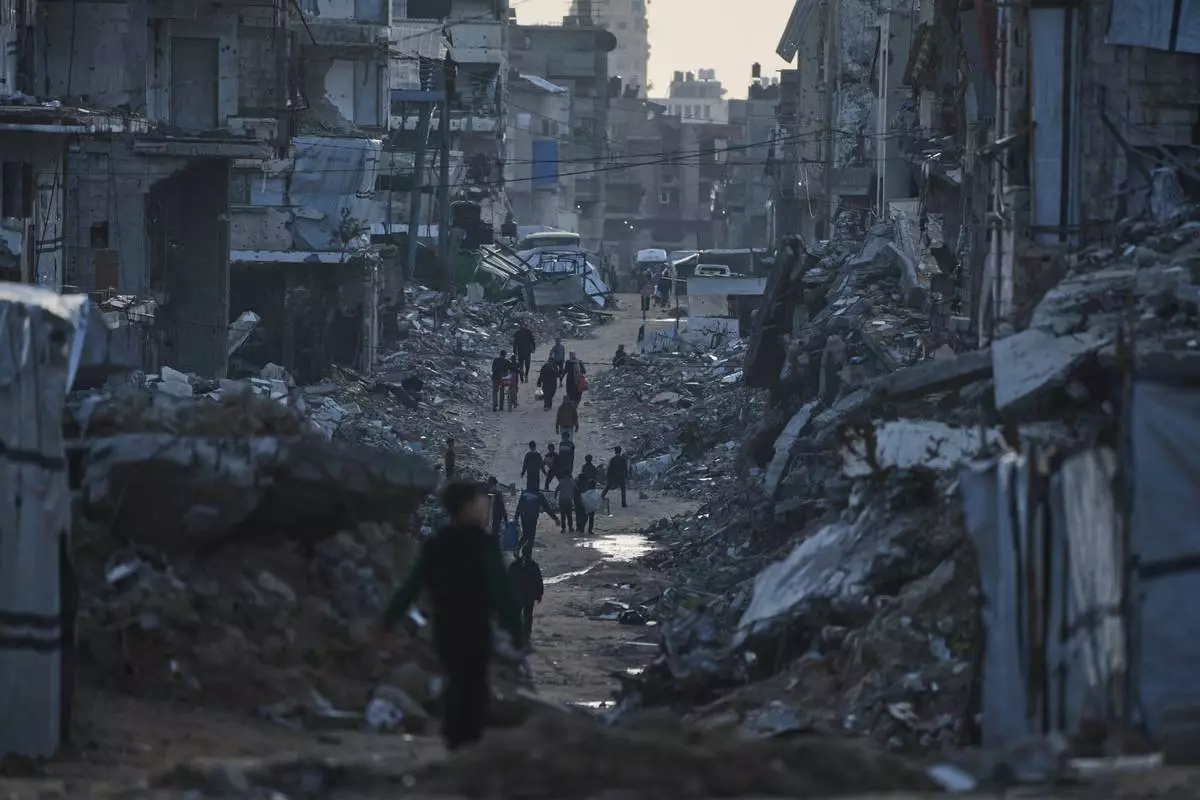
Palestinians walk amid buildings destroyed by Israeli air and ground operations in Gaza City Thursday, Jan. 15, 2026. (AP Photo/Jehad Alshrafi)
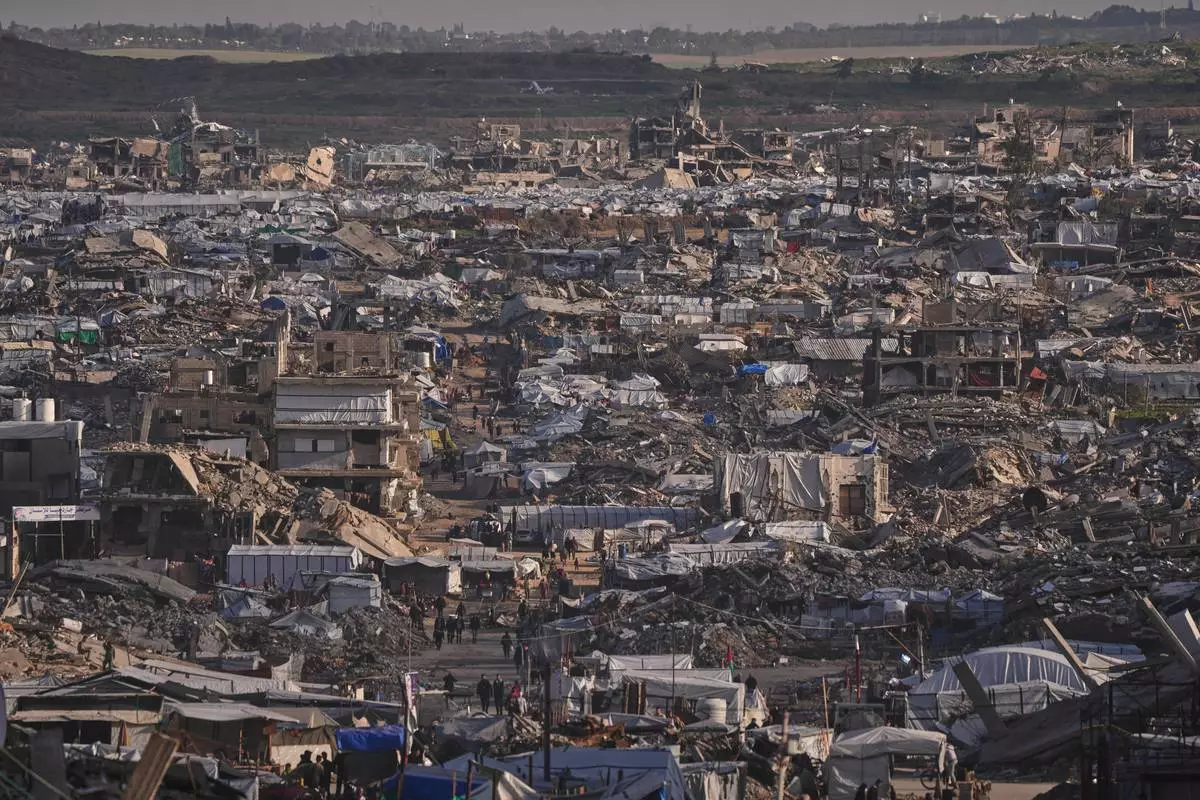
Makeshift tents shelter displaced Palestinians stand among buildings destroyed by Israeli air and ground operations in Gaza City Thursday, Jan. 15, 2026. (AP Photo/Jehad Alshrafi)