China will accelerate advanced nuclear energy technological development as part of its national strategy for future industries, a political advisor said while discussing efforts to foster emerging industries stated in the government work report submitted Wednesday to the ongoing third session of the 14th National People's Congress (NPC) for deliberation.
Lu Tiezhong, a member of the National Committee of the Chinese People's Political Consultative Conference (CPPCC) and also chairman of China National Nuclear Corporation (CNNC), one of the country's largest nuclear power operators, said that China's nuclear energy development will follow a "three-step" roadmap to accelerate the implementation of advanced nuclear technologies.
China's three-step" nuclear energy roadmap refers to the country's long-term nuclear development plan, consisting of three phases: thermal reactors, fast reactors, and fusion reactors.
The representative of the thermal reactor phase is the Hualong-1 Nuclear Power Plant in Zhangzhou City, east China's Fujian Province. As of now, there are 33 Hualong-1 power units either in operation or under construction worldwide, making it the most widely deployed Generation III nuclear reactor design globally.
"Currently, there are five Hualong-1 power units in operation domestically and two overseas. Additionally, 26 units are under construction. Overall, the deployment of Hualong-1 power units is progressing well," said Lu.
Apart from Hualong-1 power units, China is also witnessing an accelerated development of fast reactors and fusion reactors, Lu said.
A fusion reactor is an energy device that simulates the nuclear fusion reactions occurring inside the Sun, often referred to as an "artificial Sun". In contrast, a fast reactor uses fast neutrons to directly bombard uranium-238, triggering a fission chain reaction. It is classified as a Generation IV nuclear technology.
"The biggest advantage of fast reactors is their ability to increase uranium resource utilization efficiency by 60 times. Theoretically, with global uranium resources, nuclear power plants worldwide could operate for over 10,000 years. The third step is controlled nuclear fusion, which is being developed as a future energy industry. Research and development in controlled nuclear fusion are being actively advanced, and in fact, all three steps of China's nuclear energy strategy are progressing simultaneously," said Lu.
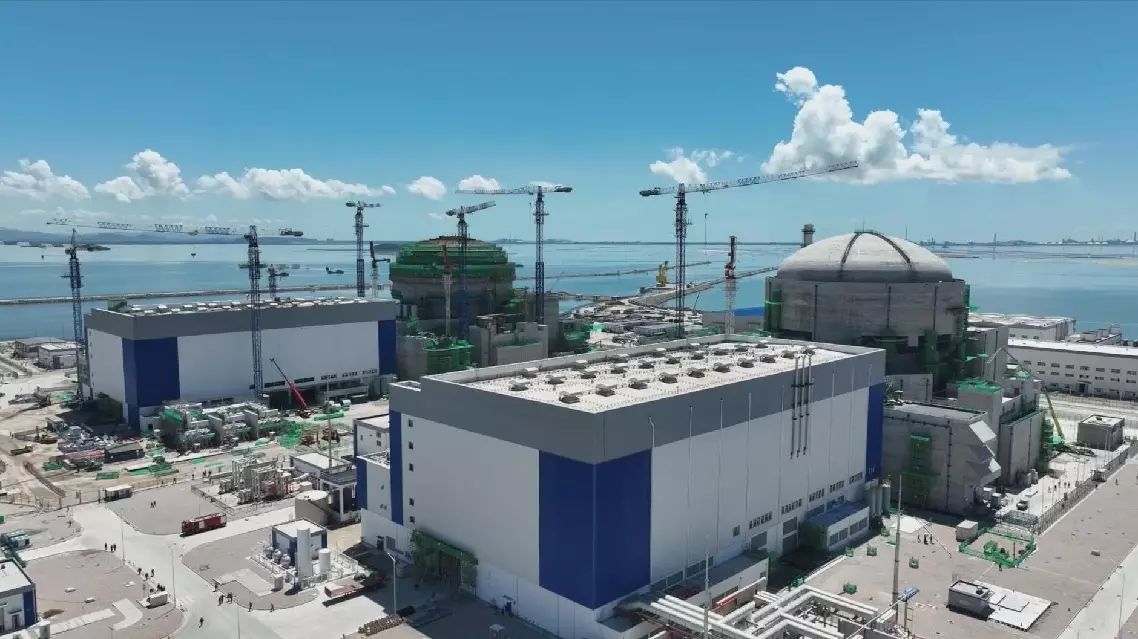
China to accelerate development of advanced nuclear energy technologies: CPPCC member
China's development blueprint for the 2026-2030 period will create strong market opportunities for industries worldwide, said Judy Marks, president and CEO of American elevator maker Otis, in Beijing on Sunday. The China Development Forum 2026 began on Sunday in Beijing. With the theme of "China in Its 15th Five-Year Plan Period: Advancing High-Quality Development and Creating New Opportunities Together," the two-day event is bringing together global officials, industry leaders, and experts for 13 thematic sessions and a series of closed-door discussions, covering topics including new trends in consumption growth, green and low-carbon transition, the development of future industries, and the industrial application of artificial intelligence (AI).
In an interview with China Global Television Network (CGTN) on the sidelines of the event, Marks shared her insights on the significant role of China's research capabilities and market environment for the global economy.
She said that Otis's research and development center in China, leveraging local resources, is well-positioned to advance its innovation strategy.
"So I would tell you to us in China, it's an innovation hub and an agility engine. And, that really describes China for us. We do work in China for China, but we also do both manufacturing and development and research for the rest of the world. And China, in Shanghai, has our largest development team of anywhere in the world. It makes us go faster. It's AI and digital driven -- and it really allows us to set the benchmark," said Marks.
She said that China is advancing rapidly in areas including smart cities and digital infrastructure, developments that will bring new opportunities and shape the future of the global elevator industry.
"Now to us, the world is digital and connected. They're the two highest priorities we have. If an elevator is part of an ecosystem in the building, we can share information with transportation systems, with energy systems. As China pursues even more of a low carbon world, our elevators actually push power back into the building and capture power when they break with our regenerative drives," she said.
Speaking of China's recently-approved 15th Five-Year Plan (2026-2030), aimed at expanding high-level opening up and driving high-quality development, Marks described it as highly encouraging for multinational companies.
"I would tell you everything we see in the 15th Five-Year Plan is encouraging: high-quality development, which is a commitment from the government and the whole ecosystem to serve its citizens, digitalization, urban renewal -- all of this combines. It's created a large market for a company like Otis. It's where we're going to invest, and it's in sync with our strategy and our mission," she said.
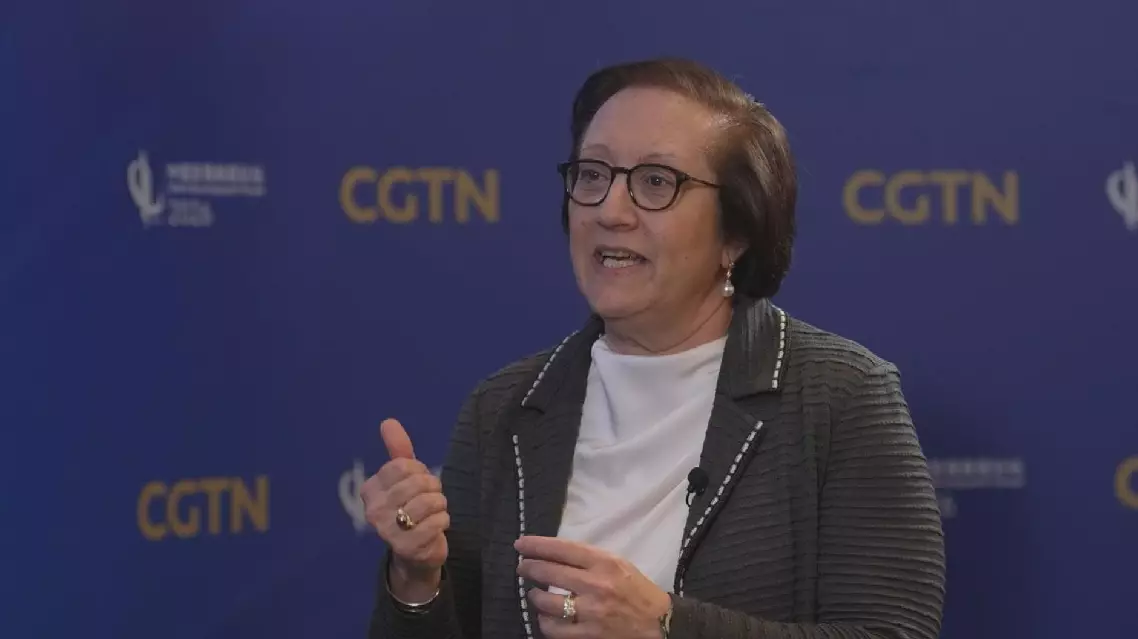
China's development blueprint brings opportunities to global industries: Otis CEO