Representatives from various sectors of society offered their recommendations on how to advance new-type urbanization and promote coordinated regional development during group deliberations on Wednesday and Thursday at the ongoing annual session of the 14th National People's Congress (NPC), China's national legislature.
The NPC deputies, who participated in group deliberations on the Government Work Report delivered by Chinese Premier Li Qiang Wednesday at the opening of the annual session, voiced strong support for connectivity among neighboring regions, which they said would benefit both new urbanization and coordinated regional development.
"In recent years, cities such as Huanggang, Xinyang, and Lu'an have spontaneously established cross-regional collaborative development mechanisms, achieving initial success in resource integration and coordinated development. It is recommended that neighboring areas of Hubei, Henan, and Anhui provinces focus on building a new integrated development mechanism in areas such as infrastructure connectivity, jointly creating an eco-cultural tourism development belt, promoting complementary and mutually beneficial industries, and advancing joint protection and governance of the ecological environment," said deputy Li Junjie, also Party secretary of the Huanggang Municipal Committee in central China's Hubei Province.
"The development of the Guangdong-Hong Kong-Macao Greater Bay Area is a national strategy. It is essential to deploy high-level scientific and technological capabilities, focusing on addressing key core technological issues that profoundly impact the competitiveness of industries and enterprises. Efforts should be made to optimize the allocation of scientific and technological resources and promote systematic and coordinated reforms in talent development. This includes establishing a regional innovation system linking universities in the Greater Bay Area, creating an open and shared talent policy framework with mutual recognition, and fostering interconnected technological collaboration. These measures aim to achieve deep integration and synergy among various scientific and technological forces, creating a virtuous cycle of mutual empowerment," said deputy Chen Guanghao, also president of the Guangzhou Branch of the Chinese Academy of Sciences.
"We must identify opportunities, tasks, and pathways from the report. We have over 40 self-managed residential communities with aging electrical infrastructure, which poses safety risks. All residential communities should be included in the renovation plan. With easier projects being prioritized first, we will eventually complete all renovations for over a dozen residential communities," said deputy Zhu Kaiguo, mayor of Dezhou City in east China's Shandong Province.
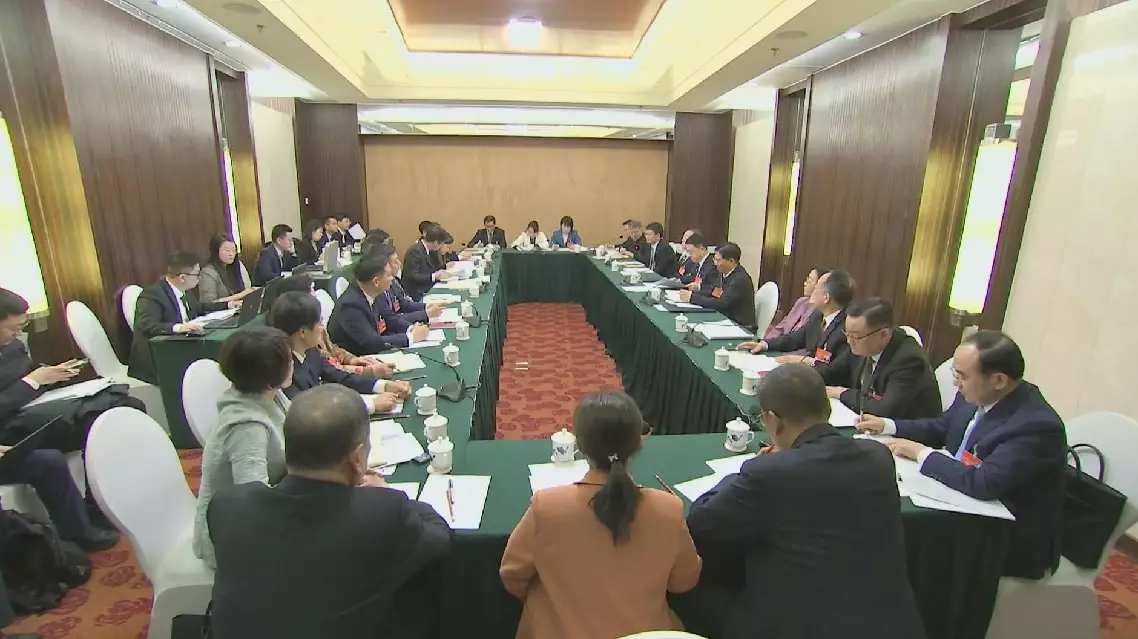
NPC deputies on how to advance new urbanization, promote coordinated regional development