China has made significant progress in consolidating and expanding its poverty alleviation achievements since declaring a "complete victory" in the fight against rural poverty in 2020, said Han Jun, Minister of Agriculture and Rural Affairs, on Saturday.
Speaking at a group interview on the sidelines of the ongoing third session of the 14th National People's Congress (NPC) -- China's national legislature -- in Beijing, Han expounded on the country's efforts to sustain poverty reduction gains and prevent any large-scale relapse of people into poverty.
After winning the battle against poverty in 2020, the central government designated 2021-2025 as the five-year transition period to consolidate and expand these accomplishments. As 2025 marks the final year of this period, Han said the country has seen significant reduction in poverty relapse risks, as well as rapid income growth and strengthened basic livelihood guarantees in formerly poverty-stricken areas.
"The Ministry of Agriculture and Rural Affairs has established a specialized big data platform dedicated to the work of preventing people from slipping back into poverty. It enables real-time monitoring of each registered household's situation. Once any risk is detected, various targeted assistance measures will be activated immediately to eliminate the risk. These measures will continue until the household concerned meets the exit criteria, at which point they are removed from the platform. With a set of strict procedures in place, the risk of poverty relapse has been significantly reduced," he said.
In addition, flourishing local industries have created more jobs and income-earning opportunities, making villagers better off.
"Over the past four years, the per capita disposable income of farmers in regions that have been removed from the list of poverty-stricken regions has grown at a rate higher than the national average for rural areas. All 832 formerly impoverished counties have developed distinctive pillar industries with significant advantages and knock-on effects during the period. The number of employed individuals from registered poor households has remained above 30 million for the past four years. Farmers now have more channels to increase their income, and the development momentum in these regions is strengthening," said the minister.
Efforts have also been made to promote good health and well-being in formerly impoverished areas.
"The achievements in ensuring compulsory education, basic healthcare, housing security and access to clean drinking water have been firmly consolidated. China's great success in poverty alleviation has stood the test of history and practice. It has also garnered widespread praise from the international community. It's indeed a remarkable feat," Han said.
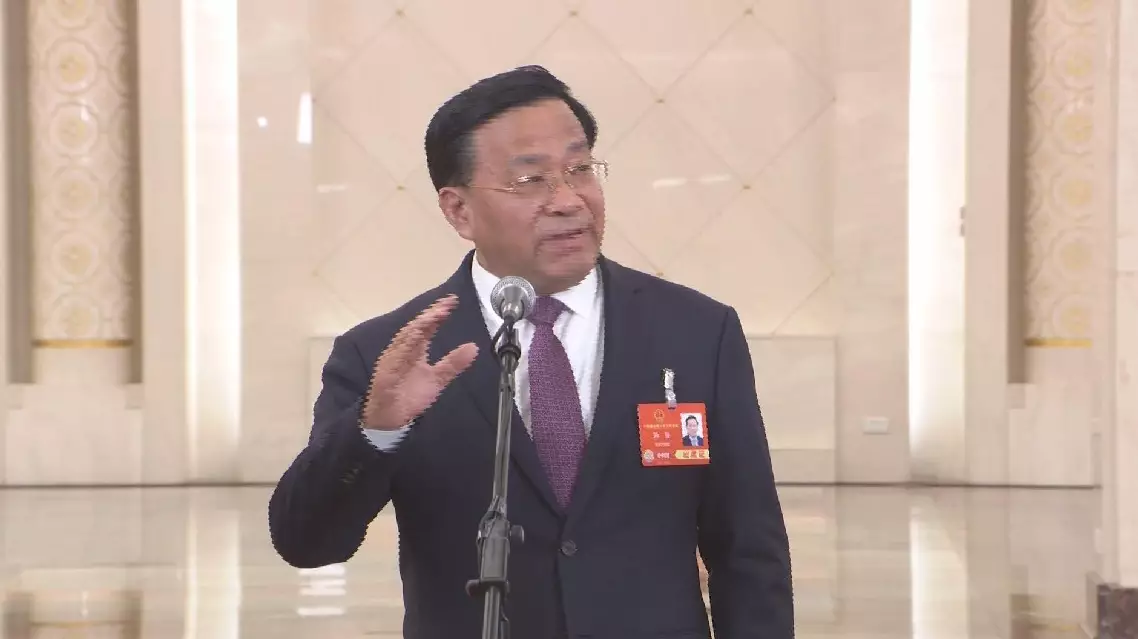
China’s poverty alleviation achievements effectively consolidated: minister
China’s poverty alleviation achievements effectively consolidated: minister
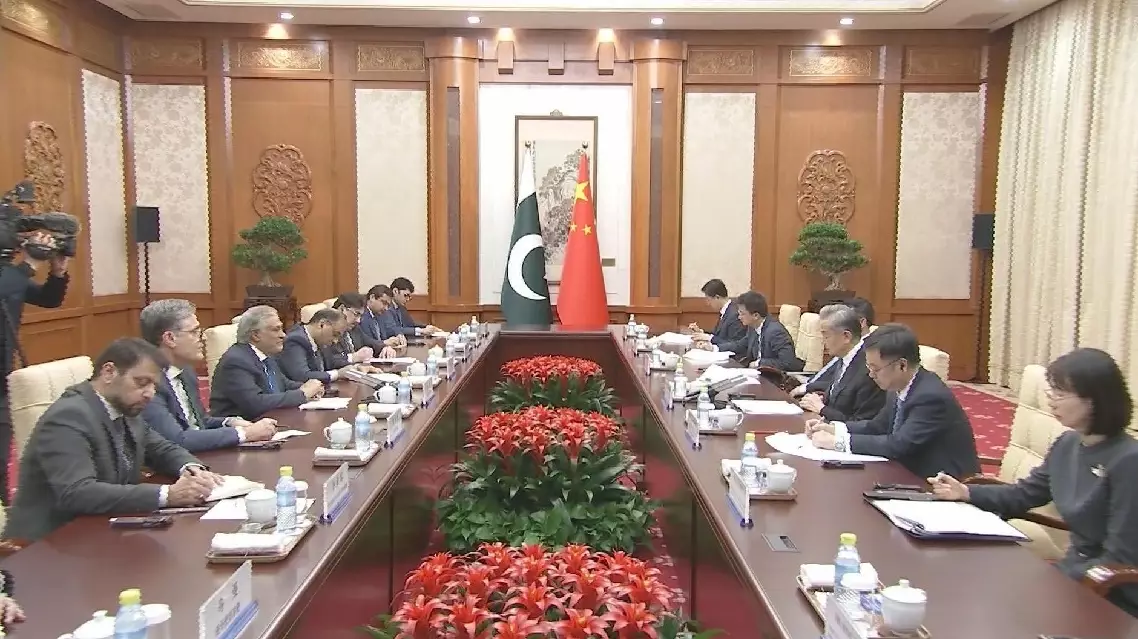
Chinese Foreign Minister Wang Yi said on Tuesday that mediation efforts of the Pakistani side regarding the Middle East tensions are in the common interests of all parties.
Wang, also a member of the Political Bureau of the Communist Party of China Central Committee, made the remarks in his talks with Pakistani Deputy Prime Minister and Foreign Minister Mohammad Ishaq Dar in Beijing.
During their talks, the two sides exchanged views on current international issues and regional conflicts.
Wang welcomed the visit of the Pakistani side to Beijing for discussion on easing tensions in the Middle East, just after its holding of a quadrilateral foreign ministers' meeting in Islamabad.
He said China supports and looks forward to Pakistan playing a unique and important role in easing the situation and resuming peace talks. This process is no easy task, and Pakistan's mediation efforts are in line with the common interests of all parties, Wang added.
He noted China is willing to make joint efforts with Pakistan to end the hostilities as soon as possible, create opportunities for peace and open the window for peace talks.
On bilateral ties, Wang said this year marks the 75th anniversary of the establishment of diplomatic relations between China and Pakistan, calling on both sides to implement the important consensus reached by the leaders of the two countries and constantly advance the building of a China-Pakistan community with a shared future.
For his part, Dar said the Pakistan-China friendship is precious and deeply rooted in people's hearts, adding that Pakistan is willing to work with China to promote the continuous development of the all-weather strategic cooperative partnership between the two countries.
Dar thanked China for supporting Pakistan's mediation of the situation in Iran, adding that the current conflict has disrupted international energy supplies and caused heavy damage to developing countries.
Noting that solutions can only be found through negotiation, Dar said Pakistan is willing to strengthen communication and coordination with China to push all parties to start peace talks as soon as possible and restore regional peace.
The two sides also put forward a five-point initiative for restoring peace and stability in the Gulf and the Middle East region:
I. Immediate cessation of hostilities: China and Pakistan call for immediate cessation of hostilities and utmost efforts to prevent the conflict from spreading. Humanitarian assistance must be allowed to all war-affected areas.
II. Start of peace talks as soon as possible. Sovereignty, territorial integrity, national independence and security of Iran and the Gulf states should be safeguarded. Dialogue and diplomacy is the only viable option to resolve conflicts. China and Pakistan support the relevant parties in initiating talks, with all parties committing to peaceful resolution of disputes, and refraining from the use or the threat of use of force during peace talks.
III. Security of nonmilitary targets. The principle of protecting civilians in military conflict should be observed. China and Pakistan call on parties to the conflict to immediately stop attacks on civilians and nonmilitary targets, and fully adhere to International Humanitarian Law, and stop attacking important infrastructure, including energy, desalination and power facilities, and peaceful nuclear infrastructure, such as nuclear power plants.
IV. Security of shipping lanes. The Strait of Hormuz, together with its adjacent waters, is an important global shipping route for goods and energy. China and Pakistan call on the parties to protect the security of ships and crew members stranded in the Strait of Hormuz, allow the early and safe passage of civilian and commercial ships, and restore normal passage through the Strait as soon as possible.
V. Primacy of the United Nations Charter. China and Pakistan call for efforts to practice true multilateralism, to jointly strengthen the primacy of the United Nations, and to support the conclusion of an agreement for establishing a comprehensive peace framework and realizing lasting peace based on the purposes and principles of the UN Charter and international law.
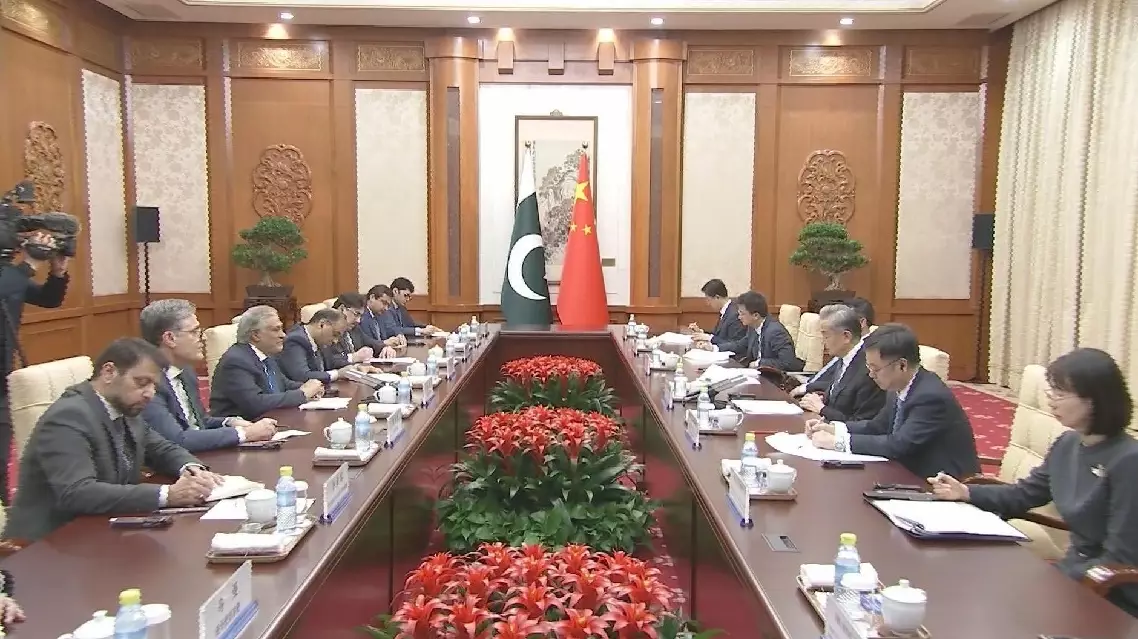
Pakistan's mediation efforts in common interests of all parties: Chinese FM
Pakistan's mediation efforts in common interests of all parties: Chinese FM