The Chongqing section of the Chongqing-Xiamen high-speed railway started joint testing on Sunday, marking a key step toward its full operation.
A test train departed from Chongqing East Station at 08:45 for Qianjiang Station in Chongqing, signaling the start of the testing phase.
Stretching about 249 km from Chongqing East to Qianjiang District, the section has a designed speed of 350 km per hour and features seven stations.
"The Chongqing East-Qianjiang section of the Chongqing-Xiamen high-speed railway features 53 tunnels along its main line, with bridges and tunnels accounting for 92 percent of the route. The project has completed static acceptance, and all equipment facilities are now in operation," said Pan Xuefeng, a project official.
As a major infrastructure project, the Chongqing-Xiamen High-Speed Railway is expected to enhance connectivity between the southwestern municipality of Chongqing and the southeastern coastal city of Xiamen.
Once operational, it will cut travel time between downtown Chongqing and Qianjiang from four hours to under one, facilitating faster and more efficient transportation while boosting regional economic development.
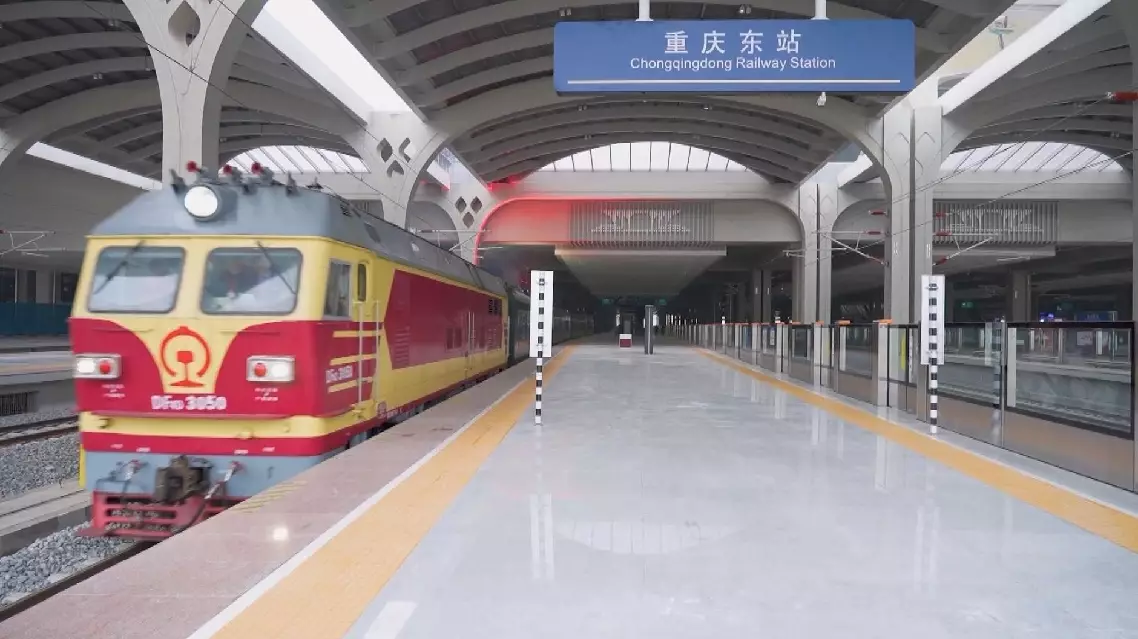
Chongqing section of Chongqing-Xiamen high-speed railway begins joint testing
China closed 2025 with a record of 92 space launches and major breakthroughs were made in manned space launches, deep space exploration and commercial launches, according to the China National Space Administration.
"In 2025, we created a new launch record, sending more than 300 satellites into planned orbits. Both the number of launches and the number of payloads placed in orbit have achieved qualitative leapfrog development," said Zhu Haiyang, an engineer with the China Aerospace Science and Technology Corporation.
In 2025, the Shenzhou-20 crew spent 204 days in orbit, setting a new record for the longest single mission duration in the history of China's manned space program. Following the Shenzhou-20, the Shenzhou-21 achieved the fastest rendezvous and docking in the history of the Shenzhou mission in just three hours and a half.
Facing an unexpected technical situation with the Shenzhou-20 spacecraft, China immediately activated emergency plans. Within 16 days, a series of maneuvers were accomplished including the launch of the Shenzhou-22 backup vehicle, presenting a "textbook model" for the international space community in effectively responding to unexpected emergencies.
In deep space exploration, the Tianwen-2 probe embarked on its journey for China's first asteroid exploration and sample-return mission in 2025.
Last year also saw intensive launch activities from multiple commercial rocket types, injecting strong momentum into the country's commercial space development.
As China has kicked off the first year of its 15th Five-Year Plan (2026–2030), a new blueprint for the country's space program is unfolding. Multiple tests are planned in preparation for future lunar exploration, as Chang'e-7 lunar probe is scheduled to be launched for the lunar south pole to search for evidence of water ice. The industry is also preparing for the maiden flights of several new rocket types, which will include the challenges to test rocket recovery and reusability technologies.
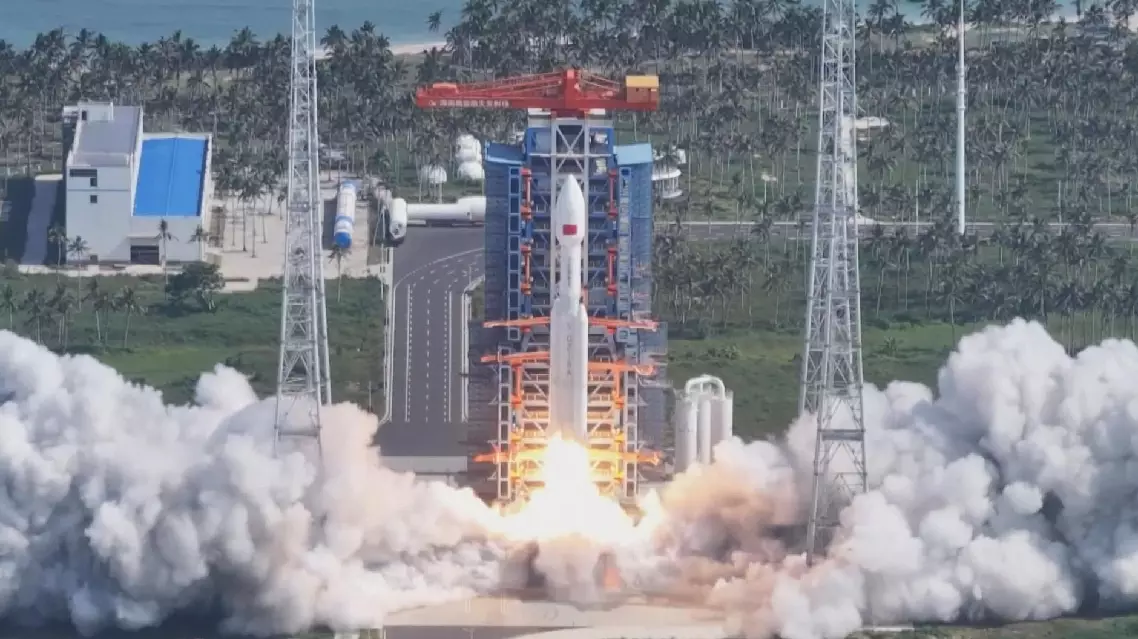
China closes 2025 with record 92 space launches