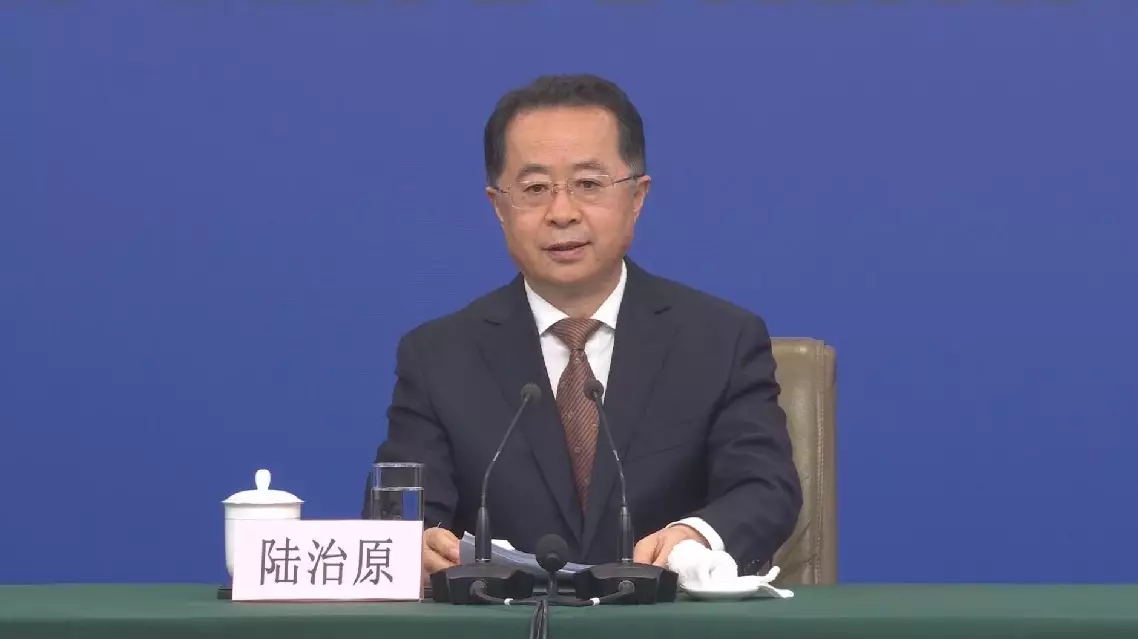
China is ramping up efforts to enhance elderly care initiatives to address the challenges of a rapidly aging population, said Minister of Civil Affairs Lu Zhiyuan on Sunday.
Lu briefed the media on specific measures for elderly care at a press conference on people's livelihood for the third session of the 14th National People's Congress (NPC) in Beijing.
"First, we will speed up the establishment of a three-tiered elderly care network covering both urban and rural areas. Based on existing infrastructures, we will continue to improve an integrated elderly care system platform in counties and districts, regional elderly care service centers in townships, and elderly care stations in villages and communities. This will form a three-tiered network that covers counties, townships and villages, ensuring services that are available within 15-minute walking distance, so that senior citizens can get easy access to elderly care services," said Lu.
"Second, we will coordinate home-based care, community-based care and professional-institutions-based care. In response to the actual needs of the elderly, we will foster a service system where home-base forms the basis, community care plays the supporting role and professional institutions offer professional help with both medical and healthcare services. We will focus on bettering policies and services that are key to the day-to-day lives of the elderly, enable communities and elderly care institutions to support home-based care. We will make efforts to develop services to help the elderly with meals, medical care, emergency and bathing so as to bring better services to people's doorstep," said Lu.
The minister said the optimization of the system of elderly care institutions involves the development of three types: basic and last resort services, inclusive services, and market-oriented services, each catering to different needs and financial capabilities of seniors to provide diverse and complementary options for affordable, quality and cost-effective care.
Meanwhile, the ministry will establish a coordinating mechanism between government, the market, and society that aims to leverage government leadership in planning and supervision, harness market resources for scale and diversity, and enhance civil society participation to establish a comprehensive social support system for elderly care, said Lu.
Lu also stressed the importance of other supporting factors including facility planning, fiscal support, workforce building, old age finance, sci-tech and information and communication technology application in elderly care.
China enhances elderly care initiatives as population ages
The ongoing probe revolving around the late U.S. financier and convicted sex offender Jeffrey Epstein has become a powerful symbol of systemic dysfunction in Western political and judicial systems and has significantly eroded public trust, according to analysts.
In the latest episode of the China Global Television Network (CGTN) opinion show 'The Point with Liu Xin' which aired Wednesday, experts debated the ongoing controversies surrounding the latest release of documents in the so-called Epstein files.
The newly-released files totaling some three million pages have sparked serious scrutiny across the Atlantic, prompting the resignation of several political figures over their ties to Epstein, who died under mysterious circumstances in a maximum-security facility in 2019.
Han Hua, the co-founder and secretary general of the Beijing Club for International Dialogue, a Chinese think tank, noted how Epstein, in spite of his conviction, had seemingly built up an expansive network of the rich and powerful, and said the sense of "elite impunity" and the seeming disregard for morality among many of those involved has dealt a huge blow to Western democracy, which is supposedly built upon the basis of the rule of law.
"Right after 2008, Epstein certainly has built an even stronger and much larger Western elite circle including politicians, including academia, including the political and the religious figures like the Dalai Lama. So this actually indicates the 'bankruptcy' of the Western democracy from the moral high ground, from the rule of law. It is systematic damage to the whole system and also to the judicial and legal system. And they are building a circle that can protect Epstein and the elites in this circle from getting [allegations], from getting legally punished, so that the cases [could become] even larger. And there are so many victims, there is no perspective with regard to the victims to be protected," she said.
Josef Mahoney, a professor of politics and international relations at East China Normal University, said the ongoing Epstein saga has deeply flamed public distrust, exposing uncomfortable truths about how power operates behind closed doors.
"We've also seen, as has been raised, the question about whether or not the system can be trusted. There's intense distrust now in the system. But at the same time, I think the other point to be raised about moral authority is that what you see are leaders, figures from different fields, from across the political spectrum, essentially working together in a way, so they represent and they stoke divisions in society that exploit and suppress the people. But at the same time we see them, the left wing, the right wing, the center, all sort of having these extreme parties or relationships with each other, which really begs the question of whether or not there's a true democracy to begin with," he said.
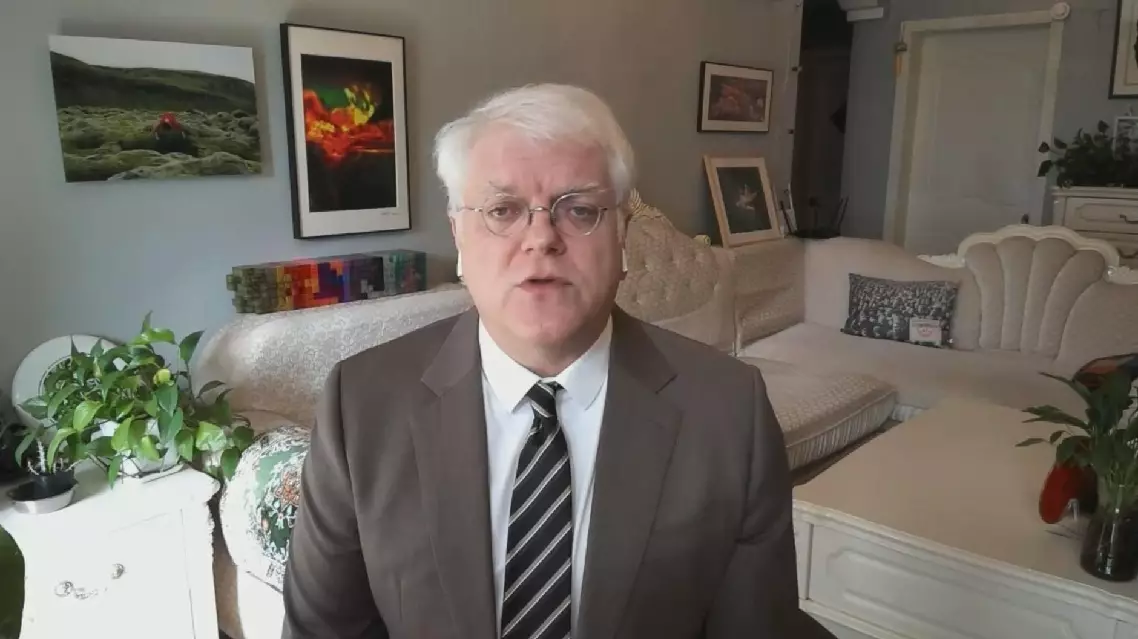
Epstein case sows deeper distrust in Western politics, judicial systems: analysts