A growing number of Chinese cities are racing to integrate embodied intelligence into their forward-looking industry incubation programs, aiming to apply this advanced technology across a wide range of scenarios, from automobile manufacturing to everyday living environments.
Embodied intelligence refers to the integration of artificial intelligence into physical entities, such as humanoid robots, enabling them to sense, learn, and interact with their environment.
AI-powered mobile phones, AI-driven computers, and intelligent robots are key examples of embodied intelligence devices.
Official data shows that more than 20 cities in China have now issued plans to accelerate the development of embodied intelligence, with Beijing, Shenzhen, Shanghai, and Hangzhou leading the efforts with their technological and industrial advantages.
The increasing investment in cutting-edge technology has led analysts to believe that humanoid robotics, as a pioneering sector in this emerging trend, will experience rapid development this year. However, the sector is also expected to face multiple technological challenges, an analyst said.
"This year, humanoid robotics is set to develop at an accelerated pace. However, there is still a long way to go before robots can move autonomously at a speed comparable to humans and accurately recognize human intentions. Breakthroughs in areas such as software and hardware are still needed," said Wang Hao, director of the Industrial Policy Research Institute at the China Center for Information Industry Development (CCID) under the Ministry of Industry and Information Technology (MIIT).
With 51,100 robot-related companies, the most in the country, south China's Shenzhen City has a noticeable advantage in manufacturing embodied agents.
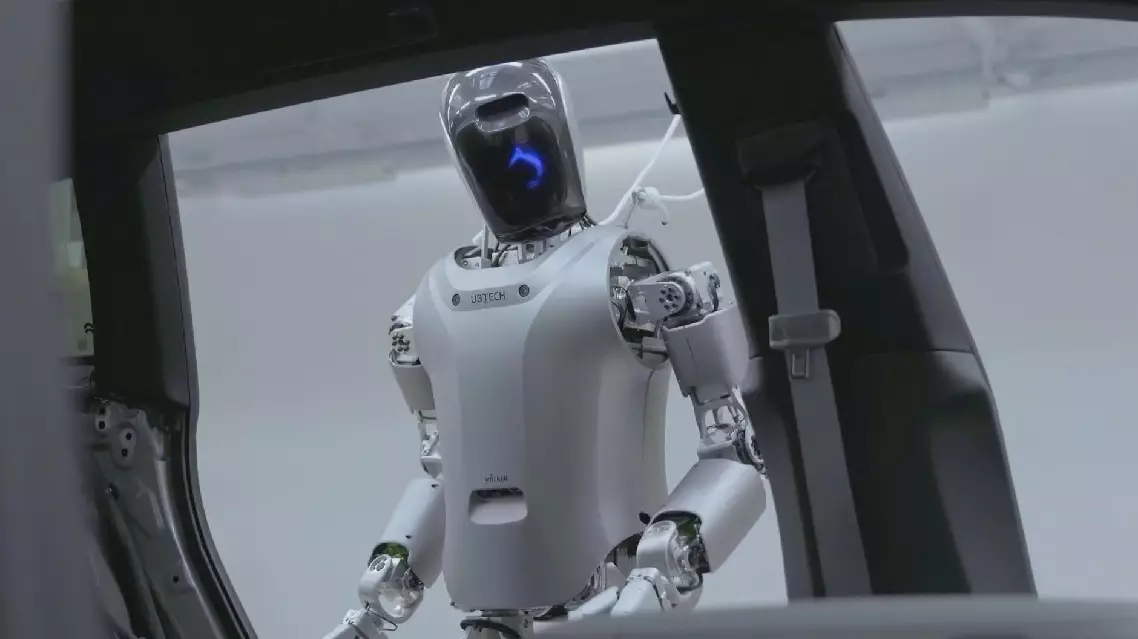
Recently, for the first time, Shenzhen deployed humanoid robots in new energy vehicle factories, where they worked alongside human co-workers to assemble vehicle parts and conduct automotive quality inspections.
"The robots are moving with the production line - achieving this coordinated manufacturing is particularly challenging. This is due to the complexity of motion planning and gait algorithm development. We have over 1,800 core technology patents, 60 percent of which are invention patents," said Tan Min, chief brand officer of UBTECH Robotics.
Shanghai's Zhangjiang Hi-Tech Park has established China’s first training ground for heterogeneous humanoid robots and plans to develop 10 million high-quality embodied datasets by the end of 2025.
Guangzhou, Chengdu, and Suzhou have incorporated embodied intelligence into their incubation plans for strategic pioneering industries and future industries.
Chinese cities race to integrate embodied intelligence into industry incubation programs