China's land market has seen a significant uptick in activity, with cities like Beijing, Shanghai and Hangzhou successfully auctioning off multiple plots.
The surge signals growing confidence in the real estate sector, and showing positive signs of recovery after last year's growth in new home sales.
At a press briefing on Sunday, Ni Hong, Minister of Housing and Urban-Rural Development, noted that the real estate market continued to show a positive trend in January and February this year, following a rise in the sales area and value of newly built commodity housing units in the fourth quarter of 2024.
In recent weeks, land auctions in cities such as Beijing, Shanghai, Hangzhou and Chengdu have seen high premium rates, signaling growing investor confidence.
In Shanghai, all four residential plots auctioned this year were sold, totaling around 15.93 billion yuan (about 2.2 billion U.S. dollars). The city's land market attracts considerable attention from real estate companies.
In Beijing's Chaoyang District, a competitive auction saw more than a hundred rounds of bidding before the land was sold for about 8.73 billion yuan (about 1.2 billion U.S. dollars).
In Hangzhou of eastern Zhejiang province, February's land auctions brought in 17.95 billion yuan (about 2.5 billion U.S. dollars), maintaining the momentum in the local land market.
Wuhan in central China's Hubei Province recently listed 16 land plots, which will be auctioned on March 28, while in Xi'an of northwestern China's Shaanxi Province, four residential plots were sold in a single day for a total of around 2.57 billion yuan (about 354 million U.S. dollars).
"Since the fourth quarter of last year, the market has stabilized after a decline, which has had a positive effect on the land market. Both the premium rates and the total land purchase prices are strong indicators of this trend. This reflects the positive development of our market and signals a very encouraging response from real estate companies, whose confidence in the market has been significantly strengthened," said Yan Yuejin, vice president of Shanghai E-House Real Estate Research Institute.
Experts suggest that as the pace of new home sales accelerates in core cities, real estate companies' confidence in acquiring quality land is likely to rise. At the same time, local governments are responding by increasing land supply to meet growing demand.
Recently, Beijing announced the second round of land supply for residential projects this year, with six plots located in areas of high market demand and well-developed infrastructure. The land supply will be completed before the end of March.
In Guangzhou, southern China's economic hub, 30 high-quality plots have been recommended, aimed at matching the diverse investment needs of companies and the varying housing demands of the public.
"Local governments have actively adjusted the supply structure, enhancing the availability of high-quality land in core areas and small, premium plots. Taking Hangzhou as an example. 90 percent of the 20 residential land plots auctioned this year have a single construction area of no more than 90,000 square meters. These plots are well-equipped with supporting infrastructure, feature a moderate floor area ratio, and are ideal for developing housing products that meet residents' demands for quality living," said Xu Xiaofen, director of the China Housing and Real Estate Research Institute at Zhejiang University of Technology.
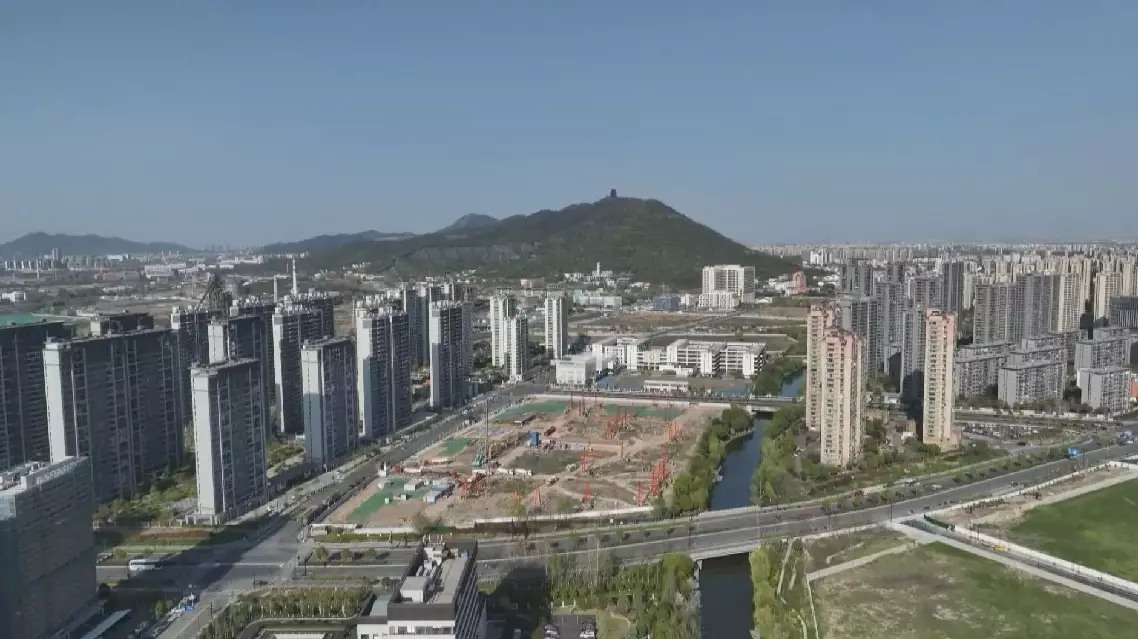
China's land market sees surge in activity across key cities