Shenzhen, a major transit port and destination for overseas travelers seeking to experience modern urban China, has been expanding services that promote convenience for the surging number of foreign visitors attracted by the country's visa-free policies.
China announced in December last year the further relaxation of its visa-free transit policy, extending the permitted stay for eligible foreign travelers from the original 72 and 144 hours to 240 hours, or 10 days.
Under the updated policy, eligible citizens from 54 countries, including Russia, Brazil, Britain, the United States and Canada, can enter China visa-free when transiting to a third country or region. These travelers may now enter through any of the 60 ports across 24 provinces, regions and municipalities and stay within the designated areas for up to 240 hours.
The number of travelers going through Shenzhen's Bao'an International Airport exceeded one million in the first two months of 2025, increasing by 34.9 percent year on year, according to the Shenzhen General Station of Exit and Entry Frontier Inspection.
Customs officers have taken note of the immense surge in visa-free travel.
"[As of the end of February], the cumulative number of foreigners entering the country from our section has exceeded 100,000, a year-on-year increase of 49.9 percent, of which 51 percent were visa-free, a year-on-year increase of 190.5 percent," said Ye Xianmao, a border inspection officer at Shenzhen airport.
Meanwhile, overseas travelers said the process of obtaining a transit visa was smooth and painless.
"Today, I arrived in Shenzhen from Moscow, and I am staying in Shenzhen for four days, and I don't have a basic visa, but today, I have got a new visa for 240 hours, a new policy in Shenzhen. This is very fast, and I'm very lucky, this is very easy for me," said a Russian traveler.
In order to facilitate international travelers in the city, Shenzhen launched an AI translation platform available at points such as government service desks and scenic spots.
At the city's Employment and Residence Service Center for Foreigners, each service window is equipped with a tablet equipped with the smart platform, enabling overseas visitors and staff to communicate effectively in their respective native languages.
"Using a translation app is very helpful. You can use a translation app and you get by here easily," said a Pakistani traveler.
In addition to real-time translation into 138 languages, this smart translator can also generate useful information about the city that can be directly transmitted to an overseas visitor's smartphone.
According to Shenzhen's Government Services and Data Management Bureau, the city will continue to expand the availability and applications of these smart services.
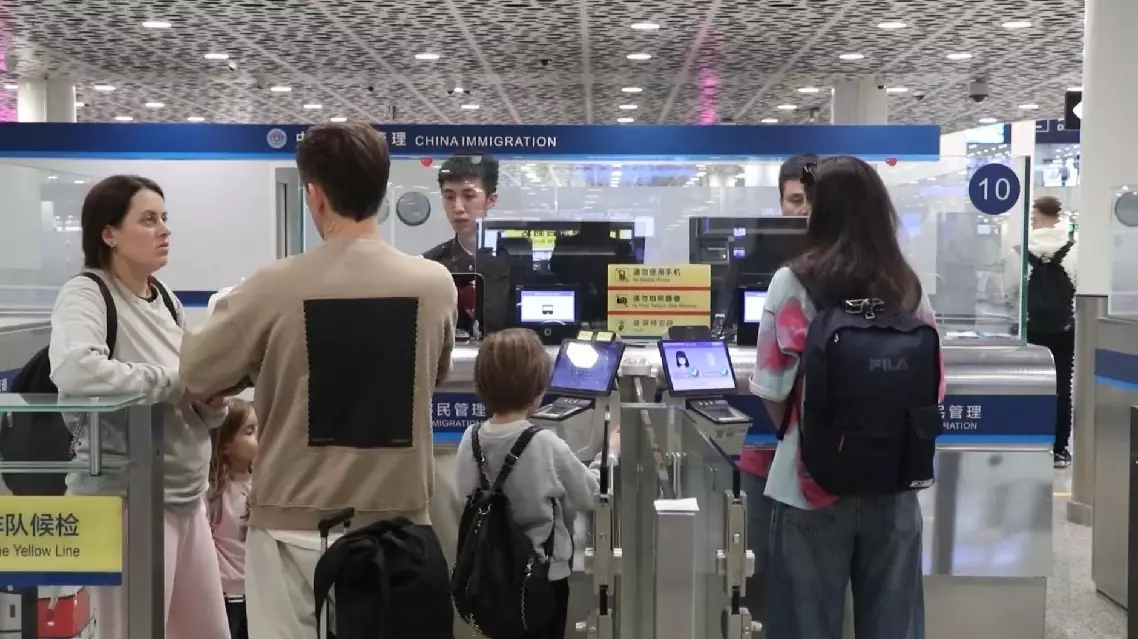
Shenzhen airport handles over 1 million foreign passengers in Jan-Feb period