China's international air freight network has continued to expand, with 92 new international air cargo routes opened in the first half of this year, the China Federation of Logistics and Purchasing (CFLP) said on Sunday.
Statistics from the CFLP's Aviation Logistics Branch show that 12 new international air cargo routes were opened in June alone. During the first half of the year, with the total of 92 new routes, more than 217 round-trip flights were added every week.
The route structure is still primarily focused on Asia and Europe. Of the new routes, 41 serve Asia, 38 serve Europe, 11 serve North America, one serves South America, and one serves Africa.
In terms of cargo structure, the shipments consist mainly of cross-border e-commerce goods, high-end manufacturing products, high-value-added goods, electronic products, and auto parts.
The construction of China's international air freight network has continuously paced up this year. Route planning has deepened its focus on core Eurasian corridors while steadily expanding transoceanic and long-distance routes, continuously extending the global logistics coverage map. Domestic aviation enterprises have become the main force in opening air cargo channels, steadily strengthening their independent air transport capacity.
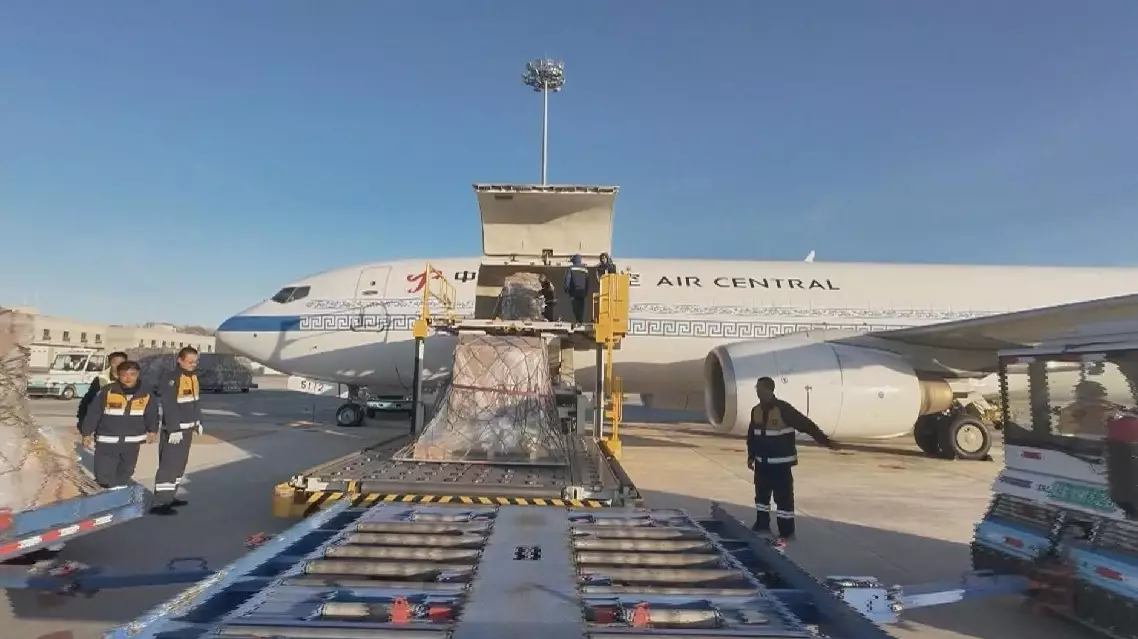
92 new international air cargo routes opened in H1
China's comprehensive research vessel KEXUE departed from Qingdao in east China's Shandong Province Saturday for an estimated 40-day mission in the western Pacific, marking the 15th voyage of the shared research program that began in 2010.
The expedition brings together scientists from more than 10 institutions, including the Chinese Academy of Sciences, Ocean University of China, Sun Yat-sen University and Xiamen University. Their work will center on two major questions: how the western Pacific's currents and warm pool influence regional and global climate, and how the region's complex geology has evolved over time.
Research will span air-sea interaction, physical oceanography, marine biology, chemistry and seafloor geology.
To address the scientific objectives of this voyage, the research team will deploy an integrated observation system that combines fixed buoys and moorings, mobile underwater gliders, and ship-based transect surveys.
A highlight of the expedition is the official naming of the self-developed buoy and mooring systems as "LangYa," which are designed to work in tandem with IOCAS's AI-powered LangYa ocean large model.
In early June, IOCAS released the LangYa 2.0 large model, a major upgrade that moves beyond basic sea variables to predict complex marine phenomena, including typhoons, extreme rainfall and storm surges.
The western Pacific is a critical region affecting China's weather, climate, and maritime shipping safety. Over the past 15 years, the shared program has proved highly effective, as more than 1,100 observation stations in the sea have been completed, and annual time-series data along key sections now stretch back up to 14 years.
The long-term data collected will support shipping safety, climate change response and the exploration of deep-sea resources and environmental management.
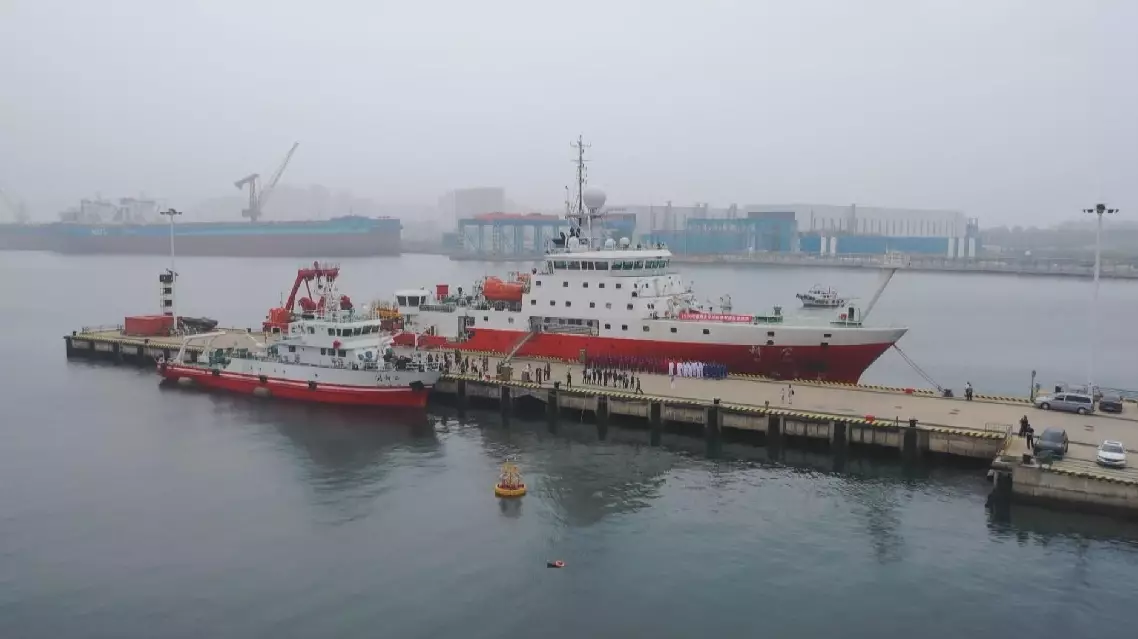
China launches 15th western Pacific expedition