Ethiopia has earned a record 3 billion U.S. dollars from coffee exports during its concluding 2025/26 fiscal year, according to Adugna Debela, director general of the Ethiopian Coffee and Tea Authority.
The director general made the remarks at a media briefing on Friday, attributing the highest revenue to the export of high-quality and specialty coffee that commanded better prices at the global market.
"It is a pride for us to register such a remarkable result amid the conflict in the Middle East," said Debela, recalling that the conflict disrupted coffee shipments and logistic operations en route to the region and the Far East.
During the year, 1 ton of Ethiopian coffee was sold at 7,500 U.S. dollars at the global market, up from 6,000 U.S. dollars last year, while other coffee exporting countries received a 40 percent lower price compared with last year, according to Debela, noting that the global coffee price per kilo has declined to 2.4 dollars this year from 4 dollars last year.
Debela said the government's commitment to introducing sound reforms, curbing illegal and contraband trade, reducing wastage, and expanding market destinations has also greatly contributed to better revenue.
Saudi Arabia, Germany, and China have become the top three destinations for Ethiopian coffee exports during the year.
The director general said the country envisages generating up to 6 billion dollars annually in the coming five years.
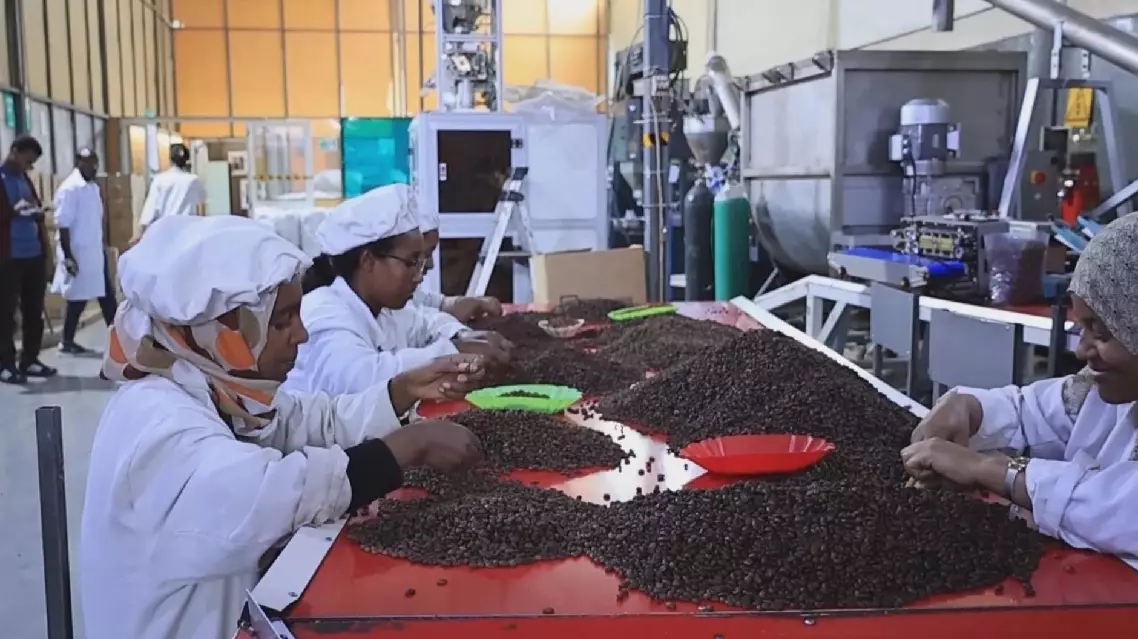
According to a statement released at the press briefing, the authority said Ethiopia's annual coffee production has grown from 500,000 tons five years ago to 1.5 million tons this year, while the country's coffee-producing capacity per hectare has also risen from 600 kg to 1,000 kg during the period.
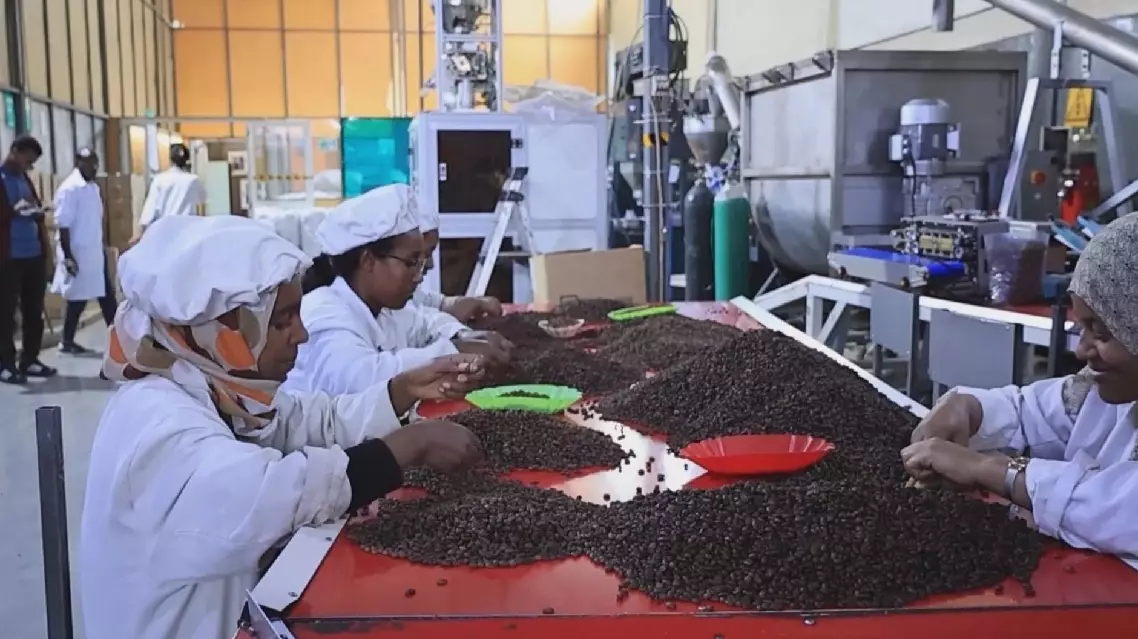
Ethiopia earns record 3 bln USD from coffee exports

The 2026 Qixi Festival Gala, produced by China Media Group (CMG), got underway at 20:00 Beijing Time on Wednesday, marking the annual celebration of one of China's oldest and most cherished traditional festivals.
The Qixi Festival, also referred to as the Chinese Valentine's Day, falls on the seventh day of the seventh month on the Chinese lunar calendar. It dates back more than 2,000 years and was inscribed on China's national intangible cultural heritage list in 2006.
The festival's enduring romantic association stems from the legends of the cowherd Niulang and the weaver girl Zhinyu, star-crossed lovers separated by the Milky Way who are permitted to meet only once a year when a flock of magpies forms a bridge across the heavens.
In ancient China, young women celebrate the festival by praying to Zhinyu for clever hands and domestic talents. Today, couples usually spend the day by exchanging gifts and many partners choose this auspicious date to register their marriages or hold collective traditional weddings.
This year's gala centered on the motif of a bridge, linking ancient myth with contemporary life.
A travelogue performance themed around the mythological bridge ran through the entire event, which featured songs, dances, traditional operas and ballet.
A highlight of the gala was a micro-film which explores shared Qixi customs between people from the Chinese mainland and Taiwan.
Among the evening's touching highlights was a short film featuring the enduring romance of 88-year-old Chinese radar technology expert Ben De, recipient of China's 2026 State Preeminent Science and Technology Award, and his wife. The award is the nation's highest honor for scientific and technological achievement.
This year's gala centered on co-creation, featuring segments with real couples from across the country to jointly celebrate the millennia-old traditions through contemporary expressions of love.
CMG airs special TV gala to celebrate China's 2,000-year-old love festival