Skip to Content Facebook Feature Image

China embraces smart home revolution with AI-integrated appliances

China

China

China

China embraces smart home revolution with AI-integrated appliances

2025-03-15 09:57 Last Updated At:16:07

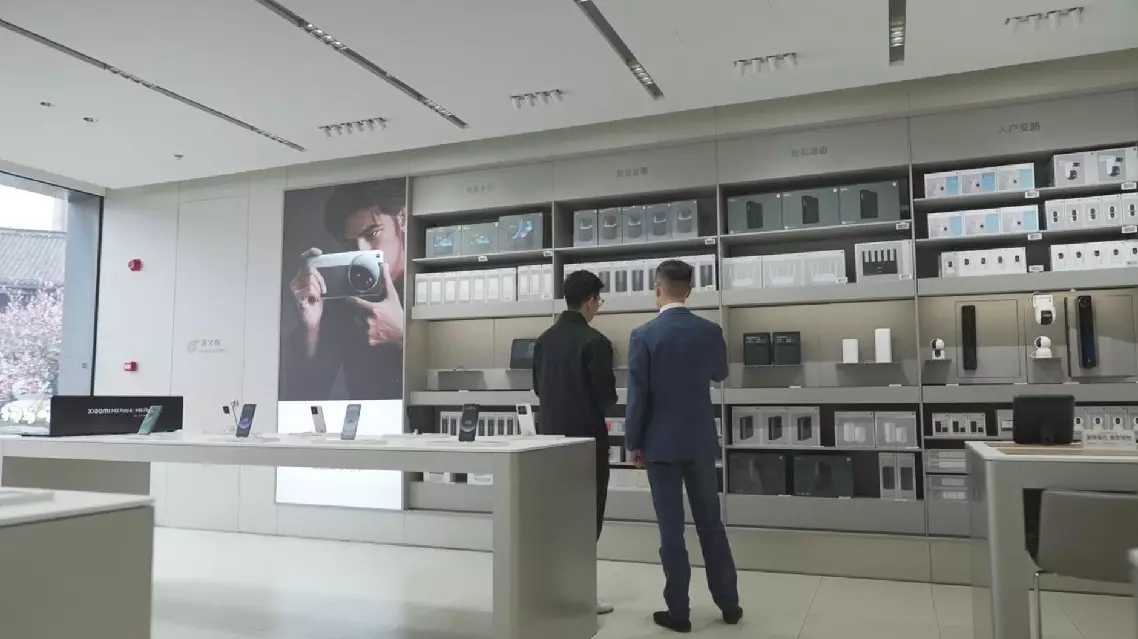
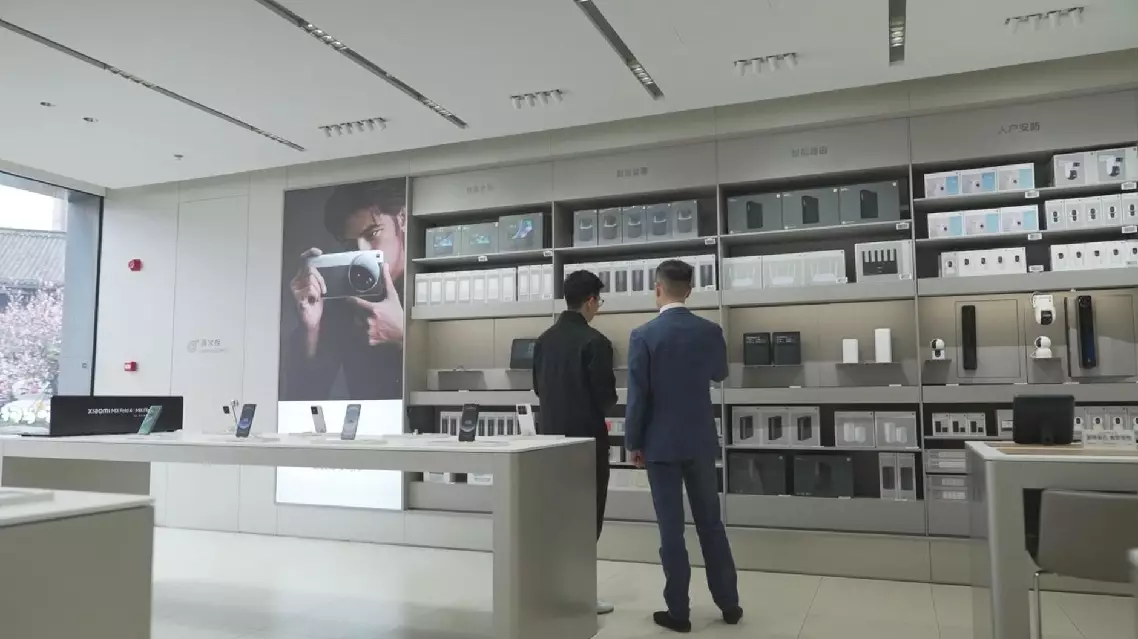
China's home appliance manufacturers are rapidly embracing a smart home revolution by integrating artificial intelligence, leading to a surge in demand for innovative products among consumers.

With the introduction of new subsidies and policies, upgrading homes with cutting-edge technology has never been easier in China, where smart home gadgets are gaining immense popularity.

The concept of controlling electronics with voice commands may still feel futuristic to many, but the essence of a smart home lies in automation -- anticipating and fulfilling the needs of users seamlessly, according to industry insiders.

"This washing machine has a feature of automation. After washing, clothes usually need to be hung up to dry. After the laundry cycle completes, the hanger detects this and automatically lowers itself when the washing machine door is opened," said He Peng, a product specialist of Xiaomi.

"This smart door lock seamlessly integrates with various devices. For instance, upon arrival, the speaker can greet you, while lights, curtains, air purifiers, and air conditioners can all be synchronized and controlled automatically," said He.

China has rolled out over 40 billion U.S. dollars in subsidies to boost consumption and encourage consumers to trade in old appliances for new ones. Digital devices and smart home gadgets are seeing an immediate surge in demand.

"Gen Z, millennials and the silver-haired are called the 'three pivotal generations' who are very key to reshaping China retail momentum. So, each generation exhibits very distinctive preferences in embracing innovation. Gen Z and millennials are quite young, they are young generations, they are much more proactive and enthusiastic when they just want to buy something new, like the smart optical, smart watches and smart speakers. So, they are very popular. In addition, the demand for AI-powered devices, such as voice-controlled smart home systems, is growing very fast in China. That reflects the consumers' growing preferences to integrate technology into their daily lives," said Jacky Zhu, head of the retail research department of JLL China.

In contrast, older generations are showing growing interest in wearable healthcare and security products, and home automation remains a massive growth area, industry insiders said.

"But what is the most important thing? I think it is also the voice-controlled terminals for all people, which could also manage the temperature, the emergency calls or the lighting, etc. So, it really helps older people to live independently, without families, and it also can reduce the risks of accidents to the older people," said Zhu.

The evolution of smart technology extends beyond homes to workspaces, where AI and advanced systems are becoming increasingly prevalent. With the advent of 5G and the Internet of Things in recent years, the interconnectivity of devices has reached new heights, marking a transformative wave of growth driven by AI-powered appliances.
China embraces smart home revolution with AI-integrated appliances
China embraces smart home revolution with AI-integrated appliances

China embraces smart home revolution with AI-integrated appliances

China embraces smart home revolution with AI-integrated appliances
A former television host from Taiwan, Zhai Xuan, has made a pivotal decision to leave mainstream broadcasting in order to create content that provides a better understanding of the Chinese mainland and cross-strait relations.

Zhai, a seasoned television host with over a decade of experience in Taiwan's media landscape, recently addressed an audience at an event in Beijing, where she revealed her complete transition into independent online media.

In her remarks, she articulated her aspiration to bridge what she perceives as a significant information gap between audiences on both sides of the Strait, highlighting her commitment to fostering a deeper understanding and connection through her new endeavors.

"I was really surprised by all the fake news. There were stories saying people on the mainland can't afford tea eggs or that they live in mud houses and in Taiwan, this was the main information many people received," said Zhai.

Zhai said she initially began producing online videos to challenge such perceptions while continuing her work as a television host.

In April 2025, she travelled to the mainland with her father to fulfill her late grandfather's wish to return to his hometown. The trip, which reunited family members separated since 1949, was recorded in a video series titled "Journey to Find Our Roots", drawing attention from viewers in both Taiwan and the mainland.

"Many people in Taiwan told me that after watching, they wanted to apply for a mainland travel permit immediately and go looking for their relatives. Some had long forgotten these things, but after seeing my story, they began thinking about their hometowns and family members they had never met and decided to search for their roots," Zhai shared her story at the event.

By mid-2025, Zhai said she began to feel increasing pressure amid rising political tensions and a tightening atmosphere around cross-Strait exchanges in Taiwan.

After more than 12 years in the industry, Zhai resigned from her position, believing it was the right thing to do.

"At that moment, I felt this was a major issue,not just for me, but for Chinese people on both sides of the Strait. If I backed down then, I wouldn’t be standing on the right side," said Zhai.

Since leaving television, Zhai has broadened her online programming to encompass a range of daily-life topics, including practical guidance on applying for a mainland travel permit and using commonly employed mobile applications, in addition to content that delves into historical memory and cultural connections across the Strait.

As the debate over cross-Strait relations continues in Taiwan, Zhai said she remains committed to her current path.

Former Taiwan TV host bridges cross-Strait divide via online media

Former Taiwan TV host bridges cross-Strait divide via online media

Recommended Articles