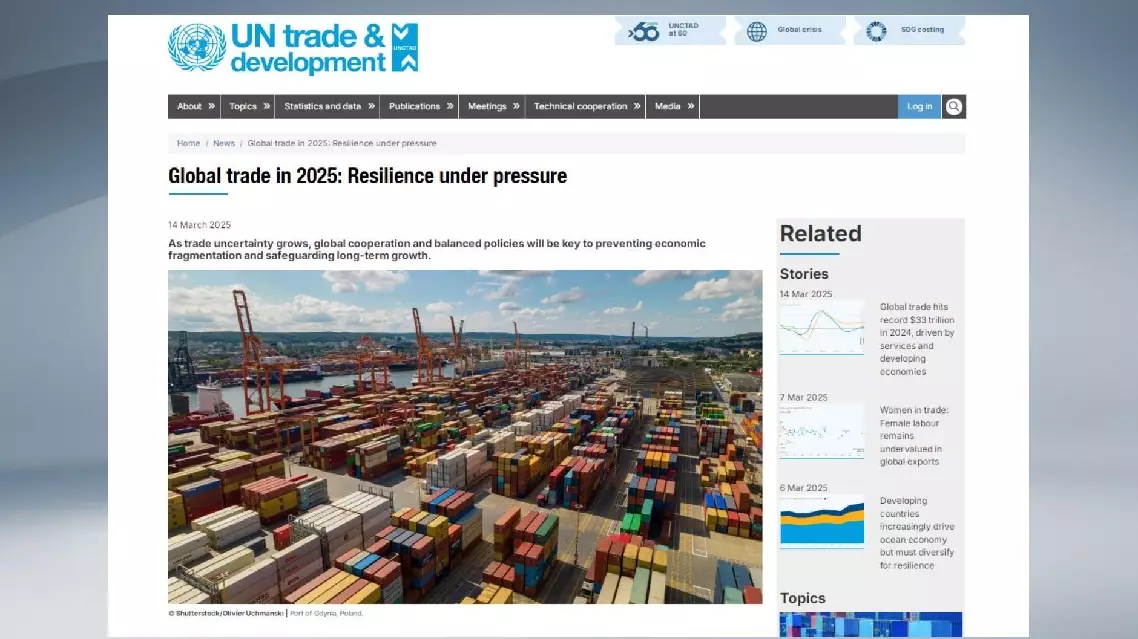
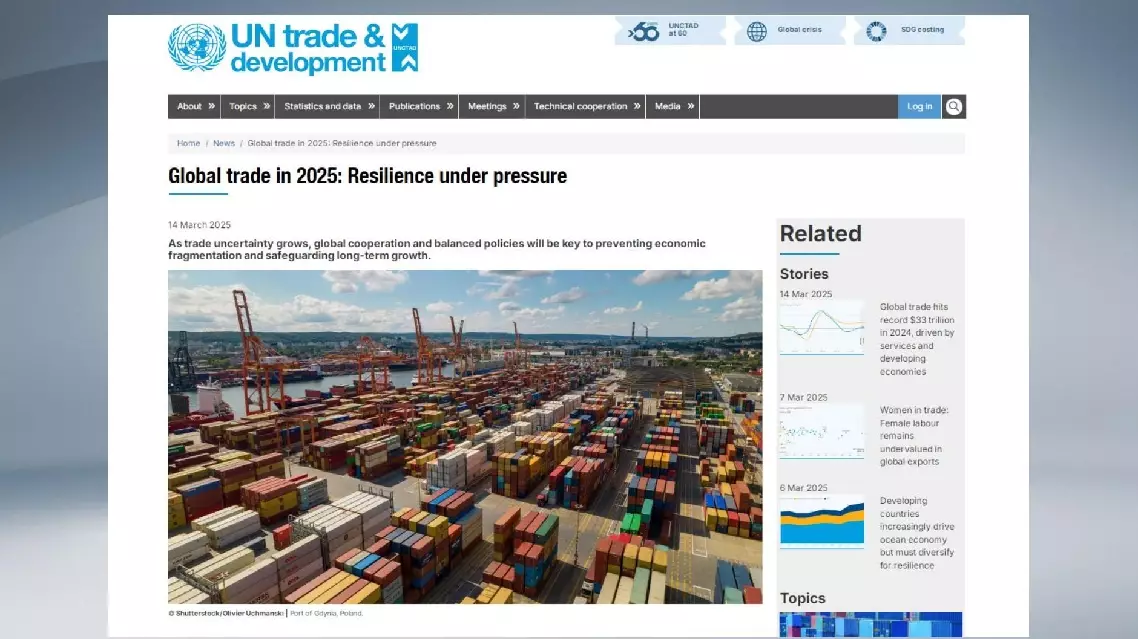
Global trade hit a record 33 trillion U.S. dollars in 2024, marking a 3.7-percent increase from 2023, showed a report released Friday by the United Nations Trade and Development (UNCTAD).
The growth was driven by services, which rose 9 percent and accounted for nearly 60 percent of the total growth, the Global Trade Update report says, adding that trade in goods grew 2 percent.
Developing economies outpaced developed nations in 2024, with imports and exports rising 4 percent for the year and 2 percent in the fourth quarter.
Foreign trade of China and India both showed strong growth momentum in the fourth quarter of 2024, the report says.
Meanwhile, developed economies' trade stagnated, with imports and exports flat for the year and down 2 percent in the last quarter, it says.
The report highlights mounting geoeconomic tensions, protectionist policies and trade disputes that could disrupt trade ahead, despite signs of trade stability in early 2025.
The report calls for efforts to prevent the formation of isolated trade blocs and avoid undermining long-term growth by properly managing policy shifts.
Global trade hits record 33 trillion USD in 2024: UN report
Global trade hits record 33 trillion USD in 2024: UN report
Iran on Friday condemned a new U.S. sanctions campaign as "state terrorism" and said pressure tactics must end for diplomacy to resume, while a senior Iranian security official vowed to retaliate against any further economic escalation.
Iran's Foreign Ministry said the sanctions amounted to a new round of "economic terrorism," accusing the United States of exploiting its influence over the dollar-based financial system to pressure other countries into adopting its policies toward Iran.
The ministry said the measures violated the sovereignty of other states and the rights of all United Nations member states, and described them as a serious breach of the UN Charter.
The statement came as Iranian Foreign Minister Abbas Araghchi met Qatar's Prime Minister and Foreign Minister Sheikh Mohammed bin Abdulrahman Al Thani in Tehran.
Araghchi described the talks as constructive and said diplomacy could return to the right track if the United States recognized that pressure would not work. It must build trust, engage respectfully, recognize Iran's rights and meet its obligations, he said.
Separately, Mohsen Rezaei, secretary of Iran's Supreme National Security Council, said in an interview aired on Lebanon's Al-Manar television that the U.S. shift toward economic pressure showed that its military strikes against Iran had not achieved their intended results.
Rezaei said Iran did not seek war but would respond decisively if hostilities resumed. He said Iran was preparing for a new phase of confrontation and that any future conflict would differ from previous ones.
He said any agreement between Iran and the United States would need to form part of a wider regional settlement, including a ceasefire across the Middle East, an Israeli withdrawal from Lebanese territory and an end to the war in Gaza.
Iran would take countermeasures against any further escalation of U.S. sanctions and target U.S. economic interests in the region, Rezaei said.

Iran condemns US sanctions, urges return to diplomacy