The Shanghai Wusongkou International Cruise Terminal welcomed 4,800 international passengers on Sunday, setting a new record for the highest number of foreign tourists to enter the port in a single day. On Sunday, the German luxury cruise ship AIDA Stella docked at the port for the first time, bringing approximately 2,200 international tourists. On the same day, Royal Caribbean’s Spectrum of the Seas also arrived, delivering over 2,600 foreign visitors to the port.
The cruise port hosted a special welcoming ceremony for foreign tourists, featuring dragon and lion dances, traditional Chinese music performances, and displays of intangible cultural heritage, which captivated many visitors. "I think it's a beautiful town, I've never been there before. I will see what it will be," said a foreign tourist.
"It's the first time we're here in China and we're really excited to see Shanghai, to see what's going on in China. We have heard that it's a really modern country. So, we are really excited about what we can see here," said another tourist.

Shanghai cruise port welcomes record 4,800 passengers in single day
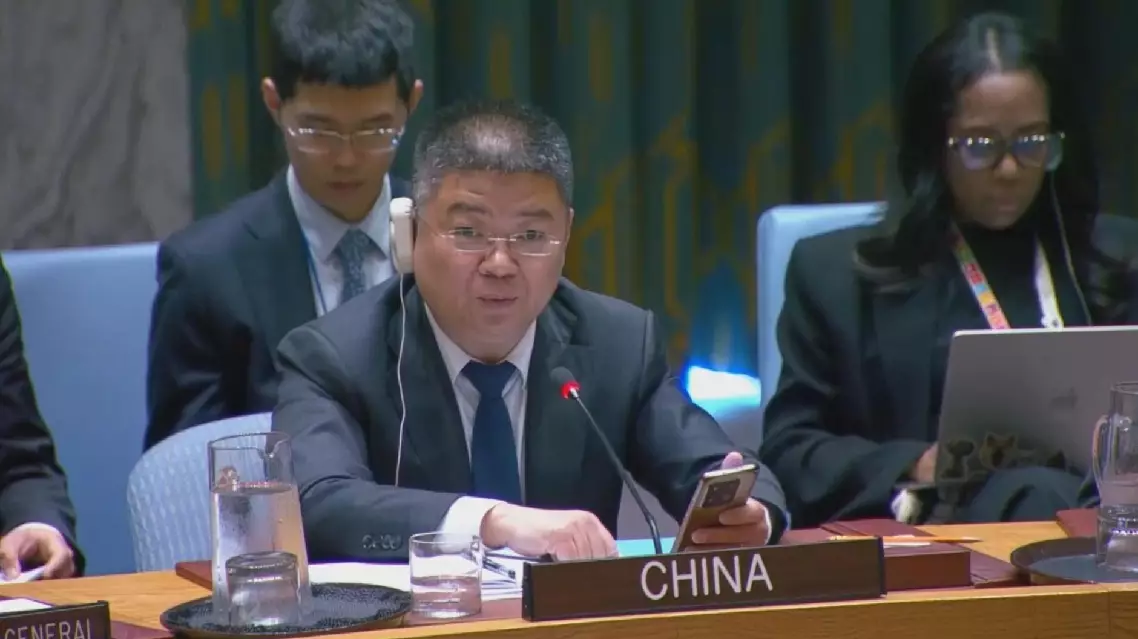
A Chinese envoy on Thursday issued a sharp warning over Japan's nuclear ambitions at the United Nations (UN), accusing Japan of challenging international red lines and urging the Japanese government to clarify its stance and abandon re-militarization.
At the UN Security Council meeting on non-proliferation on the Korean Peninsula, Xu Feng, counselor for the Disarmament Division at China's Permanent Mission to the UN, confronted Japan's recent actions and rhetoric regarding nuclear weapons.
Citing legally binding documents like the Cairo Declaration, Potsdam Proclamation, and the Japanese Instrument of Surrender, Xu stressed that Japan must be fully disarmed and is prohibited from maintaining any capability for rearmament.
"As a non-nuclear-weapon state to the Treaty on the Non-Proliferation of Nuclear Weapons, Japan must abide by its international obligations to not accept, not manufacture, not possess, and not proliferate nuclear weapons," said Xu.
The Chinese side expressed grave concern over Japan's technical status as a recognized "nuclear threshold" state, possessing reprocessing technology, operational facilities, and storing plutonium far beyond civilian energy needs, giving Japan the capability for a rapid "nuclear breakout."
Xu highlighted recent disturbing signals in Japan's nuclear policy, noting that in November 2025, the Japanese prime minister publicly questioned whether the country's Three Non-Nuclear Principles would be maintained amid security policy revisions. In December, a senior official at the prime minister's office reportedly stated that "Japan should possess nuclear weapons."
Xu pointed out that these remarks reveal an ambition among Japanese right-wing forces to challenge the international order. Japan must give a formal, top-level clarification on its nuclear policy and halt all steps towards re-militarization, he said, adding only then can international concerns be truly addressed.
China warns against Japan's nuclear ambitions at UN Security Council