TEHRAN, Iran (AP) — I've worked for The Associated Press as a photographer since 1999. A lot of what I cover involves either Iran's government or its relations with the West, but I also try to shoot on the streets of Tehran as well to show the world what life looks like here in my hometown.
The fire festival offers a great opportunity for that.
Click to Gallery
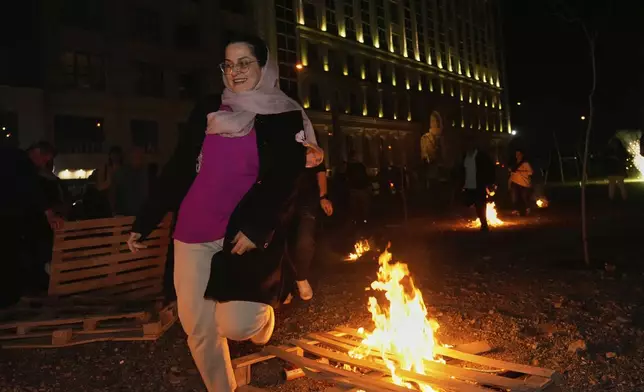
An Iranian woman jumps over a bonfire celebrating Chaharshanbe Souri, or Wednesday Feast, an ancient Festival of Fire on the eve of the last Wednesday of the Persian year, in Tehran, Iran, Tuesday, March 18, 2025. (AP Photo/Vahid Salemi)
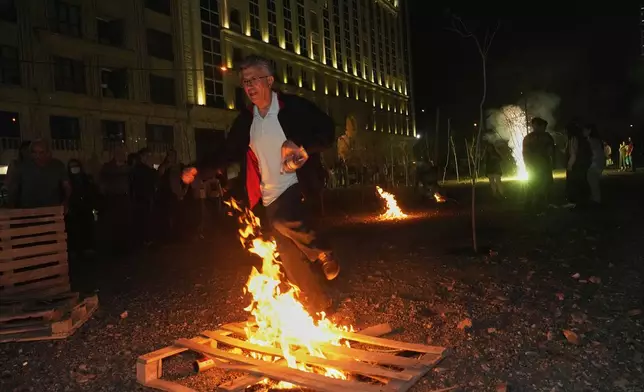
An Iranian man jumps over a bonfire celebrating Chaharshanbe Souri, or Wednesday Feast, an ancient Festival of Fire on the eve of the last Wednesday of the Persian year, in Tehran, Iran, Tuesday, March 18, 2025. (AP Photo/Vahid Salemi)
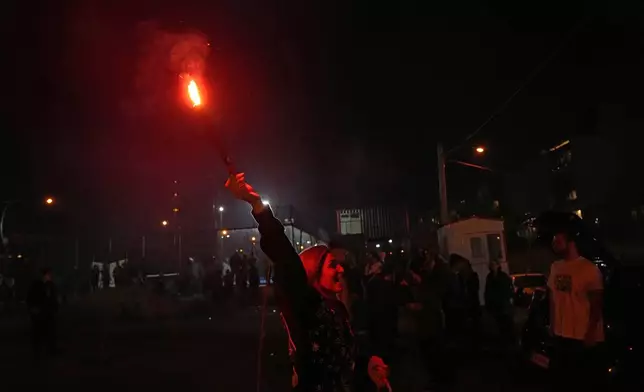
An Iranian woman holds up a firework celebrating Chaharshanbe Souri, or Wednesday Feast, an ancient Festival of Fire on the eve of the last Wednesday of the Persian year, in Tehran, Iran, Tuesday, March 18, 2025. (AP Photo/Vahid Salemi)
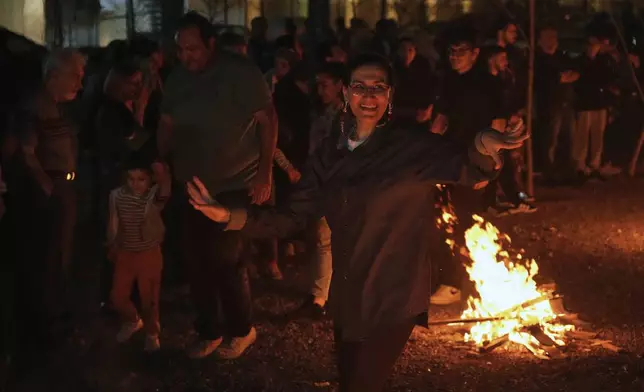
An Iranian woman dances while celebrating Chaharshanbe Souri, or Wednesday Feast, an ancient Festival of Fire on the eve of the last Wednesday of the Persian year, in Tehran, Iran, Tuesday, March 18, 2025. (AP Photo/Vahid Salemi)
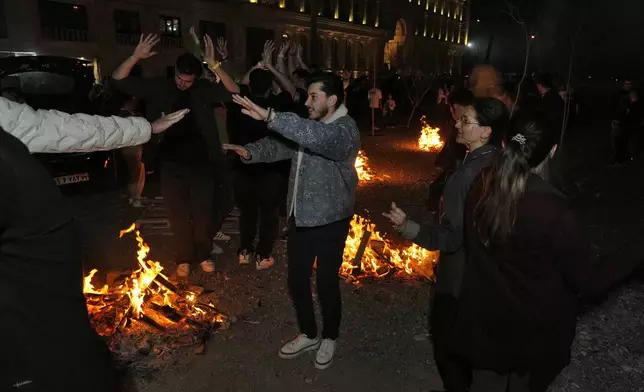
Iranians dance while celebrating Chaharshanbe Souri, or Wednesday Feast, an ancient Festival of Fire on the eve of the last Wednesday of the Persian year, in Tehran, Iran, Tuesday, March 18, 2025. (AP Photo/Vahid Salemi)
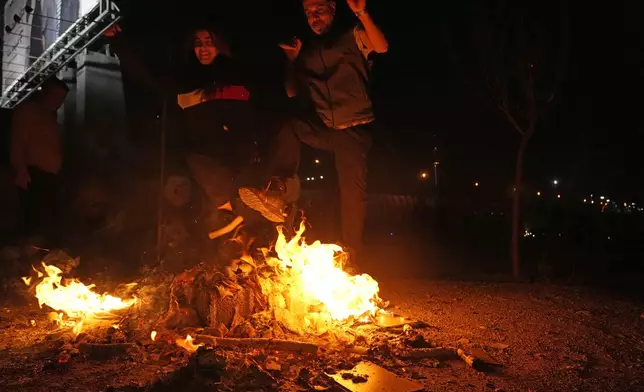
Iranians jump over a bonfire celebrating Chaharshanbe Souri, or Wednesday Feast, an ancient Festival of Fire on the eve of the last Wednesday of the Persian year, in Tehran, Iran, Tuesday, March 18, 2025. (AP Photo/Vahid Salemi)
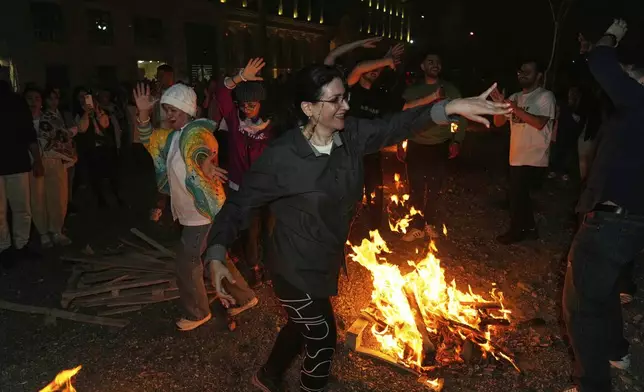
Iranians dance while celebrating Chaharshanbe Souri, or Wednesday Feast, an ancient Festival of Fire on the eve of the last Wednesday of the Persian year, in Tehran, Iran, Tuesday, March 18, 2025. (AP Photo/Vahid Salemi)
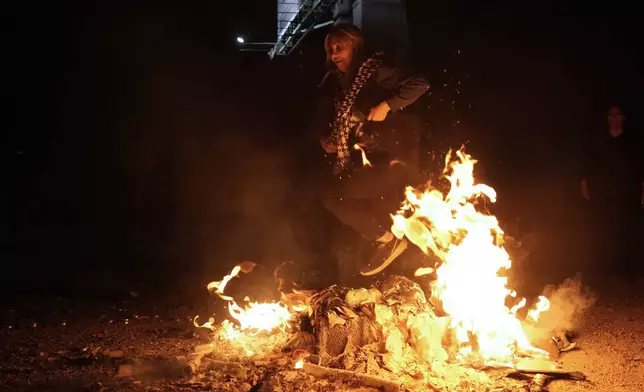
An Iranian woman jumps over a bonfire celebrating Chaharshanbe Souri, or Wednesday Feast, an ancient Festival of Fire on the eve of the last Wednesday of the Persian year, in Tehran, Iran, Tuesday, March 18, 2025. (AP Photo/Vahid Salemi)
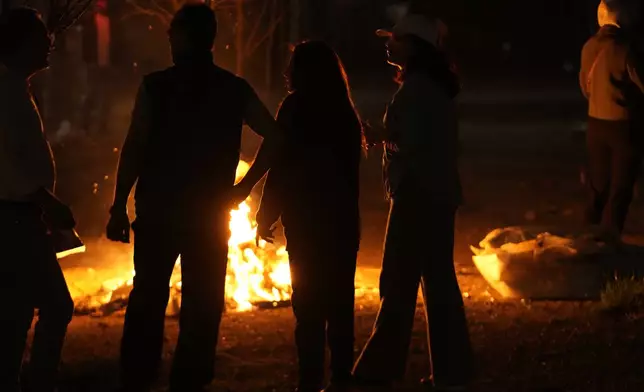
Iranians gather around a bonfire celebrating Chaharshanbe Souri, or Wednesday Feast, an ancient Festival of Fire on the eve of the last Wednesday of the Persian year, in Tehran, Iran, Tuesday, March 18, 2025. (AP Photo/Vahid Salemi)
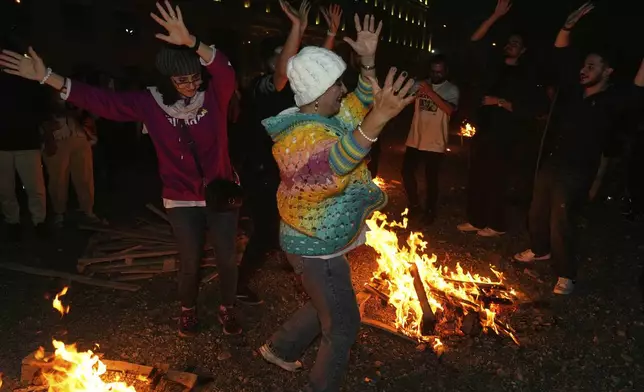
Iranians dance while celebrating Chaharshanbe Souri, or Wednesday Feast, an ancient Festival of Fire on the eve of the last Wednesday of the Persian year, in Tehran, Iran, Tuesday, March 18, 2025. (AP Photo/Vahid Salemi)
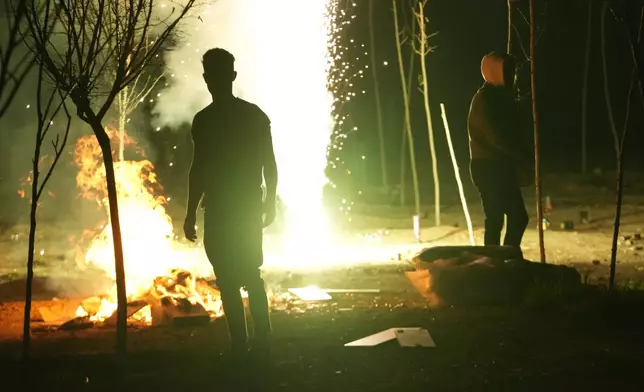
Iranians gather around a bonfire as they light a firework celebrating Chaharshanbe Souri, or Wednesday Feast, an ancient Festival of Fire on the eve of the last Wednesday of the Persian year, in Tehran, Iran, Tuesday, March 18, 2025. (AP Photo/Vahid Salemi)
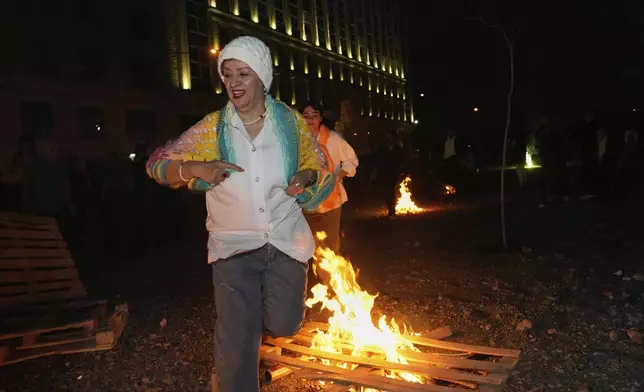
An Iranian woman jumps over a bonfire celebrating Chaharshanbe Souri, or Wednesday Feast, an ancient Festival of Fire on the eve of the last Wednesday of the Persian year, in Tehran, Iran, Tuesday, March 18, 2025. (AP Photo/Vahid Salemi)
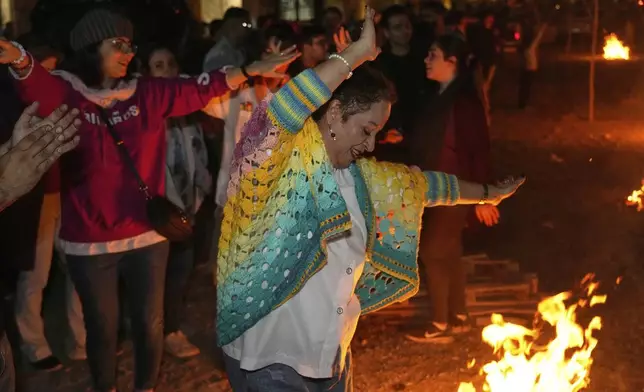
People dance while celebrating Chaharshanbe Souri, or Wednesday Feast, an ancient Festival of Fire on the eve of the last Wednesday of the Persian year, in Tehran, Iran, Tuesday, March 18, 2025. (AP Photo/Vahid Salemi)
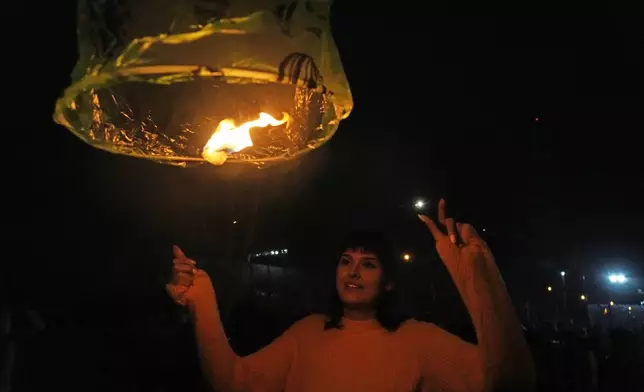
An Iranian woman releases a wishing lantern while celebrating Chaharshanbe Souri, or Wednesday Feast, an ancient Festival of Fire on the eve of the last Wednesday of the Persian year, in Tehran, Iran, Tuesday, March 18, 2025. (AP Photo/Vahid Salemi)
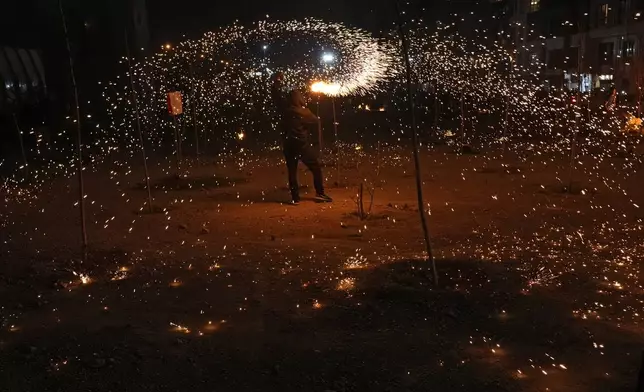
An Iranian man plays with a firework celebrating Chaharshanbe Souri, or Wednesday Feast, an ancient Festival of Fire on the eve of the last Wednesday of the Persian year, in Tehran, Iran, Tuesday, March 18, 2025. (AP Photo/Vahid Salemi)
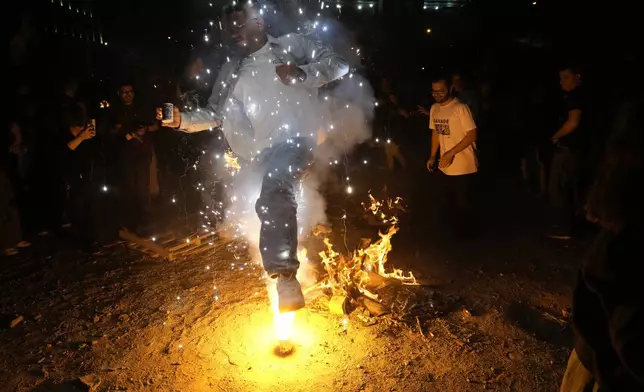
An Iranian man jumps over a firework celebrating Chaharshanbe Souri, or Wednesday Feast, an ancient Festival of Fire on the eve of the last Wednesday of the Persian year, in Tehran, Iran, Tuesday, March 18, 2025. Iranians celebrate their new year, or Nowruz, with arrival of the spring. (AP Photo/Vahid Salemi)
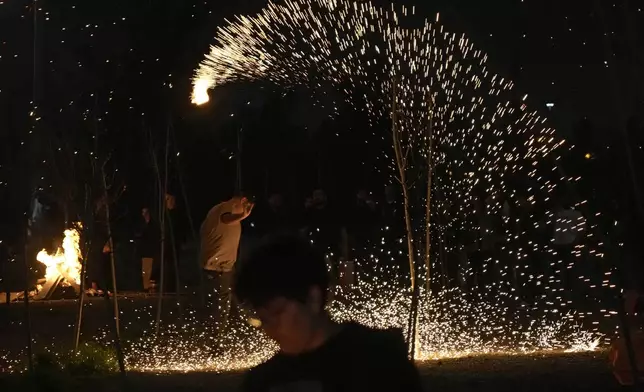
An Iranian man plays with a firework celebrating Chaharshanbe Souri, or Wednesday Feast, an ancient Festival of Fire on the eve of the last Wednesday of the Persian year, in Tehran, Iran, Tuesday, March 18, 2025. (AP Photo/Vahid Salemi)
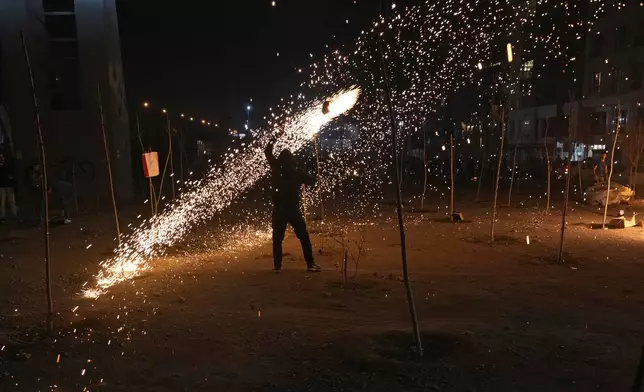
An Iranian man plays with a firework celebrating Chaharshanbe Souri, or Wednesday Feast, an ancient Festival of Fire on the eve of the last Wednesday of the Persian year, in Tehran, Iran, Tuesday, March 18, 2025. (AP Photo/Vahid Salemi)
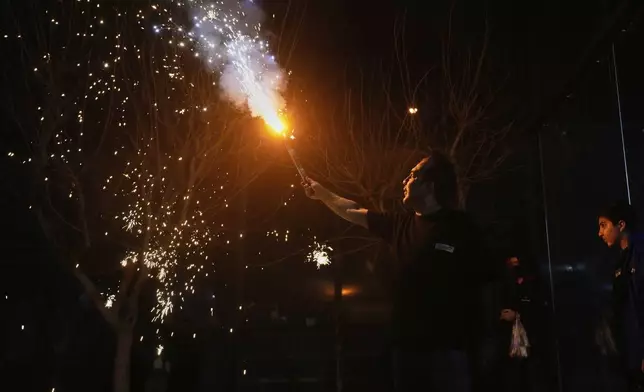
An Iranian man holds up a firework celebrating Chaharshanbe Souri, or Wednesday Feast, an ancient Festival of Fire on the eve of the last Wednesday of the Persian year, in Tehran, Iran, Tuesday, March 18, 2025. (AP Photo/Vahid Salemi)
Known as “Chaharshanbe Souri” in Farsi, the festival comes in the hours just before the Wednesday before Nowruz, which is the Persian New Year.
To celebrate, people light bonfires, set off fireworks and send wish lanterns floating off into the night sky. Others jump over and around fires, chanting “My yellow is yours, your red is mine,” invoking the replacement of ills with warmth and energy.
The fire festival also features an Iranian version of trick-or-treating, with people going door to door and being given a holiday mix of nuts and berries, as well as buckets of water.
It's not necessarily an easy assignment though. Here in Iran, some people remain sensitive about having their photograph taken, particularly women who aren't wearing Iran's mandatory headscarf, or hijab.
Meanwhile, the joy sometimes overcomes safety concerns as smoke fills the air and fireworks explode at random overhead. There are injuries every year and sometimes deaths. I ended up having a piece of a burning firecracker land inside my left shoe. I'm OK — it just burned a hole through my sock and left a small blister.
I used a flash for some of my photos to capture people jumping through the fire, given their speed and the low light available. One picture my photo editors especially liked shows a man holding a lit firework, his face silhouetted by its bright light. Behind him, you can see the empty branches of trees in the park I shot in.
Nowruz marks the start of spring. Soon, leaves will sprout again.
See more AP photography at https://apnews.com/photography.

An Iranian woman jumps over a bonfire celebrating Chaharshanbe Souri, or Wednesday Feast, an ancient Festival of Fire on the eve of the last Wednesday of the Persian year, in Tehran, Iran, Tuesday, March 18, 2025. (AP Photo/Vahid Salemi)
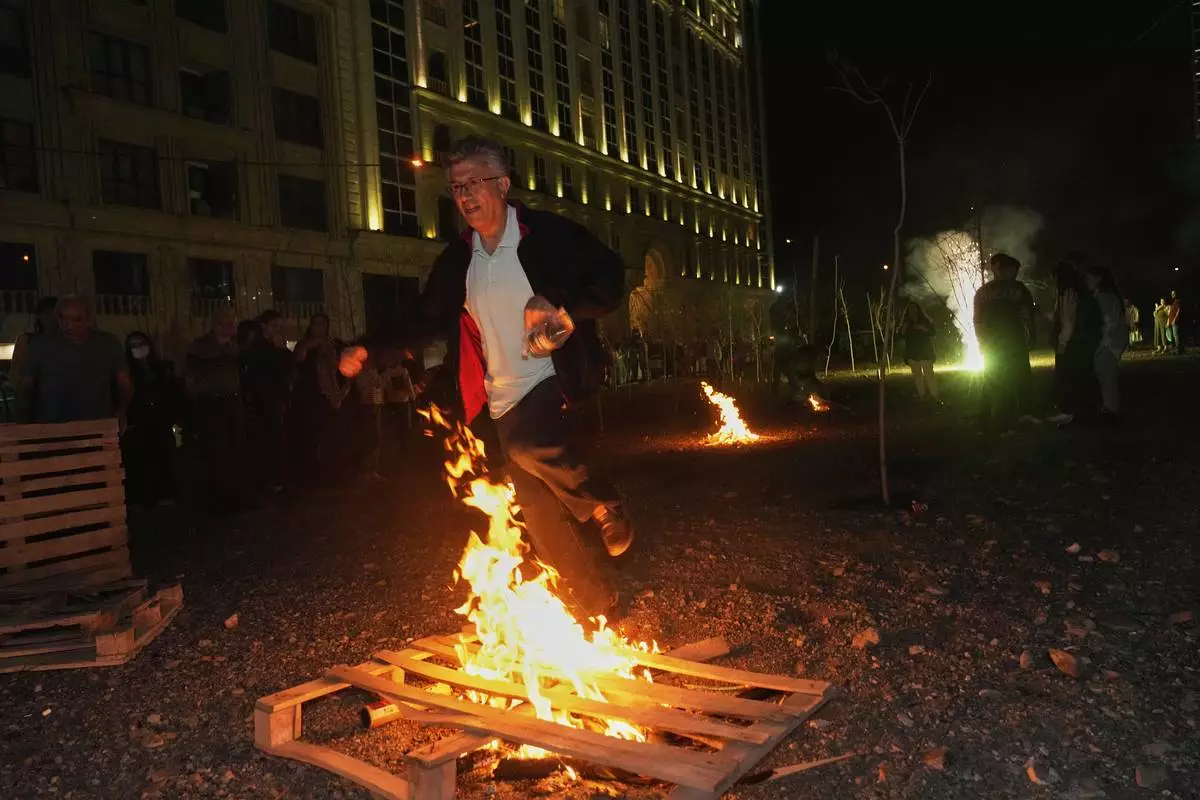
An Iranian man jumps over a bonfire celebrating Chaharshanbe Souri, or Wednesday Feast, an ancient Festival of Fire on the eve of the last Wednesday of the Persian year, in Tehran, Iran, Tuesday, March 18, 2025. (AP Photo/Vahid Salemi)
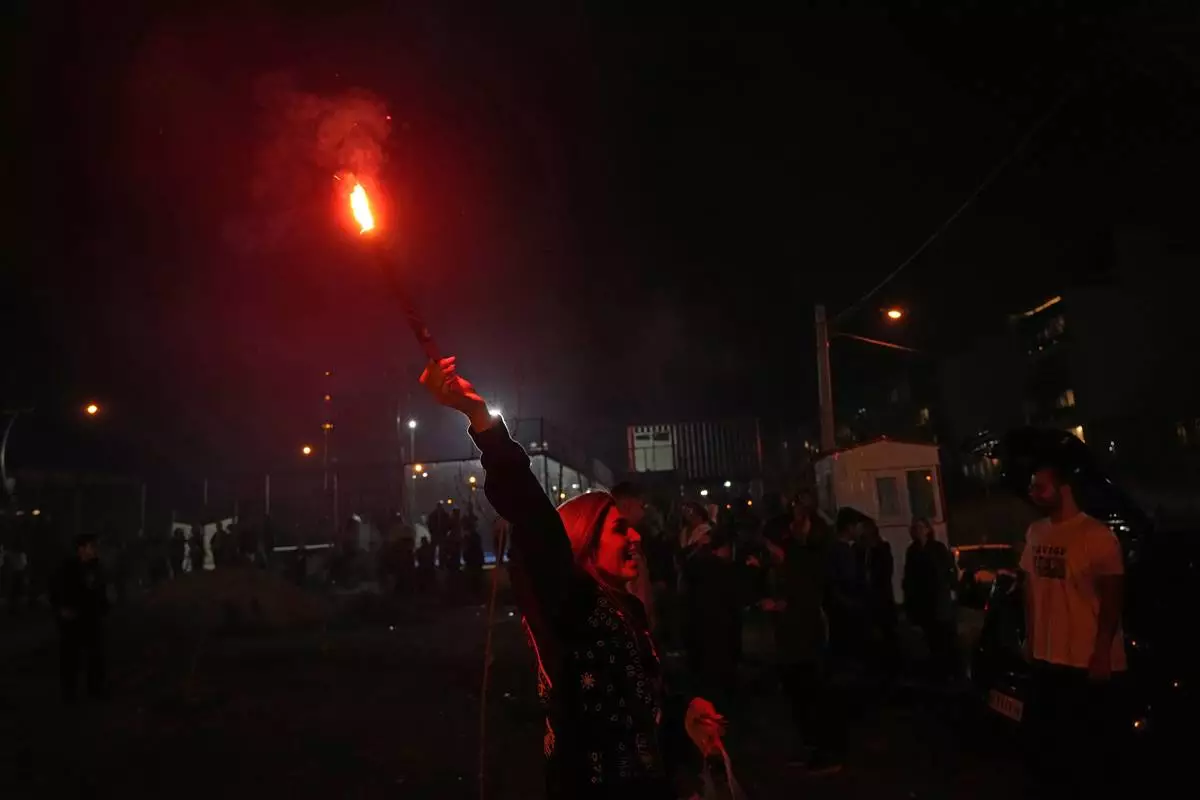
An Iranian woman holds up a firework celebrating Chaharshanbe Souri, or Wednesday Feast, an ancient Festival of Fire on the eve of the last Wednesday of the Persian year, in Tehran, Iran, Tuesday, March 18, 2025. (AP Photo/Vahid Salemi)
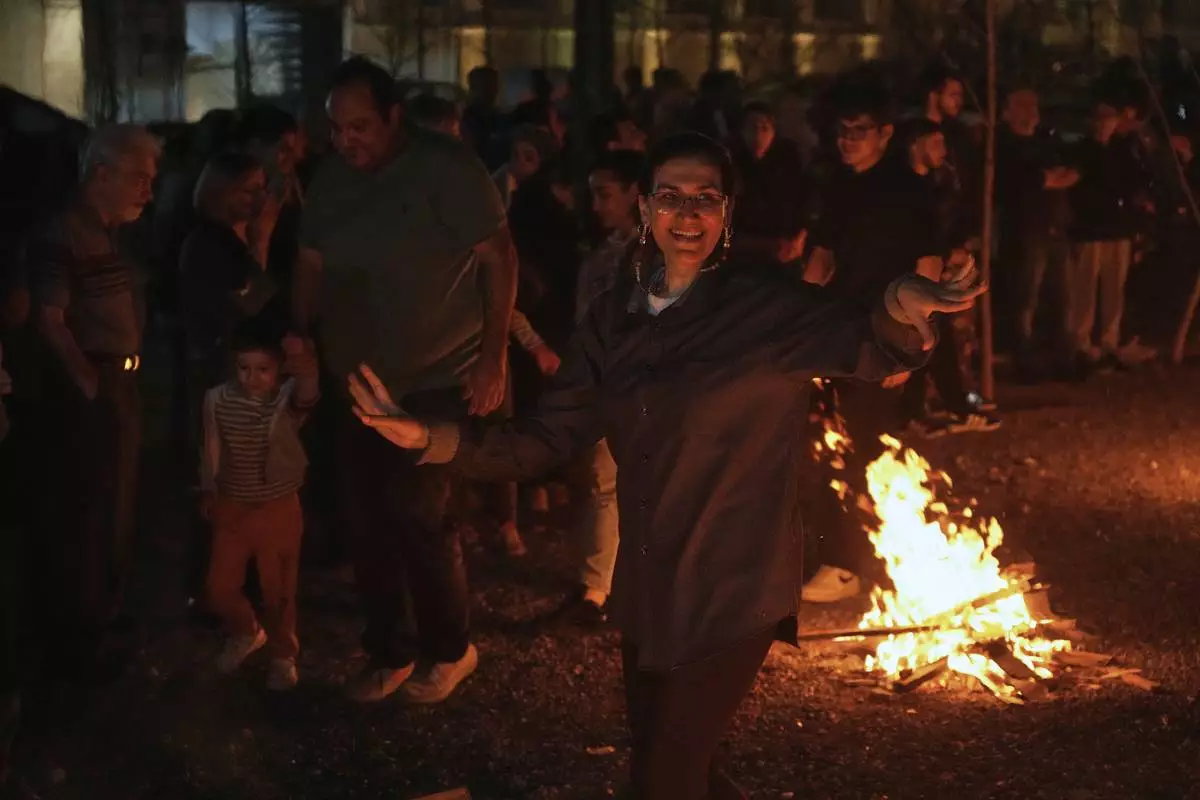
An Iranian woman dances while celebrating Chaharshanbe Souri, or Wednesday Feast, an ancient Festival of Fire on the eve of the last Wednesday of the Persian year, in Tehran, Iran, Tuesday, March 18, 2025. (AP Photo/Vahid Salemi)
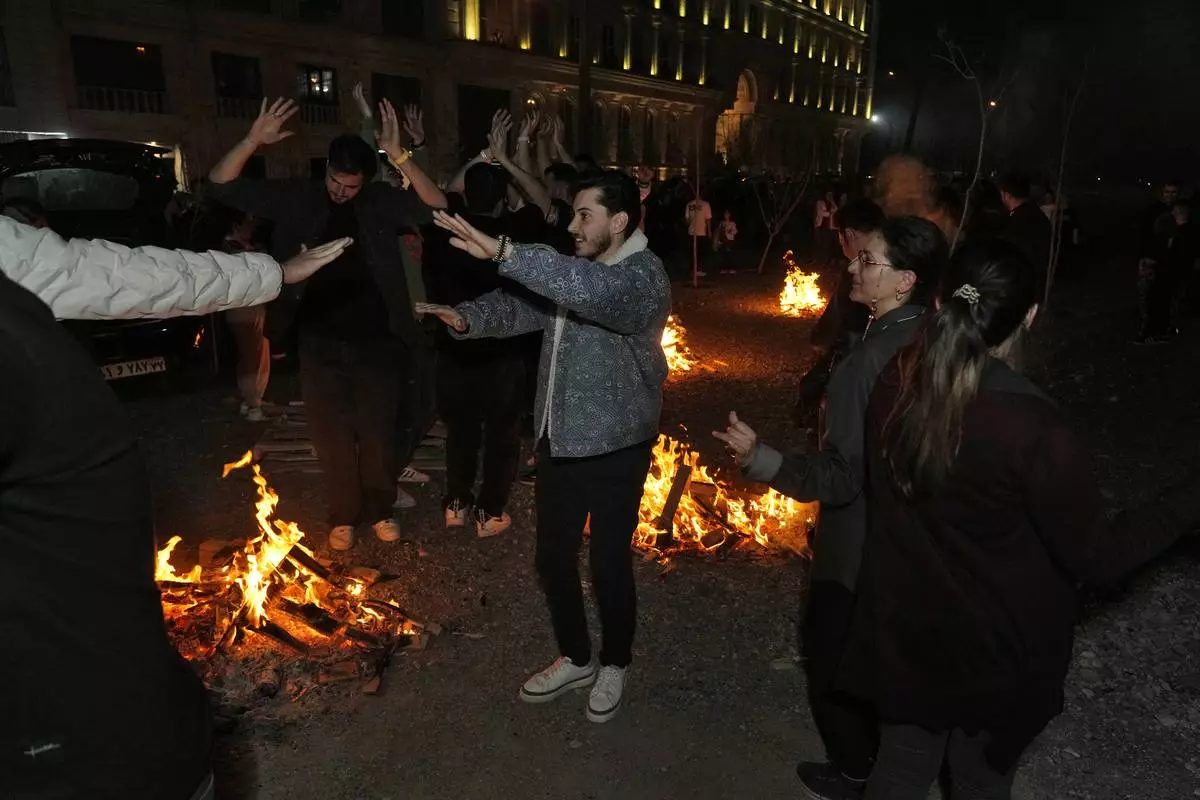
Iranians dance while celebrating Chaharshanbe Souri, or Wednesday Feast, an ancient Festival of Fire on the eve of the last Wednesday of the Persian year, in Tehran, Iran, Tuesday, March 18, 2025. (AP Photo/Vahid Salemi)

Iranians jump over a bonfire celebrating Chaharshanbe Souri, or Wednesday Feast, an ancient Festival of Fire on the eve of the last Wednesday of the Persian year, in Tehran, Iran, Tuesday, March 18, 2025. (AP Photo/Vahid Salemi)
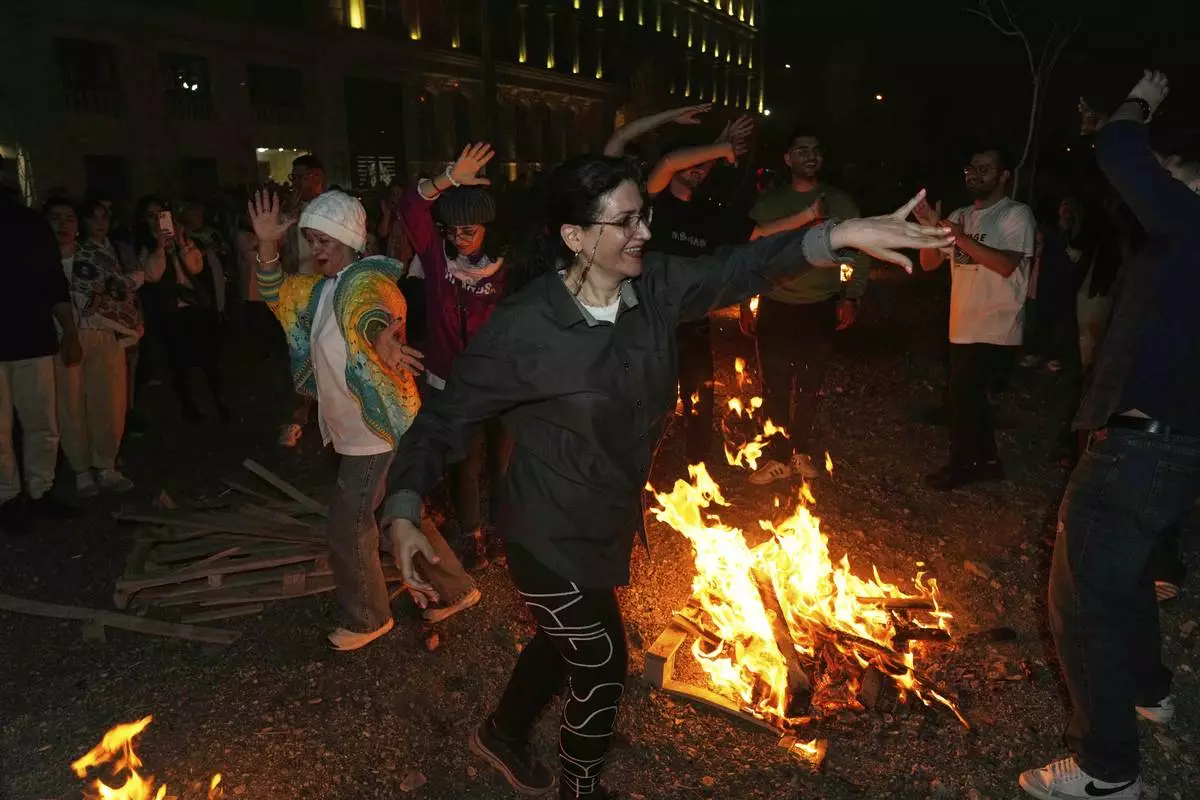
Iranians dance while celebrating Chaharshanbe Souri, or Wednesday Feast, an ancient Festival of Fire on the eve of the last Wednesday of the Persian year, in Tehran, Iran, Tuesday, March 18, 2025. (AP Photo/Vahid Salemi)
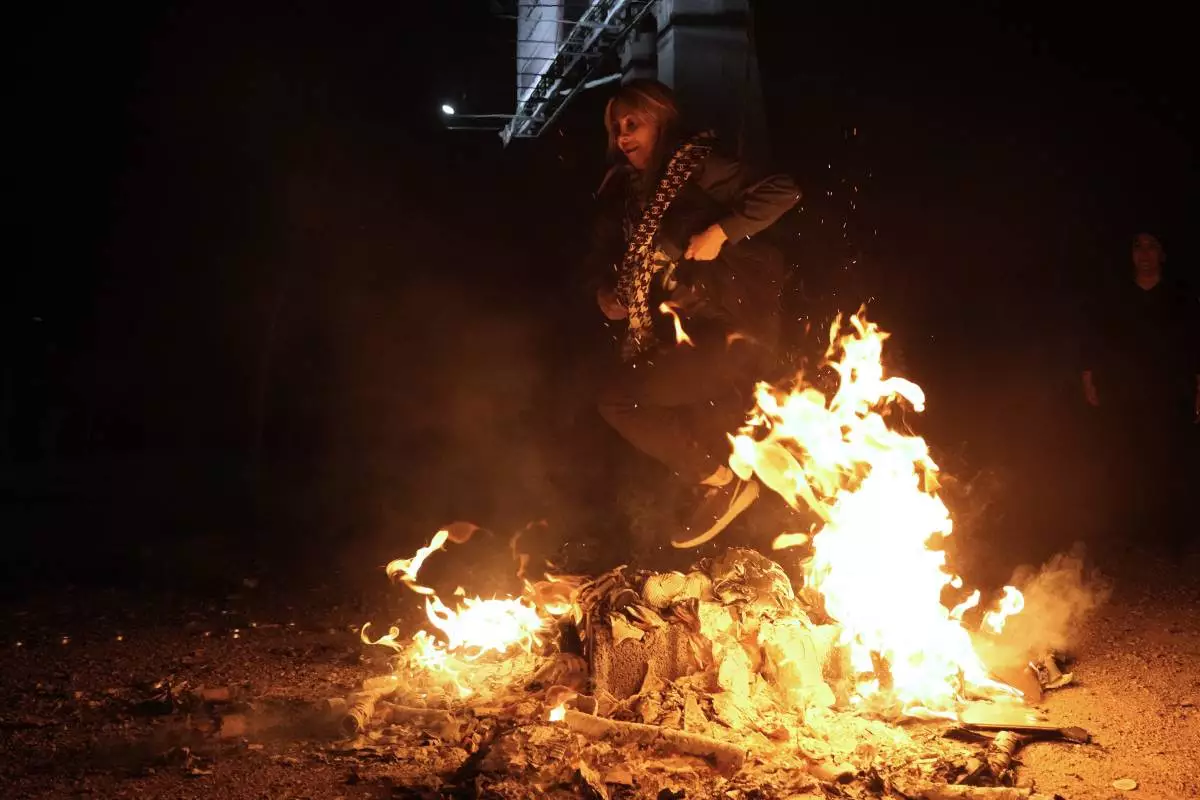
An Iranian woman jumps over a bonfire celebrating Chaharshanbe Souri, or Wednesday Feast, an ancient Festival of Fire on the eve of the last Wednesday of the Persian year, in Tehran, Iran, Tuesday, March 18, 2025. (AP Photo/Vahid Salemi)
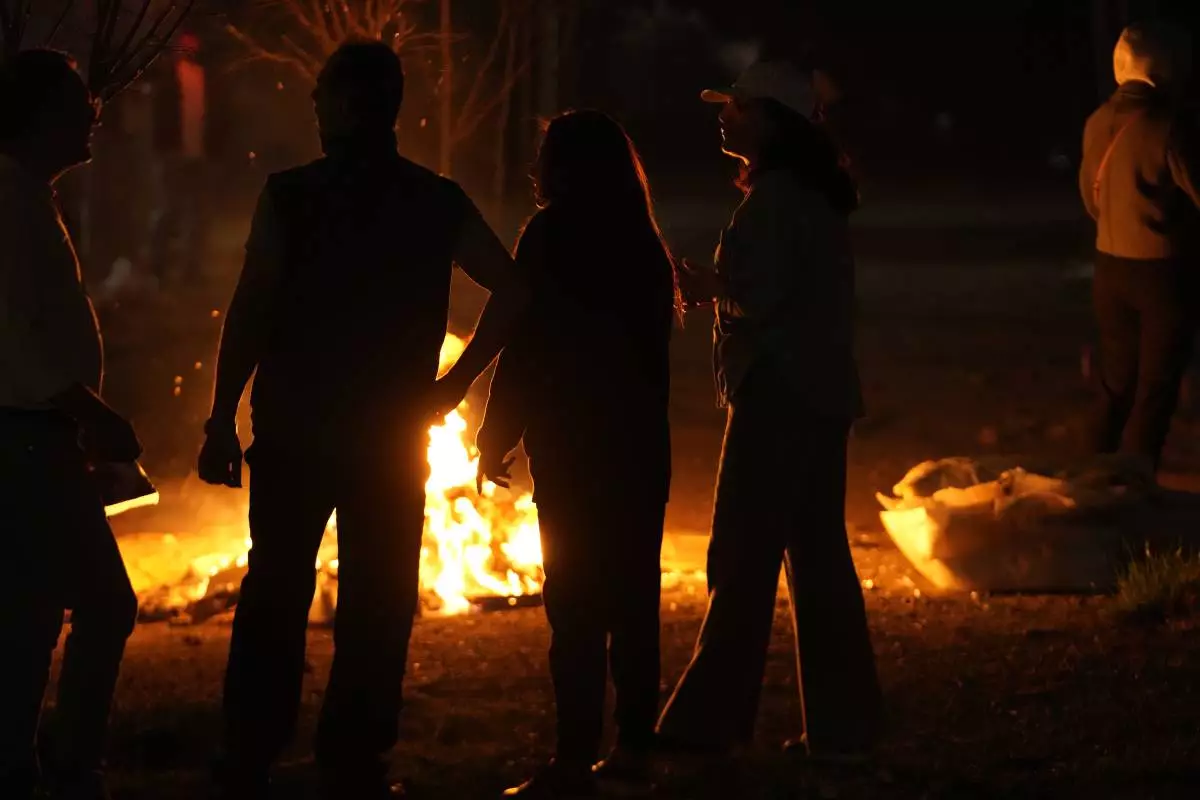
Iranians gather around a bonfire celebrating Chaharshanbe Souri, or Wednesday Feast, an ancient Festival of Fire on the eve of the last Wednesday of the Persian year, in Tehran, Iran, Tuesday, March 18, 2025. (AP Photo/Vahid Salemi)
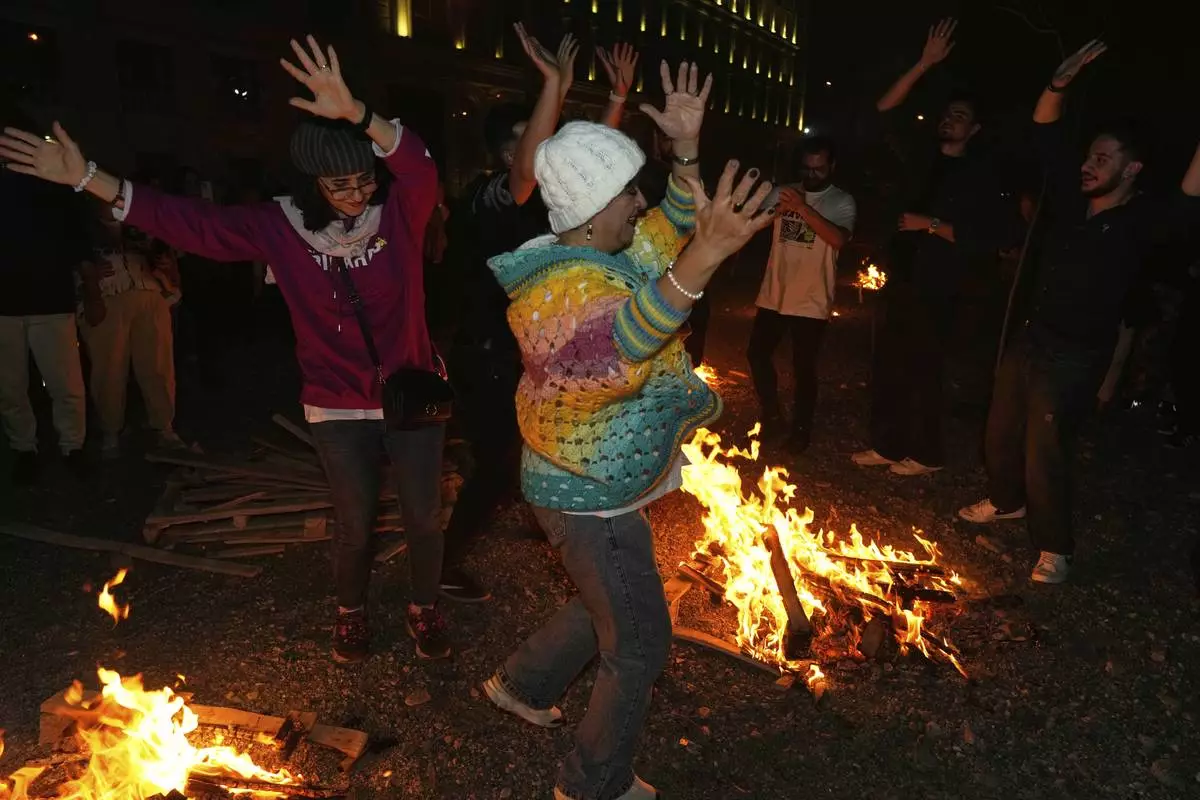
Iranians dance while celebrating Chaharshanbe Souri, or Wednesday Feast, an ancient Festival of Fire on the eve of the last Wednesday of the Persian year, in Tehran, Iran, Tuesday, March 18, 2025. (AP Photo/Vahid Salemi)
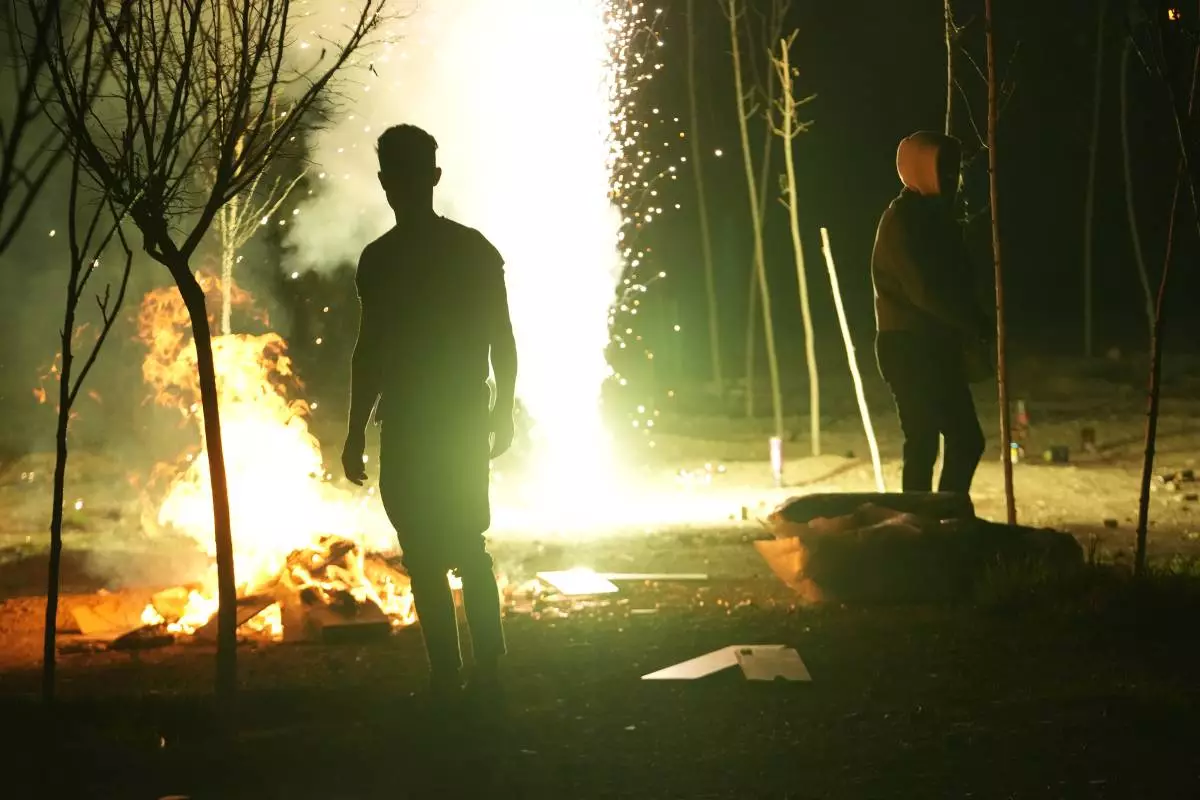
Iranians gather around a bonfire as they light a firework celebrating Chaharshanbe Souri, or Wednesday Feast, an ancient Festival of Fire on the eve of the last Wednesday of the Persian year, in Tehran, Iran, Tuesday, March 18, 2025. (AP Photo/Vahid Salemi)
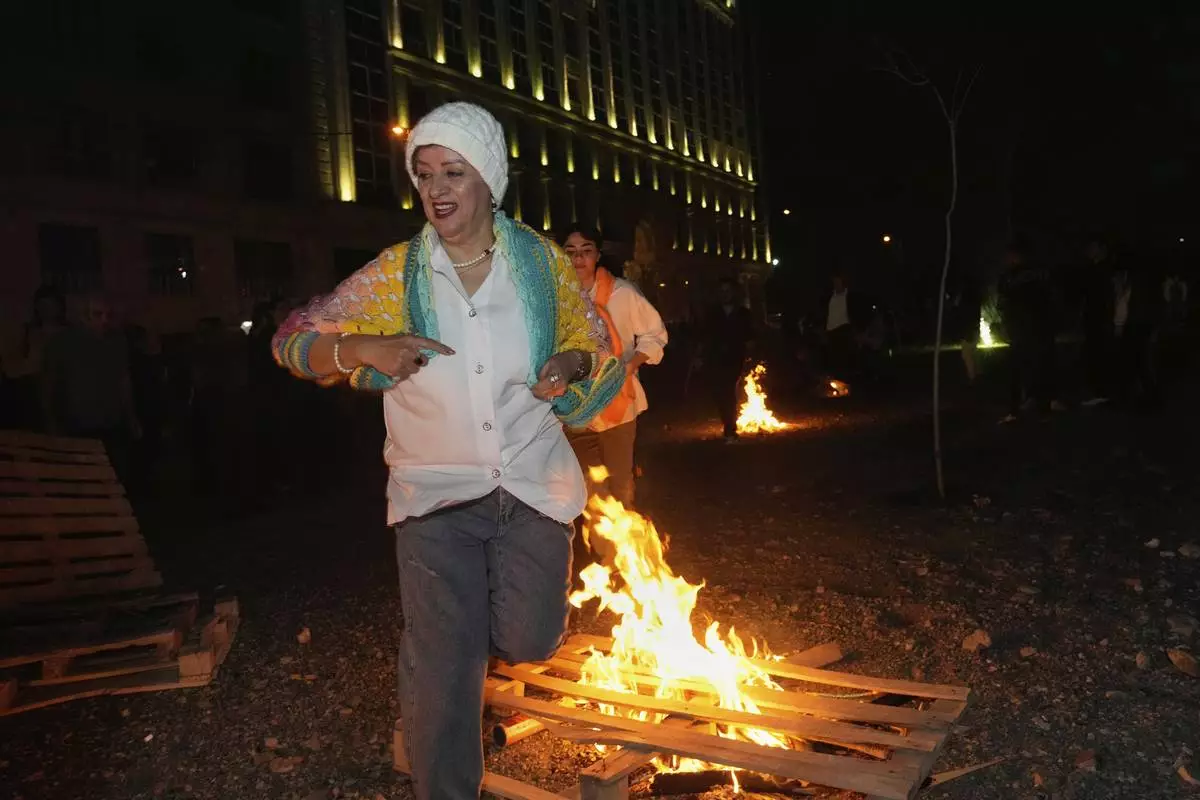
An Iranian woman jumps over a bonfire celebrating Chaharshanbe Souri, or Wednesday Feast, an ancient Festival of Fire on the eve of the last Wednesday of the Persian year, in Tehran, Iran, Tuesday, March 18, 2025. (AP Photo/Vahid Salemi)
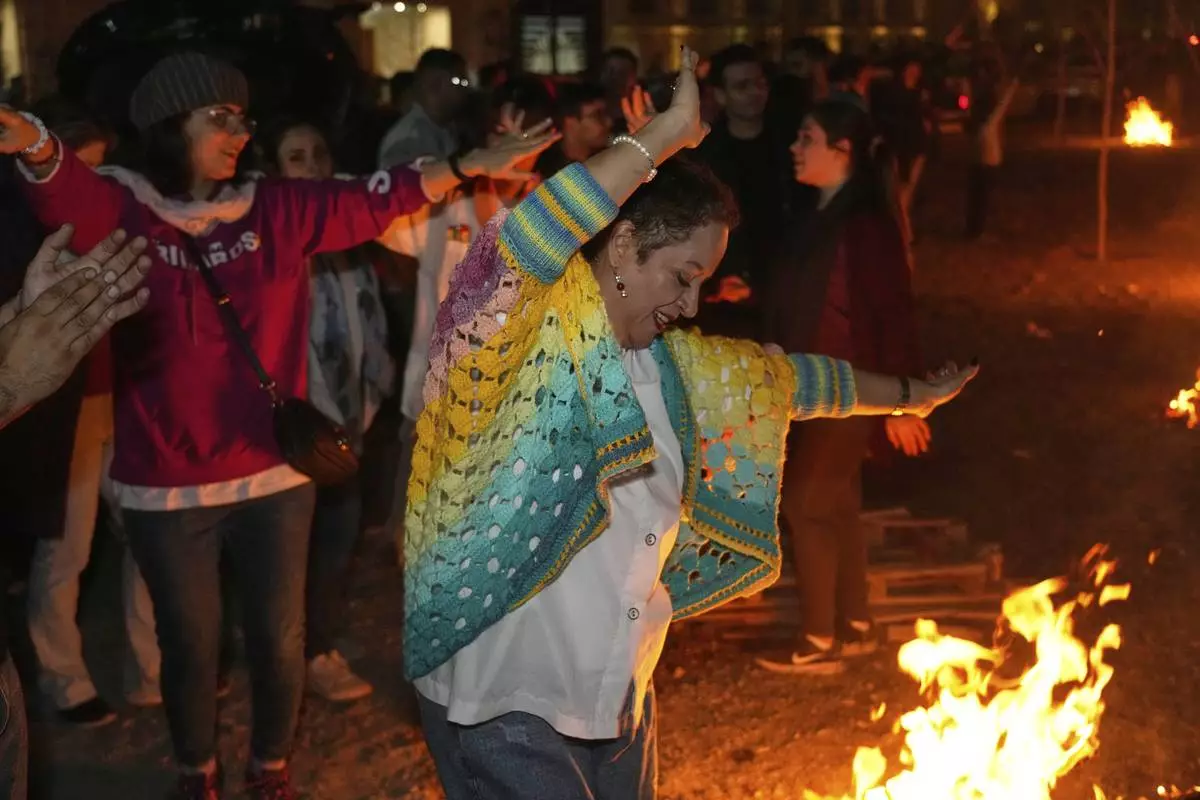
People dance while celebrating Chaharshanbe Souri, or Wednesday Feast, an ancient Festival of Fire on the eve of the last Wednesday of the Persian year, in Tehran, Iran, Tuesday, March 18, 2025. (AP Photo/Vahid Salemi)
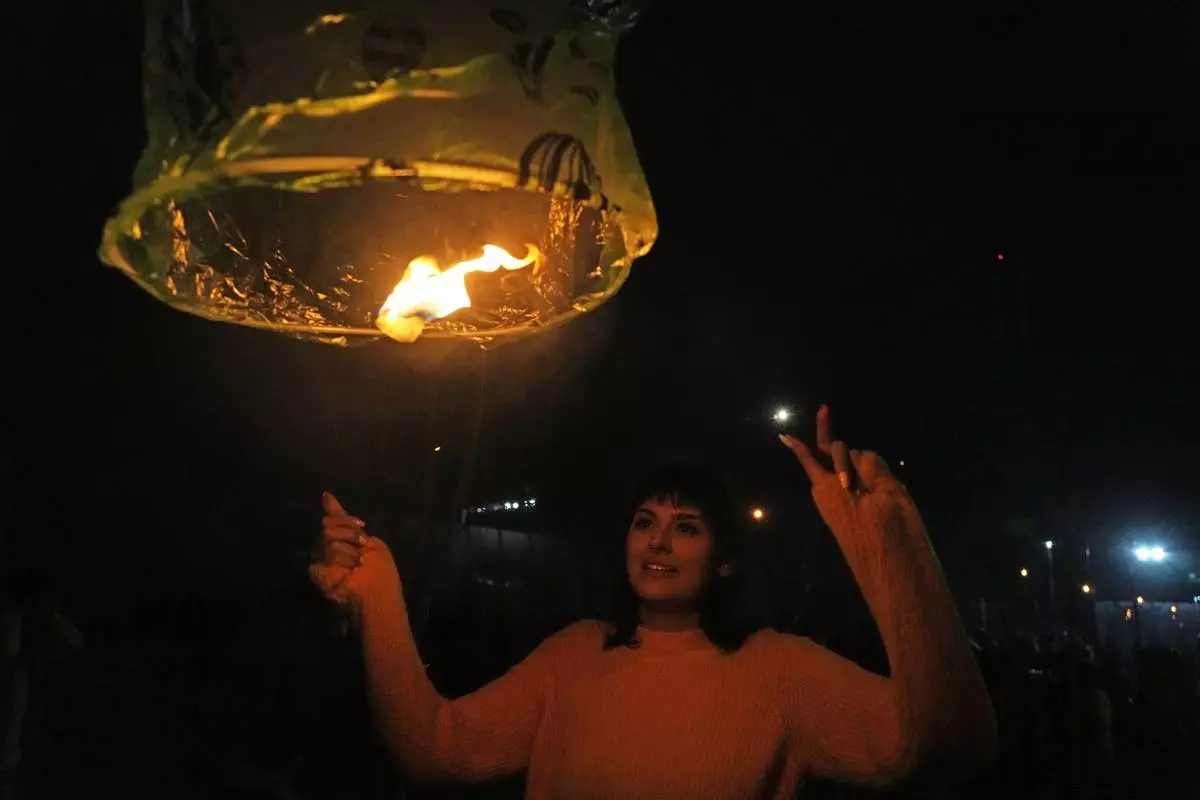
An Iranian woman releases a wishing lantern while celebrating Chaharshanbe Souri, or Wednesday Feast, an ancient Festival of Fire on the eve of the last Wednesday of the Persian year, in Tehran, Iran, Tuesday, March 18, 2025. (AP Photo/Vahid Salemi)
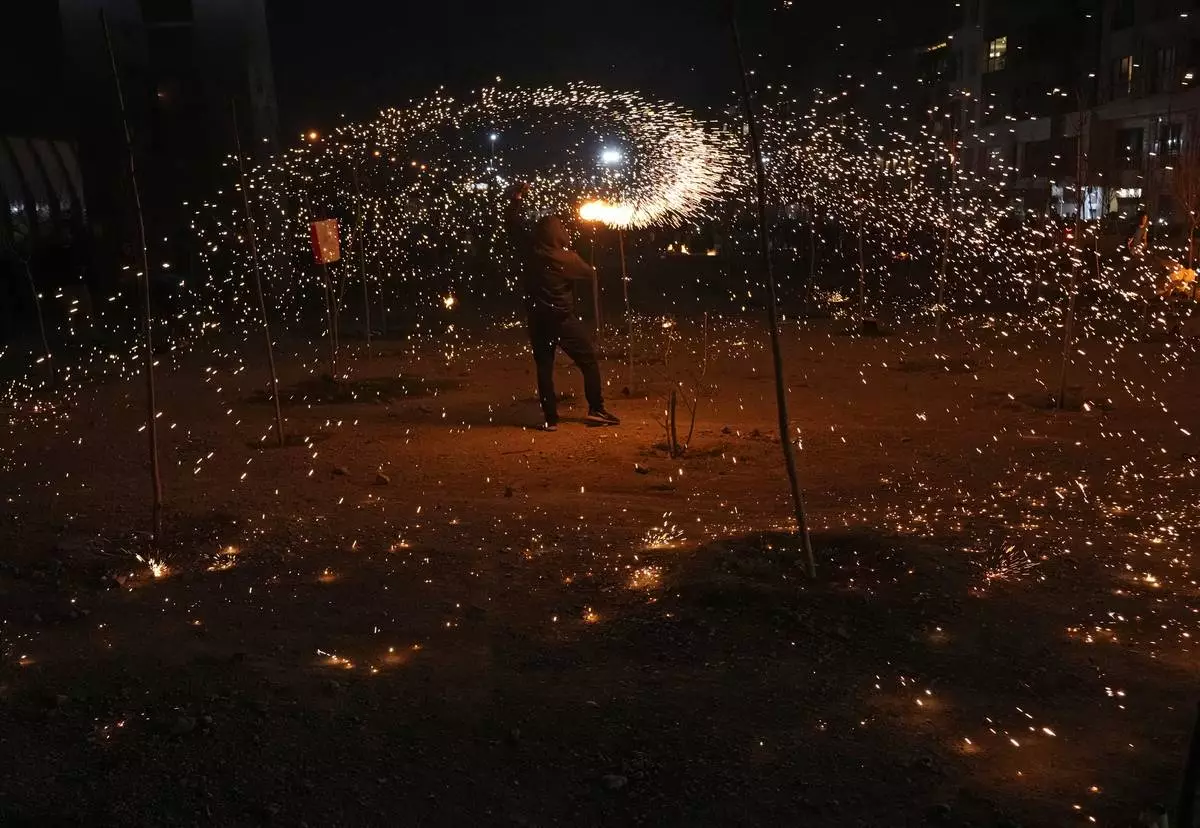
An Iranian man plays with a firework celebrating Chaharshanbe Souri, or Wednesday Feast, an ancient Festival of Fire on the eve of the last Wednesday of the Persian year, in Tehran, Iran, Tuesday, March 18, 2025. (AP Photo/Vahid Salemi)
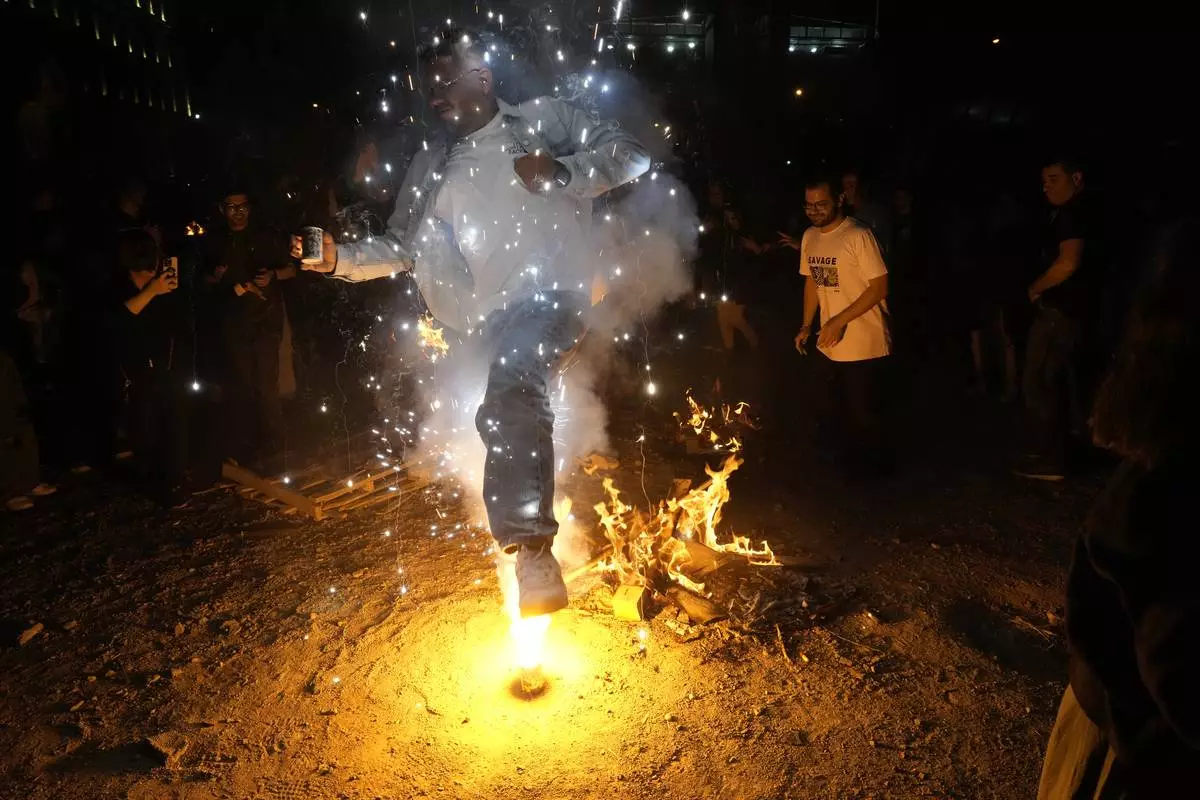
An Iranian man jumps over a firework celebrating Chaharshanbe Souri, or Wednesday Feast, an ancient Festival of Fire on the eve of the last Wednesday of the Persian year, in Tehran, Iran, Tuesday, March 18, 2025. Iranians celebrate their new year, or Nowruz, with arrival of the spring. (AP Photo/Vahid Salemi)
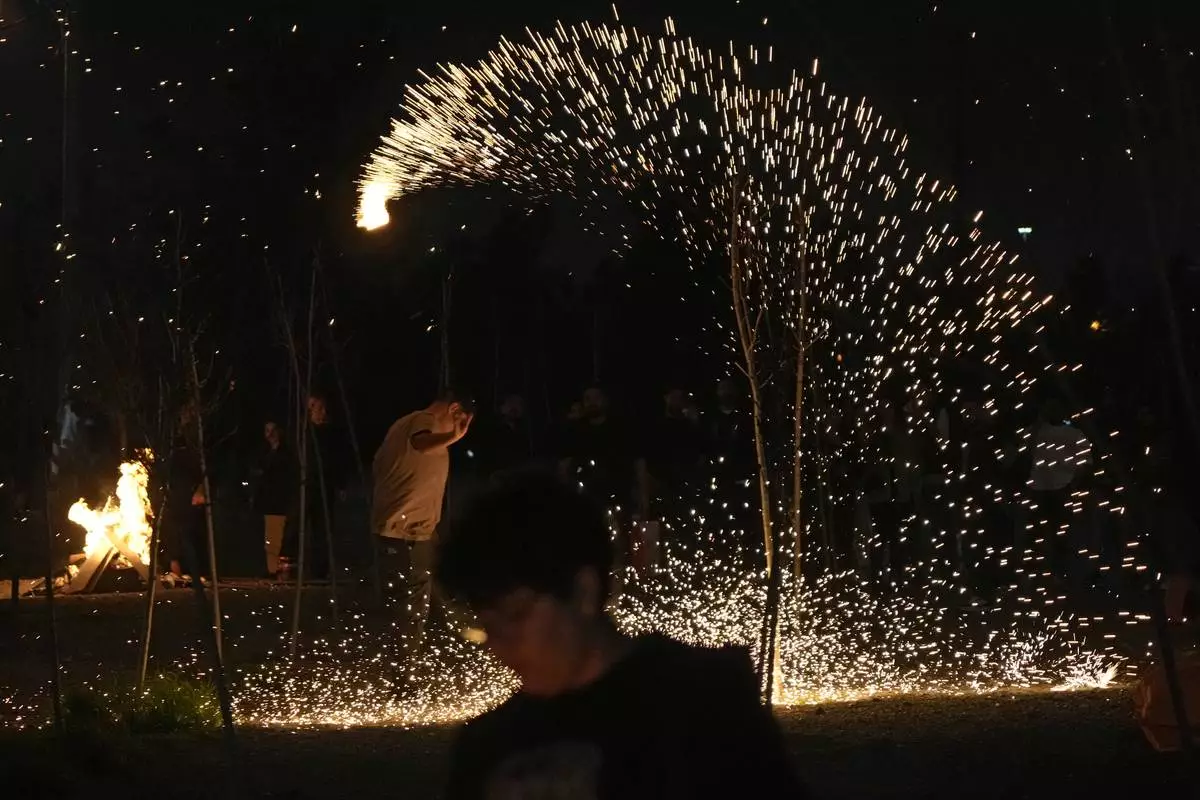
An Iranian man plays with a firework celebrating Chaharshanbe Souri, or Wednesday Feast, an ancient Festival of Fire on the eve of the last Wednesday of the Persian year, in Tehran, Iran, Tuesday, March 18, 2025. (AP Photo/Vahid Salemi)
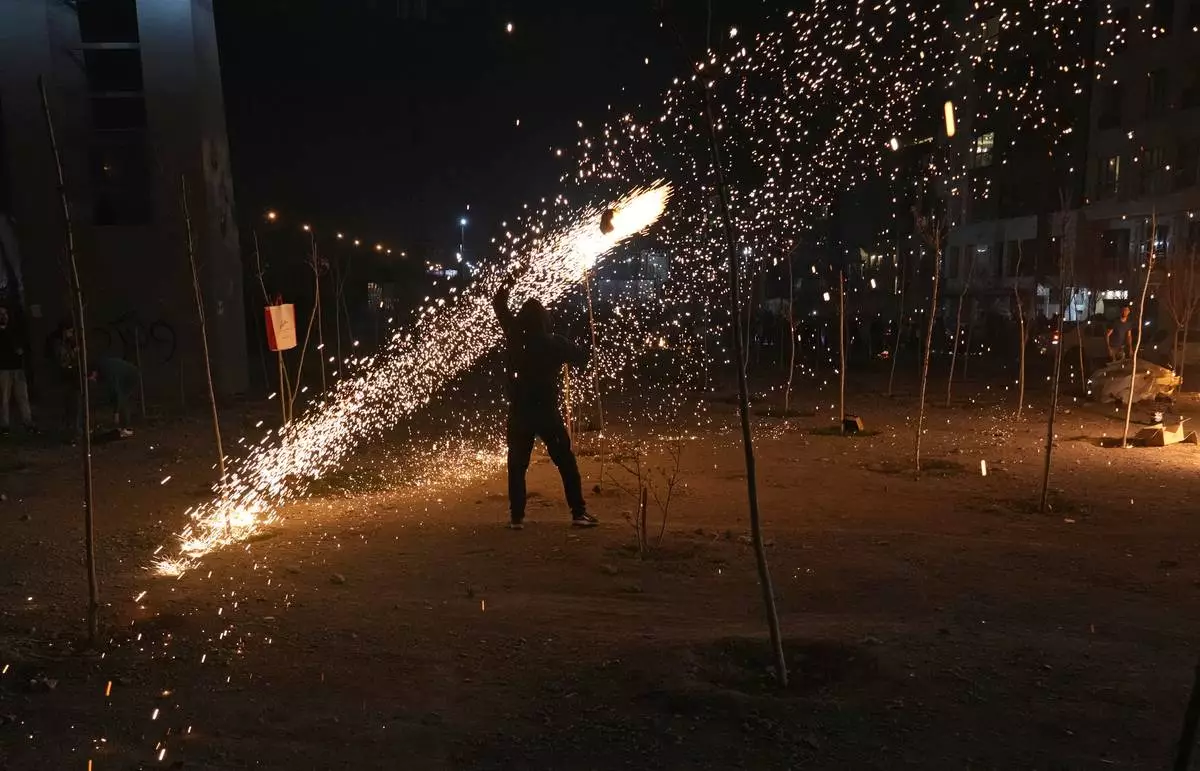
An Iranian man plays with a firework celebrating Chaharshanbe Souri, or Wednesday Feast, an ancient Festival of Fire on the eve of the last Wednesday of the Persian year, in Tehran, Iran, Tuesday, March 18, 2025. (AP Photo/Vahid Salemi)
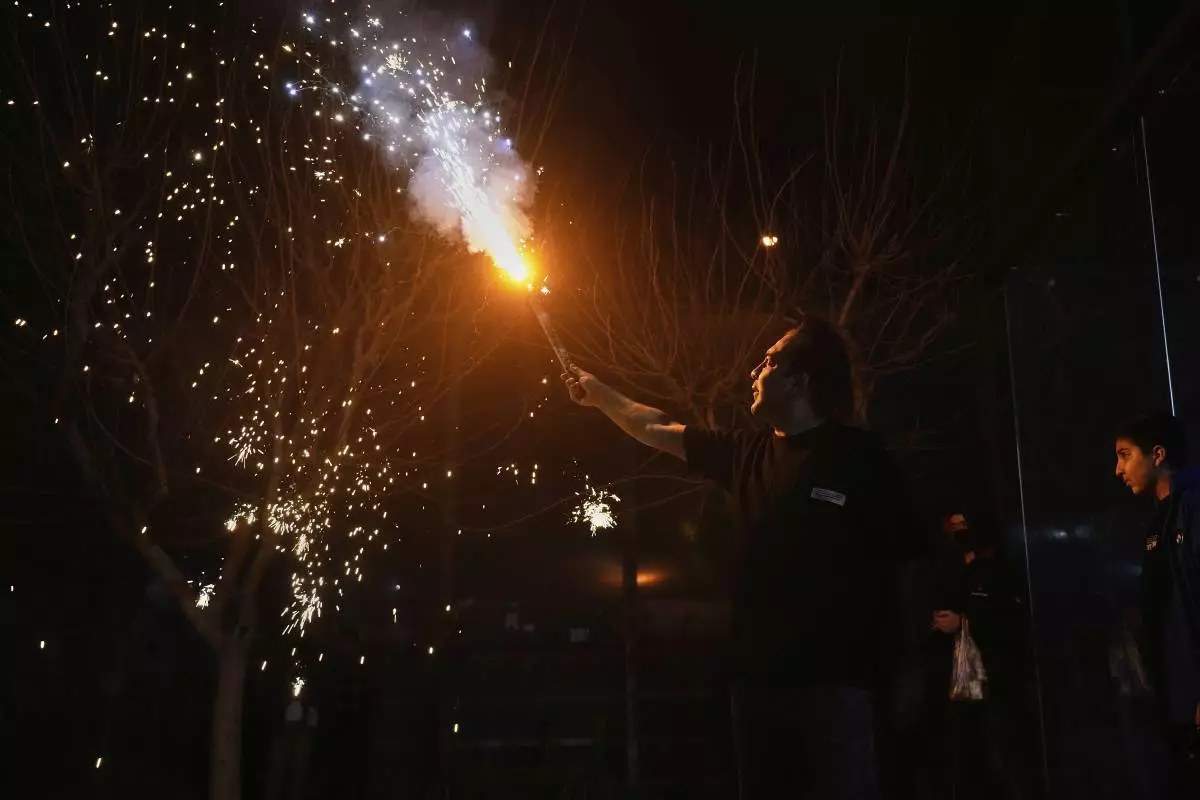
An Iranian man holds up a firework celebrating Chaharshanbe Souri, or Wednesday Feast, an ancient Festival of Fire on the eve of the last Wednesday of the Persian year, in Tehran, Iran, Tuesday, March 18, 2025. (AP Photo/Vahid Salemi)