 |
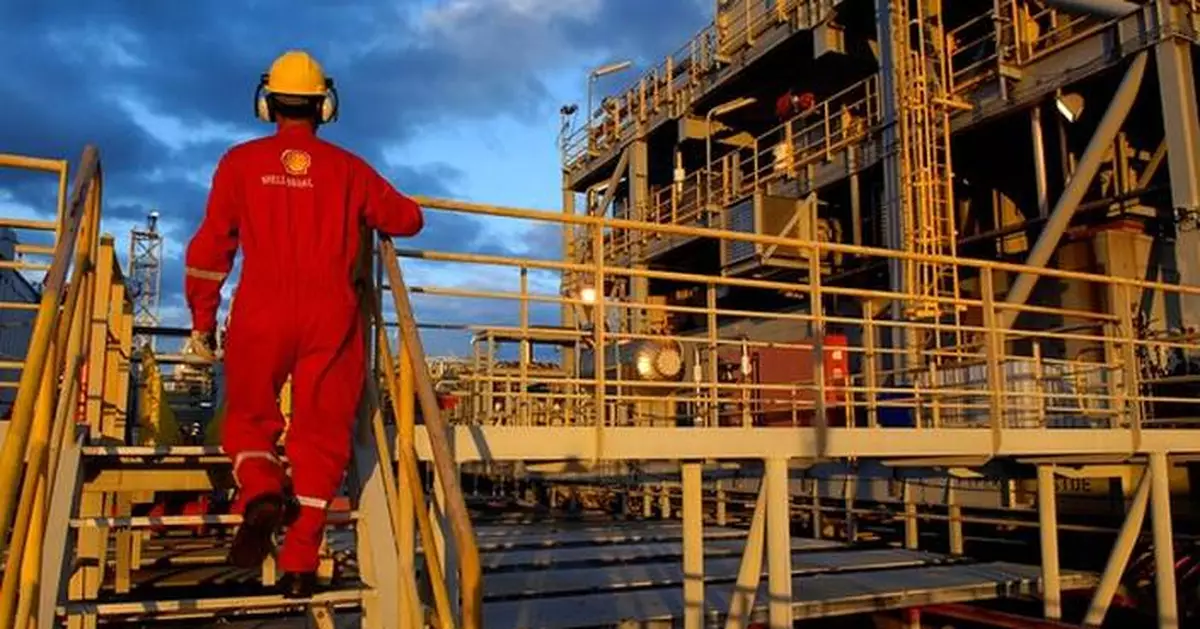
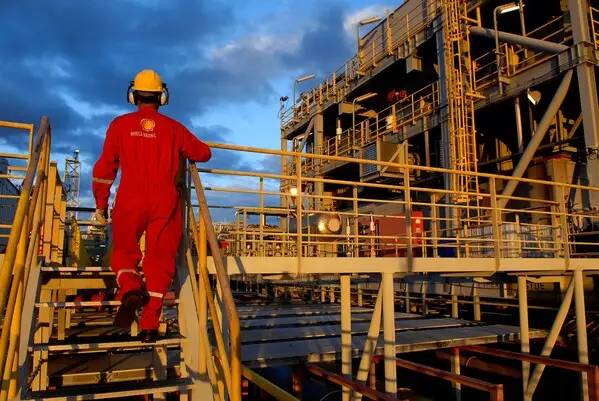
RIO DE JANEIRO, March 21, 2025 /PRNewswire/ -- Shell Brasil Petróleo Ltda. (Shell Brasil), a subsidiary of Shell plc, has taken the Final Investment Decision (FID) for Gato do Mato, a deep-water project in the pre-salt area of the Santos Basin, offshore Brazil.
The Gato do Mato Consortium includes Shell (operator with a 50% stake), Ecopetrol (30%), TotalEnergies (20%) and Pré-Sal Petróleo S.A. (PPSA) acting as the manager of the production sharing contract (PSC). The development plan includes the installation of a floating production storage and offloading (FPSO) vessel and is designed to produce up to 120,000 barrels of oil per day. Current estimated recoverable resource volumes of the Gato do Mato development are approximately 370 million barrels.
"Gato do Mato is an example of our ongoing investment in increasingly efficient projects," said Zoë Yujnovich, Shell's Integrated Gas and Upstream Director. "The project contributes to maintaining stable liquids production from our advantaged Upstream business, and expands our leadership as the largest foreign producer in Brazil as we continue working to provide for the world's energy needs well into the future."
The consortium anticipates that the Gato do Mato field will commence operations in 2029.
Notes to editors
- Located in the Santos Basin, the Gato do Mato project is a pre-salt gas-condensate discovery that covers two contiguous blocks: BM-S-54, a concession contract entered into in 2005, and Sul de Gato do Mato, a production sharing agreement obtained in 2017.
- Initial operations will involve the reinjection of natural gas for reservoir pressure support, with future optionality to export gas to onshore facilities.
- The blocks are offshore Brazil from the Rio de Janeiro coast, in water depths ranging from 1,750 to 2,050 metres.
- Resource volumes are 100% total gross and a P50 estimate under the Society of Petroleum Engineers' Petroleum Resources Classification System. P50 means there is a 50% probability of the estimate being lower and a 50% probability of being higher.
- The investment in Gato do Mato is expected to generate an internal rate of return (IRR) in excess of the hurdle rate for Shell's Upstream business.
Cautionary note
The companies in which Shell plc directly and indirectly owns investments are separate legal entities. In this press release "Shell", "Shell Group" and "Group" are sometimes used for convenience where references are made to Shell plc and its subsidiaries in general. Likewise, the words "we", "us" and "our" are also used to refer to Shell plc and its subsidiaries in general or to those who work for them. These terms are also used where no useful purpose is served by identifying the particular entity or entities. ''Subsidiaries'', "Shell subsidiaries" and "Shell companies" as used in this press release refer to entities over which Shell plc either directly or indirectly has control. The term "joint venture", "joint operations", "joint arrangements", and "associates" may also be used to refer to a commercial arrangement in which Shell has a direct or indirect ownership interest with one or more parties. The term "Shell interest" is used for convenience to indicate the direct and/or indirect ownership interest held by Shell in an entity or unincorporated joint arrangement, after exclusion of all third-party interest.
Forward-Looking Statements
This press release contains forward-looking statements (within the meaning of the U.S. Private Securities Litigation Reform Act of 1995) concerning the financial condition, results of operations and businesses of Shell. All statements other than statements of historical fact are, or may be deemed to be, forward-looking statements. Forward-looking statements are statements of future expectations that are based on management's current expectations and assumptions and involve known and unknown risks and uncertainties that could cause actual results, performance or events to differ materially from those expressed or implied in these statements. Forward-looking statements include, among other things, statements concerning the potential exposure of Shell to market risks and statements expressing management's expectations, beliefs, estimates, forecasts, projections and assumptions. These forward-looking statements are identified by their use of terms and phrases such as "aim"; "ambition"; ''anticipate''; ''believe''; "commit"; "commitment"; ''could''; ''estimate''; ''expect''; ''goals''; ''intend''; ''may''; "milestones"; ''objectives''; ''outlook''; ''plan''; ''probably''; ''project''; ''risks''; "schedule"; ''seek''; ''should''; ''target''; ''will''; "would" and similar terms and phrases. There are a number of factors that could affect the future operations of Shell and could cause those results to differ materially from those expressed in the forward-looking statements included in this press release, including (without limitation): (a) price fluctuations in crude oil and natural gas; (b) changes in demand for Shell's products; (c) currency fluctuations; (d) drilling and production results; (e) reserves estimates; (f) loss of market share and industry competition; (g) environmental and physical risks; (h) risks associated with the identification of suitable potential acquisition properties and targets, and successful negotiation and completion of such transactions; (i) the risk of doing business in developing countries and countries subject to international sanctions; (j) legislative, judicial, fiscal and regulatory developments including regulatory measures addressing climate change; (k) economic and financial market conditions in various countries and regions; (l) political risks, including the risks of expropriation and renegotiation of the terms of contracts with governmental entities, delays or advancements in the approval of projects and delays in the reimbursement for shared costs; (m) risks associated with the impact of pandemics, such as the COVID-19 (coronavirus) outbreak, regional conflicts, such as the Russia-Ukraine war, and a significant cybersecurity breach; and (n) changes in trading conditions. No assurance is provided that future dividend payments will match or exceed previous dividend payments. All forward-looking statements contained in this press release are expressly qualified in their entirety by the cautionary statements contained or referred to in this section. Readers should not place undue reliance on forward-looking statements. Additional risk factors that may affect future results are contained in Shell plc's Form 20-F for the year ended December 31, 2023 (available at www.shell.com/investors/news-and-filings/sec-filings.html and www.sec.gov). These risk factors also expressly qualify all forward-looking statements contained in this press release and should be considered by the reader. Each forward-looking statement speaks only as of the date of this press release, March 21, 2025. Neither Shell plc nor any of its subsidiaries undertake any obligation to publicly update or revise any forward-looking statement as a result of new information, future events or other information. In light of these risks, results could differ materially from those stated, implied or inferred from the forward-looking statements contained in this press release.
Shell's net carbon intensity
Also, in this press release we may refer to Shell's "Net Carbon Intensity" (NCI), which includes Shell's carbon emissions from the production of our energy products, our suppliers' carbon emissions in supplying energy for that production and our customers' carbon emissions associated with their use of the energy products we sell. Shell's NCI also includes the emissions associated with the production and use of energy products produced by others which Shell purchases for resale. Shell only controls its own emissions. The use of the terms Shell's "Net Carbon Intensity" or NCI are for convenience only and not intended to suggest these emissions are those of Shell plc or its subsidiaries.
Shell's net-Zero Emissions Target
Shell's operating plan, outlook and budgets are forecasted for a ten-year period and are updated every year. They reflect the current economic environment and what we can reasonably expect to see over the next ten years. Accordingly, they reflect our Scope 1, Scope 2 and NCI targets over the next ten years. However, Shell's operating plans cannot reflect our 2050 net-zero emissions target, as this target is currently outside our planning period. In the future, as society moves towards net-zero emissions, we expect Shell's operating plans to reflect this movement. However, if society is not net zero in 2050, as of today, there would be significant risk that Shell may not meet this target.
Forward Looking Non-GAAP measures
This press release may contain certain forward-looking non-GAAP measures such as cash capital expenditure and divestments. We are unable to provide a reconciliation of these forward-looking non-GAAP measures to the most comparable GAAP financial measures because certain information needed to reconcile those non-GAAP measures to the most comparable GAAP financial measures is dependent on future events some of which are outside the control of Shell, such as oil and gas prices, interest rates and exchange rates. Moreover, estimating such GAAP measures with the required precision necessary to provide a meaningful reconciliation is extremely difficult and could not be accomplished without unreasonable effort. Non-GAAP measures in respect of future periods which cannot be reconciled to the most comparable GAAP financial measure are calculated in a manner which is consistent with the accounting policies applied in Shell plc's consolidated financial statements.
The contents of websites referred to in this press release do not form part of this press release.
We may have used certain terms, such as resources, in this press release that the United States Securities and Exchange Commission (SEC) strictly prohibits us from including in our filings with the SEC. Investors are urged to consider closely the disclosure in our Form 20-F, File No 1-32575, available on the SEC website www.sec.gov.
RIO DE JANEIRO, March 21, 2025 /PRNewswire/ -- Shell Brasil Petróleo Ltda. (Shell Brasil), a subsidiary of Shell plc, has taken the Final Investment Decision (FID) for Gato do Mato, a deep-water project in the pre-salt area of the Santos Basin, offshore Brazil.
The Gato do Mato Consortium includes Shell (operator with a 50% stake), Ecopetrol (30%), TotalEnergies (20%) and Pré-Sal Petróleo S.A. (PPSA) acting as the manager of the production sharing contract (PSC). The development plan includes the installation of a floating production storage and offloading (FPSO) vessel and is designed to produce up to 120,000 barrels of oil per day. Current estimated recoverable resource volumes of the Gato do Mato development are approximately 370 million barrels.
"Gato do Mato is an example of our ongoing investment in increasingly efficient projects," said Zoë Yujnovich, Shell's Integrated Gas and Upstream Director. "The project contributes to maintaining stable liquids production from our advantaged Upstream business, and expands our leadership as the largest foreign producer in Brazil as we continue working to provide for the world's energy needs well into the future."
The consortium anticipates that the Gato do Mato field will commence operations in 2029.
Notes to editors
- Located in the Santos Basin, the Gato do Mato project is a pre-salt gas-condensate discovery that covers two contiguous blocks: BM-S-54, a concession contract entered into in 2005, and Sul de Gato do Mato, a production sharing agreement obtained in 2017.
- Initial operations will involve the reinjection of natural gas for reservoir pressure support, with future optionality to export gas to onshore facilities.
- The blocks are offshore Brazil from the Rio de Janeiro coast, in water depths ranging from 1,750 to 2,050 metres.
- Resource volumes are 100% total gross and a P50 estimate under the Society of Petroleum Engineers' Petroleum Resources Classification System. P50 means there is a 50% probability of the estimate being lower and a 50% probability of being higher.
- The investment in Gato do Mato is expected to generate an internal rate of return (IRR) in excess of the hurdle rate for Shell's Upstream business.
Cautionary note
The companies in which Shell plc directly and indirectly owns investments are separate legal entities. In this press release "Shell", "Shell Group" and "Group" are sometimes used for convenience where references are made to Shell plc and its subsidiaries in general. Likewise, the words "we", "us" and "our" are also used to refer to Shell plc and its subsidiaries in general or to those who work for them. These terms are also used where no useful purpose is served by identifying the particular entity or entities. ''Subsidiaries'', "Shell subsidiaries" and "Shell companies" as used in this press release refer to entities over which Shell plc either directly or indirectly has control. The term "joint venture", "joint operations", "joint arrangements", and "associates" may also be used to refer to a commercial arrangement in which Shell has a direct or indirect ownership interest with one or more parties. The term "Shell interest" is used for convenience to indicate the direct and/or indirect ownership interest held by Shell in an entity or unincorporated joint arrangement, after exclusion of all third-party interest.
Forward-Looking Statements
This press release contains forward-looking statements (within the meaning of the U.S. Private Securities Litigation Reform Act of 1995) concerning the financial condition, results of operations and businesses of Shell. All statements other than statements of historical fact are, or may be deemed to be, forward-looking statements. Forward-looking statements are statements of future expectations that are based on management's current expectations and assumptions and involve known and unknown risks and uncertainties that could cause actual results, performance or events to differ materially from those expressed or implied in these statements. Forward-looking statements include, among other things, statements concerning the potential exposure of Shell to market risks and statements expressing management's expectations, beliefs, estimates, forecasts, projections and assumptions. These forward-looking statements are identified by their use of terms and phrases such as "aim"; "ambition"; ''anticipate''; ''believe''; "commit"; "commitment"; ''could''; ''estimate''; ''expect''; ''goals''; ''intend''; ''may''; "milestones"; ''objectives''; ''outlook''; ''plan''; ''probably''; ''project''; ''risks''; "schedule"; ''seek''; ''should''; ''target''; ''will''; "would" and similar terms and phrases. There are a number of factors that could affect the future operations of Shell and could cause those results to differ materially from those expressed in the forward-looking statements included in this press release, including (without limitation): (a) price fluctuations in crude oil and natural gas; (b) changes in demand for Shell's products; (c) currency fluctuations; (d) drilling and production results; (e) reserves estimates; (f) loss of market share and industry competition; (g) environmental and physical risks; (h) risks associated with the identification of suitable potential acquisition properties and targets, and successful negotiation and completion of such transactions; (i) the risk of doing business in developing countries and countries subject to international sanctions; (j) legislative, judicial, fiscal and regulatory developments including regulatory measures addressing climate change; (k) economic and financial market conditions in various countries and regions; (l) political risks, including the risks of expropriation and renegotiation of the terms of contracts with governmental entities, delays or advancements in the approval of projects and delays in the reimbursement for shared costs; (m) risks associated with the impact of pandemics, such as the COVID-19 (coronavirus) outbreak, regional conflicts, such as the Russia-Ukraine war, and a significant cybersecurity breach; and (n) changes in trading conditions. No assurance is provided that future dividend payments will match or exceed previous dividend payments. All forward-looking statements contained in this press release are expressly qualified in their entirety by the cautionary statements contained or referred to in this section. Readers should not place undue reliance on forward-looking statements. Additional risk factors that may affect future results are contained in Shell plc's Form 20-F for the year ended December 31, 2023 (available at www.shell.com/investors/news-and-filings/sec-filings.html and www.sec.gov). These risk factors also expressly qualify all forward-looking statements contained in this press release and should be considered by the reader. Each forward-looking statement speaks only as of the date of this press release, March 21, 2025. Neither Shell plc nor any of its subsidiaries undertake any obligation to publicly update or revise any forward-looking statement as a result of new information, future events or other information. In light of these risks, results could differ materially from those stated, implied or inferred from the forward-looking statements contained in this press release.
Shell's net carbon intensity
Also, in this press release we may refer to Shell's "Net Carbon Intensity" (NCI), which includes Shell's carbon emissions from the production of our energy products, our suppliers' carbon emissions in supplying energy for that production and our customers' carbon emissions associated with their use of the energy products we sell. Shell's NCI also includes the emissions associated with the production and use of energy products produced by others which Shell purchases for resale. Shell only controls its own emissions. The use of the terms Shell's "Net Carbon Intensity" or NCI are for convenience only and not intended to suggest these emissions are those of Shell plc or its subsidiaries.
Shell's net-Zero Emissions Target
Shell's operating plan, outlook and budgets are forecasted for a ten-year period and are updated every year. They reflect the current economic environment and what we can reasonably expect to see over the next ten years. Accordingly, they reflect our Scope 1, Scope 2 and NCI targets over the next ten years. However, Shell's operating plans cannot reflect our 2050 net-zero emissions target, as this target is currently outside our planning period. In the future, as society moves towards net-zero emissions, we expect Shell's operating plans to reflect this movement. However, if society is not net zero in 2050, as of today, there would be significant risk that Shell may not meet this target.
Forward Looking Non-GAAP measures
This press release may contain certain forward-looking non-GAAP measures such as cash capital expenditure and divestments. We are unable to provide a reconciliation of these forward-looking non-GAAP measures to the most comparable GAAP financial measures because certain information needed to reconcile those non-GAAP measures to the most comparable GAAP financial measures is dependent on future events some of which are outside the control of Shell, such as oil and gas prices, interest rates and exchange rates. Moreover, estimating such GAAP measures with the required precision necessary to provide a meaningful reconciliation is extremely difficult and could not be accomplished without unreasonable effort. Non-GAAP measures in respect of future periods which cannot be reconciled to the most comparable GAAP financial measure are calculated in a manner which is consistent with the accounting policies applied in Shell plc's consolidated financial statements.
The contents of websites referred to in this press release do not form part of this press release.
We may have used certain terms, such as resources, in this press release that the United States Securities and Exchange Commission (SEC) strictly prohibits us from including in our filings with the SEC. Investors are urged to consider closely the disclosure in our Form 20-F, File No 1-32575, available on the SEC website www.sec.gov.
** The press release content is from PR Newswire. Bastille Post is not involved in its creation. **
Shell invests in the Gato do Mato project in Brazil's pre-salt
|
SHENZHEN, China, Dec. 19, 2025 /PRNewswire/ -- Following the release of its annual ESG report in June 2025, TCL Technology is proud to highlight its progress on water resource protection and green technology innovation, which are key pillars in addressing environmental challenges and building a low-carbon future. TCL Technology prioritizes water resource management and the development of clean technologies as critical components of its strategy to foster green transformation and advance sustainability on a global scale.
Comprehensive Water Resource Management: From Risk Control to Circular Economy
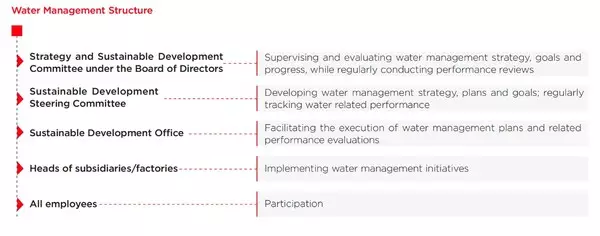
TCL Technology demonstrates its leadership in water resource management through a robust governance framework. The Strategy and Sustainability Committee under the Group's Board of Directors oversees water management strategies and performance, ensuring continuous improvement and adherence to conservation principles across all subsidiaries. By combining sound policies, technological innovation, and comprehensive process control, the Company has built a robust and efficient water resource management system.
TCL Technology embeds water resource management into its corporate governance framework, using policies to guide implementation. For example, TCL CSOT has introduced a Water Resource Management Policy, comprising six sub-policies that outline responsibilities for conservation, resource planning, and inspections. This creates a closed-loop control process from target-setting to implementation and oversight. Similarly, TCL Zhonghuan incorporates water resource management indicators into its ESG performance evaluation framework as part of its Environmental Management Policy, linking plant manager performance to executive remuneration to ensure operational accountability.
Technological innovation and process optimization drive TCL Technology's efforts to use water resources efficiently:
- Guangzhou TCL CSOT: Optimized brine reuse and rainwater collection systems, forming a closed-loop framework covering production, recycling, and reuse.
- Wuhan TCL CSOT: Adopted membrane separation to treat fluoride-bearing wastewater, enabling the reuse of 780,000 cubic meters of water annually. Additional measures, such as chemical precipitation to reduce heavy metals in silver-bearing wastewater and a wetland-based rainwater reuse system, integrate gray infrastructure with ecological solutions.
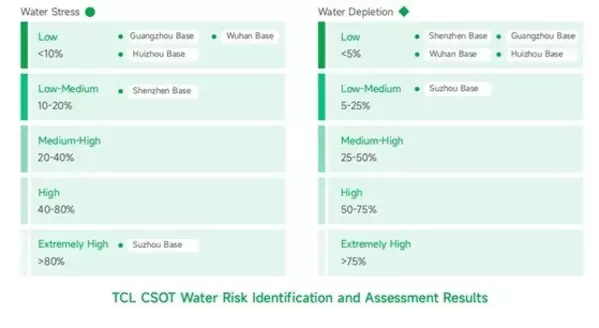
To proactively evaluate and address water-related risks, TCL Technology's subsidiaries employ the World Resources Institute (WRI) Aqueduct Water Risk Atlas to assess water risk levels globally across its factories. For example, TCL CSOT's 2024 assessment identified its Suzhou base as exposed to relatively higher water stress and consumption risks, while other locations reported at medium to low risk levels. These insights inform tailored strategies to mitigate site-specific risks.
Innovating for a Green Future: Clean Technology at the Core of TCL's Strategy
Clean technology is central to TCL Technology's mission of advancing corporate transformation and sustainable growth. By prioritizing investment in clean technologies, the Company integrates sustainability into its business operations, establishing a green management framework that covers the entire product lifecycle and supports global efforts to transition to a low-carbon economy.
In practice, TCL CSOT collaborates with customers to promote circular economy principles, such as recycling and reusing primary packaging materials to reduce resource consumption and environmental impacts. In 2024, the Company completed carbon footprint assessments for its 12.9-inch display panel and 10.1-inch central control display module. Using the results, it optimized key emission hotspots along the product lifecycle and established an ESG-oriented product R&D platform to advance green product development and enhance sustainability performance.
TCL Zhonghuan plays a key role in the energy and low-carbon transition, focusing on reducing the levelized cost of electricity (LCOE) in photovoltaic power systems. Through breakthroughs in photovoltaic wafer and cell technologies, the Company is developing low-emission photovoltaic solar energy products across the full product lifecycle.
By seamlessly integrating water resource efficiency management and clean technology innovation into its operations, TCL Technology is setting a benchmark for sustainable development. The Company's commitment to circular economy principles, resource conservation, and ESG-focused innovation underscores its vision of creating a positive impact on the environment, businesses, and communities worldwide.
###
About TCL
Founded in 1981, TCL—short for "The Creative Life"—embodies creativity in every aspect of life. As a leading technology brand, TCL is dedicated to delivering innovative solutions—including TVs, smartphones, audio products, smart home devices, display technologies, and clean energy—that enhance customer experiences through two independent entities—TCL Industries and TCL Technology.
As of now, with 47 R&D centers and 39 manufacturing bases globally, TCL operates in over 160 countries and regions, cementing its position as a globally competitive smart technology brand. To further inspire greatness, TCL has become an official Worldwide Olympic and Paralympic Partner in the Home Audiovisual Equipment and Home Appliances category.
SHENZHEN, China, Dec. 19, 2025 /PRNewswire/ -- Following the release of its annual ESG report in June 2025, TCL Technology is proud to highlight its progress on water resource protection and green technology innovation, which are key pillars in addressing environmental challenges and building a low-carbon future. TCL Technology prioritizes water resource management and the development of clean technologies as critical components of its strategy to foster green transformation and advance sustainability on a global scale.
Comprehensive Water Resource Management: From Risk Control to Circular Economy
TCL Technology demonstrates its leadership in water resource management through a robust governance framework. The Strategy and Sustainability Committee under the Group's Board of Directors oversees water management strategies and performance, ensuring continuous improvement and adherence to conservation principles across all subsidiaries. By combining sound policies, technological innovation, and comprehensive process control, the Company has built a robust and efficient water resource management system.
TCL Technology embeds water resource management into its corporate governance framework, using policies to guide implementation. For example, TCL CSOT has introduced a Water Resource Management Policy, comprising six sub-policies that outline responsibilities for conservation, resource planning, and inspections. This creates a closed-loop control process from target-setting to implementation and oversight. Similarly, TCL Zhonghuan incorporates water resource management indicators into its ESG performance evaluation framework as part of its Environmental Management Policy, linking plant manager performance to executive remuneration to ensure operational accountability.
Technological innovation and process optimization drive TCL Technology's efforts to use water resources efficiently:
- Guangzhou TCL CSOT: Optimized brine reuse and rainwater collection systems, forming a closed-loop framework covering production, recycling, and reuse.
- Wuhan TCL CSOT: Adopted membrane separation to treat fluoride-bearing wastewater, enabling the reuse of 780,000 cubic meters of water annually. Additional measures, such as chemical precipitation to reduce heavy metals in silver-bearing wastewater and a wetland-based rainwater reuse system, integrate gray infrastructure with ecological solutions.
To proactively evaluate and address water-related risks, TCL Technology's subsidiaries employ the World Resources Institute (WRI) Aqueduct Water Risk Atlas to assess water risk levels globally across its factories. For example, TCL CSOT's 2024 assessment identified its Suzhou base as exposed to relatively higher water stress and consumption risks, while other locations reported at medium to low risk levels. These insights inform tailored strategies to mitigate site-specific risks.
Innovating for a Green Future: Clean Technology at the Core of TCL's Strategy
Clean technology is central to TCL Technology's mission of advancing corporate transformation and sustainable growth. By prioritizing investment in clean technologies, the Company integrates sustainability into its business operations, establishing a green management framework that covers the entire product lifecycle and supports global efforts to transition to a low-carbon economy.
In practice, TCL CSOT collaborates with customers to promote circular economy principles, such as recycling and reusing primary packaging materials to reduce resource consumption and environmental impacts. In 2024, the Company completed carbon footprint assessments for its 12.9-inch display panel and 10.1-inch central control display module. Using the results, it optimized key emission hotspots along the product lifecycle and established an ESG-oriented product R&D platform to advance green product development and enhance sustainability performance.
TCL Zhonghuan plays a key role in the energy and low-carbon transition, focusing on reducing the levelized cost of electricity (LCOE) in photovoltaic power systems. Through breakthroughs in photovoltaic wafer and cell technologies, the Company is developing low-emission photovoltaic solar energy products across the full product lifecycle.
By seamlessly integrating water resource efficiency management and clean technology innovation into its operations, TCL Technology is setting a benchmark for sustainable development. The Company's commitment to circular economy principles, resource conservation, and ESG-focused innovation underscores its vision of creating a positive impact on the environment, businesses, and communities worldwide.
###
About TCL
Founded in 1981, TCL—short for "The Creative Life"—embodies creativity in every aspect of life. As a leading technology brand, TCL is dedicated to delivering innovative solutions—including TVs, smartphones, audio products, smart home devices, display technologies, and clean energy—that enhance customer experiences through two independent entities—TCL Industries and TCL Technology.
As of now, with 47 R&D centers and 39 manufacturing bases globally, TCL operates in over 160 countries and regions, cementing its position as a globally competitive smart technology brand. To further inspire greatness, TCL has become an official Worldwide Olympic and Paralympic Partner in the Home Audiovisual Equipment and Home Appliances category.
** The press release content is from PR Newswire. Bastille Post is not involved in its creation. **
TCL Technology Pioneers a Low-Carbon Future Through Advanced Water Management and Clean Technology Innovation
TCL Technology Pioneers a Low-Carbon Future Through Advanced Water Management and Clean Technology Innovation
TCL Technology Pioneers a Low-Carbon Future Through Advanced Water Management and Clean Technology Innovation